
Designing Property Platforms for a Rent-First Gen-Z World

 Anuraag Jain
Last Updated on March 30, 2026
Key Takeaways
What You’ll Learn:
- Property platforms must work as full marketplaces, not listing websites
- Gen Z users expect mobile-first, fast, simple property search experiences
- Rental-focused platforms grow faster than ownership-based property models today
- AI search helps users find properties based on lifestyle, not location
- Digital payments and contracts complete the rental journey inside platforms
Stats That Matter:
- Most property searches now start online across digital platforms
- Mobile devices drive the majority of property browsing activity today
- Virtual tours increase property engagement and viewing rates significantly
- Rental demand continues growing across major urban markets globally
- Marketplace platforms dominate most online transaction-based business models today
Real Insights:
- Faster platforms convert better than feature-heavy but slow property apps
- High-quality listings improve trust and increase user retention rates
- Simple search filters improve user decisions and reduce platform drop-offs
- Local supply density improves booking success and user satisfaction
- Social video content is driving modern property discovery behavior
Designing Property Platforms for a Rent-First Gen-Z World
Scrolling listings is the new house hunting. No brokers, no site visits – just swipes, reels, and quick decisions. That’s how Gen Z approaches renting today.
This shift is redefining how property platforms are built. A rent-first Gen-Z world demands mobile-first design, instant transactions, AI-driven search, and transparent listings that go beyond static photos. Traditional property portals struggle because they weren’t designed for this behavior.
For founders and real estate entrepreneurs, this creates a clear opportunity. Platforms that combine marketplace architecture, real-time discovery, and seamless leasing workflows are gaining traction faster than legacy models.
This is where launching property platforms for a rent-first Gen-Z world becomes critical – because the next generation of renters expects speed, clarity, and control from the very first tap.
Why the Rent-First Gen-Z World Is Reshaping Property Platforms
The real estate industry is undergoing a structural shift. Gen Z is entering the rental market with a mindset that prioritizes flexibility, speed, and digital convenience over long-term ownership. This generation is less interested in traditional property buying cycles and more focused on access over ownership.
For platform builders, this changes everything.
A rent-first Gen-Z world demands property platforms that function less like static listing portals and more like dynamic, interactive marketplaces. Users expect instant access to information, seamless booking workflows, and the ability to evaluate properties without physical visits.
This shift is not temporary. It reflects a broader transformation in how real estate is consumed, discovered, and transacted. Founders who recognize this early can build platforms that align with emerging user behavior rather than outdated industry practices.
Gen Z Prefers Renting Over Ownership
Gen Z’s financial priorities and lifestyle choices differ significantly from previous generations. Many prefer renting due to:
- career mobility and remote work flexibility
- lower upfront financial commitment
- preference for experiences over long-term assets
This creates a sustained demand for rental-focused platforms rather than ownership-centric marketplaces.
Data from the U.S. Census Bureau show that over 74% of Gen Z choose to rent rather than own, reinforcing long-term demand for rental-first platforms.
For founders, this means designing platforms where renting is not a secondary feature but the primary experience.
Digital-First Behavior Is Redefining Property Discovery
Gen Z discovers properties the same way they discover products – through digital channels.
Property search is no longer limited to websites. It often begins on:
- short-form video platforms
- social media content
- peer recommendations
This behavior requires platforms to integrate visual-first discovery mechanisms, including video walkthroughs and immersive content.
A property platform that does not support digital-first discovery risks losing relevance.
Growth Insight: Users don’t start with search – they start with content. Platforms that integrate video and visual discovery convert higher.
Why Traditional Property Platforms Are Failing Gen Z
Most traditional property platforms were built for a different user behavior model.
They focus on:
- static listings
- limited filtering
- manual inquiries
These platforms lack:
- real-time interaction
- personalized recommendations
- seamless transaction workflows
As a result, they create friction in the user journey. Gen Z users, accustomed to instant digital experiences, quickly abandon platforms that feel outdated or inefficient.
What Is a Modern Property Platform in a Rent-First Gen-Z World
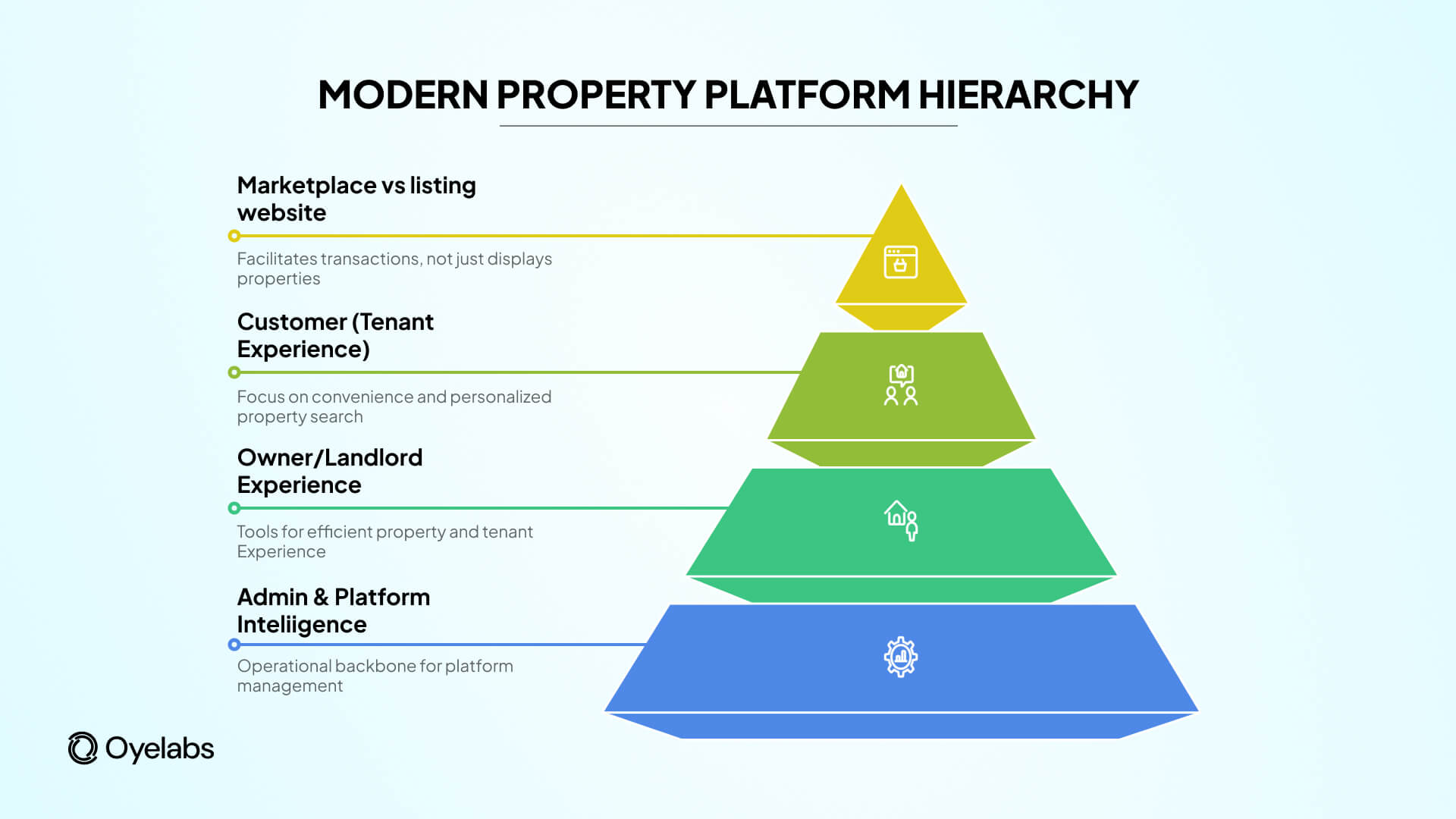
A modern property platform is not just a listing website. It is a two-sided marketplace that connects tenants with property owners while managing discovery, communication, and transactions within a single system.
Unlike traditional portals, these platforms are designed to support the entire rental lifecycle.
Marketplace vs Listing Website
A listing website displays properties. A marketplace facilitates transactions.
The difference is critical.
A property marketplace platform enables:
- direct interaction between tenants and landlords
- booking and scheduling workflows
- in-platform communication
- digital transaction processing
This model creates a more efficient and scalable business compared to static listing portals.
Customer (Tenant) Experience Layer
The tenant-facing side of the platform focuses on convenience and personalization.
Key elements include:
- advanced search filters based on lifestyle preferences
- real-time property availability
- digital booking and scheduling
- transparent pricing and lease details
The goal is to reduce friction and allow users to make decisions quickly.
Builder Tip: A successful platform minimizes decision friction, allowing users to move from discovery to booking within minutes.
Owner / Landlord Experience Layer
Property owners require tools to manage listings and respond to tenant demand efficiently.
This includes:
- property listing management
- inquiry handling
- pricing and availability control
- performance tracking
A strong landlord experience ensures that supply remains active and engaged on the platform.
Admin & Platform Intelligence Layer
The admin layer acts as the operational backbone of the platform.
It enables founders to:
- monitor user activity
- manage listings and transactions
- analyze performance metrics
- control platform growth
This centralized control system is essential for scaling a property marketplace.
Why Building a Property Platform From Scratch Is Slow and Expensive
Building a property platform from the ground up involves significant complexity. Many founders underestimate the time and resources required to develop a fully functional system.
A typical development cycle includes:
- product design and user experience planning
- backend architecture and database design
- mobile and web application development
- integration of payment and communication systems
- testing and deployment
These stages often extend over several months.
Complex Search + Listing Architecture
Property platforms require sophisticated search systems that can handle multiple filters simultaneously.
Users expect to filter properties based on:
- location
- price range
- amenities
- lifestyle preferences
Developing this functionality requires advanced indexing and database optimization.
Transaction Layer (Leasing, Payments, Contracts)
Unlike simple listing platforms, modern property marketplaces must support digital transactions.
This includes:
- lease agreement generation
- digital contract signing
- secure payment processing
These features introduce additional technical and compliance requirements.
Scalability and Multi-City Challenges
As the platform grows, it must support multiple cities and regions.
This requires:
- location-based data handling
- scalable infrastructure
- consistent user experience across regions
Without proper planning, scaling can lead to performance issues.
Maintenance and Feature Iteration
After launch, continuous updates are necessary to keep the platform competitive.
This includes:
- feature enhancements
- performance optimization
- security updates
For early-stage startups, maintaining this infrastructure can become resource-intensive.
Still deciding between a listing portal and a full marketplace? Here’s how founders are launching Zillow-like platforms in the US without writing a single line of code.
Designing Property Platforms for a Rent-First Gen-Z World with Oyelabs
To overcome development challenges, many founders are adopting ready-built marketplace solutions.
Oyelabs provides infrastructure that allows entrepreneurs to launch property platforms similar to Zillow without building everything from scratch.
This approach focuses on speed, reliability, and scalability.
What Oyelabs Offers for Property Platform Development
Oyelabs provides a complete ecosystem for building property platforms, including:
- customer-facing applications
- landlord management tools
- admin dashboards
These components are designed to work together seamlessly, reducing development complexity.
Zillow-Like Property Platforms Using White-Label Solutions
White-label solutions enable founders to launch branded property platforms with pre-built functionality.
Instead of developing core systems, founders can focus on:
- customizing the platform
- onboarding property listings
- building user demand
This significantly reduces time to market.
Why Founders Choose Ready-Built Property Platform Infrastructure
Founders choose ready-built solutions because they provide:
- faster launch timelines
- reduced development costs
- proven architecture
This allows startups to validate their business models quickly and iterate based on real user feedback.
Core Features of Property Platforms for a Rent-First Gen-Z World
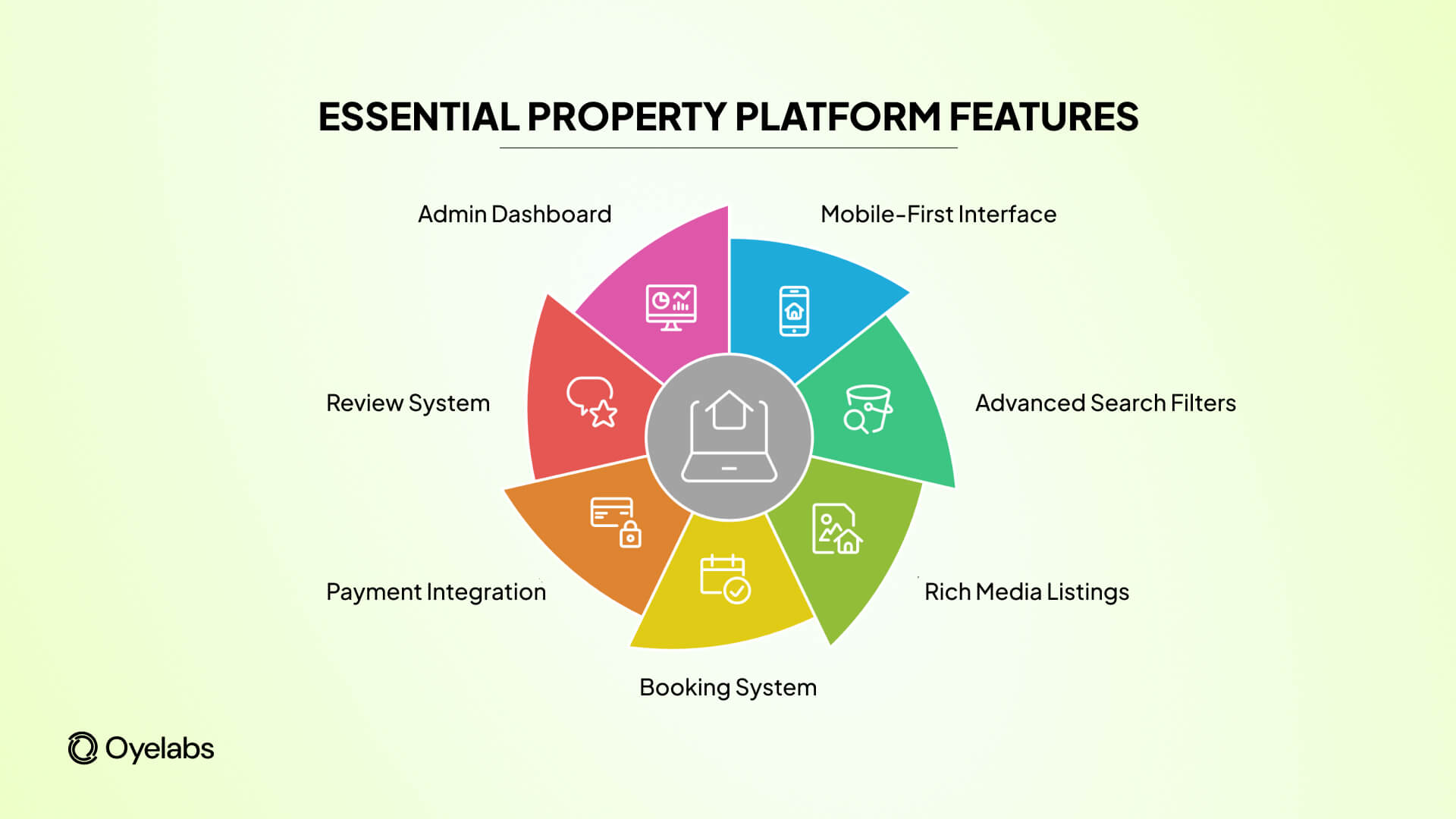
A successful property platform must include features that support seamless discovery, interaction, and transactions.
These features form the foundation of the user experience.
Key Functional Features
| Feature | Purpose |
| Mobile-First Interface | Enables seamless property browsing on smartphones |
| Advanced Search | Filters properties based on multiple criteria |
| Rich Listings | Provides detailed property information and media |
| Booking System | Allows users to schedule visits or inquiries |
| Payment Integration | Supports digital transactions |
| Review System | Builds trust through user feedback |
Mobile-First Property Discovery
Gen Z primarily interacts with digital platforms through mobile devices. According to the National Association of Realtors, over 60% of property searches now begin on mobile, making mobile-first design a non-negotiable requirement.
A mobile-first design ensures:
- faster navigation
- intuitive user interface
- seamless browsing experience
This is essential for capturing user attention and engagement.
Advanced Search Filters (Lifestyle-Based)
Modern users search for properties based on lifestyle, not just location.
Filters may include:
- proximity to co-working spaces
- access to public transport
- nearby entertainment options
This level of personalization improves search relevance.
Property Listings with Rich Media
Static images are no longer sufficient.
Effective listings include:
- high-quality images
- video walkthroughs
- detailed descriptions
Rich media helps users evaluate properties without visiting them physically.
Booking, Scheduling, and Inquiry System
A streamlined booking system allows users to:
- schedule property visits
- send inquiries
- communicate with property owners
This reduces manual coordination and speeds up decision-making.
Secure Payments and Lease Management
Digital transactions simplify the rental process.
Platforms can support:
- deposit payments
- rent transactions
- lease agreement management
This creates a seamless end-to-end user experience.
Ratings, Reviews, and Trust Signals
Trust is a critical factor in property transactions.
User reviews and ratings provide transparency and help users make informed decisions.
Admin Dashboard for Property Management
The admin dashboard enables platform operators to manage listings, monitor activity, and track performance.
This centralized control system supports efficient platform operations.
Builder Tip: Launching with limited but high-quality listings in one area drives faster traction than scaling across multiple cities too early.
Advanced Features That Define Gen-Z Property Platforms
To meet the expectations of a rent-first Gen-Z audience, property platforms must go beyond basic functionality.
Advanced features enhance user engagement and differentiate the platform in a competitive market.
Virtual Tours and AR-Based Property Viewing
Virtual tours allow users to explore properties remotely.
This reduces the need for physical visits and speeds up the decision-making process.
AI-Driven Property Recommendations
AI algorithms can analyze user behavior and preferences to recommend relevant properties.
This improves user experience and increases conversion rates.
Flexible Lease and Co-Living Options
Gen Z values flexibility.
Platforms should support:
- short-term leases
- co-living arrangements
- furnished rentals
These options align with modern lifestyle preferences.
Social Discovery (Reels, Video, UGC)
Property discovery is increasingly influenced by social content.
Platforms can integrate:
- video listings
- user-generated content
- social sharing features
This enhances visibility and engagement.
Sustainability and Smart Living Features
Gen Z is highly conscious of sustainability.
Platforms should highlight:
- energy-efficient properties
- green certifications
- smart home features
This adds value to property listings.
Integrated Messaging and Instant Transactions
Real-time communication between tenants and landlords improves responsiveness.
Instant transaction capabilities further reduce friction in the rental process.
How Oyelabs Helped a Founder Build a Zillow-Like Platform
A founder approached Oyelabs with a clear vision: build a digital property platform that simplifies renting for urban users.
The challenge was execution. Developing a platform similar to Zillow required significant technical resources and time.
Instead of starting from scratch, the founder leveraged Oyelabs’ property platform infrastructure to accelerate development.
The platform was customized with location-based search, rich property listings, and streamlined inquiry workflows. Once launched, it quickly began attracting both property owners and renters.
As listings increased, user engagement improved. The platform gained visibility through digital channels, and impressions grew steadily. With consistent user activity and a growing supply base, the platform established itself as a recognizable brand within its market.
By focusing on speed to market and user experience, the founder was able to increase market value and position the platform competitively within a short period.
Benefits of Designing Property Platforms for a Rent-First Gen-Z World with Oyelabs
Building a property platform requires balancing speed, cost, and scalability. Oyelabs addresses these priorities through a structured approach.
Speed to Market
Traditional development cycles can take several months.
With a ready-built platform, founders can significantly reduce launch timelines and enter the market faster.
Lower Development Cost
Developing a property platform from scratch involves hiring multiple technical resources.
A pre-built infrastructure reduces these costs and allows founders to allocate resources toward growth and marketing.
Proven Marketplace Architecture
Oyelabs provides a tested platform structure that includes:
- search and discovery systems
- booking workflows
- user management
This reduces technical risk for early-stage startups.
Scalable Infrastructure
As the platform grows, it can handle increased traffic, listings, and transactions without requiring major system changes.
Multi-Platform Support
Oyelabs platforms support:
- mobile applications
- web platforms
- admin dashboards
This ensures accessibility across devices and user segments.
Common Mistakes Founders Make When Designing Property Platforms
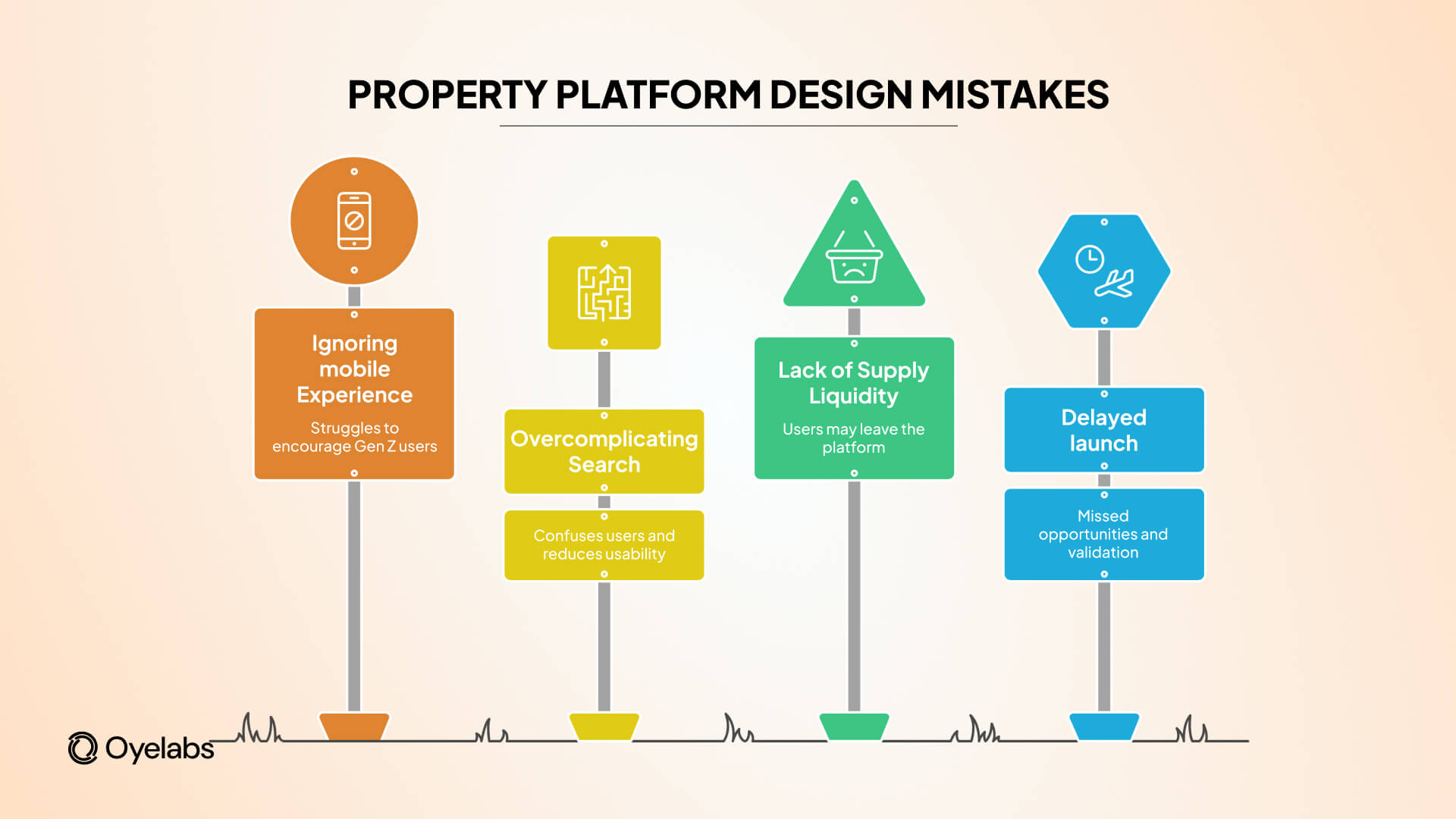
Understanding common mistakes helps founders avoid costly delays and inefficiencies.
Ignoring Mobile Experience
A platform that is not optimized for mobile devices will struggle to engage Gen Z users.
Mobile-first design is essential.
Overcomplicating Search
Complex search systems can confuse users.
Simplifying filters and prioritizing relevant results improves usability.
Lack of Supply Liquidity
Without enough listings, users may leave the platform.
Maintaining a balance between supply and demand is critical.
Delayed Launch
Waiting too long to launch can result in missed opportunities.
Early launch allows founders to validate their platform and iterate quickly.
Launch Your Property Platform Without Guesswork
Start your own rent-first Gen-Z property platform faster with proven marketplace infrastructure and scalable technology.
✓ Pre-built marketplace architecture reduces development time and risk
✓ Mobile-first apps designed for modern renter expectations today
✓ Integrated payments, booking, and communication workflows included
✓ Scalable infrastructure supports multi-city expansion from day one
Conclusion
The shift toward renting is not just a trend – it reflects a deeper change in how younger generations approach living, mobility, and financial decisions.
For founders, this creates a clear opportunity to build platforms that align with modern user expectations.
Instead of relying on outdated listing models, successful platforms focus on creating seamless, interactive experiences that simplify property discovery and transactions.
With the right infrastructure and strategy, entrepreneurs can launch property platforms that scale efficiently and adapt to evolving market demands.
Designing property platforms for a rent-first Gen-Z world requires a combination of technology, user-centric design, and marketplace strategy – an approach that enables founders to build not just platforms, but long-term digital businesses.
FAQs
What makes designing property platforms for a rent-first Gen-Z world different from traditional real estate platforms?
Designing for Gen Z requires mobile-first interfaces, instant interactions, flexible leasing, and full digital transactions. Unlike traditional platforms, Gen Z platforms prioritize speed, transparency, and personalization. They function as marketplaces rather than listing portals, enabling users to discover, evaluate, and rent properties without offline dependencies or delays.
Why do Gen Z users prefer renting over buying in modern property platforms?
Gen Z prefers renting due to flexibility, lower financial commitment, and lifestyle mobility. They value access over ownership and prioritize convenience, location freedom, and digital ease. Property platforms must reflect this by focusing on short-term rentals, co-living options, and seamless booking experiences tailored to changing user needs.
What core features are essential when designing property platforms for a rent-first Gen-Z world?
Essential features include mobile-first design, AI-based search, virtual tours, instant messaging, digital payments, and flexible lease options. Platforms must also offer real-time availability, transparent pricing, and review systems. These features reduce friction, improve trust, and enable faster decision-making for digitally native users.
How can founders launch property platforms for a rent-first Gen-Z world without building from scratch?
Founders can use ready-built marketplace infrastructure like Oyelabs to avoid long development cycles. These solutions provide pre-built apps, dashboards, and workflows that can be customized. This approach reduces cost, accelerates launch timelines, and allows founders to focus on user acquisition and platform growth instead of engineering.