
How to Develop a Live Shopping App Like Whatnot?
How to Develop a Live Shopping App Like Whatnot?
 Sachin Sharma
Last Updated on November 19, 2025
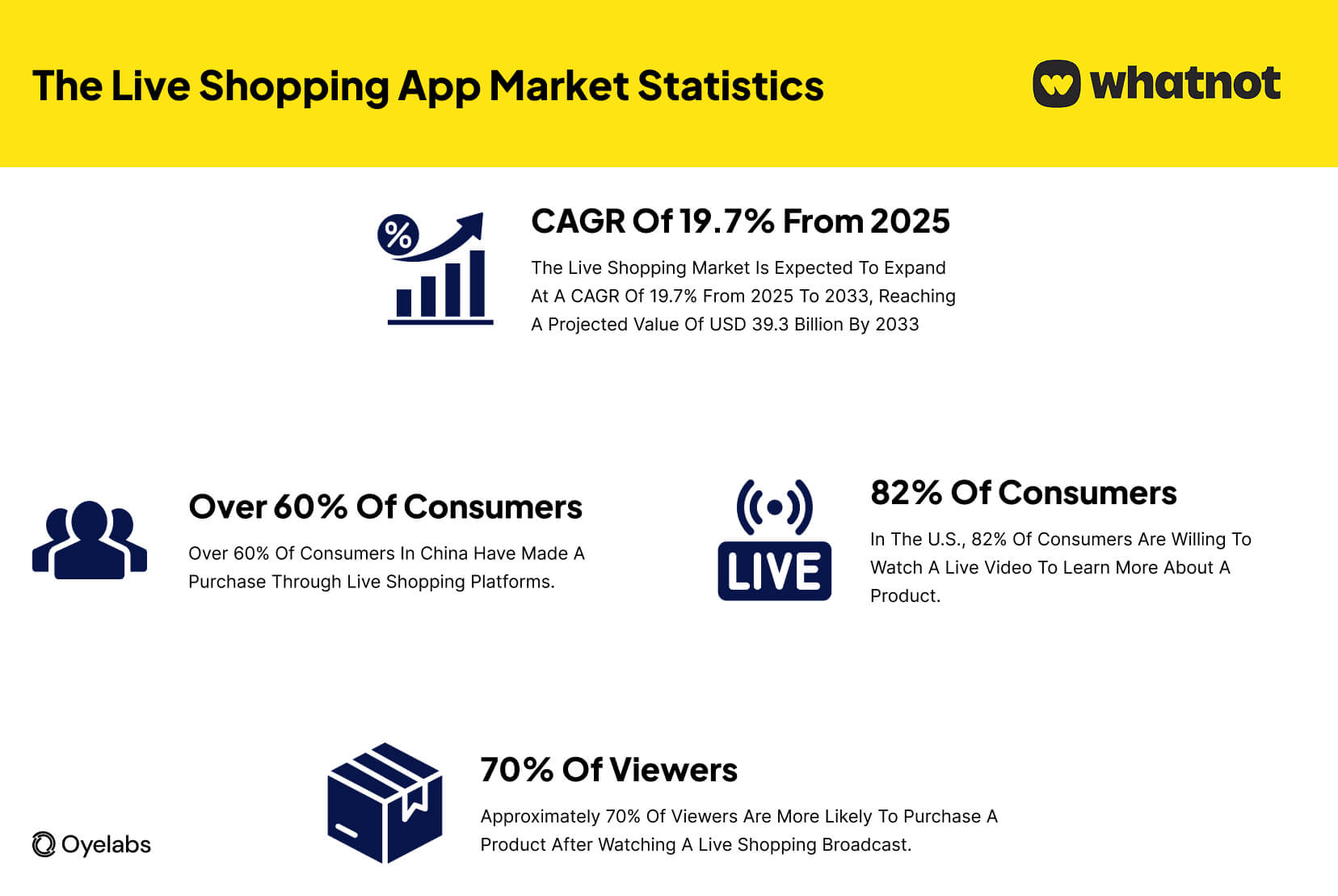
Key Takeaways What You’ll Learn Live shopping apps let people buy products while watching real-time video streams. Live video makes online shopping more fun, trustworthy, and interactive for buyers. Apps like Whatnot help sellers show products clearly and answer questions instantly. Auctions and live bids make buyers more excited and ready to purchase faster. Live shopping boosts sales because people buy more after watching product demos. Stats That Matter The live shopping market may reach $39.3B by 2033 globally. Over 60% of shoppers in China use live shopping to buy products. 82% of U.S. users watch live videos to learn about products. Around 70% of viewers buy products after watching a live stream.
What if you could shop online while watching sellers showcase products live, interact with them in real time, and place bids instantly? That’s exactly what a Live Streaming Shopping App like Whatnot offers today. Buyers don’t just scroll through static product images; they experience products up close, ask questions, and engage with sellers directly. This approach is already popular among collectors, hobbyists, resellers, and small businesses selling niche items like trading cards, sneakers, toys, and collectibles. Building a Whatnot-style app allows entrepreneurs to tap into this growing trend, connect buyers with creators, and deliver an interactive shopping experience that drives engagement, loyalty, and sales. In this guide, we will break down how these apps work, the essential features to include, and how to build your own live streaming shopping platform. Building a live streaming shopping app like Whatnot brings together the best parts of online shopping, social media, and live video. This model is growing quickly because it makes online shopping more fun, interactive, and trustworthy. Instead of looking at static photos, buyers can watch sellers showcase products live, ask questions, place bids, and enjoy a more engaging shopping experience. To understand why this format is becoming so popular and how you can build a similar platform, let’s look at the main benefits and how a Whatnot-style app works. Live shopping is becoming one of the biggest trends in digital commerce. People now prefer real-time product demos and direct interaction with sellers. That’s why brands and creators are quickly moving toward livestream shopping. According to McKinsey, live commerce could make up 10–20% of all eCommerce revenue worldwide by 2026. In the U.S. alone, the live shopping market is expected to reach $55 billion by 2026, showing strong demand. A Whatnot-like app also benefits from the rise of creator-led selling. Influencers, collectors, resellers, and small businesses are now using video to sell directly to their audience. By building an app like Whatnot, you naturally attract: Since creators bring their own followers to the platform, your user base begins to grow organically, reducing the need for heavy marketing and lowering overall acquisition costs. Live shopping further strengthens this growth because it is one of the most engaging formats in digital commerce today. Real-time product demonstrations, instant buyer–seller interaction through live chat, and the fast-paced excitement of auction-style sales encourage viewers to take action quickly. This results in longer watch times, higher participation, and stronger conversion rates compared to traditional eCommerce. A Whatnot-style app also unlocks multiple revenue opportunities, making the business both scalable and profitable. These include commissions earned from each sale, auction fees charged during live bidding sessions, and paid promotional placements for sellers who want additional visibility. You can further introduce seller subscription plans with exclusive benefits, priority listing boosts that push products higher in search results, standard withdrawal and transaction fees, and featured seller placements for creators who want to stand out. Together, these income streams build a strong, diverse monetization model that continues to grow as engagement increases, ensuring long-term profitability for your platform. A Whatnot-like app operates on a fast, interactive, and community-driven model where live video becomes the center of the buying and selling experience. Instead of traditional product listings, the app creates a real-time marketplace where entertainment meets instant commerce. 1. Seller Onboarding: The journey begins when sellers sign up and complete a quick verification process to prove authenticity. Once approved, they can upload product details, set prices, and schedule their live auctions or selling sessions. Many platforms also allow sellers to create collections or themed shows to attract the right audience. 2. Live Video Streams: This is the heart of the platform. Sellers go live and showcase items in real time, whether it’s collectibles, fashion, electronics, or rare items. Buyers join the stream, interact through chat, ask questions, and place bids while the seller demonstrates the product. Timed auctions, sudden drops, product countdowns, and real-time reactions create a sense of urgency and excitement that traditional marketplaces lack. 3. Instant Purchases: When a buyer wins an auction or clicks “Buy Now,” the platform processes the payment immediately. Modern Whatnot-style apps offer multiple secure payment options such as cards, UPI, PayPal, wallets, and even BNPL solutions. Everything happens inside the app, so users don’t have to leave the live stream. 4. Shipping & Tracking: After payment, sellers generate shipping labels directly from the dashboard. They pack the items, hand them off to a courier, and the system updates the buyer automatically. Real-time tracking notifications keep both sides informed, reducing disputes and building trust. 5. Social & Shopping Features: To grow engagement, the app blends eCommerce with social networking. Users can create profiles, follow their favorite sellers, and get notifications for upcoming shows. Discovery feeds help buyers explore trending items, while ratings and reviews ensure credibility. Wishlists, browsing history, and personalized recommendations keep shoppers active even when no live stream is happening. Together, these features transform the platform into a dynamic, community-driven shopping experience. People keep returning not only to make purchases but also to enjoy the thrill of live auctions, interact with sellers, and feel part of an active community. Also Read: How To Build An App Like TaskRabbit In 10 Easy Steps Creating a strong competitor to Whatnot requires careful planning, a clear strategy, and a deep understanding of your target audience. It’s not just about replicating features, it’s about improving the user experience, adding value, and building a platform that attracts both buyers and sellers. Here’s how you can do it step by step: Before building your app, analyze Whatnot’s platform from both buyer and seller perspectives. Identify areas where users face challenges or frustration. Common gaps include: By understanding these pain points, you can design a platform that solves them, making your app more attractive to both sellers and buyers. Whatnot attracts collectors, hobbyists, resellers, and small businesses. To stand out, define the audience you want to serve. This could be: Tailoring your platform to a specific community allows you to create a focused experience, from personalized product feeds to targeted marketing campaigns, which improves engagement and user retention. Your app needs to clearly communicate what makes it different from Whatnot. Consider adding: A strong value proposition helps your platform stand out and convinces users to switch from other apps. Ease of use is critical for adoption. Your app should allow sellers to quickly list products, start live streams, manage inventory, and communicate with buyers. Buyers should navigate easily, search for products, and make purchases without confusion. Intuitive design reduces friction, improves trust, and encourages repeated use. Transparent and fair pricing is essential to attract sellers. Consider flexible models, such as: Balancing fees with profitability ensures that sellers feel motivated to list their products, which keeps the marketplace active. Customer support builds trust, which is crucial for live commerce. Offer: A responsive support system enhances user satisfaction and encourages long-term engagement. Effective marketing helps you reach the right audience and grow quickly. Use channels like: Highlight success stories of early sellers and unique features to make your platform more appealing. Community engagement keeps users returning. Build a platform that encourages interaction through: A loyal and active community drives organic growth and improves the overall experience. The live shopping market evolves quickly. Regularly gather feedback, track market trends, and release updates. This could include: Continuous improvement keeps your platform competitive and ensures long-term growth. To build a live shopping platform that users love, certain core features are essential: Choosing the right technology ensures your app is scalable, fast, and reliable. Here’s a recommended stack for a Whatnot-like platform: Also Read: Cost to Build a Home Services App Like UrbanClap You don’t have to just watch the live shopping trend grow. With Oyelabs, you can launch your own live commerce platform and tap into the rapidly expanding market. Our expertise helps you create a feature-rich, user-friendly, and scalable live shopping app that attracts creators, collectors, and buyers while generating multiple streams of revenue. From high-quality live streaming to secure payments and community-driven engagement, Oyelabs ensures your platform delivers a seamless and interactive shopping experience. Take the first step today and turn your idea into a thriving platform that combines entertainment, community, and eCommerce in one. Lead the way in the fast growing world of live commerce with Oyelabs. Building a live streaming shopping app like Whatnot is a promising opportunity in today’s digital commerce landscape. By combining real-time video, interactive engagement, and secure eCommerce, you create a platform that buyers and sellers love. With proper planning, clear targeting, unique features, and a scalable tech stack, you can launch a successful Whatnot-style platform. Focus on community building, continuous improvement, and innovative marketing to stand out in the growing live shopping market. Now is the perfect time to enter live commerce and capture the attention of buyers and creators who want more than just traditional online shopping—they want a real-time, interactive, and fun experience. 1. How does a Whatnot-like app make money? Ans- A Whatnot-style app earns through commissions, transaction fees, featured listings, ads, and premium seller tools like boosted visibility and advanced analytics. 2. How do you become a live seller on Whatnot? Ans – You apply through Whatnot’s app or website, submit product details, verify your identity, and complete a short onboarding review. Once approved, you can start hosting live auctions. 3. Is there another app like Whatnot? Ans – Yes. Popular alternatives include Popshop Live, NTWRK, TikTok Shop Live, eBay Live, Amazon Live, and other niche marketplaces with auction-style live streams. 4. What are the biggest challenges in building a Whatnot clone? Ans – The main challenges include lag-free live streaming, strong seller verification, fraud prevention, secure payments, and smooth real-time auctions. 5. How much does it cost to build an app like Whatnot? Ans- Building a Whatnot-like app costs $10,000 to $50,000+, depending on features and complexity. Simple, mid-level, and advanced versions vary in time and budget. Ans – A basic MVP takes 10–14 weeks, while a complete platform with auctions, moderation tools, wallets, and dashboards requires 4–6 months, depending on customization.
Why Build a Whatnot-Like App & How It Really Works
Why Build an App Like Whatnot?
How Does an App Like Whatnot Work?
How to Launch a Successful Whatnot-Style App
1. Identify Whatnot’s Gaps
2. Define Your Target Audience
3. Develop a Unique Value Proposition
4. Build an Intuitive Platform
5. Offer Competitive Pricing
6. Provide Reliable Customer Support
7. Execute Smart Marketing
8. Foster a Community
9. Focus on Continuous Improvement
Essential Features for a Whatnot-Like App
Recommended Tech Stack for Your App
Build Your Own Live Shopping App Like Whatnot Today
Conclusion
FAQs