
How to Build a Group Travel Booking App Like WeRoad

How to Build a Group Travel Booking App Like WeRoad
 Anuraag Jain
Last Updated on June 15, 2026
Key Takeaways
What You’ll Learn
- How WeRoad works and why its business model is different from traditional travel booking platforms
- The core features required to build a group travel booking app like WeRoad
- The recommended technology stack for developing a scalable travel marketplace
- How traveler profiles, group chat, and coordinator tools improve user engagement
- The business model behind community-focused travel booking app
- How much it costs to build a WeRoad-like platform
- Whether to choose custom development or a white-label travel marketplace solution
- The fastest path to launching a travel community platform
How to Build a Group Travel Booking App Like WeRoad
Building a group travel booking app like WeRoad requires more than a standard travel booking platform. You need a system that combines trip discovery, group bookings, traveler profiles, community communication, payment processing, itinerary management, and travel coordinator tools.
Most founders start with a Minimum Viable Product (MVP) that includes trip listings, bookings, payments, traveler profiles, group chat, and an admin dashboard before expanding into advanced community and social features.
This guide explains the complete process of building a WeRoad-like platform, including features, technology stack, development roadmap, business model, cost considerations, and launch strategy.
Quick Answer: How Do You Build an App Like WeRoad?
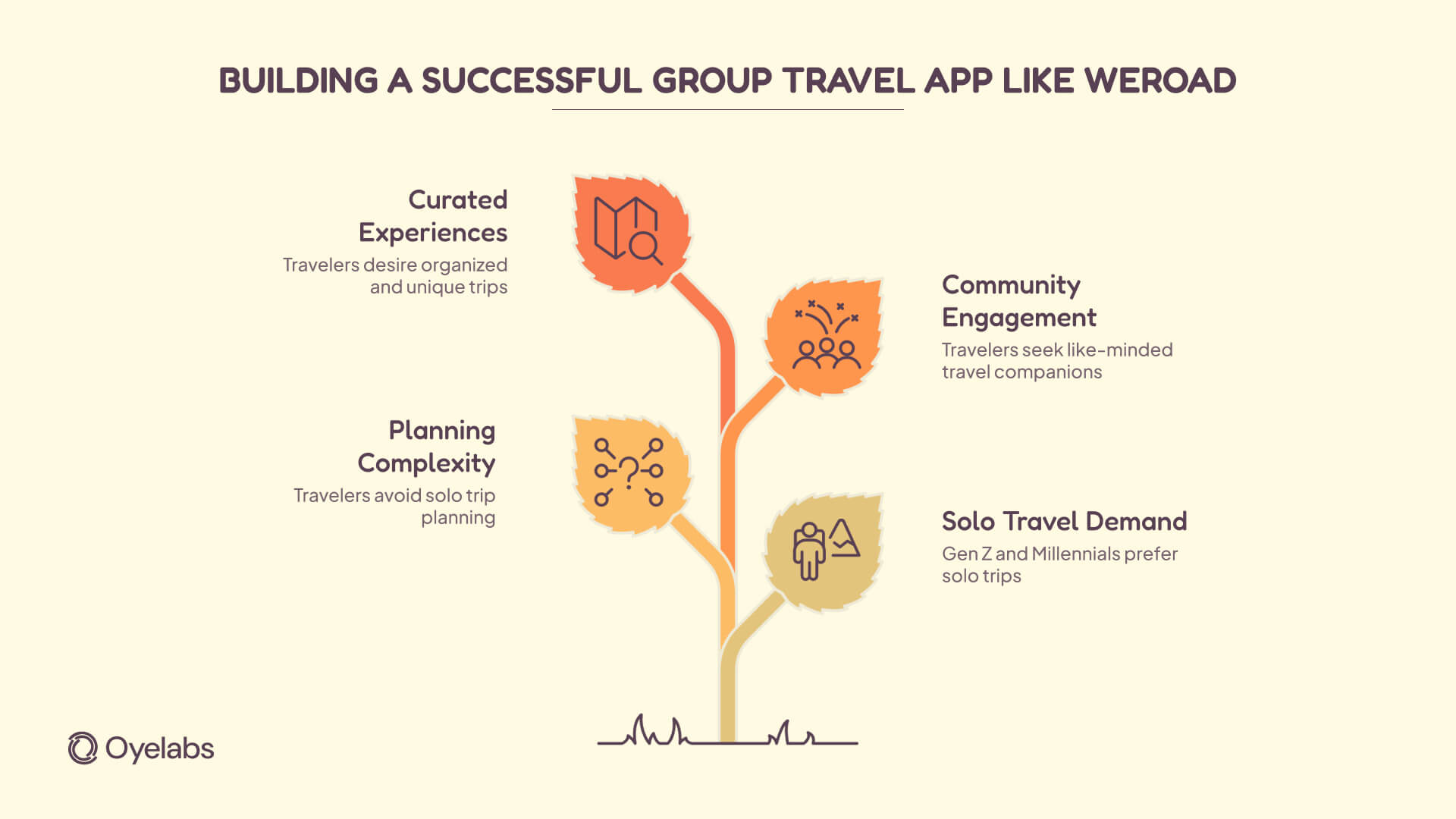
To build an app like WeRoad, you need a platform that allows users to discover curated group trips, book travel experiences, communicate with fellow travelers, make payments, manage itineraries, and interact with travel coordinators. The fastest approach is to launch an MVP with core booking and communication features before expanding into community-driven functionality.
What Is WeRoad and How Does It Work?
WeRoad is a group travel booking app or platform that organizes curated trips for travelers who want to explore destinations with like-minded people.
Unlike traditional travel booking app or websites, WeRoad focuses on group experiences where travelers join pre-planned trips led by travel coordinators.
The platform typically includes:
- Trip discovery
- Group travel bookings
- Traveler profiles
- Travel coordinator management
- Group communication
- Payment processing
- Itinerary management
This model combines travel bookings with community engagement.
Why Is WeRoad Successful?
WeRoad succeeds because it solves a common problem.
Many travelers want to travel but do not want to travel alone.
The platform removes the complexity of planning and helps users join organized group experiences.
WeRoad is benefiting from broader shifts in traveler behavior. According to Hotelbeds, approximately 76% of Gen Z and Millennial travelers plan to take solo trips, creating strong demand for platforms that help travelers join organized groups safely and socially. This is one reason community-focused group travel apps continue gaining traction.
Key success factors include:
- Curated travel experiences
- Group-based travel model
- Community engagement
- Travel coordinator support
- Simplified booking process
- Strong social proof
These elements create a repeatable travel marketplace model.
Step 1: Define Your Group Travel Business Model
Before development begins, you must define how the platform will generate revenue.
This decision influences features, operations, and partnerships.
Common Revenue Models for WeRoad-Like Platforms
| Revenue Model | Description |
| Trip Package Sales | Revenue from curated travel experiences |
| Vendor Margins | Markups on hotels, transport, and activities |
| Premium Experiences | Upsells and optional activities |
| Membership Programs | Recurring traveler subscriptions |
| Partnerships | Brand sponsorships and collaborations |
Most group travel platforms combine multiple revenue streams.
Step 2: Identify Your Target Travelers
A successful travel platform targets a specific audience before expanding.
Examples include:
- Solo travelers
- Adventure travelers
- Digital nomads
- Young professionals
- Women-only travel communities
- Luxury travel groups
- Student travel groups
The more focused the audience, the easier it becomes to acquire users.
Step 3: Build the Core Features of a WeRoad-Like App
The MVP should focus on the features required to support bookings and group travel management.
Trip Catalog
The trip catalog acts as the marketplace inventory.
Each trip should display:
- Destination
- Travel dates
- Pricing
- Itinerary
- Group size
- Availability
- Travel coordinator details
Rich visuals and detailed descriptions are critical for conversion.
Booking Engine
The booking engine allows travelers to reserve trips in the travel booking app.
Core functionality includes:
- Seat availability
- Reservations
- Deposits
- Installment payments
- Booking confirmations
- Cancellation workflows
This is one of the most important components of the platform.
Payment Gateway Integration
Secure payments are essential.
Most platforms integrate payment providers such as:
- Stripe
- Braintree
- PayPal
Payment systems should support:
- Multiple currencies
- Installment plans
- Refunds
- Deposits
Traveler Profiles
Traveler profiles help users personalize their experience.
Common profile fields include:
- Name
- Interests
- Travel preferences
- Languages
- Travel history
Profiles also support future personalization.
Group Chat and Messaging
Group communication helps travelers coordinate before departure.
Messaging features should include:
- Group chats
- Direct messages
- Trip announcements
- Travel updates
Real-time communication improves engagement and customer satisfaction.
Travel Coordinator Dashboard
Travel coordinators need dedicated management tools.
The dashboard should support:
- Group management
- Participant tracking
- Trip updates
- Emergency information
- Communication management
This improves operational efficiency.
Reviews and Ratings
Reviews increase trust and improve booking conversion rates.
Users should be able to review:
- Trips
- Coordinators
- Travel experiences
Trust is a critical factor in travel marketplaces and travel booking app.
Admin Dashboard
The admin panel controls platform operations.
Core functions include:
- User management
- Trip management
- Payments
- Bookings
- Content moderation
- Reporting and analytics
This becomes the operational center of the business.
Step 4: Choose the Right Technology Stack
The technology stack should support scalability, security, and mobile accessibility.
Frontend Development
Recommended technologies:
- Flutter
- React Native
These frameworks support both Android and iOS applications from a single codebase.
Backend Development
Recommended technologies:
- Node.js
- Python
- Laravel
The backend handles:
- User management
- Bookings
- Payments
- APIs
- Notifications
Database
Popular choices include:
- PostgreSQL
- MySQL
- MongoDB
The database stores user, booking, payment, and trip data.
Real-Time Messaging
Messaging can be powered by:
- Firebase
- Sendbird
These services support scalable communication infrastructure.
Maps and Location Services
Most travel platforms integrate:
- Google Maps API
This helps display:
- Destinations
- Itineraries
- Meeting points
- Activity locations
Travel APIs
Travel integrations may include:
- Amadeus
- Skyscanner
- Travelport
These APIs support travel-related functionality.
Step 5: Build an MVP Before Full Development
Most successful startups launch a Minimum Viable Product before investing heavily in advanced functionality.
Recommended MVP Features
| Feature | Priority |
| Trip Listings | High |
| Bookings | High |
| Payments | High |
| Traveler Profiles | High |
| Group Chat | High |
| Admin Dashboard | High |
| Reviews | Medium |
| Advanced Matching | Low |
| AI Recommendations | Low |
Launching with a focused MVP reduces risk and accelerates market validation.
Step 6: Partner With Hotels, Activities, and Transport Providers
Travel marketplaces depend heavily on partnerships.
Before launch, establish relationships with:
- Hotels
- Hostels
- Transportation providers
- Tour operators
- Activity providers
These partnerships help improve margins and traveler experience.
Step 7: Handle Legal and Compliance Requirements
Travel businesses operate in a regulated environment.
Common requirements include:
- Terms and conditions
- Privacy policy
- Liability waivers
- Travel insurance requirements
- Refund policies
- Consumer protection compliance
Founders should seek professional legal guidance before launch.
How Much Does It Cost to Build a Travel Booking App Like WeRoad?
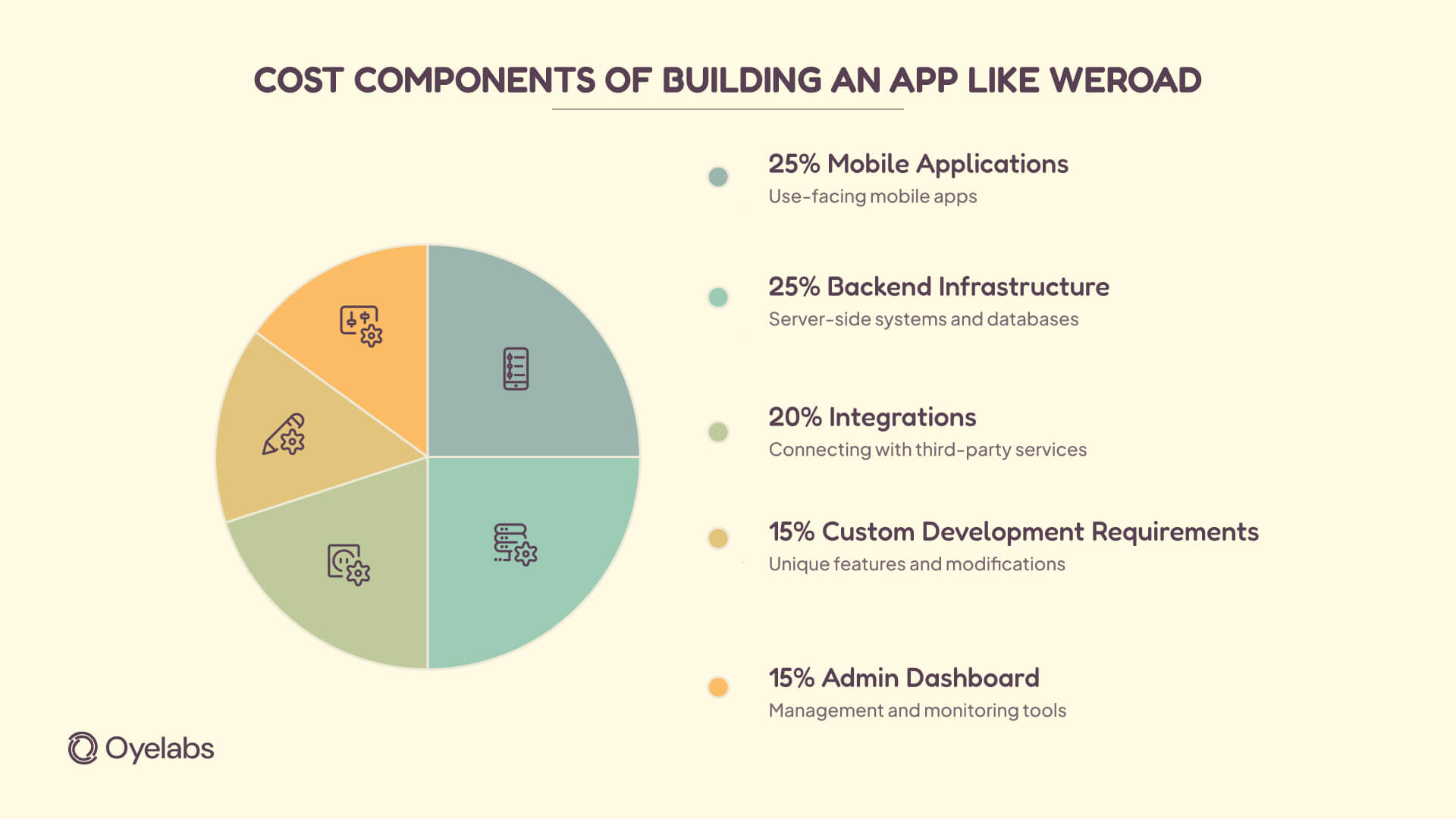
The cost depends on:
- Feature complexity
- Mobile applications
- Backend infrastructure
- Integrations
- Custom development requirements
A typical WeRoad-like platform usually requires:
- Mobile applications
- Admin dashboard
- Backend APIs
- Payment integrations
- Messaging infrastructure
Most founders launch an MVP first and expand features based on user feedback.
How Long Does It Take to Build an App Like WeRoad?
Development timelines vary depending on scope.
A focused MVP can typically be launched significantly faster than a fully custom enterprise platform.
Timeline factors include:
- Number of features
- Integrations
- Design complexity
- Mobile applications
- Third-party services
Launching in phases is usually the most efficient approach.
Build From Scratch vs White Label Travel Platform
Many founders must decide whether to build from scratch or use an existing foundation.
| Factor | White Label Platform | Custom Development |
| Launch Speed | Faster | Slower |
| Initial Cost | Lower | Higher |
| Development Risk | Lower | Higher |
| Time to Market | Faster | Slower |
| Customization | High | Complete |
| Scalability | Strong | Strong |
For many startups, faster validation is more valuable than rebuilding common marketplace functionality.
Best Solution to Build a Travel Booking App Like WeRoad
The best solution depends on your goals, budget, and timeline.
A successful WeRoad-like platform should support:
- Group travel bookings
- Traveler profiles
- Messaging
- Coordinator management
- Payments
- Trip management
- Marketplace administration
At Oyelabs, we help founders build travel marketplaces, booking platforms, and community-driven travel applications with scalable architecture and marketplace-focused workflows.
For most startups, launching an MVP and validating demand before expanding features is the most effective strategy.
Also Read: Best Features of An Airbnb-like App in 2026
Conclusion
Building a group travel booking app like WeRoad requires a combination of travel marketplace functionality and community-driven user experiences.
The most important steps are:
- Define the business model.
- Identify your target travelers.
- Build the core booking features.
- Select the right technology stack.
- Launch an MVP.
- Establish travel partnerships.
- Ensure legal compliance.
Founders who focus on validation and phased development typically reduce risk and reach the market faster than those attempting to build every feature at once.
A successful WeRoad-like platform is not built around destinations alone. It is built around well-organized travel experiences, seamless bookings, and scalable operations.
Frequently Asked Questions
What Is a WeRoad-Like App?
A WeRoad-like app is a group travel booking platform that allows users to discover, book, and participate in curated travel experiences with other travelers.
What Features Does a WeRoad-Like App Need?
Core features include:
- Trip listings
- Bookings
- Payments
- Traveler profiles
- Group chat
- Travel coordinator tools
- Admin dashboard
What Technology Stack Is Best for Building a WeRoad-Like App?
Flutter or React Native for mobile development, combined with Node.js, Python, or Laravel for backend development, is a common approach.
Can I Build a WeRoad-Like App as an MVP?
Yes.
Most founders start with an MVP that includes bookings, payments, messaging, profiles, and administration tools.
Is a White Label Travel Platform Better Than Custom Development?
For many startups, a white-label approach reduces development costs, launch timelines, and market-entry risk while still supporting future customization.