
How Brands Find and Hire Influencers Through Marketplaces

How Brands Find and Hire Influencers Through Marketplaces
 Sachin Sharma
Last Updated on August 27, 2026
Key Takeaways
What You’ll Learn:
- Influencer marketplaces help brands discover and hire creators from one platform.
- Brands can filter creators by niche, platform, audience, location, and creator size.
- Audience relevance matters more than follower count when choosing an influencer.
- Brands can contact creators directly or let creators apply to campaigns.
- Campaign tools help manage briefs, content, deadlines, payments, and approvals.
Stats That Matter:
- U.S. creator advertising spend is projected to reach $37 billion in 2025.
- Creator advertising spend is expected to grow 26% from 2024 to 2025.
Finding the right influencer sounds easy until a brand actually has to do it at scale.
A marketing team might spend hours searching Instagram, TikTok, or YouTube, opening creator profiles, checking audiences, comparing engagement, sending messages, and keeping track of who replied. Multiply that by dozens or hundreds of creators, and influencer hiring can quickly turn into a spreadsheet-heavy job.
That’s where influencer marketplace platforms come in. Instead of searching for creators one profile at a time, brands can use these platforms to discover creators, evaluate audience and performance data, contact potential partners, manage collaborations, and measure campaign results.
And the need for better creator discovery is growing. According to the IAB 2025 Creator Economy Ad Spend & Strategy Report, U.S. creator advertising spend is projected to reach $37 billion in 2025, up 26% from 2024. The report also identifies finding and selecting the right creators as the top challenge for brands, showing that creator discovery isn’t always as straightforward as it looks.
So, how does a brand actually go from “We need influencers” to “These are the creators we want to hire”? That’s exactly what we’ll break down in this guide.
How Does Influencer Hiring Through a Marketplace Work?
The process is easier to understand as a journey:
Define the campaign → Search creators → Evaluate profiles → Shortlist → Contact or receive applications → Agree on terms → Manage the campaign → Measure results
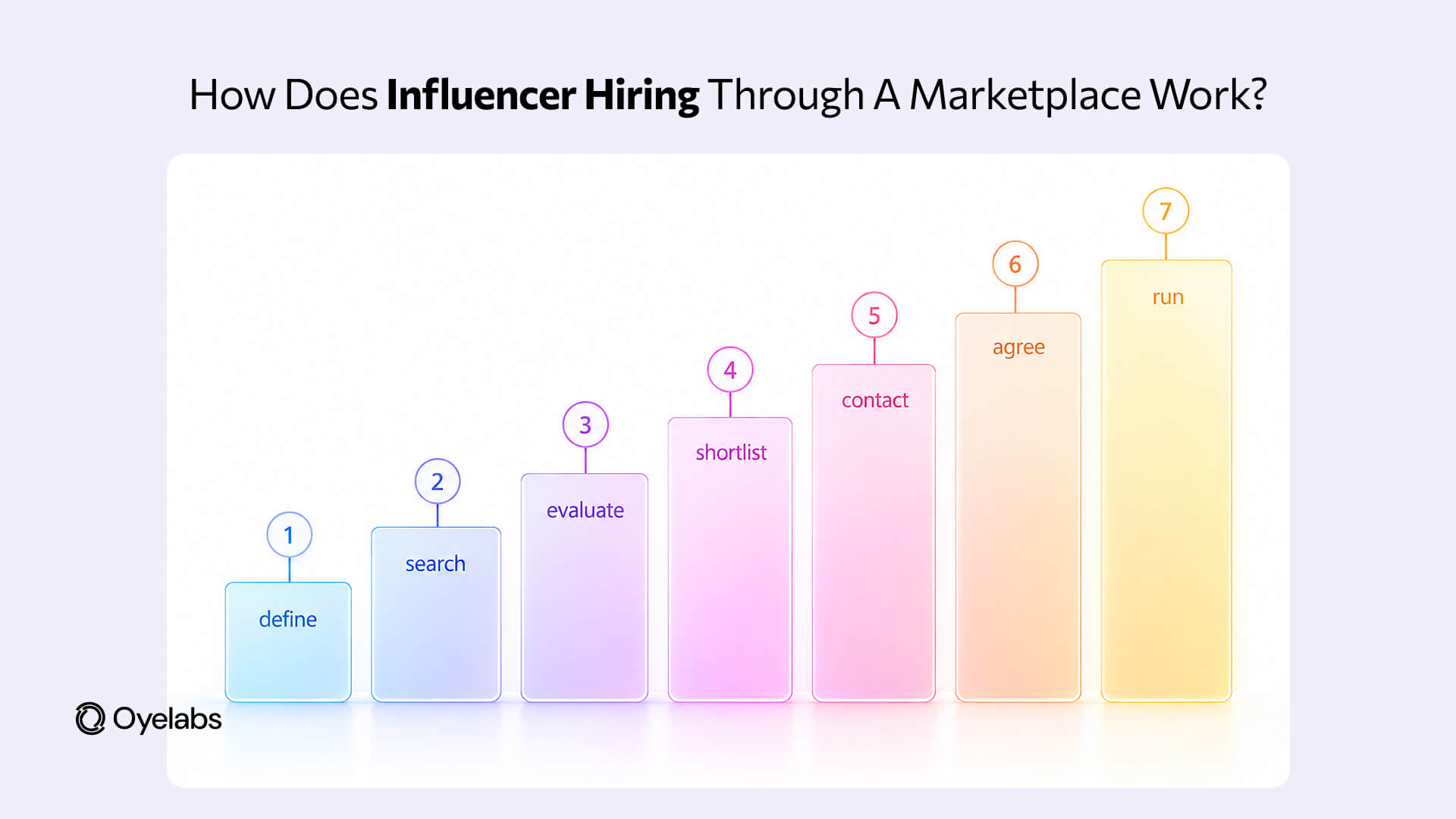
Depending on the platform, brands may be able to search a creator database, filter profiles by niche and audience, review creator data, contact creators, publish campaigns for applications, manage products and content, handle payments, and track campaign performance.
The important thing is that not every platform works the same way. Some focus primarily on creator discovery, while others support much more of the campaign lifecycle.
Step 1: How Brands Search for Influencers on a Marketplace
The first job is narrowing a huge pool of creators down to people who could realistically fit the campaign. Instead of manually opening social profiles one by one, brands can use the marketplace’s available search and filtering tools.
Start With the Campaign Goal
Before searching, brands need to know what they want the influencer campaign to accomplish.
The objective could be building awareness, launching a product, reaching a new audience, generating UGC, driving website traffic, or increasing sales. Each goal can lead to a different type of creator.
For example, a brand looking for UGC may care heavily about content quality and whether the creator can produce assets that fit the brand. A sales-focused campaign may put more weight on audience relevance and a creator’s ability to drive measurable actions.
Starting with the objective prevents the search from becoming a simple hunt for the creator with the biggest following.
Search by Niche, Platform, and Audience
Once the campaign goal is clear, brands can narrow their search by content niche and social platform.
Depending on the marketplace, brands may search for creators working in categories such as beauty, fashion, fitness, gaming, food, travel, technology, or business. They can also focus on platforms that fit the campaign, platforms like TikTok, Instagram, YouTube, or others supported by the service.
Audience data adds another layer.
Depending on what the platform provides, brands may be able to review information such as audience location, age, gender, interests, and other demographics. This helps answer a much more useful question than “How many followers does this creator have?”
The question becomes:
“Does this creator reach the people we actually want to reach?”
Choose the Right Influencer Tier
Creator size can also be used as a search criterion.
The IAB’s 2025 Creator Economy Definitions and Taxonomy uses these creator categories:
| Creator tier | Followers |
|---|---|
| Nano | 1,000-10,000 |
| Micro | 10,000-50,000 |
| Mid-tier | 50,000-500,000 |
| Macro | 500,000-1 million |
| Top-tier / Mega | 1-5 million |
| VIP / Celebrity | 5 million+ |
These tiers make creator discovery easier to organize, but follower count shouldn’t be treated as the final answer.
A smaller creator may have a highly relevant audience, while a larger creator may be better when broad reach is the priority. IAB’s 2025 research found that brands reported partnering most frequently with mid-tier, macro, and micro creators, rather than simply choosing the largest creators available.
Build a Shortlist
After applying its criteria, the brand can create a shortlist of creators who appear to match the campaign.
This is where a marketplace can save significant manual work. Instead of moving from hundreds of unrelated profiles directly to a hiring decision, the brand can first narrow the pool to a smaller group worth reviewing carefully.
But appearing in search results does not mean a creator is ready to hire.
The next step is vetting.
Step 2: How Brands Evaluate Influencers Before Hiring
Discovery gets creators onto the list. Vetting helps brands decide who should stay there.
A strong marketplace profile can provide useful information, but brands still need to look at the creator’s audience, content, performance, and overall fit.
Look Beyond Follower Count
Follower count is useful for understanding audience size, but it doesn’t tell a brand whether those followers are relevant or engaged.
Brands may compare available metrics such as views, reach, engagement, likes, comments, shares, and other performance information. The exact metrics available depend on the marketplace and connected social platforms.
Imagine a creator with 70,000 followers whose audience closely matches the brand’s target market and another with 500,000 followers whose audience has little connection to the product.
The second creator is bigger.
That doesn’t automatically make them the better choice.
The brand should consider relevance, performance, and campaign objectives alongside audience size.
Check Audience and Content Fit
A creator’s audience should match the people the brand wants to reach, but the content itself needs to fit too.
Brands can review the creator’s previous posts to understand their style, tone, production quality, and experience with sponsored content. They can also look at whether the creator has worked with similar products or brands.
This matters because influencer marketing works partly because creators already know how to communicate with their audiences.
A creator who can naturally introduce a product is often a more logical candidate than someone who simply has impressive numbers.
Look for Potential Red Flags
Brands should also investigate anything unusual in a creator’s profile or performance data.
Some creator marketing platforms provide audience analysis or fraud-detection features that can help identify suspicious patterns. These tools can make screening faster, but an automated score should not be treated as a perfect guarantee that an audience is genuine.
Brands can combine available platform data with their own review of the creator’s content, audience, engagement, and previous partnerships.
The goal isn’t to find a magical “perfect” score.
It’s to make a more informed hiring decision.
Step 3: How Brands Contact and Shortlist Influencers
After evaluating potential creators, the brand can move from research to outreach.
This is another area where marketplaces can work differently.
Contact Creators Directly
Some creator platforms allow brands to discover creators and contact them about campaigns.
The brand can share information such as the product, campaign objective, expected deliverables, timeline, and compensation. The creator can then decide whether the opportunity fits their content and commercial expectations.
Having this interaction within a creator platform can make outreach easier to organize than managing dozens of separate social media conversations.
Let Creators Apply to Campaigns
Other marketplaces allow brands to publish campaign opportunities and let creators apply.
Upfluence is an example. Its marketplace allows brands to publish campaigns with requirements and compensation, while creators can apply for opportunities that interest them. Brands can then review applications and select creators.
The workflow looks like this:
Brand publishes campaign → Creators apply → Brand reviews applications → Brand selects creators
This approach can be particularly useful when a brand wants to attract creators who are already interested in the campaign.
Compare the Final Candidates
Whether creators are contacted directly or apply themselves, the brand can compare the final candidates based on the same core questions:
Does their audience fit? Is their content right for the campaign? Do their performance signals make sense? Can they deliver what the campaign requires?
At this point, the brand has moved from a large creator database to a small group of realistic potential partners.
Step 4: How Brands Hire Influencers Through the Marketplace
Once a creator has been selected, the brand needs to turn the opportunity into a clear working agreement.
Create a Clear Campaign Brief
The campaign brief explains what the creator is expected to do.
It can cover the campaign objective, product information, content format, deliverables, deadlines, compensation, important requirements, approval process, and content usage rights.
The brief should give creators enough direction to understand the campaign without trying to dictate every creative decision.
After all, brands are often hiring creators because they already understand how to communicate with their audiences.
Agree on Deliverables and Compensation
Before work begins, both sides should agree on exactly what will be delivered and how the creator will be paid.
This might involve one short-form video, several Stories, a YouTube integration, UGC assets, or another agreed format.
There is no universal influencer price based only on follower count. Compensation can vary depending on the creator, content format, number of deliverables, campaign duration, usage rights, exclusivity, and other requirements.
The important thing is that the commercial terms are clear before the creator starts working.
Clarify Content Usage Rights
Content usage is another detail brands shouldn’t leave vague.
If a creator publishes sponsored content on their social account, that doesn’t automatically explain whether the brand can reuse the content in paid advertising, on its website, or across other marketing channels.
If broader usage is required, those rights should be agreed upon before the campaign starts.
A little clarity here can prevent a much bigger disagreement later.
Finalize the Partnership
Once the important terms are agreed upon, the creator can officially become part of the campaign.
Depending on the platform, this stage may involve contracts, approvals, payments, or other workflow features.
The exact process varies between marketplaces and creator marketing platforms.
Step 5: How Brands Manage Influencers After Hiring
Hiring the creator is only the beginning of the campaign.
The brand still needs to make sure products arrive, content is delivered, deadlines are met, and everyone is working from the same information.
Manage Briefs, Content, and Deadlines
A centralized creator platform can help brands organize campaign information and track creator deliverables.
Instead of relying on scattered emails and spreadsheets, the marketing team may be able to manage briefs, content submissions, approvals, communication, and campaign status from the same system.
The exact tools depend on the platform.
Manage Product Seeding
Product campaigns add another layer of logistics.
If a brand is sending products to several creators, it needs to keep track of which products are being sent, where they are going, and whether creators have received what they need.
GRIN, for example, offers product-seeding tools designed to help brands manage product gifting and fulfillment as part of creator campaigns.
Handle Payments
Payments also need to be tracked and completed according to the agreed terms.
Some creator marketing platforms include payment functionality as part of their workflow, while others may leave payment processing to the brand or another service.
So brands should check exactly how payments work before choosing a platform.
Step 6: How Brands Measure Influencer Campaign Results
The campaign is live. Now comes the question every marketing team wants answered: Did it work?
Match Metrics to the Campaign Goal
The right metrics depend on what the brand wanted to accomplish in the first place. For awareness campaigns, brands may look at reach, impressions, and views.
For engagement-focused campaigns, likes, comments, shares, and other engagement signals may matter. For traffic campaigns, clicks and website visits can be more useful.
For sales campaigns, brands may look at conversions, revenue, or other business outcomes. There is no single number that defines influencer marketing success.
Compare Creator Performance
When several creators are part of the same campaign, brands can compare their results. One creator might generate the most views.
Another might drive more website traffic. Another might produce content that the brand wants to reuse.
Looking at performance in the context of the campaign objective helps the brand understand which partnerships delivered the most value.
Use the Results for Future Campaigns
The most useful part of measurement isn’t just knowing what happened. It’s using that information to make the next campaign better. If certain creators consistently perform well with a particular audience or product category, the brand may choose to work with them again.
Over time, these results can make future creator discovery more informed because the brand has its own history of what works.
Examples of Influencer Marketing Platforms Brands Use
Not every influencer marketing platform is a traditional marketplace. Some focus heavily on creator discovery, while others combine discovery with campaign management, creator relationships, product seeding, payments, and reporting.
CreatorIQ: CreatorIQ is an enterprise-focused creator marketing platform that covers creator discovery, campaign workflows, measurement, and creator program management.: CreatorIQ says it has 1,300+ customers across 85+ countries, according to its website.
Traackr: Traackr focuses on creator discovery, creator data, campaign management, and measurement. It is designed for brands that want to manage creator relationships and understand their influencer marketing investment across campaigns and markets.
GRIN: GRIN focuses on managing creator relationships and campaigns. Its platform includes creator discovery and recruitment alongside tools for content management, product seeding, payments, and reporting.
Upfluence: Upfluence combines creator discovery with its influencer marketplace and campaign management tools. Brands can search for creators or publish campaigns that allow creators to apply. Its platform also supports creator recruitment, payments, tracking, and campaign management.
Modash: Modash focuses heavily on creator discovery and creator data.
Brands can use its discovery tools to find creators and review available audience and performance information. Its broader platform also provides tools for managing creator campaigns.
The important point is that these platforms aren’t identical. A brand looking mainly for creator discovery may need something different from an enterprise managing a large, ongoing creator program.
Also Read: Top Marketing Channels for Acquiring Creators and Subscribers
What Should Brands Look for in an Influencer Marketplace?
Instead of asking only “How many creators does this marketplace have?”, brands should ask whether the platform supports the work they actually need to do.
- Creator Discovery: Can the brand search creators using useful criteria such as niche, platform, location, audience, or creator size?
- Audience Insights:Can the marketing team understand who actually follows or watches a creator?
- Creator Vetting: Does the platform provide enough information to help evaluate potential partners before contacting them?
- Outreach or Applications: Can brands contact creators directly, or can creators discover and apply to campaigns?
- Campaign Management: Can the team manage briefs, deliverables, content, approvals, and deadlines?
- Payments and Reporting: Does the platform support the payment workflow and performance reporting the brand needs?
The right answer will depend on the business. A small company running a few creator collaborations doesn’t necessarily need the same tools as an enterprise running creator programs across multiple markets.
Common Mistakes Brands Make When Using Influencer Marketplaces
Choosing Creators Only by Follower Count: A large following can provide reach, but it doesn’t automatically make a creator relevant to the campaign. Audience fit, content quality, performance, and campaign objectives all matter.
Skipping the Vetting Process: Being listed in a marketplace doesn’t automatically mean a creator is the right partner. Brands should still review the creator’s audience, content, performance, and previous work.
Assuming Every Marketplace Works the Same Way: Some platforms are primarily discovery tools, while others support creator applications, outreach, campaign management, product seeding, payments, and reporting. Understanding the actual workflow matters more than the platform’s label.
Leaving Usage Rights Unclear: If the brand wants to reuse creator content in advertising or other channels, those rights should be discussed before the content is created.
Measuring the Wrong Results: A campaign designed to build awareness shouldn’t necessarily be judged using the same metrics as a campaign designed to generate sales. The measurement plan should follow the campaign goal.
Build Your Own Influencer Marketplace With Oyelabs
The platforms above show how creator technology can support different parts of influencer marketing, from discovering and evaluating creators to managing partnerships and measuring campaign results.
If you’re planning to launch your own platform, Oyelabs’ White Label Influencer Marketplace Platform can provide a customizable foundation for building a branded marketplace where businesses and creators can connect and manage collaborations.
You can shape the platform around your business model, audience, and required workflow rather than building every marketplace capability from scratch.
Have an influencer marketplace idea? Talk to Oyelabs and explore how you can turn it into your own platform.
Conclusion
Brands no longer have to rely entirely on manual social media searches to find influencer partners.
Through influencer marketplaces and creator marketing platforms, they can search for creators using relevant criteria, evaluate available audience and performance data, shortlist potential partners, contact creators or receive applications, and manage the collaboration after hiring.
But the marketplace is a tool, not a shortcut around good marketing decisions.
The strongest approach is to start with the campaign objective, find creators who genuinely match the target audience, review their content and performance, agree on clear commercial terms, and measure the results against the original goal. In simple terms: Define → Discover → Evaluate → Shortlist → Hire → Manage → Measure
The goal isn’t to find the biggest influencer. It’s to find the right creator for the right audience, campaign, and objective.
FAQs
Reviewed By: Sachin Sharma
Sr. Digital Transformation Consultant, Oyelabs