
How to Build a Live Streaming App Like Poppo Live

 Anuraag Jain
Last Updated on September 8, 2026
Key Takeaways
What You’ll Learn:
- Poppo Live combines live video, social interaction, creator tools, and monetization.
- A successful live streaming app needs viewers, creators, agencies, and administrators.
- Virtual gifts, coins, subscriptions, VIP memberships, and paid events can generate revenue.
- Custom development costs more, while ready-made solutions can support faster market entry.
- A live streaming app needs reliable technology for streaming, payments, notifications, and real-time communication.
Stats That Matter:
- 26.8% of internet users watched live streaming content weekly in Q2 2025.
- The global live streaming market may reach $137.1 billion by 2026.
Live streaming has become much more interactive than simply watching someone broadcast a video.
People can now join conversations, react to what is happening, support creators, discover new communities, and participate in experiences that feel more immediate than traditional social content. For founders, this creates an opportunity to build platforms around specific audiences, creator communities, or live experiences.
Poppo Live is one example of the type of social live streaming product entrepreneurs may look at when planning their own platform.
But building an app like Poppo Live isn’t about copying every screen or feature.
You need to understand why people would use your platform, what creators get from it, how the business makes money, and what technology is required to keep live experiences running reliably.
This guide walks through those decisions and explains what it takes to build a live streaming app from the ground up.
What Is Poppo Live and How Does It Work?
Poppo Live is a live streaming platform built around real-time video and social interaction. The basic experience is simple: creators broadcast live, viewers join their streams, and both sides interact through features available inside the live room.
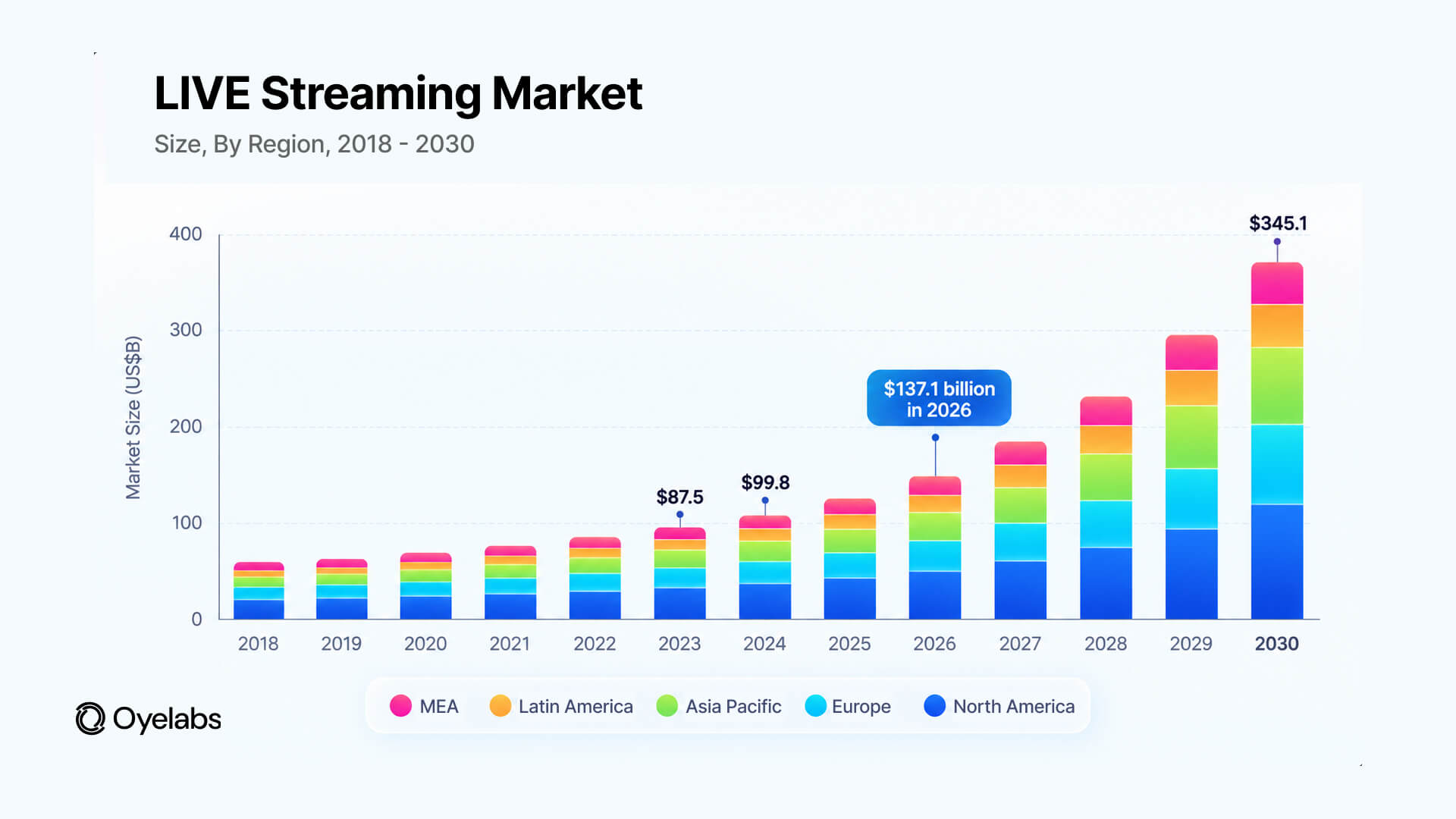
The demand for live content is already significant. 26.8% of internet users worldwide watched live streaming content weekly in Q2 2025. The global live streaming market was valued at $87.5 billion in 2023 and is estimated to reach $137.1 billion in 2026, according to Grand View Research.
For a founder, however, the interesting part isn’t just the live video. It is the business system built around the stream.
A typical live streaming platform can bring together four groups:
- Viewers who discover streams, watch creators, chat, and participate in live activities.
- Creators who broadcast content, build audiences, and potentially earn through platform monetization.
- Agencies or creator partners that may help recruit and manage creators, depending on the business model.
- Administrators who manage users, content, transactions, moderation, and platform operations.
These groups depend on each other.
Creators need an audience. Viewers need interesting content. The platform needs both groups to remain active. If you introduce monetization, the payment and reward system has to work for everyone involved.
That means your product shouldn’t be planned as simply a video streaming app.
It is better to think of it as a combination of: Live video + social interaction + creator tools + monetization + platform management
That combination is what you need to design around when creating your own product.
What Features Do You Need to Build an App Like Poppo Live?
You don’t need to launch with every feature an established live streaming platform may offer. Your MVP should support one complete experience: Discover → Watch → Interact → Follow → Return.
Start with the features needed to make that journey work, then expand as your audience and business grow.
| Feature Area | Core Features |
|---|---|
| Viewers | Registration and login, profiles, live stream discovery, categories, creator profiles, chat, reactions, follows, sharing, notifications, block and report |
| Creators | One-tap live streaming, camera and microphone controls, stream title and category, chat, viewer management, follower management, gift receiving, earnings, withdrawals, basic analytics |
| Monetization | Virtual currency, virtual gifts, wallet, transaction history, creator earnings, withdrawal management |
| Live Interaction | Co-hosting, group rooms, creator battles, fan communities, leaderboards, interactive challenges |
| Agencies | Creator recruitment, creator management, performance tracking, earnings and commission management |
| Admin & Moderation | User and creator management, live room management, reports, moderation, account restrictions, transactions, withdrawals, notifications, platform analytics |
Not every feature needs to be included in the first release. Core streaming, discovery, chat, profiles, following, basic monetization, and moderation can form the foundation of the MVP. Features such as battles, group rooms, agency tools, and advanced recommendations can be introduced later.
The right feature set depends on your target audience, monetization model, and content strategy. The goal isn’t to copy another platform feature for feature, but to build the features that give your users a reason to watch, participate, and return.
Also Read: Niche Live Streaming vs General Entertainment Platforms
How Does a Poppo-Like App Make Money?
A live streaming app can attract thousands of viewers and still struggle to make money if monetization is treated as an afterthought. Decide how the platform will earn before development begins because your revenue model affects payments, wallets, creator payouts, and other product decisions.
You can start with one model or combine several, depending on your audience and content strategy.
- Virtual Gifts: Let viewers show support during live streams by purchasing virtual currency and sending digital gifts to creators. The platform can retain a share of eligible transactions while the creator receives the applicable earnings.
- Virtual Coins: Virtual coins give users a simple way to pay for in-app experiences. Users purchase coins through supported payment methods and spend them on gifts or other eligible features, creating a common payment layer across the app.
- Creator Subscriptions: Give viewers a reason to stay connected with their favorite creators through recurring subscriptions. Benefits can include exclusive live sessions, private communities, badges, or premium content.
- VIP Memberships: A platform-wide VIP plan can target users who regularly spend time or money on the app. You could offer benefits such as special badges, exclusive events, or premium experiences that make membership worthwhile.
- Paid Live Events: Not every stream has to be free. Creators can charge for selected experiences such as performances, workshops, classes, or private sessions, giving them another way to earn beyond virtual gifts.
- Platform Commission: The platform can earn by retaining a percentage of eligible transactions, such as gifts, subscriptions, or paid events. Your commission and creator payout structure should be clear from the beginning so both sides understand how the money is divided.
What Technology Stack Do You Need to Build a Live Streaming App?
A live streaming app needs a technology stack that can handle video, real-time communication, user accounts, payments, notifications, and creator transactions.
A suitable technology stack can include:
| Layer | Technology Options |
|---|---|
| Backend | Laravel, PHP, Node.js |
| Web Frontend | Vue.js, Bootstrap, Alpine.js |
| Database | MySQL |
| Mobile App | Java, Kotlin, Swift |
| Real-Time Communication | Twilio |
| Notifications | Firebase |
| Payments | Stripe, PayPal, Apple Pay |
| Web3 / Blockchain | Web3.js |
These technologies are not mandatory for every live streaming app. Your final stack should depend on the features you plan to build, supported devices, payment requirements, expected traffic, and the level of real-time interaction your platform needs.
What Are the Steps to Build a Live Streaming App Like Poppo Live?
Building a live streaming app is easier when you break the process into clear stages. Instead of trying to build everything at once, start with the business idea, define the core experience, and expand the product after validating it with real users.
Step 1. Define Your Target Audience
First, decide who the platform is for. You could focus on entertainment creators, gamers, musicians, educators, regional communities, or another specific audience.
Your target users will influence your features, creator strategy, content, and marketing.
Step 2. Decide How Your App Will Make Money
Choose your monetization model before development begins. Options can include virtual gifts, subscriptions, paid events, or other revenue streams.
This decision affects important parts of the product, including payments, wallets, creator earnings, and withdrawals.
Step 3. Research Competitors and Find Your Gap
Study live streaming platforms like Bigo Live, Poppo Live, TikTok LIVE, and Tango to understand what they offer and what users already expect.
Go beyond copying features. Look for underserved audiences, creator frustrations, weak user experiences, and opportunities to offer something different.
Step 4. Plan Your MVP
Turn your research into a focused first release. Your MVP could include:
- Registration and login
- User and creator profiles
- Live streaming
- Stream discovery
- Following
- Live chat and reactions
- Virtual gifts or another selected monetization feature
- Wallet and payments
- Notifications
- Reporting and blocking
- Admin management
Only include features that are necessary to deliver your core user experience.
Step 5. Design the User Experience
Map the main journeys before development begins.
A viewer should be able to discover a stream, join it, interact with the creator, and return without unnecessary friction. Creators should have an equally simple process for starting, managing, and ending a stream.
Step 6. Choose the Technology Stack
Select the technologies needed for your mobile app, backend, database, real-time communication, payments, notifications, and streaming infrastructure.
Choose based on your expected scale, features, budget, development expertise, and target platforms rather than simply choosing the most popular technology.
Step 7. Build and Integrate the Core Features
Start developing the MVP around the main user journey. Build the account system, profiles, live rooms, streaming, discovery, chat, creator tools, and other essential functionality.
Get the core experience working before investing heavily in advanced features.
Step 8. Implement Monetization and Payouts
Integrate the selected payment and monetization systems once the core experience is stable.
Test virtual currency, gifts, subscriptions, transactions, creator earnings, withdrawals, and platform commissions carefully. Payment errors can quickly damage user and creator trust.
Step 9. Add Features That Increase Engagement
After validating the core product, introduce features that encourage users to spend more time on the platform.
These could include:
- Co-hosting
- Group rooms
- Creator battles
- Fan communities
- Leaderboards
- Challenges
Prioritize them based on actual user behavior rather than adding everything at once.
Step 10. Test, Launch, and Improve
Before launch, test the app across different devices, network conditions, streaming situations, payment flows, and moderation scenarios.
Then launch with a focused audience and monitor how people actually use the platform. Track retention, viewing activity, creator participation, engagement, and monetization to decide what to improve next.
The goal of the first launch isn’t to build the biggest live streaming platform immediately. It’s to prove that viewers want to return and creators have a reason to keep streaming.
How Much Does It Cost to Build a Live Streaming App Like Poppo Live?
There is no fixed cost for building a live streaming app like Poppo Live. The budget depends on the number of platforms, features, streaming requirements, monetization model, integrations, and level of customization you need.
For custom development, the budget can vary significantly depending on the scope. Approximate industry ranges are:
| Development Scope | Approximate Cost |
|---|---|
| Basic MVP | $25,000–$80,000 |
| Feature-Rich Platform | $80,000–$200,000+ |
| Advanced Large-Scale Platform | $200,000–$500,000+ |
These are approximate industry ranges, not the cost of building Poppo Live itself. A basic MVP with live streaming, profiles, chat, discovery, and moderation will generally require a smaller budget than a full-scale platform with virtual gifting, wallets, creator payouts, subscriptions, agency management, advanced analytics, and more complex infrastructure.
Several factors can affect the final development cost:
- Number of platforms
- Feature scope
- UI/UX complexity
- Streaming and real-time communication requirements
- Backend architecture
- Payment and wallet systems
- Third-party integrations
- Moderation and security requirements
- Testing and quality assurance
- Development team
- Infrastructure requirements
What About a Ready-Made Poppo Live Clone?
Custom development isn’t the only option. If you don’t want to build the entire platform from scratch, a ready-made Poppo Live clone can help reduce the initial development effort and shorten the time needed to launch.
Oyelabs’ Poppo Live Clone starts at $5,000 and includes Web, iOS, and Android apps, customizable source code, and two months of post-launch support.
A ready-made solution can be a practical choice for:
- Startups testing a live streaming business idea
- Founders working with a limited initial budget
- Businesses that want to launch faster
- Entrepreneurs who need core streaming and monetization features without building everything from scratch
- Existing businesses looking to add live streaming to their product
The solution can also be customized to match your branding, business model, feature requirements, and future plans.
Whichever development approach you choose, launching the app is only the beginning of the investment. Once users start streaming and watching content, you’ll also have recurring costs for cloud infrastructure, video processing, video delivery, bandwidth, storage, real-time communication, payment processing, moderation, security, and maintenance.
These operating costs can increase as your user base, viewing hours, concurrent streams, and content volume grow. Planning your infrastructure around your expected launch requirements and scaling it as usage increases can help you manage these costs more effectively.
Conclusion
Building a live streaming app like Poppo Live involves bringing together live video, real-time interaction, creator tools, user engagement, and monetization in one smooth experience. The best approach is to start with the features your target audience actually needs, launch a focused MVP, and improve the platform based on user and creator feedback. As your audience grows, you can introduce advanced features, strengthen monetization, and scale your infrastructure to support increasing streaming activity.
FAQs
1. How Long Does It Take to Build a Live Streaming App Like Poppo Live?
The timeline depends on the feature scope, number of platforms, integrations, testing requirements, and development approach. A focused MVP will generally take less time than a full-featured platform.
2. What Team Is Needed to Build a Live Streaming App?
A typical project may require UI/UX designers, mobile and backend specialists, QA professionals, and a project manager. The exact team size depends on the product scope and development approach.
3. How Do Live Streaming Apps Handle Content Moderation?
Live streaming platforms can use a combination of automated moderation, user reporting, administrator controls, content policies, and human review to identify and manage inappropriate content or behavior.
4. How Can I Attract Creators to a New Live Streaming Platform?
Start by offering creators clear earning opportunities, useful streaming tools, promotional support, and a reason to build their audience on your platform. A focused creator niche can also make early recruitment easier.
5. How Do I Scale a Live Streaming App After Launch?
Scale based on actual usage by improving streaming infrastructure, backend capacity, storage, bandwidth, moderation systems, and monitoring as concurrent viewers, streams, and overall platform activity increase.
Reviewed By: Anuraag Jain
CEO, Oyelabs & AI Transformation Expert