Key Risks When Building a Creator Monetization Platform

 Anuraag Jain
Last Updated on November 13, 2026
Key Takeaways
What You’ll Learn:
- Creator platforms earn through subscriptions, tips, and paid content.
- Payment delays can affect creator income and content production.
- Weak security can expose private data and exclusive content.
- Legal compliance covers privacy, age checks, and copyright.
- Poor moderation can lead to complaints and platform restrictions.
- Creator retention depends on reliable payouts and useful tools.
Stats That Matter:
- 26% of surveyed creators said payment delays affected content production (Visa, 2025).
- Visa surveyed 1,067 creators across five countries.
Creator monetization platforms give content creators a way to earn money through paid subscriptions, exclusive content, tips, private messaging, and other paid interactions with their audiences. For entrepreneurs, building one can be an opportunity to enter the creator economy and develop a recurring-revenue business.
However, launching a creator monetization platform involves more than developing a website or mobile app with payment and subscription features. Entrepreneurs must consider payment processing, data security, legal requirements, content moderation, creator retention, and the technical infrastructure needed to support platform growth.
Overlooking these areas can lead to unexpected expenses, operational problems, and difficulties retaining creators and subscribers. Understanding the risks before development helps business owners make better decisions about their investment, technology, and long-term business strategy.
- Multiple user roles: Creators, subscribers, and administrators need different permissions, dashboards, and platform functionalities.
- Different revenue streams: Subscriptions, pay-per-view content, tips, and private interactions require appropriate pricing and transaction management.
- Sensitive user information: Personal details, payment records, private messages, and exclusive media need proper protection.
- Third-party integrations: Payment gateways, cloud services, and identity verification providers can affect platform operations.
- Ongoing management: Content moderation, customer support, technical maintenance, and payment disputes require continuous attention.
These requirements make it important to identify potential risks before investing in platform development.
Also Read: Why OnlyFans Alternatives Keep Getting Shut Down
Key Risks of Building a Creator Monetization Platform
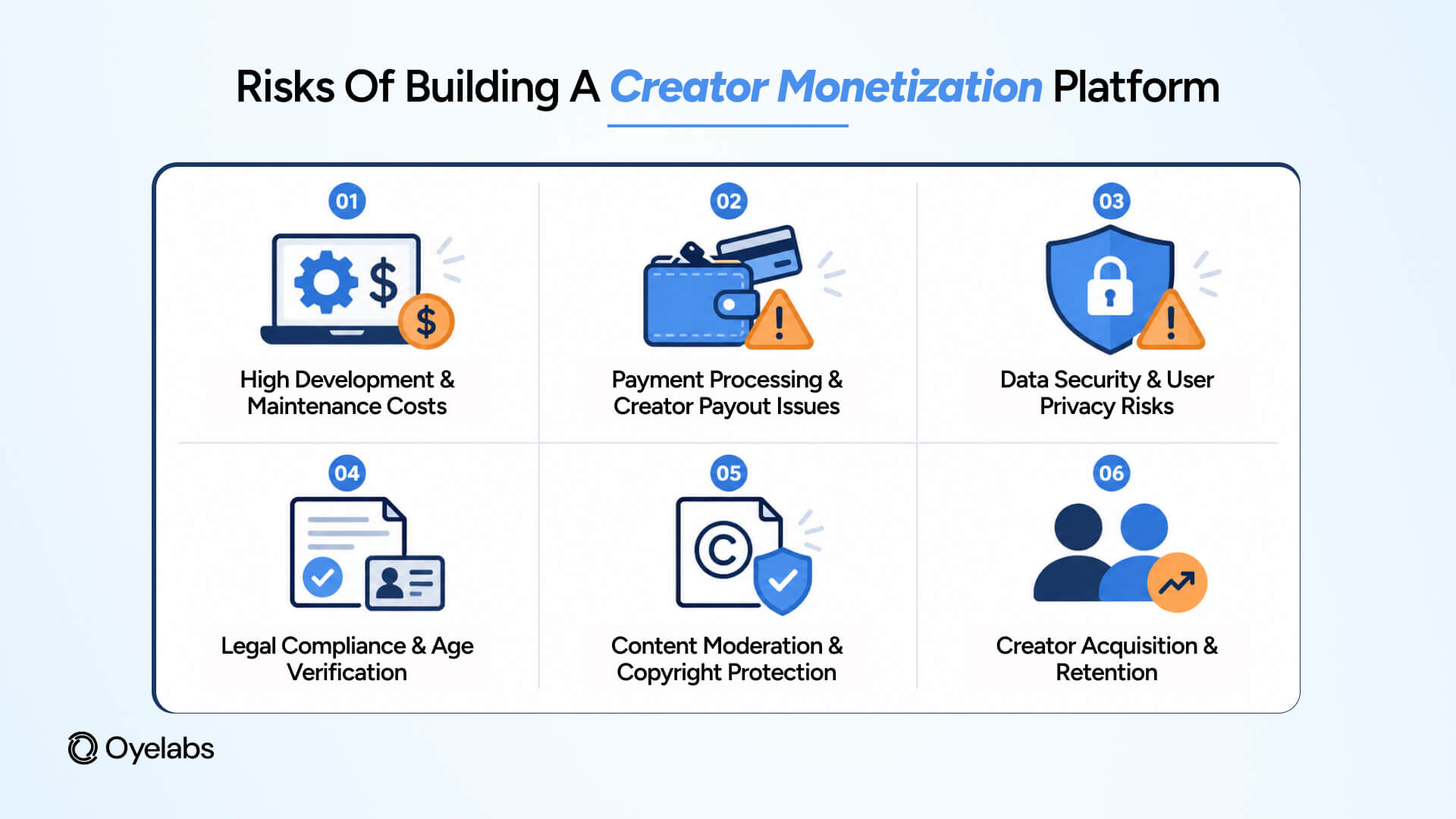
1. High Development and Maintenance Costs
Building a creator monetization platform requires an investment in several components, including user registration, creator profiles, subscription management, payment integration, content management, messaging, and administrative controls.
The development cost can increase when entrepreneurs add advanced features, support multiple payment methods, or launch separate web and mobile applications. Infrastructure, security updates, bug fixes, and ongoing maintenance also add to the long-term expenses.
Starting with too many features can make the initial investment difficult to manage, particularly when the business has not yet established a consistent user base.
How to reduce this risk:
- Identify the essential features needed for the first launch.
- Set a development budget that includes maintenance and infrastructure expenses.
- Prioritize features based on creator and subscriber requirements.
- Plan additional features in stages instead of developing everything at once.
2. Payment Processing and Creator Payout Issues
Payments are central to a creator monetization platform. Subscribers need a convenient way to purchase memberships and exclusive content, while creators expect reliable payouts for their earnings.
However, payment processing can become complicated when a platform works with multiple creators, supports recurring subscriptions, and operates across different countries.
Payment gateway restrictions, failed transactions, chargebacks, delayed settlements, and payout disputes can affect both creators and subscribers. Some payment providers also have restrictions on adult-oriented or user-generated content, making provider selection particularly important for certain creator platforms.
Payment delays can also affect creators’ ability to continue producing content. According to Visa’s 2025 Creator Report, 26% of surveyed creators said payment delays had affected their content production. This highlights why payout reliability should be considered an important part of platform planning.
How to reduce this risk:
- Research payment providers before selecting a payment integration.
- Check whether their terms allow the type of content and transactions your platform supports.
- Establish clear payout schedules and transaction policies.
- Implement transaction records and payment status tracking.
- Provide a process for handling refunds, failed payments, and disputes.
- Consider payment options that support creators in different countries.
3. Data Security and User Privacy Risks
Creator monetization platforms handle personal and financial information belonging to creators and subscribers. Depending on the platform’s features, they may also store private messages, uploaded media, identity verification documents, and subscription records.
A security breach can expose sensitive information, damage user trust, and create legal and financial consequences.
Weak passwords, unauthorized account access, insecure file storage, and inadequate access controls can increase these risks. Platforms handling private creator content must also prevent unauthorized access to paid or restricted media.
How to reduce this risk:
- Use secure authentication and access control mechanisms.
- Encrypt sensitive information during transmission and storage where appropriate.
- Restrict access to private content and administrative functions.
- Conduct regular security testing and software updates.
- Maintain secure backups and an incident response plan.
- Collect and retain only the personal information necessary for platform operations.
4. Legal Compliance and Age Verification
Legal compliance is another important consideration when launching a creator monetization platform. Requirements can vary depending on the platform’s business model, content categories, user locations, and payment arrangements.
Privacy regulations, consumer protection requirements, tax obligations, intellectual property laws, and content-related regulations may all apply.
Age verification is particularly important for platforms that allow adult-oriented content. Businesses may need to verify creator identities and ages, prevent access by underage users, and maintain appropriate records.
Ignoring these requirements can result in legal disputes, regulatory action, payment provider restrictions, or platform shutdowns.
How to reduce this risk:
- Identify the legal requirements in every market where the platform will operate.
- Establish creator identity and age verification procedures.
- Publish clear terms of service, privacy policies, and content guidelines.
- Consult qualified legal professionals about applicable regulations.
- Review compliance requirements regularly as the platform expands into new markets.
5. Content Moderation and Copyright Issues
Creator platforms allow users to upload and distribute different types of content. Without proper moderation, the platform may become vulnerable to copyright infringement, prohibited material, impersonation, harassment, and other forms of misuse.
Copyright violations are particularly challenging because creators may upload content that belongs to someone else or redistribute material without permission.
A lack of clear reporting and moderation procedures can also make it difficult to respond to complaints and remove inappropriate content.
How to reduce this risk:
- Establish clear content policies that creators must follow.
- Provide reporting and complaint submission options.
- Develop procedures for reviewing and removing prohibited content.
- Create a process for handling copyright complaints and repeat violations.
- Use appropriate moderation tools to identify potentially problematic uploads.
- Assign responsibility for reviewing reports and taking action.
6. Creator Acquisition and Retention Challenges
A creator monetization platform needs both creators and subscribers to remain active. Without enough creators publishing valuable content, subscribers may have little reason to join. Similarly, creators may leave if they struggle to attract paying audiences.
This creates an early-stage challenge for new platforms. Entrepreneurs must attract creators while also building an audience willing to pay for their content.
Unclear revenue-sharing policies, delayed payouts, limited promotional tools, and poor creator experiences can further affect retention.
How to reduce this risk:
- Identify a specific creator niche or target audience.
- Offer straightforward onboarding for new creators.
- Provide transparent subscription and payout policies.
- Give creators tools to manage subscriptions, content, and earnings.
- Introduce promotional features that help creators reach subscribers.
- Collect feedback and address recurring platform issues.
How to Reduce Risks When Launching a Creator Monetization Platform
Addressing individual risks is important, but entrepreneurs should also consider how different parts of the platform work together. Payment problems can affect creator retention, security issues can damage subscriber trust, and poor technical performance can interrupt revenue generation.
A practical approach is to prepare for these challenges before the platform goes live.
Here are a few important steps:
- Validate the business model: Identify your target creators, subscriber audience, pricing structure, and revenue sources before investing in development.
- Choose the right development approach: Compare custom development and white-label solutions based on your budget, launch timeline, feature requirements, and customization needs.
- Prioritize essential features: Start with creator profiles, subscriptions, payment processing, content management, user authentication, and administrative controls.
- Test before launch: Check registration, payments, subscriptions, content access, creator payouts, and administrative functions to identify problems before users encounter them.
- Plan for ongoing operations: Allocate resources for maintenance, security updates, customer support, content moderation, and platform improvements.
These steps help entrepreneurs prepare for common operational and technical challenges without making the initial development process unnecessarily complicated.
Build Your Creator Monetization Platform with Oyelabs
Building a creator monetization platform requires the right combination of technology, payment infrastructure, security measures, and creator-focused features. Choosing an experienced development partner can help businesses plan these requirements and avoid overlooking important components during development.
Oyelabs offers creator monetization platform development solutions with features such as paid subscriptions, pay-per-view content, tips, livestreaming, private messaging, creator dashboards, payment integrations, KYC and age verification, content moderation, and watermarking.
Businesses can develop a platform around their branding, business requirements, and target audience, with the flexibility to choose features that support their monetization model.
If you are planning to launch a creator monetization platform, contact Oyelabs to discuss your project requirements and explore the available development options.
Conclusion
Building a creator monetization platform involves several risks that can affect development costs, payment operations, data security, legal compliance, and long-term business growth.
Entrepreneurs should evaluate these challenges before development rather than trying to resolve every issue after launch. Defining the business model, selecting suitable payment providers, establishing security and moderation procedures, and planning for creator retention can help build a more reliable platform.
With proper preparation and the right development approach, businesses can reduce avoidable risks and create a creator monetization platform that supports both creators and subscribers as the business grows.
FAQs
1. How do creator monetization platforms make money?
Platforms typically earn through creator revenue commissions, subscription fees, transaction charges, premium memberships, or paid promotional services.
2. What payment methods should a creator monetization platform support?
Consider credit and debit cards, digital wallets, and local payment methods based on your target markets and payment provider availability.
3. Can I launch a creator monetization platform for a specific niche?
Yes. You can target fitness instructors, musicians, educators, artists, or other creator communities with features suited to their audiences.
4. How can I attract creators to a new monetization platform?
Offer competitive monetization options, transparent payouts, useful creator tools, responsive support, and early-access benefits to encourage creators to join.
Reviewed By: Anuraag Jain
CEO, Oyelabs & AI Transformation Expert