
UberEats & Aldi Partnership – Insights Every Startup Should Know
UberEats & Aldi Partnership – Insights Every Startup Should Know
 Sachin Sharma
Last Updated on December 22, 2025
Key Takeaways What You’ll Learn: The UberEats & Aldi partnership shows how collaboration between two brands with different strengths can create real value for customers and open new business opportunities. Learn why Aldi chose partnership over building its own delivery system, focusing on cost-effectiveness, accessibility, and customer satisfaction. Understand the practical lessons startups can apply, from leveraging partnerships and reusing existing resources to building trust and thinking long-term. Stats That Matter: Aldi USA operates over 2,500 stores, with plans to expand to 3,200 by 2028. Starting September 25, 2025, Aldi becomes the first national retailer on UberEats to accept SNAP-EBT payments. UberEats continues to grow beyond restaurant delivery, expanding its grocery partnerships worldwide with brands like Carrefour and Costco. Promotions like 40% off orders over $30 and free delivery for Uber One members highlight the focus on affordability and reach.
What began as a simple way to order food online has now expanded into groceries, medicines, and even daily essentials. A prime example of this trend is the UberEats & Aldi partnership, which demonstrates how two companies with different strengths can collaborate to make life easier for customers.
UberEats, a leader in on-demand food delivery, and Aldi, a retailer famous for affordable groceries, have joined forces to make grocery shopping faster, simpler, and more convenient. This collaboration is not only about convenience for customers but also a strategic business move that offers valuable lessons for startups looking to build a delivery app and scale efficiently.
In this blog, we’ll explore how this on-demand grocery delivery partnership works, why it stands out in the market, and the key insights startups can take from it to grow their own business successfully.
Uber’s Journey into Grocery Delivery
Uber started in 2009 as a simple ride-hailing service where you could book a car from your phone and get to your destination easily. Over time, the company realized that its delivery network could be used for more than just rides. That’s how UberEats was born in 2014, allowing people to order meals from restaurants using the same app.
As UberEats grew, so did people’s love for doorstep convenience. Soon, Uber saw a new opportunity in grocery delivery. During the pandemic, people wanted groceries delivered safely and quickly, and that demand continued to grow afterward.
By entering the grocery market, Uber aimed to use its large delivery network in a smarter way. It started partnering with stores like Carrefour in France and Costco in the U.S. The idea was simple: Uber would handle the deliveries, while stores managed the products.
Now, Uber’s newest move, teaming up with Aldi, takes this idea even further. It combines Uber’s fast delivery service with Aldi’s affordable grocery options.
The Aldi & UberEats Partnership Explained
So, what exactly is happening between Aldi and UberEats?
Before diving into the details, it’s important to know more about Aldi. Aldi USA is one of the fastest-growing grocery retailers in the country, serving millions of customers every month. Known for its disciplined approach to operating with simplicity and efficiency, Aldi offers high-quality products at some of the lowest prices among national grocery chains.
The company emphasizes sustainability, community impact, and customer convenience, providing shopping options like in-store, curbside pickup, and now, on-demand delivery through UberEats. With over 2,500 locations nationwide and plans to expand to 3,200 by 2028. Aldi has built a loyal fan base thanks to its focus on value, quality, and accessibility.
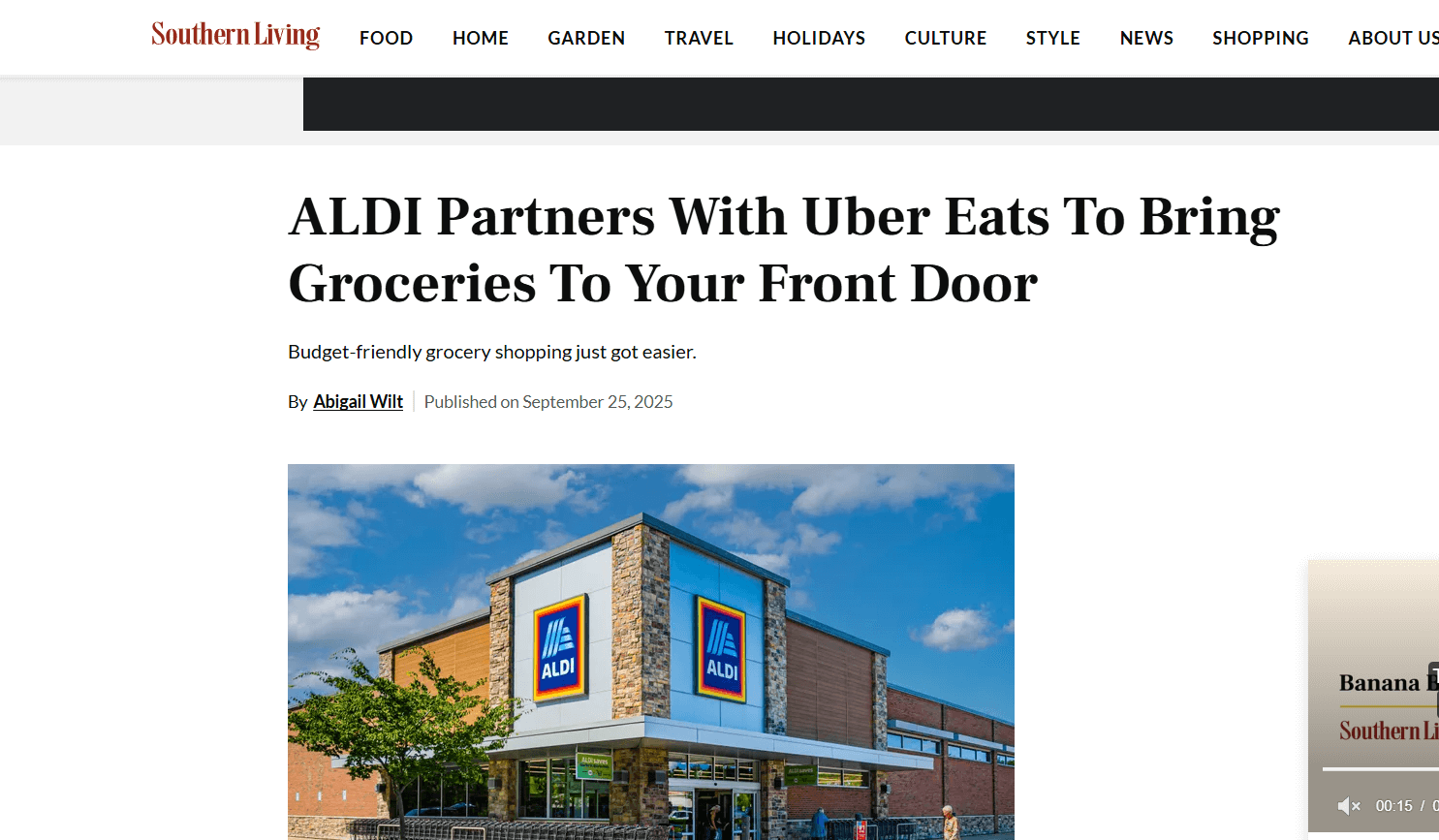
Starting September 25, 2025, UberEats users can shop a curated assortment of Aldi-exclusive products directly through the app. From organic fruits and vegetables, gluten-free snacks, and prebiotic soda to select wine and beer at certain locations, customers can stock up on everyday essentials faster than ever.
Significantly, Aldi becomes the first retailer on UberEats to accept SNAP-EBT payments nationwide from day one, expanding access for more customers. Promotions, such as 40% off orders over $30 and free delivery for Uber One members, make shopping even more affordable. Exclusive weekly Aldi Finds are also available for discovery and delivery through the app.
How the Partnership Works
Shopping for Aldi groceries on UberEats is simple and convenient:
- Open the Uber Eats app and navigate to the “Grocery” category.
- Select your nearest Aldi location to browse products available in that store.
- Choose from hundreds of items, including fresh produce, pantry staples, bakery goods, meats, beverages, and Aldi-exclusive products.
- Add items to your cart, select a delivery time or schedule for on-demand delivery, and place your order.
- Track your delivery in real time to know exactly when your groceries will arrive.
This partnership allows customers to enjoy Aldi’s exceptional value and quality with the convenience of doorstep delivery, all within the familiar UberEats app.
Why Aldi Chose UberEats
Aldi’s decision to partner with UberEats reflects a smart strategic move. Rather than building its own delivery infrastructure which would require significant investment in time, money, and logistics-Aldi leverages Uber’s existing network to:
- Reach millions of customers online quickly and efficiently.
- Provide fast, reliable delivery using Uber’s extensive driver network.
- Maintain low grocery prices while expanding digital access.
For Uber, the collaboration brings additional advantages. Aldi’s loyal customer base helps attract new users to the app, while expanding UberEats’ footprint in the grocery delivery space nationwide. Pop-up stores in New York, Miami, and Chicago also let customers sample products before placing orders, enhancing engagement and trust in the service.
Customer Benefits
The collaboration between Aldi and UberEats delivers multiple advantages for shoppers:
- Time-saving: No need for store trips or waiting in line; groceries arrive at the doorstep.
- Affordable prices: Aldi’s budget-friendly products remain accessible through the app.
- Ease of use: Customers can shop using the same UberEats app they already know.
- Reliable delivery: Uber’s network ensures timely and consistent delivery.
Increased accessibility: SNAP-EBT payments accepted nationwide, making grocery shopping available to more households.
Key Lessons for Startups
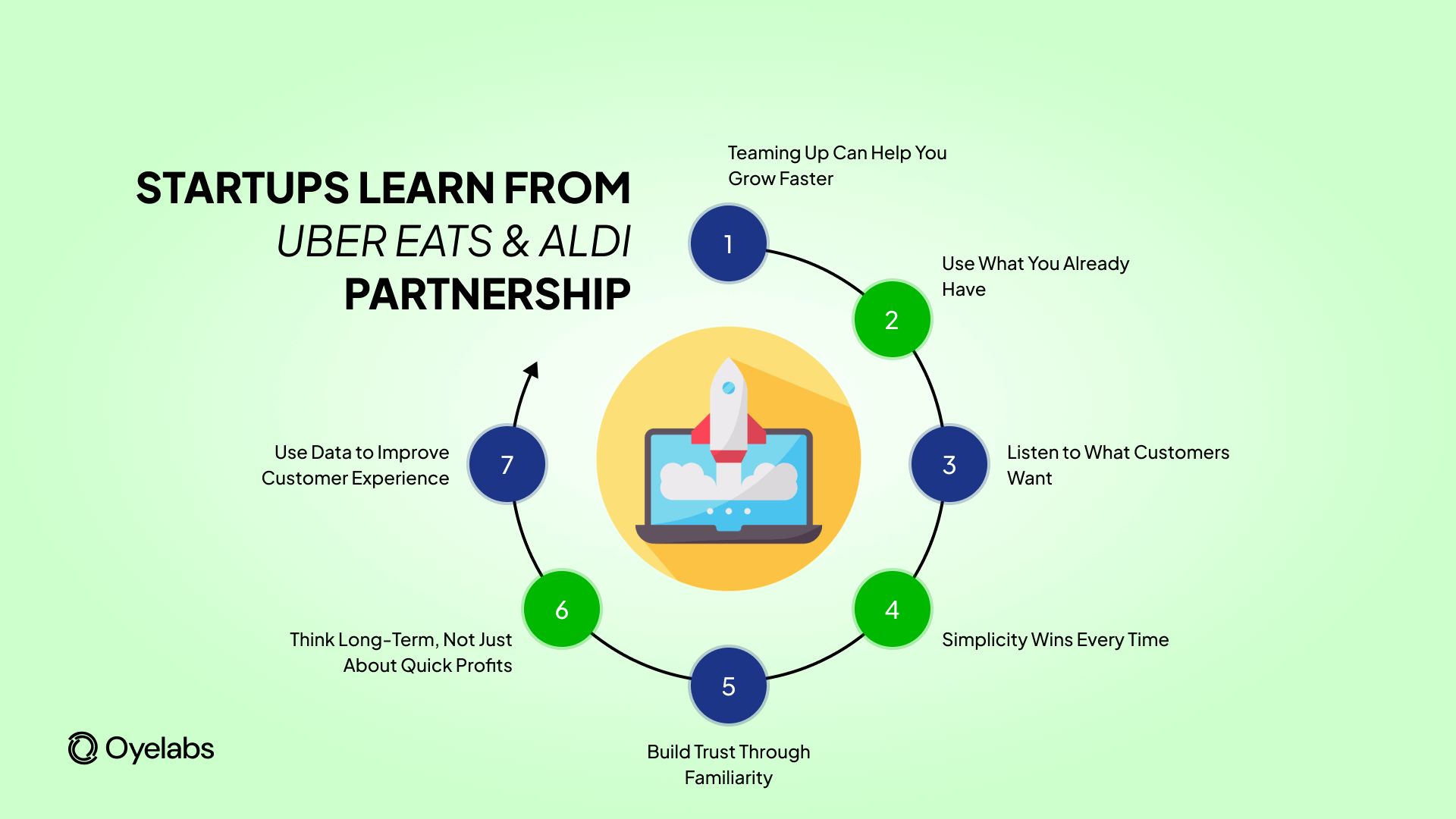
For startups and small businesses, the UberEats and Aldi partnership offers powerful lessons on how collaboration, customer focus, and innovation can drive growth. Let’s explore each one in detail.
Teaming Up Can Help You Grow Faster
Building a business like UberEats or Uber from scratch takes time, effort, and money. Sometimes, the fastest way to grow is to team up with another company that has what you don’t. That’s exactly what Uber and Aldi did. Uber already had a massive delivery network, while Aldi had a strong reputation for affordable groceries. Together, they created a win-win situation where Aldi gained access to Uber’s delivery infrastructure, and Uber expanded its services beyond restaurant meals.
Lesson for startups: Don’t try to do everything alone. Look for partners whose strengths complement yours. A partnership can help you reach new audiences, share costs, and scale faster than going solo.
Use What You Already Have
Uber didn’t have to reinvent the wheel. It already had drivers, delivery technology, and a customer base that trusted the UberEats app. Instead of spending millions on new logistics systems, Uber simply adapted its existing model to handle grocery deliveries. This smart use of existing resources helped the company expand efficiently and quickly.
Lesson for startups: Before you invest in something new, look at what you already have. Can your current tools, systems, or team be used in a better way? Often, innovation isn’t about building something brand new. It’s about reimagining what’s already in your hands.
Listen to What Customers Want
Consumer behavior is changing fast. People today prefer convenience over anything else, whether it’s ordering dinner, groceries, or medicines. They want everything delivered to their door. Uber and Aldi recognized this shift early. Uber realized that its users wanted more than restaurant meals, and Aldi saw the growing demand for online grocery shopping. Together, they filled that gap.
Lesson for startups: One major reason why most food delivery startups fail is that they lose touch with what customers actually want. Stay close to your customers, watch how their habits change, and listen to their feedback. Every complaint or suggestion can lead to your next big idea. Businesses that evolve with their customers survive longer and grow faster.
Simplicity Wins Every Time
One reason for UberEats’ popularity is how simple the app is to use. The same goes for Aldi, whose stores are easy to navigate and pricing is straightforward. Together, they built an experience that’s fast, simple, and stress-free for users. People love convenience, and both brands understood that perfectly.
Lesson for startups: Complexity turns customers away. Whether it’s your website, app, or service process, make it simple and easy to understand. The fewer steps your customers need to take, the more likely they’ll stay loyal to you.
Build Trust Through Familiarity
Trust is one of the hardest things to earn in business. UberEats and Aldi both had loyal customer bases. Uber users trusted the brand for quick deliveries, and Aldi shoppers trusted it for affordable groceries. When these two came together, customers felt safe trying out grocery delivery on UberEats because both brands already had credibility.
Lesson for startups: If you’re new in the market, consider teaming up with a trusted name. That partnership can give your brand instant credibility. People are more likely to try something new if it’s connected to a brand they already trust.
Think Long-Term, Not Just About Quick Profits
Uber’s grocery delivery might not be highly profitable right now, but it’s a long-term investment. Every time a customer orders groceries through UberEats, the company builds a habit. Eventually, those customers might also use the app for other services like food delivery, pharmacy orders, or even convenience items. It’s about building loyalty, not just chasing immediate profits.
Lesson for startups: Don’t get discouraged if your idea doesn’t make big profits right away. Focus on building habits and relationships. When people trust and rely on your service regularly, profits will follow naturally over time.
Also Read: Lessons from JustEat’s Food Delivery Success
Use Data to Improve Customer Experience
Uber’s biggest strength is data. The company knows what users order, when they order, and how long they’re willing to wait. This data helps Uber improve its delivery routes, recommend groceries people actually want, and send targeted offers that feel personal.
Lesson for startups: Data doesn’t have to be complicated. Even simple insights, such as which products sell fastest or what time customers visit your website, can help you make smarter decisions. Use that information to make your customers’ experience smoother and more personalized.
Launch Your On-Demand Food Delivery Business
The world of food delivery is growing rapidly, and startups need smart solutions to keep up with customer demand. Instead of building everything from scratch, you can leverage a proven, fully functional platform designed for efficiency and growth. Our food delivery script provides all the essential features to start your business quickly, including order management, real-time tracking, secure payments, and a seamless user experience.
By using this ready-made solution, you can focus on attracting customers, optimizing operations, and scaling your service without the technical headaches. Take advantage of this opportunity to enter the booming delivery market and start serving customers efficiently from day one.
Conclusion
The UberEats–Aldi partnership is more than just a business deal; it offers a glimpse into the future of shopping and delivery. It demonstrates how two different brands can come together to solve real-world problems for customers. From Uber’s powerful delivery system to Aldi’s affordable groceries, the partnership creates a win-win situation for both companies and their customers.
For startups, the lessons are simple but powerful. Collaborate instead of competing. Focus on what customers truly need. Keep your business model simple. Think long-term and build trust. The delivery industry will continue to change, but one thing is certain: businesses that understand customer needs and adapt quickly will always stay ahead.