
Why White-Label Freelance Marketplace Solutions Are Trending

Why White-Label Freelance Marketplace Solutions Are Trending
 Sachin Sharma
Last Updated on October 31, 2025
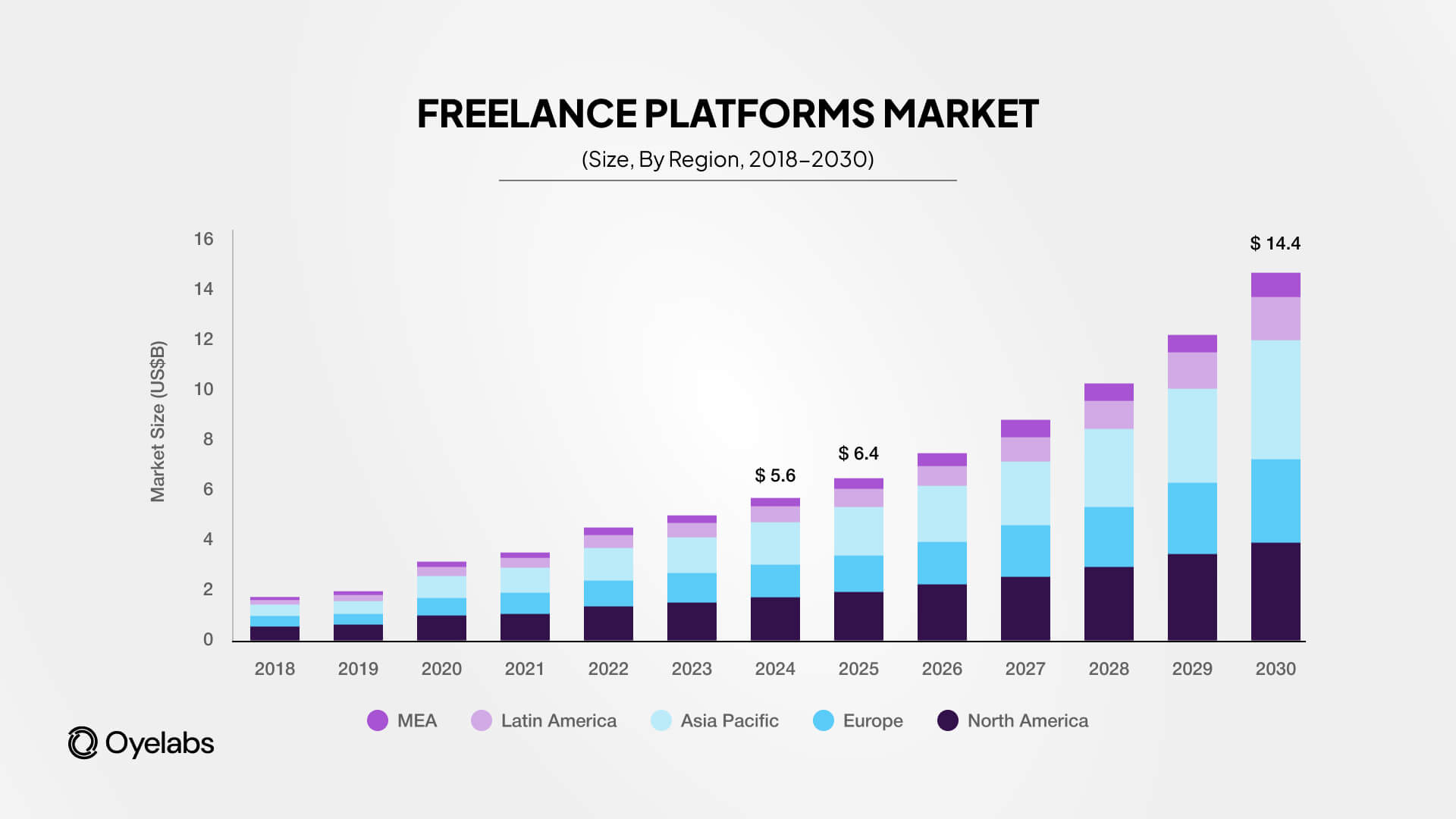
Key Takeaways What You’ll Learn: White-label freelance marketplaces let you launch your own Fiverr-like platform fast. They’re cheaper and quicker than building a custom marketplace from scratch. You can fully brand, customize, and scale your freelance platform easily. Stats That Matter: The global freelance platform market may hit $14.39B by 2030. Freelancers could make up over 50% of the U.S. workforce by 2027. White-label solutions can launch in under 8 weeks, saving up to 80% in cost. Real Insights: Faster setup helps founders test ideas and attract users early. Niche platforms build loyal, high-value freelancer communities. Built-in tools like payments and chat save time and money. Low-risk models make white-label platforms ideal for startups.
Freelancing has become a regular part of people’s lives, changing the way we work and earn. Today, many professionals prefer the freedom to choose their own projects instead of working for one company. Platforms like Upwork, Fiverr, and Toptal have made it easier for businesses to find skilled freelancers anytime they need. To keep up with this growing trend, white-label freelance marketplace solutions offer a faster and more affordable way for businesses to launch their own freelance platforms. In this blog, we will look at why these solutions are becoming so popular and how they are shaping the future of freelance work. A white-label freelance marketplace is a pre-built, fully functional digital platform that can be rebranded and customized to operate as your own. It includes all the essential components of a freelance marketplace such as freelancer and client profiles, job posting systems, secure payments, messaging, reviews, and admin controls. This allows you to focus on branding and market positioning rather than software development. Businesses can tailor the platform’s appearance, payment methods, and workflow to align with their vision. They can add their logo, select custom color schemes, integrate specific gateways, and even modify the onboarding experience to serve a niche audience. For example, an entrepreneur might launch a platform dedicated solely to graphic designers, while another could create a regional network for app developers. A consulting firm could also introduce a specialized legal or financial freelance marketplace. The flexibility of white-label solutions allows organizations to target their desired markets effectively while skipping the high cost and time commitment associated with building from scratch. Ultimately, this model enables faster entry into the booming freelance economy, providing both startups and established companies with a scalable foundation for growth. The global workforce is undergoing a structural transformation. More professionals now choose independence over traditional employment, seeking greater control over their time and income. At the same time businesses are prioritising on-demand talent for flexibility, scalability and cost-efficiency. For instance the global freelance platforms market was estimated at USD 5.58 billion in 2024 and is projected to reach USD 14.39 billion by 2030, growing at a CAGR of 17.7 %. In the U.S. it is projected that 86.5 million people will be freelancing by 2027, making up more than half of the total U.S. workforce. White-label freelance marketplace solutions have become the fastest way for entrepreneurs to capitalise on this momentum. Instead of spending over a year and hundreds of thousands of dollars on development, businesses can launch within weeks. This agility allows them to test their business idea, gain traction and establish brand presence while the market continues to expand. In essence white-label marketplaces are trending because they provide a timely and scalable response to the world’s accelerating shift toward flexible, project-based work. Speed and affordability are two key drivers behind the popularity of white-label platforms. Building a custom freelance marketplace typically requires 12 to 18 months of development and can cost anywhere from $100,000 to $250,000, sometimes even more. In contrast, a white-label marketplace can be launched in just 4 to 8 weeks at a fraction of that cost. Because these solutions are already fully developed, the technical complexities such as secure payments, server management, and data protection are handled by the provider. Businesses only need to focus on customization, branding, and marketing strategy. This lower barrier to entry makes white-label solutions particularly appealing for startups, agencies, and SaaS companies looking to expand their service portfolio without a major financial commitment. It’s a strategic and cost-effective route to establishing a digital marketplace presence. Managing a complex online platform requires ongoing technical maintenance, including updates, bug fixes, server monitoring, and security patches. For many entrepreneurs, building and sustaining an internal tech team is both expensive and time-consuming. White-label freelance marketplace solutions remove this burden by offering comprehensive technical support and maintenance as part of the package. Most providers handle hosting, regular updates, cybersecurity, and uptime monitoring to ensure seamless platform performance. This allows business owners to stay focused on what matters most growth, marketing, and customer acquisition while the technical foundation remains stable in expert hands. By minimizing operational overhead, businesses can operate with greater efficiency, predictability, and scalability, ensuring long-term sustainability. Scalability is one of the strongest advantages of white-label freelance marketplace solutions. Built with modular architecture, these platforms allow businesses to start small and expand seamlessly over time. You can begin by focusing on a specific niche such as content creators, web developers, or marketing consultants, and gradually extend to multiple industries or global markets. White-label systems also support third-party integrations via APIs, making it easy to connect tools like CRMs, analytics platforms, payment gateways, and automation software. As the business grows, you can introduce new modules such as premium memberships, subscription plans, referral programs, and even companion mobile apps. This scalability ensures the platform evolves with your business needs instead of restricting them. It provides the flexibility to adapt quickly to market shifts and user expectations. Perhaps the most compelling advantage of a white-label marketplace is complete ownership of your brand identity. Unlike third-party platforms where your visibility is limited, a white-label solution enables full control over user experience, design, and customer engagement. This autonomy allows you to create a marketplace that resonates with a particular audience, such as: For example, you could build a “Fiverr for healthcare consultants” or an “Upwork for content marketers.” Such niche-focused marketplaces tend to build loyal, engaged communities and attract premium clients willing to pay for specialization. By controlling the design, tone, and communication, your platform can stand out in an increasingly competitive freelance market. Also Read: Top Freelance Marketplace Apps White-label solutions today are far from generic templates. They are feature-rich, enterprise-grade systems designed to compete directly with global platforms. They often include: These ready-to-use features give businesses a head start, allowing them to launch a professional marketplace immediately. Over time, custom integrations and add-ons can further enhance functionality and user experience. Owning a white-label marketplace also gives you full SEO and marketing control, something not possible on third-party platforms. Operating under your own domain strengthens brand authority and allows you to rank organically for valuable keywords such as “hire freelance designers” or “on-demand content creators.” Each freelancer profile, job listing, and blog post contributes to your search engine visibility. Many white-label solutions come equipped with marketing tools such as email automation, referral programs, and analytics dashboards, helping you track conversions and engagement metrics effectively. This autonomy over your marketing ecosystem gives your brand a sustainable long-term advantage, helping attract traffic, build trust, and grow your user base organically. Launching a new business model always carries risk, especially in competitive markets like freelancing. However, white-label platforms dramatically lower this risk. With minimal upfront costs and ready-made infrastructure, you can validate your business idea quickly. You can launch a beta version for a targeted audience, test engagement, analyze metrics, and make adjustments before committing to large-scale investments. This agile, low-risk approach aligns perfectly with lean startup principles, allowing entrepreneurs to innovate, pivot, and scale efficiently. While white-label freelance marketplace solutions offer speed, affordability, and convenience, there are still a few important challenges to consider before selecting a provider. Understanding these factors early can help ensure that your platform runs smoothly in the long term. Hidden Costs: Many white-label providers promote low entry prices, but additional costs can appear later for advanced integrations, premium plugins, or usage-based hosting. These hidden expenses can impact your budget if not reviewed carefully. Before committing, it’s essential to get a detailed cost breakdown, including upgrade fees, third-party tools, and future scalability charges. Customization Limits: Although most white-label solutions offer a high level of flexibility, they may still have limitations when it comes to deep structural customization. Certain architectural components or proprietary backends can restrict how much you can modify core workflows, UI elements, or new feature additions. Choosing a provider that allows scalable and modular customization ensures your marketplace can evolve with your business goals. Vendor Dependence: Your platform’s reliability and performance are closely tied to your vendor’s infrastructure and support quality. If the provider delays updates, lacks technical transparency, or discontinues certain features, your business could be affected. It’s crucial to partner with a provider known for long-term stability, regular security updates, and strong post-launch support to avoid future setbacks. When approached thoughtfully, these challenges are manageable. Conducting proper research, requesting demos, and reviewing client case studies can help you identify trustworthy providers who deliver both flexibility and reliability. With the right partnership, your white-label freelance marketplace can scale confidently and sustainably. Launch your freelance marketplace with Oyelabs, where we specialize in creating custom white-label freelance platforms tailored to your unique business niche. Whether you want to build an Upwork-like global marketplace or a specialized network for creative professionals, our solutions are designed to help you launch faster, scale effortlessly, and maintain full control over your brand. With Oyelabs, you gain a ready-to-launch and fully customizable platform, complete end-to-end technical support, and the flexibility to shape every element of your design, branding, and workflows. The global shift toward freelance and remote work has created enormous opportunities for digital marketplaces that connect businesses with independent professionals. Yet, building such platforms from the ground up remains time-intensive and costly. White-label freelance marketplace solutions have emerged as the smarter, faster, and more cost-effective alternative, offering speed, scalability, and full branding control. They empower businesses to enter the gig economy confidently, launch faster, and grow sustainably. As the freelance industry continues to expand and beyond, white-label solutions will remain at the center of this transformation, powering the next generation of digital work ecosystems. 1. Are white-label freelance marketplaces secure for investors? 2. Can AI improve ROI for my marketplace? 3. What revenue models work best? 4. How can I quickly attract users after launch? 5. Do I need technical expertise to manage it? 6. Can the platform scale globally?
What Is a White-Label Freelance Marketplace?
Why Are White-Label Freelance Marketplaces Trending?
1. The Explosive Growth of the Gig Economy
2. Faster Launch and Lower Costs
3. Minimal Technical Overhead
4. Flexibility and Scalability
5. Branding and Market Differentiation
6. Built-In Modern Features
7. SEO and Marketing Advantages
8. Lower-Risk Model for Experimentation
Challenges to Keep in Mind
Launch Your Freelance Marketplace with Oyelabs
Conclusion
FAQs
Yes, they include SSL encryption, GDPR compliance, and secure payments. Choose vendors with proven reliability and strong uptime support.
Definitely. AI tools for matching, moderation, and automation boost engagement, reduce costs, and increase ROI.
Commissions, subscriptions, and premium listings are most common. Many founders combine them for steady recurring income.
Focus on niche marketing, referral bonuses, and partnerships. Offering early incentives helps build traction fast.
No. Most white-label solutions are plug-and-play with simple admin dashboards—ideal for non-technical founders.
Yes. These platforms support multiple languages, currencies, and global payment systems, making expansion easy.