
A to Z Guide to Launch an Event-Based Robot Rental Platform

 Sachin Sharma
Last Updated on January 5, 2026
Key Takeaways What You’ll Learn Event-based robot rentals turn expensive robots into affordable, on-demand services. Weddings, exhibitions, concerts, and trade shows are top use cases for event robots. Robot-as-a-Service (RaaS) lowers entry barriers for event organizers. A booking platform is as important as the robots themselves. Safety, logistics, and on-site support define service quality. Stats That Matter China’s robot rental market may grow from CNY 1B in 2025 to CNY 10B in 2026. Advanced humanoid robots can rent for up to $14,000 per day. Qingtian Rent operates in 50+ cities with 1,000+ robots. Robot rentals support over 16 event-specific roles.
In 2026, events are no longer limited to speeches and networking. They are becoming interactive experiences where technology plays a central role. Robots are now commonly used at events as greeters, performers, guides, and entertainment assistants. With improving hardware and lower production costs, the Robot-as-a-Service model makes it easy to rent robots for short-term event use instead of buying them. This growing demand is driving the need for dedicated event-based robot rental platforms. In this guide, we break down how the market is shaping up and the exact steps needed to launch a robot rental platform. If you are looking for the right technology partner to build such a platform, Oyelabs is one of the trusted names businesses choose. In December 2025, Chinese robotics company AgiBot launched Qingtian Rent, one of the first open robot rental platforms designed for commercial and event use. The platform allows clients to rent humanoid robots, quadruped robots, and service bots for weddings, trade shows, exhibitions, corporate events, and concerts. Key Facts About Qingtian Rent: This shows how robot rentals are becoming a commercially viable business, and how entrepreneurs can replicate this model in other markets. Right now is the best time to start a robot rental business. Three big things are happening that make 2026 special. If you wait too long, you’ll miss this chance. 1. Robots Are Finally Affordable Two years ago, one robot cost $80,000 to $100,000. That’s a lot of money! Today, the same robot only costs $20,000 to $40,000. Companies that make robots got better at building them, so prices dropped by half. Why this helps you: You need less money to start. If you buy a $30,000 robot and rent it for $2,500 per day, you get your money back after just 12 rentals. That could be only 6 months if you rent it twice each month. After that, you keep most of the money you make. 2. Events Are Booming After being stuck at home during COVID, people want fun events that feel special. They want moments they can share on Instagram and TikTok. Robots make events exciting and memorable. People spend billions of dollars on events every year: weddings, parties, conferences, and festivals. Most events don’t have robots yet, so you won’t have much competition. 3. Renting Is Normal Now People rent cars, stream movies, and pay monthly for apps. Event planners already rent tables, chairs, and sound systems. They understand renting. When you offer robot rentals, they get it right away. You don’t need to explain why renting is good, they already know. If you wait, someone else will start first in your city. In 12-18 months, most cities will have robot rental companies. In 2-3 years, there will be many companies fighting for customers. Prices will drop and making money will be harder. Start now while it’s easy and profitable. Launching a robot rental business requires strategic planning across inventory, operations, technology, safety, marketing, and growth. Here are eight essential steps to get started: Start by choosing which types of events you want to focus on. Different events need different kinds of robots, so picking your target market helps you buy the right equipment and create the best packages for your customers. Instead of trying to serve everyone at once, focus on 1-2 event types first. This way, you become really good at those specific events before expanding to others. Main Event Types to Consider: When you focus on specific event types, you can become the expert everyone recommends. You’ll understand exactly what those customers need and how to make their events amazing. This focused approach helps you build a strong reputation before you try to serve every type of event. Choosing the right robots is like picking the right tools for a job – you need different ones for different tasks. Your robot fleet is your biggest investment, so you want to choose carefully based on what your target customers actually need. Starting with a small, focused collection of robots is smarter than buying lots of different types right away. Four Main Robot Categories: A smart starting fleet costs about $60,000-$210,000 total. This should include 2 service robots for reliable everyday rentals, 1 humanoid robot for premium bookings, and 1-2 quadruped robots for budget-friendly options. This mix lets you serve different types of customers and always have a backup robot available if something goes wrong. Also Read: Why Food Delivery Companies Are Using Autonomous Robots Your pricing needs to be simple enough for customers to understand while still being profitable for long-term growth. In a robot rental business idea, the Robot-as-a-Service model allows customers to rent robots instead of purchasing them, similar to how people rent cars rather than owning them. Offering multiple package levels helps customers choose options that match their budget and event requirements without confusion. Three Service Package Levels: You can also charge extra for special requests and offer discounts for multi-day events (15-25% off) and early bookings made 3+ months ahead (10% off). During busy seasons like spring and fall, you can charge 10-20% more because everyone wants robots then. Your website and booking system are like the control center of your business. Customers should be able to see your robots, check availability, and book everything online without calling you. A good system also helps you track where all your robots are and when they need maintenance. Essential Platform Features: Think of your platform like the brain of your business. It needs to handle bookings smoothly, keep your robots working properly, and give you information to make smart decisions. The better your system works, the less time you spend on paperwork and the more time you can spend growing your business. The difference between a successful robot rental and a disaster is how well you prepare and support each event. Robots are complex machines, so you need trained people, proper equipment, and clear processes to make sure everything works perfectly every single time. Professional operations mean your customers trust you and recommend you to others. Operational Excellence Requirements: After each event, inspect all equipment carefully, clean and sanitize every robot, charge all batteries to full, update your maintenance records, and send the client a report about how it went. This professional approach means customers see you as reliable experts, not just people who drop off robots. Running a robot rental business means you’re responsible for expensive equipment operating around people. You need proper insurance, clear contracts, and strong safety rules to protect both your business and your customers. Taking these legal and safety issues seriously from day one prevents major problems later. Critical Protection Requirements: Getting the legal and safety stuff right might seem boring, but it protects everything you’ve built. One serious accident without proper insurance could end your business. Good contracts prevent arguments with customers. Strong safety practices keep people safe and show you’re a professional operation. Event planners are your ideal customers because they book multiple events throughout the year. They need to prove that everything they spend money on makes the event better and more successful. Your marketing should show them real results and data, not just say “robots are cool.” When you can prove your robots increase engagement, attendance, or social media reach, event planners will choose you over competitors. Effective Marketing Strategies: The key is making event planners look like heroes to their clients. When they book your robots and the event is a huge success, they get credit for being innovative and forward-thinking. Focus your marketing on making them successful, and they’ll keep coming back to you. Also Read: Start a Successful Vacation Rental Business in 2026 Once your robot rental business is running smoothly and making money, it’s time to think about growing bigger. Smart growth means expanding carefully based on what’s actually working, not just buying more robots and hoping for the best. Look at your data to see what customers want most, which events are most profitable, and where demand is highest. Strategic Growth Opportunities: The company Qingtian Rent grew from 50 cities to over 200 cities by expanding carefully and building strong partnerships. They didn’t try to be everywhere at once – they grew step by step, making sure quality stayed high in every location. Planning to start your own robot rental business? Oyelabs helps you build an event-based robot rental platform using a flexible rental script designed for real-world operations. Whether you plan to offer humanoid greeters, entertainment robots, or service bots for weddings, corporate events, or trade shows, our customizable platform gives you everything needed to go live quickly. With built-in booking management, fleet tracking, pricing controls, and logistics support, the rental script is designed to scale as your business grows. Choose a proven solution, customize it for your market, and start running your own robot rental platform with confidence. Starting a robot rental platform is an exciting business opportunity that combines cutting-edge technology with proven market demand. The key to success is careful planning across all eight essential areas: choosing your target events, selecting the right robots, setting smart pricing, building good technology systems, running professional operations, handling legal requirements, marketing effectively, and planning for growth. The robot rental market is growing incredibly fast, as shown by platforms like Qingtian Rent in China. They proved this business model works and can scale to hundreds of cities. Now is the perfect time to start because robot costs are dropping, event demand is high, and competition is still low in most places. If you follow this guide and focus on delivering excellent service, you can build a successful business in this emerging industry. 1. How long does it take to set up a robot at an event? Ans -Most robots can be set up, tested, and ready to go in 2-4 hours. Simple setups at venues you know well might only take 1 hour, while complex events with multiple robots at new venues could take 4-6 hours to do properly. 2. Can robots work at outdoor events? Ans- Yes, many robots are designed for outdoor use and can handle light rain, wind, and different temperatures. However, extreme weather, bumpy ground, and strong direct sunlight can cause problems, so each outdoor venue needs to be checked beforehand. 3. Do robots need WiFi to work? Ans- Basic functions like moving around and talking work without internet, but features like remote monitoring, software updates, data collection, and social media posting need WiFi or cellular data. It’s best to have good internet connection available. 4. What happens if a robot breaks during an event? Ans – Professional services include trained technicians on-site who can fix most problems in minutes. For important events, backup robots are available to swap in if needed, so the event continues smoothly without interruption. 5. Can small events afford robot rentals? Ans- Absolutely! Entry-level robots and simple packages are designed for smaller budgets. Options include shorter rental times (4 hours instead of all day), basic robots without fancy features, and simple service packages starting around $500-$1,000.
Event Robots Made Easy with Qingtian Rent
Why 2026 Is the Right Time for Robot Rentals
Three Simple Reasons to Start Now
Your Guide to Building a Robot Rental Platform
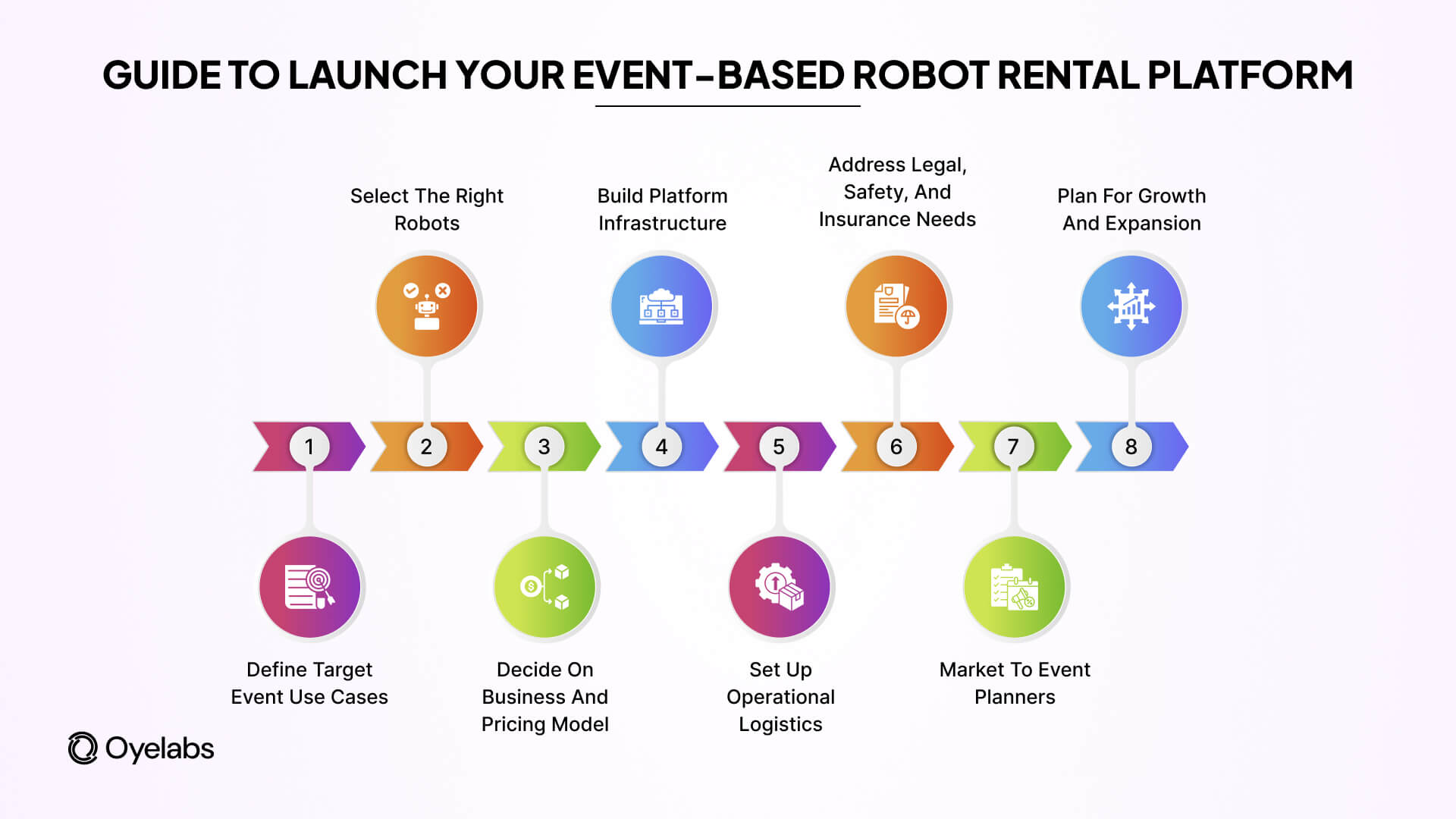
1. Define Target Event Use Cases
2. Select the Right Robots
3. Decide on Business and Pricing Model
4. Build Platform Infrastructure
5. Set Up Operational Logistics
6. Address Legal, Safety, and Insurance Needs
7. Market to Event Planners
8. Plan for Growth and Expansion
Launch Your Event-Based Robot Rental Platform
Conclusion
FAQs