
Must Have Passenger Safety Features in a Ride Hailing App

Must Have Passenger Safety Features in a Ride Hailing App
 Anuraag Jain
Last Updated on March 23, 2026
Key Takeaways
What You’ll Learn
- Ride-hailing apps connect passengers and drivers through mobile platforms.
- Passenger safety features protect riders during booking, pickup, and the trip.
- Real-time GPS tracking lets passengers and platforms monitor rides live.
- Driver verification ensures only authorized drivers operate on the platform.
- SOS emergency buttons allow riders to request help instantly during rides.
- Trip sharing allows friends or family to monitor a ride in real time.
- Safety systems increase passenger trust and encourage repeat bookings.
- Startups can launch ride-hailing platforms faster using ready-built solutions.
Stats That Matter
- The ride-hailing market may exceed $212 billion globally by 2029.
- Uber serves over 137 million monthly active users worldwide.
- Smartphone users surpassed 6.8 billion globally, enabling ride app adoption.
- More than 70% of riders consider safety features essential in ride-hailing apps.
Real Insights
- Safety features increase passenger trust and ride completion rates.
- Driver verification reduces fraud and unsafe driver behavior.
- Real-time tracking helps detect route deviations quickly.
- Transparent ride monitoring improves platform credibility.
- Launching with proven technology helps startups scale mobility platforms faster.
Must Have Passenger Safety Features in a Ride-Hailing App
You tap a ride, the car arrives, and you step in. Simple, right? For passengers today, that moment depends entirely on trust. If the app indicates the ride is unsafe, the ride never happens.
The global ride-hailing market is projected to exceed $200 billion in the coming years, but growth comes with scrutiny. Riders now expect strong safety systems built directly into the platform. Features such as real-time GPS tracking, SOS alerts, driver identity verification, and trip-monitoring algorithms are no longer optional – they are the baseline for modern mobility apps.
For founders and startup CEOs planning to launch a ride-hailing platform, safety architecture must be a core component of the product strategy. In this guide, we break down the must-have passenger safety features in a ride-hailing app that help build trust, increase adoption, and strengthen your platform’s credibility from day one.
Why Passenger Safety Features in a Ride-Hailing App Are Critical for Founders
Launching a ride-hailing platform is not only about building an app that connects drivers and riders. It is about creating a marketplace where strangers can trust one another in real-world situations. Passenger safety sits at the center of that trust.
Over the last decade, mobility platforms have expanded rapidly across cities and countries. Yet many new ride-hailing startups struggle to gain traction because users hesitate to trust unfamiliar platforms. When passengers feel uncertain about safety, they simply choose the brand they already know.
For founders and early-stage entrepreneurs, this creates a clear reality: safety features are not optional product enhancements. They are fundamental infrastructure.
Passenger safety features influence several core business outcomes:
- User adoption – Riders are more likely to install and try a new mobility platform when safety tools are clearly visible.
- App ratings and reviews – Safety experiences often determine whether users leave positive feedback in app stores.
- Driver accountability – Transparent systems discourage unsafe behavior.
- Investor confidence – Investors evaluate operational risk before backing mobility startups.
- Brand reputation – A single safety incident can damage a platform’s credibility.
In mature markets such as the United States and Europe, regulatory authorities are also pushing ride-hailing platforms to implement stronger passenger protection measures. These include identity verification systems, emergency communication channels, and real-time ride monitoring.
For startup founders entering the mobility space, the lesson is straightforward. If your platform cannot demonstrate a strong passenger safety architecture, scaling the business becomes significantly harder.
The most successful ride-hailing companies understand this well. They treat safety not as a marketing message but as an integrated product layer that runs across the entire platform – from driver onboarding to trip completion.
8 Must-Have Passenger Safety Features in a Ride-Hailing App
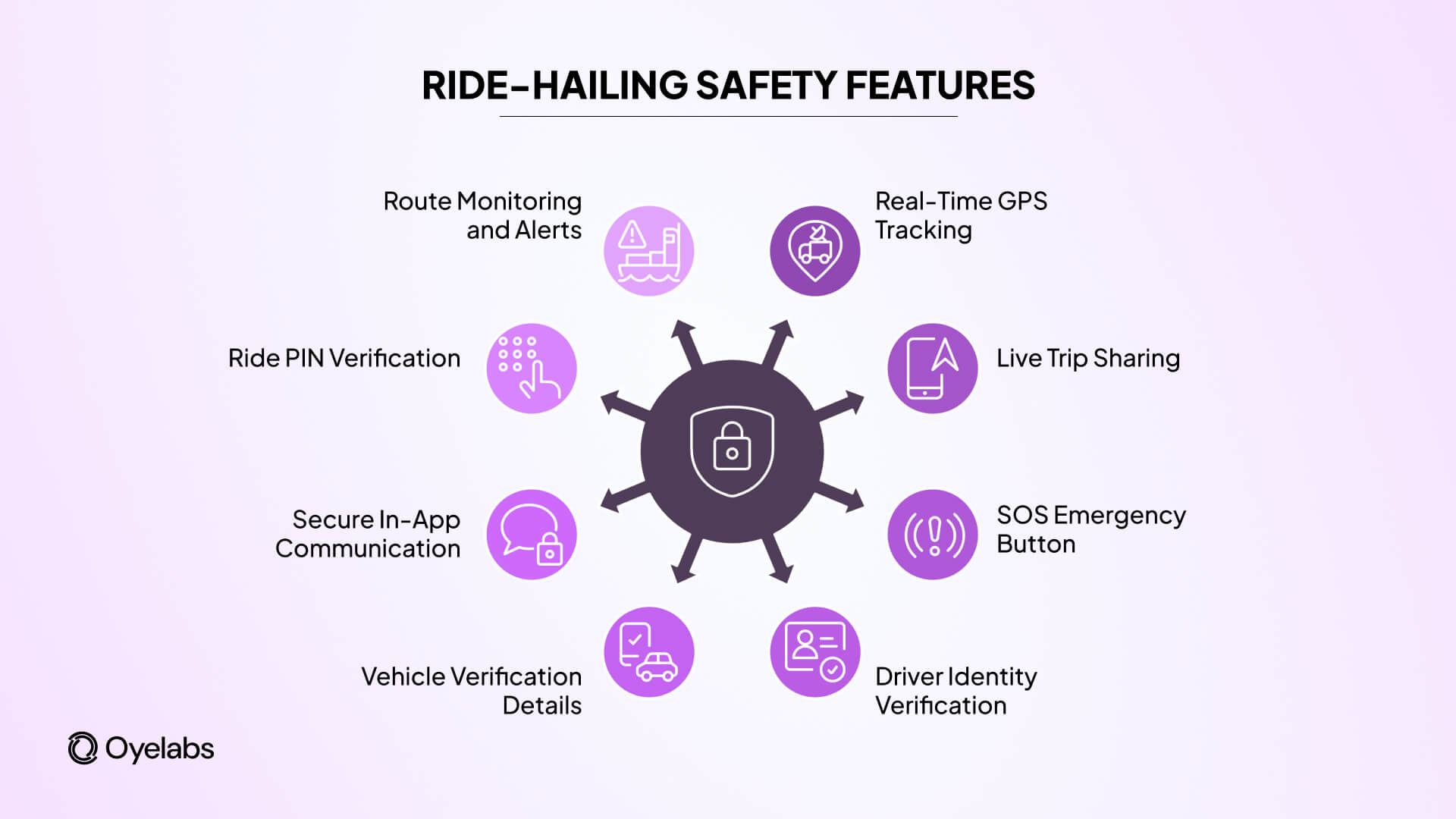
Modern ride-hailing platforms combine multiple technologies to create a secure ride experience. Some of these features are visible to passengers, while others operate silently in the background to monitor rides and prevent incidents.
The following safety technologies are essential passenger safety features in ride-hailing apps used by leading mobility platforms.
These features can broadly be grouped into two categories:
| Category | Purpose |
| Core Safety Features | Fundamental protections are expected in every ride-hailing platform |
| Advanced Safety Features | Additional technologies that enhance monitoring and accountability |
Implementing these features early allows founders to build credibility with both passengers and regulators. It also helps create a platform that can scale confidently into new markets.
1. Real-Time GPS Tracking
Real-time GPS tracking is the backbone of passenger safety in a ride-hailing platform. It enables both passengers and the platform to monitor the vehicle’s location throughout the trip continuously.
When a ride begins, the application captures the driver’s route via GPS and displays it in real time on the passenger’s screen. This live mapping technology provides clear visibility into the vehicle’s current location and estimated trip duration.
From a safety perspective, this feature performs several important functions:
- Passengers can verify that the driver is following the expected route.
- The platform can detect unusual driving patterns or unexpected stops.
- Trip records are stored for dispute resolution if needed.
Real-time tracking also supports operational transparency for the ride-hailing company. Administrators can review ride data to understand driver behavior, optimize routes, and investigate incidents.
For founders launching a mobility startup, GPS tracking infrastructure must be reliable and scalable. It requires integration with mapping services, route algorithms, and backend monitoring systems.
Without real-time tracking, a ride-hailing platform cannot deliver the level of safety passengers expect today.
Growth Insight: Real-time GPS tracking does more than display a map. It becomes the foundation for route monitoring, incident investigation, driver behavior analysis, and future AI safety systems.
2. Live Trip Sharing with Trusted Contacts
Trip sharing introduces a powerful layer of social safety. This feature allows passengers to share their ride details with friends or family members in real time.
When enabled, the passenger can send a secure tracking link to selected contacts. The recipient can then monitor the trip on their device without installing the ride-hailing app.
Typically, the shared information includes:
- Driver name and photo
- Vehicle make and license plate number
- Current ride location
- Route map and estimated arrival time
This simple capability significantly improves passenger confidence. Even though the platform itself is monitoring the ride, passengers feel reassured knowing that someone they trust can also see their journey.
Trip sharing has become a standard feature across global mobility platforms because it enhances transparency. It also discourages unsafe driving behavior because rides are visible to external observers.
For founders designing a ride-hailing platform, implementing trip-sharing functionality requires secure link generation, location streaming, and privacy controls to ensure the passenger’s data remains protected.
3. SOS Emergency Button
The SOS emergency button is one of the most critical passenger safety tools within a ride-hailing application. It allows riders to request help immediately if they encounter a dangerous situation during a trip.
This feature is typically positioned prominently on the ride screen to enable quick access for passengers. When activated, the system triggers multiple safety responses.
These responses may include:
- Alerting emergency contacts
- Sending the passenger’s live location
- Notifying the platform’s safety support team
- Connecting to local emergency services where applicable
The value of an SOS system lies in its ability to shorten response time. In emergencies, every second matters. A single-tap emergency action lets the passenger signal distress without navigating multiple menus.
Ride-hailing companies often integrate this feature with backend monitoring tools so that support teams can quickly assess the situation and take appropriate action.
For startup founders, implementing an SOS system requires coordination with location services, notification systems, and, in some cases, third-party emergency service integrations.
Platform Strategy: Emergency systems should not be hidden inside settings. The most effective ride-hailing apps place the SOS control directly on the ride screen, ensuring passengers can access help instantly.
4. Driver Identity Verification
Passengers must feel confident in the person picking them up. Driver identity verification ensures that every driver operating on the platform has been properly authenticated.
When a ride is assigned, the passenger can view key driver information before the vehicle arrives. This typically includes:
- Driver name
- Driver photograph
- Driver rating
- License verification status
This transparency allows passengers to confirm that the person arriving matches the profile displayed in the app.
Identity verification also prevents unauthorized individuals from driving under someone else’s account. Many platforms enforce strict verification during driver onboarding using document validation and biometric checks.
For founders, a robust identity verification system reduces fraud and strengthens passenger trust. It also demonstrates compliance with transportation regulations in many regions.
A well-designed driver verification system sends a clear signal to passengers: the platform takes safety seriously.
5. Vehicle Verification Details
In addition to driver identity, passengers must be able to verify the vehicle itself. Vehicle verification ensures that riders enter the correct car and prevents confusion at pickup locations.
Before the ride begins, the application displays key vehicle information to the passenger. This information typically includes:
- Vehicle make and model
- Vehicle color
- License plate number
- Vehicle category (economy, premium, etc.)
When the driver arrives, passengers can quickly confirm that the vehicle matches the information displayed in the app.
This feature might appear simple, but it plays a crucial role in preventing incidents where passengers mistakenly enter the wrong vehicle.
Vehicle verification also helps maintain transparency in the platform’s driver fleet. By linking each driver account to a registered vehicle, the system ensures consistency across rides.
For mobility startups, implementing this feature requires integrating vehicle documentation during driver onboarding and linking it with the passenger interface.
6. Secure In-App Communication
Communication between the passenger and the driver is often necessary before and during a ride. However, sharing personal phone numbers can create privacy risks. This is why modern ride-hailing platforms rely on secure in-app communication systems.
Instead of revealing real phone numbers, the platform provides masked calling and messaging capabilities. Both the passenger and the driver communicate through temporary numbers or encrypted chat channels managed by the application.
This approach protects both parties while still allowing them to coordinate important details such as pickup location or ride instructions.
Secure in-app communication provides several advantages:
- Protects passenger privacy
- Prevents misuse of personal contact information
- Reduces harassment risks
- Maintains a record of communication if disputes occur
From a technical perspective, implementing this feature requires backend communication services and number-masking technology that routes calls through secure gateways.
For founders building a ride-hailing platform, privacy-focused communication tools demonstrate that the platform is designed with user protection in mind.
7. Ride PIN Verification
Ride PIN verification adds layer of security to the pickup process. This feature ensures the passenger boards the correct vehicle and the driver picks up the intended rider.
Before the ride begins, the passenger receives a unique four-digit PIN generated by the application. The driver must enter this PIN into their app to start the trip.
This simple step prevents many common safety issues, including:
- Passengers entering the wrong vehicle
- Unauthorized individuals attempting to impersonate drivers
- Drivers starting rides without the correct passenger
PIN verification has become increasingly common in large cities where multiple ride-hailing vehicles may arrive in the same area simultaneously.
For startup founders, implementing PIN verification improves operational accuracy and reduces pickup errors, thereby enhancing the user experience.
8. Route Monitoring and Deviation Alerts
Advanced ride-hailing platforms use automated monitoring systems to track ride routes and detect unusual behavior.
Route monitoring systems analyze the driver’s path in real time. If the vehicle deviates significantly from the expected route or stops unexpectedly, the platform can trigger alerts.
These alerts may be sent to:
- The passenger
- The platform’s safety team
- Emergency contacts, depending on the configuration
Route monitoring serves as an early detection system for potential safety concerns. It also discourages unsafe driving behavior because drivers know that their route is being monitored.
For founders building a ride-hailing startup, implementing route monitoring requires integrating with mapping APIs and backend analytics systems to compare expected routes with real-time movement data.
This type of safety technology is particularly valuable in unfamiliar cities, where passengers may not know the optimal route.
Curious how apps like inDriver enable passenger-driver price negotiation?
Read our guide on How to Create an InDriver App in 2025 – Step-by-Step Guide.
How One Founder Built a Ride-Hailing Brand Using the Right Technology
Many founders enter the mobility market with a strong vision but limited technical infrastructure. One entrepreneur approached Oyelabs with the goal of launching a ride-hailing platform similar to Uber and inDriver for a regional market that lacked reliable mobility services.
Instead of spending months building complex systems from scratch, the founder deployed a ready-built ride-hailing solution with essential passenger safety features already integrated. Within a short period, the platform was live with real-time GPS tracking, verified driver onboarding, and secure ride monitoring.
As the service expanded, more drivers joined the platform, and passenger engagement increased steadily. The growing trust in the platform improved impressions, boosted ride bookings, and helped the startup establish itself as a recognizable mobility brand in its market.
Why Founders Choose Oyelabs to Build Ride-Hailing Apps
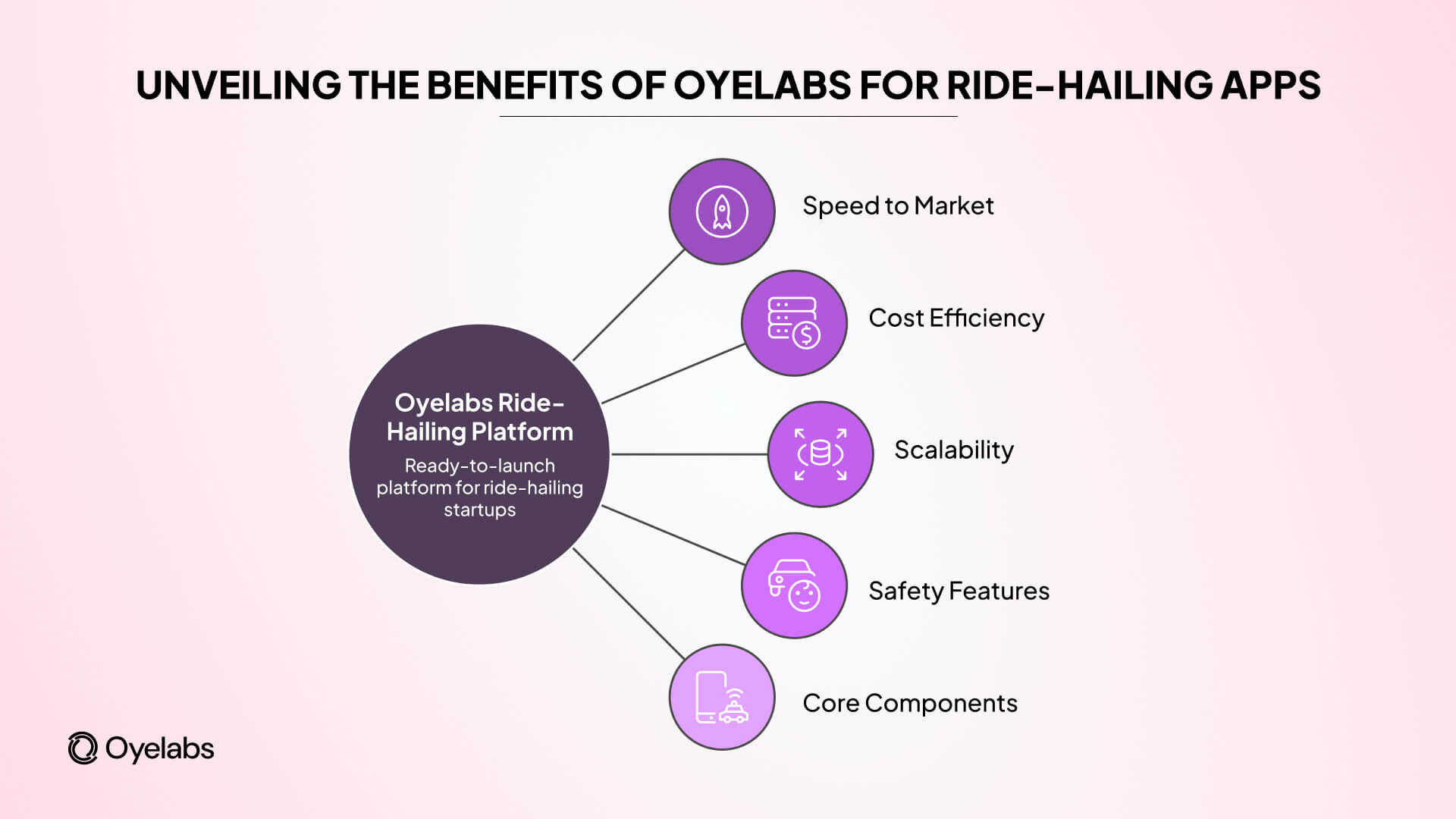
Oyelabs provides a ready-to-launch taxi booking platform designed specifically for entrepreneurs and mobility startups. Instead of building every feature from the ground up, founders can deploy a scalable ride-hailing system that already includes the core components needed to operate a mobility marketplace.
The platform is built with modern ride-hailing architecture and integrates many of the safety features discussed earlier in this guide.
Key capabilities of the Oyelabs taxi booking platform include:
- Real-time GPS ride tracking
- Driver identity and vehicle verification
- Ride monitoring and route visibility
- Passenger-driver communication tools
- Ratings and feedback system
- Secure trip management dashboard
Because the infrastructure is already developed, founders can launch their ride-hailing platform significantly faster compared to building a custom application from scratch.
Another advantage is cost efficiency. The Oyelabs taxi booking script starts at $950, making it one of the most accessible ways for entrepreneurs to enter the mobility technology market while still delivering the safety features passengers expect.
For early-stage startups, this type of solution allows founders to validate their market, build a driver network, and grow their platform before investing heavily in additional custom development.
Build Your Ride Hailing Platform Without Guesswork
Launch a scalable ride-hailing app with proven safety infrastructure and modern mobility technology.
✓ Launch your branded ride-hailing platform faster without complex development
✓ Built-in passenger safety features for trusted mobility platforms
✓ Scalable architecture supporting drivers, riders, and admin operations
✓ Customizable platform designed for regional mobility startup growth
Conclusion
Passenger safety is the backbone of every successful ride-hailing platform. Riders will only trust and repeatedly use an app when they feel secure throughout their journey. Features such as real-time GPS tracking, SOS emergency alerts, driver verification, trip sharing, and route monitoring help create that trust by ensuring transparency and accountability during every ride.
For founders and startups entering the mobility space, building these safety systems from scratch can be complex and time-consuming. This is why many entrepreneurs choose ready-built solutions that already include the essential safety infrastructure. Platforms like the Oyelabs taxi booking solution allow founders to launch faster with reliable technology, enabling them to focus on scaling their driver network, growing user adoption, and building a trusted ride-hailing brand.
FAQs
What safety features should every ride-hailing app include for passenger protection and trust?
Essential safety features include GPS tracking, SOS alerts, driver verification, trip sharing, and route monitoring. These tools allow passengers and platform administrators to track rides in real time, respond to emergencies quickly, and maintain transparency throughout the journey.
Why are passenger safety features important when launching a ride-hailing startup?
Safety features build user trust, improve app ratings, and reduce operational risks. Platforms that prioritize safety attract more passengers and drivers because riders feel confident using a service that actively protects them during trips.
How do ride-hailing apps verify drivers to ensure passenger safety?
Ride-hailing platforms verify drivers through identity checks, driving license validation, vehicle registration verification, and background screenings. These processes ensure that only authorized drivers operate on the platform, improving overall ride safety.
Can startups launch a ride-hailing platform with built-in safety features quickly?
Yes. Many startups use ready-built ride-hailing platforms that already include GPS tracking, driver verification, and safety monitoring. This allows founders to launch faster while still providing essential passenger protection features.