
Guide to Launch a Bike Taxi App Like UberMoto

 Anuraag Jain
Last Updated on June 15, 2026
Key Takeaways
What You’ll Learn
- How UberMoto works
- Why bike taxi businesses are growing
- How to validate market demand
- Legal and compliance requirements
- Core features required in a bike taxi booking app
- Driver onboarding strategies
- Technology stack recommendations
- Cost and timeline considerations
- White-label vs custom development approaches
Guide to Launch a Bike Taxi App Like UberMoto
Launching a bike taxi app like UberMoto requires more than building a mobile application. You need a complete ecosystem that includes a Passenger App for bookings, a Driver App for ride management, and an Admin Dashboard for operations, payments, and fleet monitoring.
Before launch, founders must validate market demand, understand local regulations, onboard drivers, establish pricing strategies, and deploy the right technology stack.
This guide explains the complete process of launching a bike taxi business and building a bike taxi booking app similar to UberMoto.
Quick Answer: How Do You Launch a Bike Taxi App Like UberMoto?
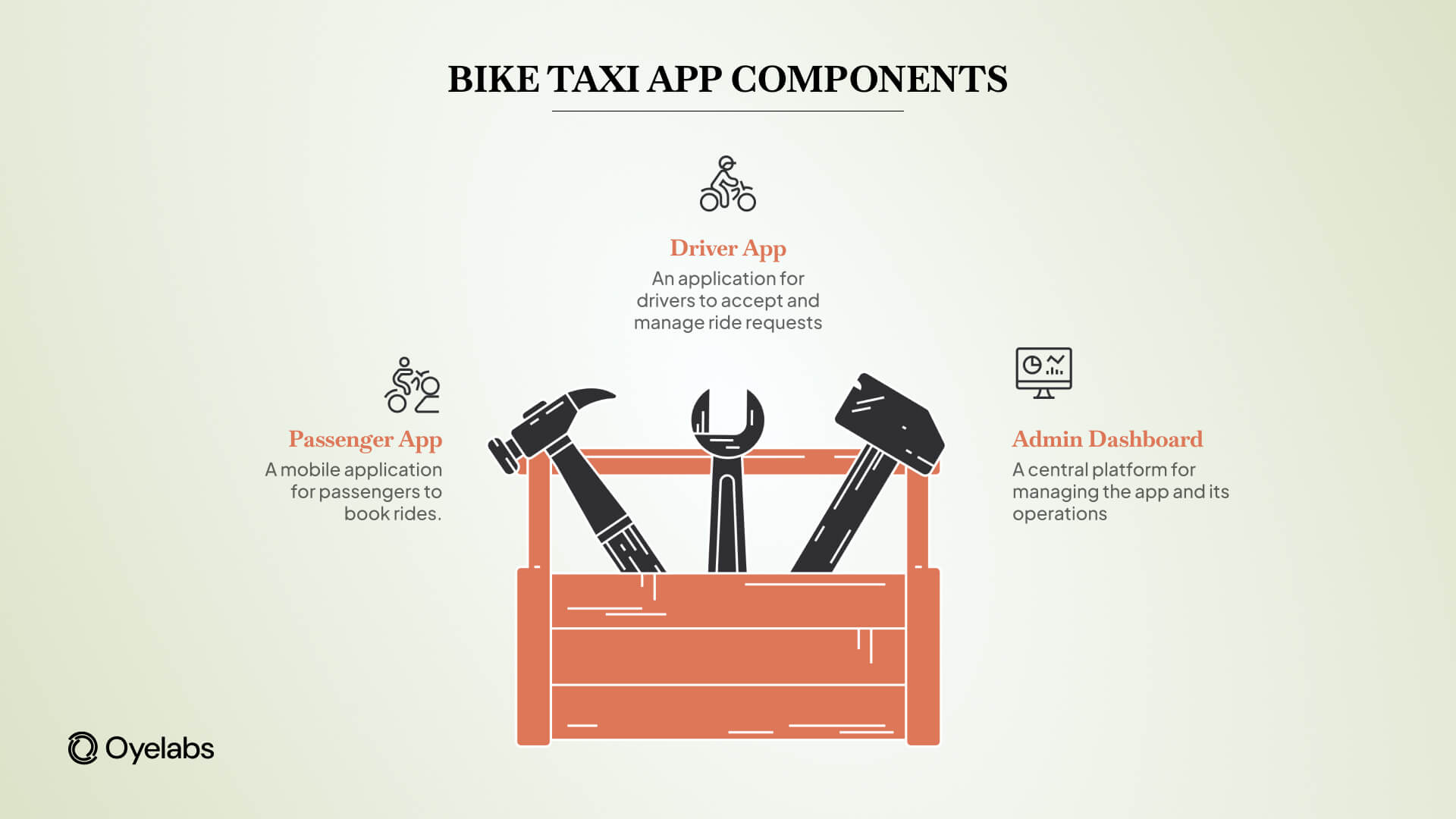
To launch a bike taxi app, you need three core systems: a Passenger App, a Driver App, and an Admin Dashboard. You must also secure regulatory approvals, onboard riders, implement payment systems, establish pricing models, and launch initially in high-demand areas before expanding city-wide.
What Is UberMoto and How Does It Work?
UberMoto is a bike taxi service that allows passengers to book motorcycle rides through a mobile app.
Instead of connecting passengers with car drivers, the platform connects users with verified motorcycle riders for short-distance and last-mile transportation.
A typical bike taxi platform includes:
- Passenger booking app
- Driver application
- Admin dashboard
- Real-time GPS tracking
- Digital payments
- Ride management tools
This model is especially effective in cities with traffic congestion and last-mile transportation challenges.
Why Are Bike Taxi Apps Growing?
Bike taxi apps are growing because they solve three major urban transportation problems:
- Traffic congestion
- Last-mile connectivity
- High transportation costs
Motorcycles can move through congested roads more efficiently than cars, reducing travel time significantly.
Urban congestion continues to worsen globally. According to the INRIX Global Traffic Scorecard, drivers in major cities can lose more than 100 hours annually to traffic congestion. This growing congestion is one reason commuters increasingly prefer bike taxis for short-distance and last-mile transportation.
In many developing and high-density cities, commuters increasingly seek affordable transportation options for short distances. This has created demand for bike taxi services that can provide faster and lower-cost rides compared to traditional taxis.
Step 1: Validate Market Demand Before Launching
A bike taxi business is viable when a city has strong commuter demand, traffic congestion, and transportation gaps that motorcycles can solve more efficiently than traditional vehicles.
Before development, research:
- Daily commuter patterns
- Public transportation usage
- Traffic congestion levels
- Last-mile connectivity challenges
- Existing ride-hailing competition
Questions to Answer During Market Research
- Do commuters face traffic delays?
- Are taxi fares considered expensive?
- Are metro stations underserved?
- Are riders already using informal bike transportation?
- Is there demand for short-distance rides?
The answers help determine whether the market can support a bike taxi platform.
Step 2: Understand Local Regulations
Bike taxi regulations vary significantly between cities, states, and countries.
Before launch, founders should consult local transport authorities to understand licensing requirements.
Common compliance requirements include:
- Commercial rider licenses
- Vehicle registration verification
- Commercial insurance
- Rider background checks
- Helmet compliance
- Passenger safety regulations
Ignoring regulatory requirements can delay or completely prevent launch.
Compliance Checklist
| Requirement | Purpose |
| Driver License Verification | Rider eligibility |
| Vehicle Registration | Legal compliance |
| Insurance Coverage | Risk protection |
| Helmet Policy | Passenger safety |
| Background Checks | Trust and security |
| Terms & Conditions | Legal protection |
Compliance should be completed before rider onboarding begins.
Step 3: Choose Your Development Approach
The answer depends on your timeline, budget, and business goals.
Most startups launch faster using a white-label solution and customize later.
White Label UberMoto Clone
A white-label solution provides:
- Faster deployment
- Lower development costs
- Proven workflows
- Reduced technical risk
This approach is ideal for founders who want to validate demand quickly.
Custom Development
Custom development provides:
- Full control
- Unique features
- Greater flexibility
- Long-term customization
This approach is often chosen by companies with larger budgets and specialized requirements.
White Label UberMoto Clone vs Custom Development
| Factor | White Label UberMoto Clone | Custom Development |
| Launch Speed | Faster | Slower |
| Initial Cost | Lower | Higher |
| Development Risk | Lower | Higher |
| Time to Market | Faster | Slower |
| Customization | High | Complete |
| Scalability | Strong | Strong |
Many founders begin with a white-label platform and expand after market validation.
Step 4: Build the Passenger App
The passenger app should allow users to register, book rides, make payments, and track drivers in real time.
Seamless Registration
Users should be able to register through:
- Mobile number
- Social login
Fast onboarding improves conversion.
Ride Booking
Passengers should be able to:
- Select pickup location
- Choose destination
- View fare estimates
- Confirm bookings
This forms the foundation of the booking experience.
Real-Time Tracking
Passengers should see:
- Driver location
- Estimated arrival time
- Route information
Real-time tracking improves trust and transparency.
Digital Payments
The app should support:
- Credit cards
- Debit cards
- Digital wallets
- Cash (if applicable)
Flexible payment options improve user adoption.
Safety Features
Essential safety features include:
- SOS button
- Emergency contacts
- Ride sharing
- Driver verification
Safety is often a deciding factor for new users.
Step 5: Build the Driver App
The driver app should help riders manage bookings, navigation, earnings, and account information.
Ride Request Management
Drivers should be able to:
- Accept rides
- Reject rides
- View destinations
- See fare details
This helps riders make informed decisions.
Integrated Navigation
Navigation systems help riders:
- Find passengers
- Follow optimized routes
- Reduce delays
Google Maps integration is commonly used.
Earnings Dashboard
Drivers should see:
- Daily earnings
- Weekly earnings
- Incentives
- Bonuses
- Ride history
Transparent earnings encourage retention.
Document Management
Drivers should upload:
- License
- Insurance
- Registration documents
This simplifies compliance management.
Step 6: Build the Admin Dashboard
The Admin Dashboard controls platform operations.
It helps administrators monitor rides, manage riders, process payouts, and resolve issues.
Essential Admin Features
Ride Monitoring
Track all active and completed rides.
Driver Management
Approve, suspend, or verify drivers.
Commission Management
Configure platform commission rates.
Customer Support
Manage support tickets and complaints.
Analytics & Reporting
Monitor revenue, rides, and platform growth.
Step 7: Onboard Your First Drivers
Driver supply determines marketplace success.
Without riders, passengers cannot book rides.
Rider Acquisition Strategies
Offer:
- Sign-up bonuses
- Referral incentives
- Zero commission periods
- Guaranteed earnings
These incentives help attract the initial fleet.
Driver Verification Process
Require:
- Identity verification
- License checks
- Insurance validation
- Safety training
Verification improves platform trust.
Step 8: Launch in a Small Area First
Launching in a focused area improves ride availability and reduces operational complexity.
Start in:
- Business districts
- College campuses
- Metro stations
- High-density residential zones
Concentrated demand improves marketplace efficiency.
Step 9: Market Your Bike Taxi Platform
Customer acquisition should focus on awareness and trial.
Effective Launch Promotions
Popular promotions include:
- First ride free
- Discounted rides
- Referral rewards
- Loyalty programs
These campaigns encourage initial adoption.
Local Partnerships
Partner with:
- Universities
- Corporate offices
- Residential communities
- Retail centers
Partnerships accelerate user acquisition.
How Much Does It Cost to Launch a Bike Taxi App?
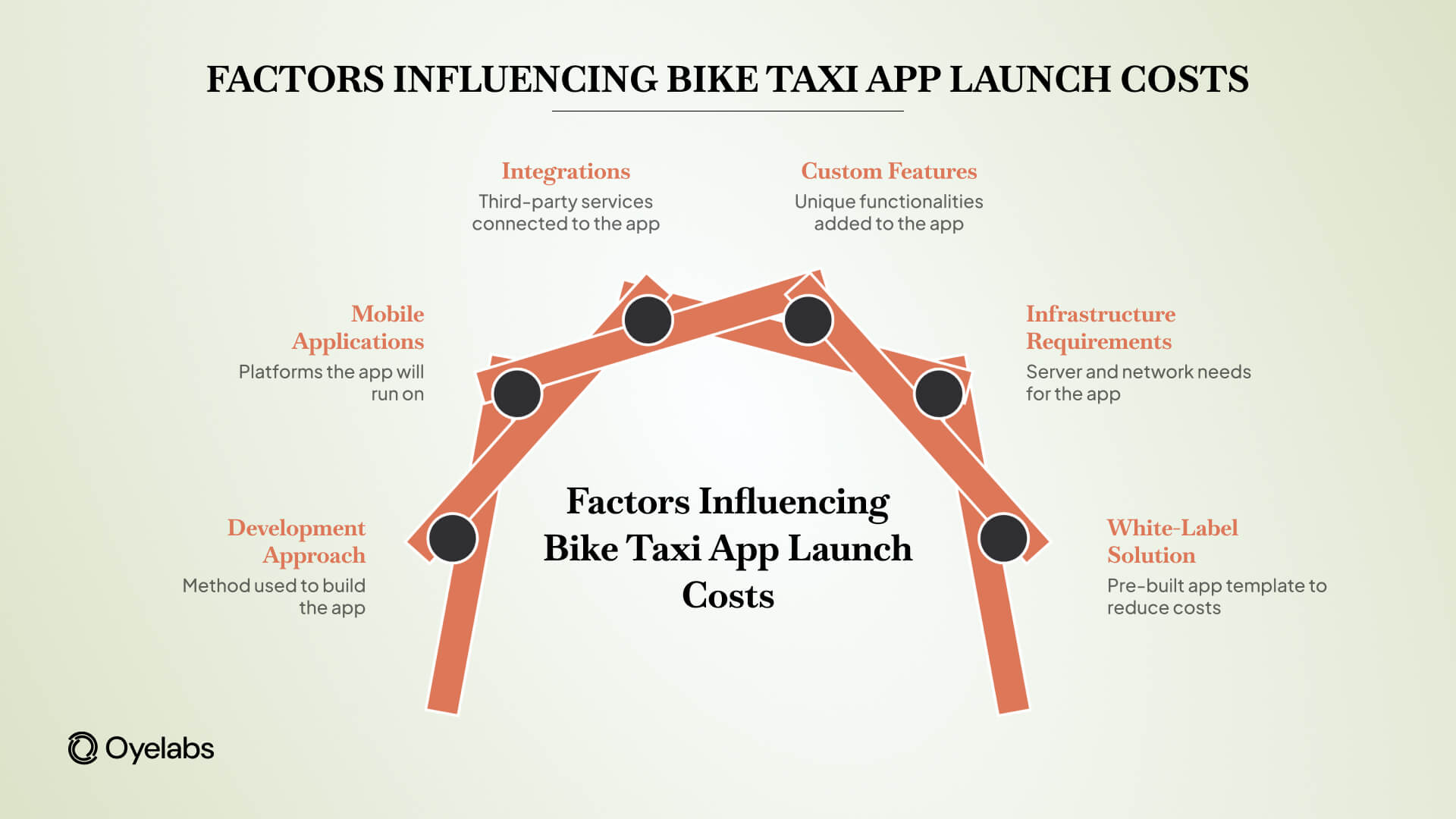
The cost depends on:
- Development approach
- Mobile applications
- Integrations
- Custom features
- Infrastructure requirements
A white-label UberMoto clone typically reduces launch costs compared to custom development.
How Long Does It Take to Launch a Bike Taxi App?
A focused MVP can be launched much faster than a fully custom transportation platform.
Development timelines depend on:
- Feature scope
- Design complexity
- Integrations
- Compliance requirements
Most startups launch an MVP first and expand functionality over time.
Also Read: Features of an Uber-Like App Every Taxi Booking Platform Needs in 2026
Conclusion
Launching a bike taxi app like UberMoto requires a combination of technology, compliance, rider acquisition, and operational planning.
The most important steps are:
- Validate market demand.
- Understand regulations.
- Choose the right development approach.
- Build the passenger, driver, and admin systems.
- Onboard riders.
- Launch in focused areas.
- Scale gradually.
Founders who focus on operational execution and market validation before expansion generally achieve stronger long-term results than those who prioritize scale too early.
FAQs
What Is a Bike Taxi App?
A bike taxi app connects passengers with motorcycle riders through a mobile platform for short-distance transportation.
How Does UberMoto Work?
UberMoto allows passengers to book motorcycle rides, track drivers, make payments, and complete trips through a mobile application.
Is a Bike Taxi Business Profitable?
Yes. Bike taxi businesses can be profitable when rider utilization, pricing, and operational costs are managed effectively.
What Features Should a Bike Taxi Booking App Include?
Core features include:
- Ride booking
- GPS tracking
- Payments
- Driver management
- Admin controls
- Safety tools
Can I Launch Using a White Label UberMoto Clone?
Yes. Many startups launch using white-label solutions because they reduce development costs and accelerate deployment.