
Cost To Build a TaskRabbit Clone – Founder’s Guide
Cost To Build a TaskRabbit Clone – Founder’s Guide
 Anuraag Jain
Last Updated on July 5, 2026
Key Takeaways
- A TaskRabbit-style app can cost $999 to $50,000+, depending on whether you choose white-label software, customization, or full custom development.
- OyeLabs offers an AI-powered, 100% white-label, Flutter-powered TaskRabbit clone script starting at $999.
- Custom development costs more because booking logic, provider workflows, payouts, disputes, and admin operations must be built from scratch.
- Provider reliability often affects customer retention more than lower pricing.
- Marketplace liquidity depends on matching customers and available providers in a specific local area.
- Launching across too many cities too early usually increases acquisition costs and weakens service quality.
- White-label development is useful for fast validation, while custom development is better for complex workflows.
- The biggest hidden cost is often provider acquisition, not software development.
Cost To Build a TaskRabbit Clone – Founder’s Guide
The Cost to Build a TaskRabbit Clone platform depends on one decision first: whether you want to validate a local-services marketplace quickly or build a fully custom platform from scratch.
A TaskRabbit-style platform connects customers with local service providers for jobs such as cleaning, handyman work, moving help, furniture assembly, and home repairs.
TaskRabbit itself describes its marketplace as a platform that connects people seeking household help with skilled Taskers in their communities. TaskRabbit also expanded its IKEA partnership across North America and Europe in 2025, showing how local-services marketplaces can become part of larger home-service ecosystems.
Across multiple local-services marketplace engagements, we consistently found that provider onboarding and retention consumed more resources than initial platform development.
Quick Answer: How Much Does It Cost to Build a TaskRabbit Clone?
The Cost to build a TaskRabbit Clone software ranges from $999 for a white-label marketplace solution to $50,000+ for fully custom development.
The final cost depends on launch speed, app complexity, provider workflows, payment logic, admin controls, mobile apps, integrations, and the level of customization required.
| Development Approach | Estimated Cost | Best For |
| White-label TaskRabbit clone | Starts at $999 | Fast validation and early launch |
| Customized white-label platform | $2,000 to $10,000 | Branding and workflow adjustments |
| Custom marketplace development | $12,000 to $50,000+ | Complex or unique operating models |
What Actually Drives TaskRabbit App Development Cost?
TaskRabbit app development cost is driven by marketplace operations, not just app screens. The expensive parts are booking logic, provider availability, location-based matching, secure payments, payout handling, cancellations, dispute management, and admin visibility.
The main cost drivers are:
Booking Workflow: Customers need to select services, describe tasks, choose times, view pricing, and confirm bookings.
Provider Matching: The platform must match demand with available providers by location, skill, schedule, rating, and service category.
Payment and Payout Logic: Service marketplaces need customer payments, provider payouts, refunds, commissions, and transaction records.
Admin Operations: Marketplace owners need dashboards to manage users, providers, bookings, disputes, reviews, revenue, and support.
Mobile Apps: Customer and provider applications increase development scope, especially when both Android and iOS are required.
From a platform-development perspective, the cost rises fastest when founders ask for unusual provider rules, custom commission models, complex service categories, or multi-city operations before validating the first market.
Why Local Marketplace Liquidity Matters More Than App Features
Marketplace liquidity means customers can find available providers in the right location at the right time. A TaskRabbit-style platform can have strong technology and still fail if customers cannot quickly book reliable providers near them.
This is the core operating truth behind local-services marketplaces.
A platform with 500 registered providers can still perform poorly if only 20 are active in the customer’s area. A smaller marketplace with fewer providers can perform better if those providers respond quickly, complete jobs reliably, and stay available in a focused service zone.
In early-stage platform launches, provider density usually matters more than feature quantity.
This is why founders should validate one focused geography before expanding across several cities. Multi-city launches often spread provider supply too thin, increase acquisition costs, and create slow booking experiences.
Many founders underestimate how marketplace liquidity directly influences the Cost to Build a TaskRabbit Clone businesses successfully.
The Hidden Cost: Provider Reliability
Provider reliability influences customer retention more than pricing in local-service marketplaces. Customers may tolerate a slightly higher price for a cleaner, mover, or handyman. They rarely tolerate repeated cancellations, late arrivals, or incomplete jobs.
Provider quality is often a more important success factor than the initial Cost to Build a TaskRabbit Clone software.
This is where many cost estimates are misleading.
A founder may budget for development but ignore:
- Provider onboarding
- Background checks
- Skill verification
- Response-time monitoring
- Support workflows
- Cancellation handling
- Review moderation
These operating costs shape marketplace quality after launch.
TaskRabbit-style platforms are not only software products. They are local service networks. The platform must continuously balance customer demand, provider availability, pricing, trust, and support.
White-Label vs Custom Development Cost
White-label development is cheaper and faster because the core marketplace workflows already exist. Custom development is more expensive because booking, provider management, payments, payouts, disputes, and admin tools must be built specifically for your business.
| Factor | White-Label Platform | Custom Development |
| Launch Cost | Lower | Higher |
| Launch Time | Faster | Slower |
| Customization | Moderate | Extensive |
| Validation Risk | Lower | Higher |
| Maintenance Burden | Lower | Higher |
| Best Use Case | Testing demand | Building unique operations |
The trade-off is simple.
White-label software reduces cost and launch time, but may not fit complex enterprise workflows.
Custom development gives more control, but can become expensive before the founder has validated demand.
For most early-stage founders, launching quickly and testing local demand is usually more practical than spending heavily on custom development first.
What Does OyeLabs Charge for a TaskRabbit Clone?
Founders evaluating the Cost to Build a TaskRabbit Clone platform often choose between white-label software and fully custom development.
OyeLabs provides an AI-powered, 100% white-label, Flutter-powered TaskRabbit clone script that starts at $999 and can go live in 7 days, depending on branding, deployment readiness, and customization requirements.
The solution is designed for founders who want to launch a local-services marketplace faster without rebuilding the entire platform from scratch.
It includes the foundation required for:
- Customer bookings
- Provider workflows
- Admin operations
- Service categories
- Payment flows
- Marketplace management
- Flutter-powered mobile applications
- White-label branding
This option is suitable for founders who want to validate a local-services marketplace, test provider supply, launch quickly, and control early development costs.
It may not be suitable for businesses that need complex enterprise integrations, unusual compliance workflows, deeply custom marketplace rules, or highly specialized operational logic from day one.
When Should You Choose Custom Development?
Custom development makes sense when your marketplace has workflows that cannot be handled by a white-label platform. This usually applies to enterprise service networks, regulated service categories, complex insurance requirements, multi-role operations, or highly specific provider rules.
Custom workflows can significantly increase the Cost to Build a TaskRabbit Clone platform compared to ready-made marketplace solutions.
Choose custom development if you need:
- Custom provider approval flows
- Complex service pricing rules
- Enterprise integrations
- Advanced dispatch logic
- Multi-region operating controls
- Specialized compliance workflows
- Deeply custom admin permissions
Do not choose custom development only because it sounds more premium.
One common founder mistake is building a fully custom platform before proving that customers will book and providers will stay active. That sequence increases cost without reducing marketplace risk.
What Costs Continue After Launch?
Post-launch costs include maintenance, hosting, payment processing, support, provider acquisition, bug fixes, compliance updates, and feature improvements. These costs continue whether the platform is white-label or custom-built.
Common ongoing expenses include:
Maintenance: Bug fixes, app updates, performance improvements, and operating-system compatibility.
Infrastructure: Hosting, cloud storage, notifications, maps, databases, and backups.
Payment Processing: Transaction fees, refund handling, payout management, and chargeback support.
Provider Acquisition: Recruiting, verifying, training, and retaining service providers.
Support Operations: Handling cancellations, disputes, late arrivals, incomplete tasks, refunds, and complaints.
The biggest mistake is treating launch as the finish line.
For local-services marketplaces, launch is the point where operational learning begins.
How to Reduce TaskRabbit App Development Cost
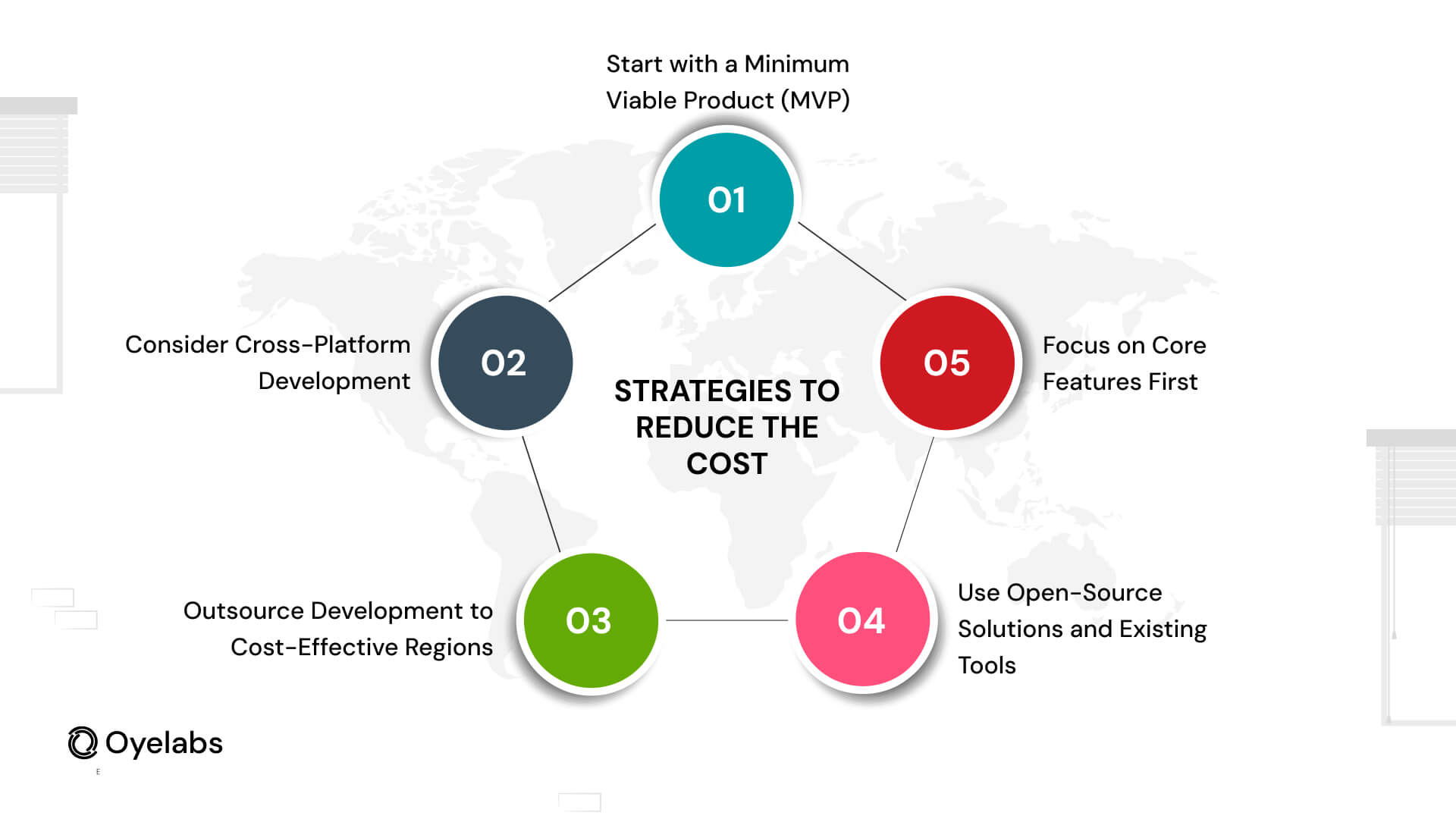
The best way to reduce the TaskRabbit app development cost is to avoid building unnecessary custom logic before validating local demand. Start with the workflows that prove whether customers will book and providers will complete jobs reliably.
Cost-control priorities include:
Start With One Geography: Validate service demand and provider density before expanding.
Use White-Label Software First: Launch faster and reduce upfront development risk.
Prioritize Core Workflows: Booking, provider profiles, payments, payouts, reviews, and admin controls matter first.
Delay Advanced Features: AI matching, gamification, loyalty systems, and complex automation can wait.
Track Marketplace Health: Measure completed bookings, repeat customers, provider activity, cancellation rate, and response time.
The strongest cost strategy is not spending less everywhere.
It is spending only on what validates the marketplace.
Why Ready-Made TaskRabbit Alternatives Are Becoming Popular
Ready-made TaskRabbit alternatives are becoming popular because founders want to test marketplace demand before making large custom-development investments. This is especially relevant in service categories where local provider supply is uncertain.
Digital labour platforms continue to influence how work is organized globally. The International Labour Organization has highlighted how digital labour platforms are transforming work arrangements, while the EU adopted new platform-work rules in 2024 to improve working conditions for people working through digital labour platforms. These developments show that platform businesses are maturing, but also becoming more operationally and regulatory sensitive.
For founders, that creates a practical lesson.
Do not spend six figures before understanding your service category, provider economics, worker classification risks, and local-market demand.
Launch Your TaskRabbit-Style Marketplace Without Overspending
Validate the market before committing to a full custom build.
✓ Start with a white-label marketplace foundation
✓Test local provider and customer demand faster
✓ Keep upfront development costs controlled
✓ Expand customization after real usage data appears
Conclusion
The Cost to Build a TaskRabbit Clone platform depends on development approach, customization requirements, marketplace complexity, and long-term operational goals.
A white-label platform can start at $999, while fully custom development can exceed $50,000 when complex workflows are required.
The most important cost lesson is that local-services marketplaces do not win through software alone. They win when customers can repeatedly find reliable providers nearby. Provider reliability, local density, booking completion, and support quality often affect growth more than feature volume. Build only what helps validate those realities first.
FAQs
How much does it cost to build an app like TaskRabbit?
Building an app like TaskRabbit can cost from $999 for a white-label solution to $50,000+ for custom development. The final cost depends on platform complexity, customization needs, mobile apps, provider workflows, payment systems, and marketplace operations.
What does OyeLabs charge for a TaskRabbit clone?
OyeLabs offers an AI-powered, 100% white-label, Flutter-powered TaskRabbit clone script starting at $999. The platform can go live in 7 days, depending on branding, deployment requirements, and customization scope.
Is white-label better than custom development?
White-label development is better for fast validation and lower upfront cost. Custom development is better when the business requires unique workflows, enterprise integrations, complex compliance rules, or highly specific marketplace operations.
What is the biggest hidden cost?
The biggest hidden cost is usually provider acquisition and retention. A local-services platform needs active, reliable providers in each target area. Without provider density, even a well-built app may struggle to generate repeat bookings.
Can I customize a TaskRabbit clone later?
Yes. Many founders launch with a white-label platform first, validate demand, and then add custom workflows after they understand customer behavior, provider availability, booking patterns, and operational requirements.
Sources
- TaskRabbit Official Website: Used for platform category, service positioning, and local-services marketplace context.
- TaskRabbit 2025 IKEA Partnership Announcement: Used for TaskRabbit’s geographic presence, IKEA integration, and marketplace maturity context.
- Ingka Group TaskRabbit Acquisition Story: Used for IKEA ownership and strategic home-services context.
- International Labour Organization: Digital labour platform research used for platform-work context.
- European Union Directive 2024/2831: Used for platform-work regulation and operational-compliance context.
Editorial Note
This article focuses on the cost of building a TaskRabbit-style local-services marketplace. Cost ranges are based on common marketplace-development approaches, OyeLabs product pricing, and typical custom-development scope differences. Actual project cost may vary depending on service category, geography, compliance needs, integrations, app complexity, and customization requirements.
TaskRabbit, IKEA, and other referenced entities are used for educational and comparative context. OyeLabs is not affiliated with TaskRabbit or IKEA.
Disclosure
OyeLabs develops marketplace software, including TaskRabbit-style local-services platforms. Commercial pricing mentioned in this article reflects OyeLabs’ current white-label offer at the time of writing and may change based on scope, customization, deployment requirements, and ongoing service needs.
Reviewed By: Surya Pratap Singh
Senior IOS Developer, Oyelabs