
Niche Rental Verticals That Still Have Room For New Founders

Niche Rental Verticals That Still Have Room For New Founders
 Sachin Sharma
Last Updated on August 25, 2026
Key Takeaways
What You Will Learn
* The global rental economy is projected to reach roughly $265 billion by 2034, growing faster than most e-commerce categories.
* Mobile wellness equipment, moving logistics, creator gear, baby travel gear, and tool libraries are five niches with real room left.
* Every one of these niches runs on the same booking, deposit, and inventory logic as an Airbnb-style marketplace.
* Low search competition in these niches is itself a real, measurable SEO advantage for a new founder.
* Security deposits and calendar-based inventory tracking matter more in asset rental than in most other business models.
* Starting asset-light with a small test fleet reduces risk before committing to a full category.
Real Insights
* A rental vertical with unclear target audience usually fails at the marketing stage, not the operations stage.
* Reusing proven marketplace architecture is what makes these niches launchable in months, not years.
* Maintenance overhead varies more between these verticals than most founders expect going in.
* Underpricing a niche rental asset is as common a mistake as overpricing it.
Niche Rental Verticals That Still Have Room For New Founders
The global rental economy is on track to reach roughly $265 billion by 2034, and most of that growth isn’t happening in cars or apartments anymore. It’s happening in narrow, specific categories that big rental platforms haven’t bothered to build for yet.
What ties these rental verticals together, and what most founders miss, is that they all run on the exact same underlying architecture as an app like Airbnb: a bookable calendar, a security deposit, an inventory record, and a review system. You don’t need to reinvent that logic for a mobile sauna business any more than you would for a vacation property. You need to point proven marketplace infrastructure at an underserved niche.
I look at a lot of niche business ideas through a search-competition lens, since that’s genuinely where I spend most of my time, and these five verticals share something rare: real demand with almost no content or platforms fighting over it yet.
Quick Answer
- Mobile wellness equipment, saunas, cold plunges, and recovery tech, commands premium weekend pricing with fast payback.
- Eco-friendly moving logistics replaces disposable cardboard with reusable bins customers rent for a few weeks at a time.
- Specialized content creation and drone kits serve creators who’d rather rent current gear than own depreciating equipment.
- Niche baby and toddler travel gear solves a real pain point for traveling families near hotels and vacation rentals.
- Micro-leasing for DIY and homesteader tools serves occasional-use categories big box rental stores ignore.
- All five verticals can launch on the same booking, deposit, and inventory logic that powers an Airbnb-style platform.
Why These Niches Still Have Room in 2026
Most rental business content still points founders toward saturated categories: cars, party equipment, general tools. Competition in those spaces is intense, and customer acquisition cost reflects it.
The verticals below are different for one structural reason: the asset itself is either too new, too specific, or too fragmented for large incumbents to have built a dedicated platform around it yet.
That gap is exactly where a new founder, using proven rental marketplace technology instead of custom-building from scratch, can move faster than the market expects.
1. High-Ticket Mobile Wellness Equipment
The wellness economy has created real demand for recovery tools, but most consumers don’t want the cost or hassle of installing permanent infrastructure at home.
What This Includes: Trailer-mounted wood-fired saunas and commercial-grade cold plunges rented for backyard gatherings, corporate retreats, and wellness pop-up events. It also covers home delivery of recovery tech, red light therapy panels, hyperbaric chambers, and compression boot systems, on a weekly or monthly subscription basis.
Why It Has Room: Utilization economics are unusually strong here. A single mobile sauna or cold plunge unit can command premium weekend pricing, which means the capital outlay on one unit can be recovered in a relatively small number of bookings compared to most physical rental assets.
Target Audience: Event planners, corporate wellness coordinators, and affluent homeowners hosting private gatherings.
2. Eco-Friendly and Upscale Moving Logistics
Traditional cardboard moving boxes are wasteful, structurally weak, and time-consuming to assemble, and a growing number of eco-conscious consumers and offices want a better alternative.
What This Includes: Interlocking, waterproof, industrial-grade plastic moving bins rented alongside dollies. The typical business model drops a stack of bins at a customer’s old address and collects them from the new address a few weeks later.
Why It Has Room: The inventory has essentially zero technological obsolescence. A well-made plastic bin lasts for hundreds of moves with minimal wear, which builds steady, predictable local revenue without the depreciation risk that hits categories like electronics or vehicles.
Target Audience: Local residential movers and corporate offices relocating on a schedule.
Builder Tip: Zero-obsolescence inventory, like reusable moving bins, is one of the lowest-risk ways to enter rental with minimal ongoing replacement cost.
3. Specialized Content Creation and Drone Kits
Generic camera rental is a competitive, mature category. The explosion of independent creators, social video marketers, and drone specialists has outpaced what traditional rental houses stock.
What This Includes: Ready-to-shoot themed bundles, a complete podcast setup or a short-form video studio kit, rather than standalone parts a customer has to assemble themselves. It also includes higher-end drones: thermal imaging units for agricultural or roof inspections, and cinematic FPV drones for event videographers.
Why It Has Room: Equipment in this category changes fast, and most creators would rather rent the current model for one project than sink money into gear that depreciates within a year or two.
Target Audience: Independent content creators, freelance videographers, and small marketing agencies.
4. Niche Baby and Toddler Travel Gear
Parents traveling with infants face real friction hauling heavy strollers, car seats, and cribs through airports, and it’s a pain point most travel rental platforms simply don’t address.
What This Includes: Storing and renting premium strollers, smart bassinets, and sanitized toy bundles directly near major tourist destinations, hotels, or vacation rental properties, so traveling families never have to bring this gear with them.
Why It Has Room: This category is genuinely fragmented. Success depends far more on local partnerships with vacation rental hosts and boutique travel agencies than on competing against a large global platform.
Target Audience: Traveling families and premium vacation rental or hotel hosts looking to offer added convenience.
5. Micro-Leasing for DIY and Homesteader Tools
Large home improvement stores rent general construction equipment, but they consistently overlook the specialized, occasional-use tools urban hobbyists and eco-builders actually want.
What This Includes: Curated tool libraries covering high-end culinary gear, freeze dryers and commercial meat slicers, premium lawn care equipment, or specialized crafting tools like carpet tufting guns and 3D printers.
Why It Has Room: These are items most people need once or twice a year at most, which makes ownership genuinely impractical for the customer and creates strong margins on assets that would otherwise sit idle in a warehouse.
Target Audience: Urban hobbyists, home cooks, and small-scale eco-builders.
Growth Insight: Occasional-use categories, tools people need once or twice a year, often carry the strongest margins of any niche rental vertical.
Key Operational Differences Between These Verticals
These five niches aren’t interchangeable. Capital requirements, maintenance overhead, and target buyers vary significantly, and that difference should shape which one a founder actually chooses first.
Rental Vertical Comparison
| Vertical | Initial Investment | Maintenance Overhead | Target Audience |
|---|---|---|---|
| Mobile Wellness Equipment | High (trailers, chillers) | Medium (sanitization between uses) | Event planners, affluent homeowners |
| Upscale Moving Bins | Medium (bulk plastic purchase) | Very low (wipe-downs) | Local movers, offices |
| Creator Gear Kits | Medium to high (electronics) | High (tech verification each return) | Freelancers, small agencies |
| Traveler Baby Gear | Low to medium | High (deep sanitization) | Traveling families, premium hosts |
Why This Maps Directly to Airbnb-Style Marketplace Architecture
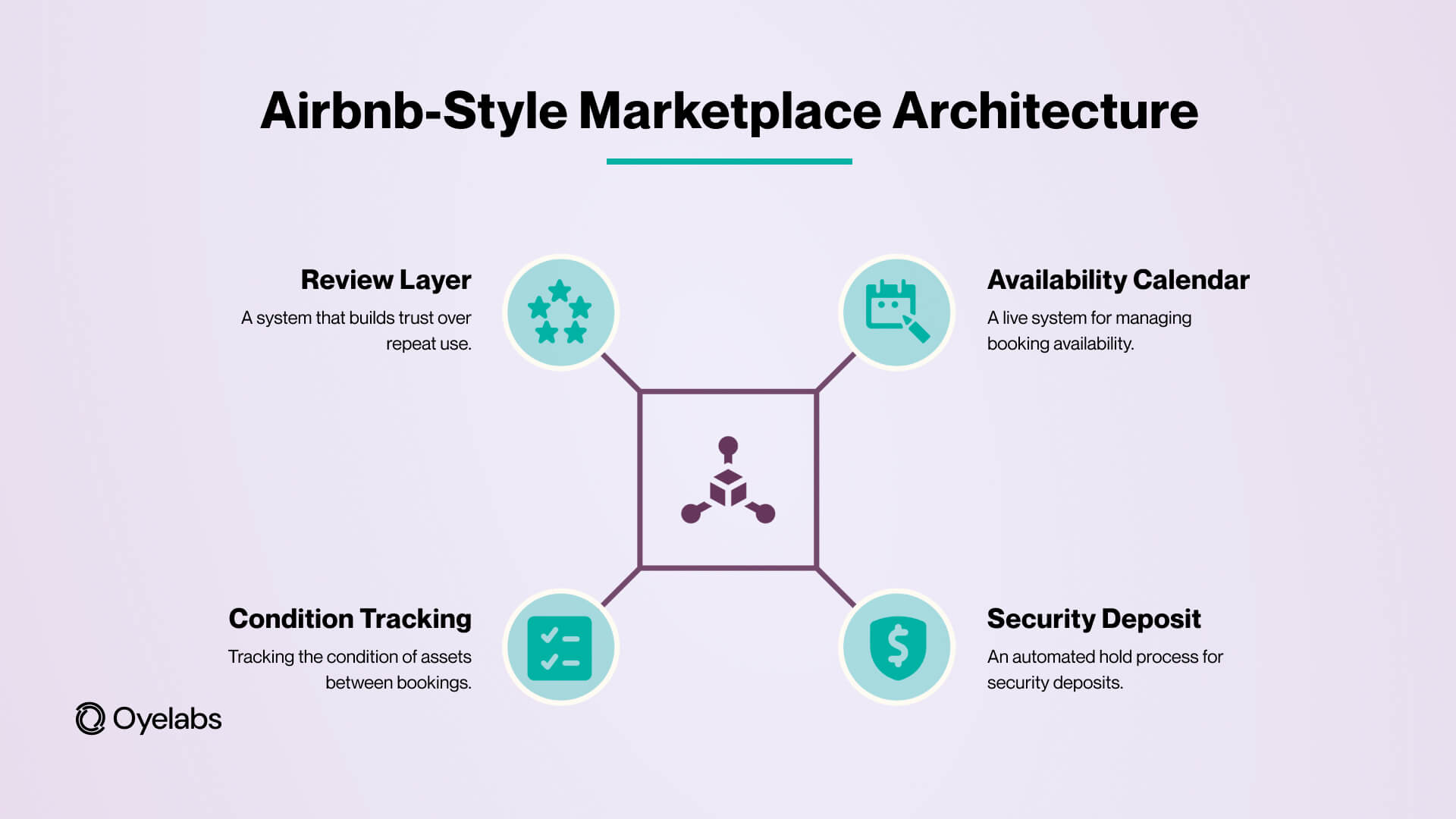
Every one of these five verticals needs the same core system: a live availability calendar, an automated security deposit hold, condition tracking between bookings, and a review layer that builds trust over repeat use.
That’s not a coincidence. It’s the same infrastructure an app like Airbnb runs on, just pointed at a different kind of bookable asset instead of a property listing.
This is the part most niche rental content skips entirely: a founder doesn’t need to build calendar logic, deposit automation, or inventory tracking from zero. A proven vacation rental script, built on exactly this architecture, adapts to any of these five verticals with far less development time than starting from a blank page.
Common Mistakes Founders Make Entering These Niches
- Buying too much inventory before testing demand: Committing to a large fleet before confirming local interest ties up capital in a niche that hasn’t been validated yet.
- Skipping security deposit automation: Manual deposit handling doesn’t scale and leaves the business exposed to damage or late-return losses.
- Ignoring sanitization and maintenance overhead: Categories like wellness equipment and baby gear carry hygiene expectations that directly affect repeat bookings.
- Targeting too broad an audience: Each of these verticals has a specific buyer; marketing to “everyone” dilutes conversion in a niche category.
- Underestimating local partnership value: Categories like traveler baby gear depend heavily on host and hotel partnerships, not just direct-to-consumer marketing.
Also Read: How to Build an App Like Airbnb – A Complete Guide
How OyeLabs Helps Founders Launch Niche Rental Marketplaces Faster
From an SEO and go-to-market standpoint, the appeal of these niches is obvious: low content competition means a new site can realistically rank for category-specific searches within months, not years, if the platform itself is ready to convert that traffic.
That’s usually where the timeline actually breaks. Founders spend months building booking calendars, deposit logic, and inventory tracking from scratch, by which point a competitor with off-the-shelf infrastructure has already captured the early search visibility.
A white label vacation rental script skips that build entirely. The booking, deposit, and inventory systems are already proven, so the real early-stage work becomes choosing the niche, sourcing the first small batch of inventory, and building the content and local partnerships that convert visibility into bookings.
Conclusion
None of these five niche rental verticals require inventing a new business model. They require recognizing that the same booking, deposit, and trust infrastructure that powers an app like Airbnb works just as well for a mobile sauna, a set of moving bins, or a stroller sitting near a hotel lobby.
The founders who move fastest in these categories won’t be the ones who build the most custom technology. They’ll be the ones who pick a specific, underserved niche, start with a small test fleet, and put proven rental marketplace infrastructure behind it before a bigger player notices the gap.
Frequently Asked Questions
Which niche rental vertical has the fastest payback period?
Mobile wellness equipment tends to have the fastest capital payback due to strong weekend demand pricing, though it also carries higher upfront investment than most other niches on this list.
Do these niche rental businesses need custom-built software?
No. All five run on the same booking calendar, deposit, and inventory logic used by property rental marketplaces, which means proven rental marketplace software can be adapted rather than built from scratch.
Which niche has the lowest maintenance overhead?
Upscale moving bins generally require the least ongoing maintenance, since the inventory only needs a wipe-down between uses and has minimal wear over hundreds of moves.
Is it better to launch broad across many rental categories or start narrow?
Starting narrow in one niche with a small test fleet reduces risk and lets a founder validate real local demand before committing capital to a wider category.
Why do these niches still have low competition in 2026?
Large rental incumbents have focused on high-volume categories like vehicles and general tools, leaving specific, fragmented niches underserved by dedicated platforms.
Sources and Editorial Notes
Sources
- Yo!Rent – Global Rental Economy Market Size and Growth Projections
- Grand View Research – Vacation Rental Market Size Report
Editorial Notes
- Global rental economy market-size figures are sourced from Yo!Rent’s published industry analysis; broader rental marketplace projections were cross-checked against Roobykon’s 2026 industry trends report.
- Specific pricing figures for individual niche categories (such as mobile wellness equipment weekend rates) are presented as general industry ranges rather than audited figures, since no standardized public dataset tracks pricing across these emerging niches.
- The operational comparison table reflects general category characteristics based on industry rental business analysis rather than a single audited source.