
The Benefits of eCommerce Analytics for Your Business Growth

 Anuraag Jain
Last Updated on October 25, 2024
In today’s fast-paced digital landscape, data-driven decision-making is no longer a luxury but a necessity for business success. With eCommerce booming and competition increasing, understanding how customers interact with your online store is crucial to staying ahead. Entrepreneurs looking to develop an eCommerce app or expand their existing digital presence can’t afford to overlook the power of eCommerce analytics.
By leveraging data insights, you can make informed choices that drive growth, improve customer experiences, and boost revenue. In this blog, we’ll explore the benefits of eCommerce analytics and how it can fuel your business growth.
What is eCommerce Analytics?
eCommerce analytics involves collecting, processing, and interpreting data from various customer touchpoints within your online store or mobile app. It provides valuable insights into customer behavior, preferences, and buying patterns. This data helps you understand how users engage with your site or app, what products or categories perform well, and where bottlenecks exist in the customer journey.
Some key metrics typically monitored include:
- Traffic Sources: Where your customers are coming from (organic search, social media, email marketing, etc.)
- Conversion Rate: The percentage of visitors who complete a desired action, such as making a purchase.
- Average Order Value (AOV): The average amount customers spend per transaction.
- Customer Lifetime Value (CLV): The predicted revenue from a customer over their entire relationship with your brand.
- Cart Abandonment Rate: The percentage of customers who add items to their cart but do not complete the purchase.
These metrics are just the beginning—eCommerce analytics allows you to dive deep into data that can shape strategies, boost conversions, and maximize profitability.
The Benefits of eCommerce Analytics for Entrepreneurs
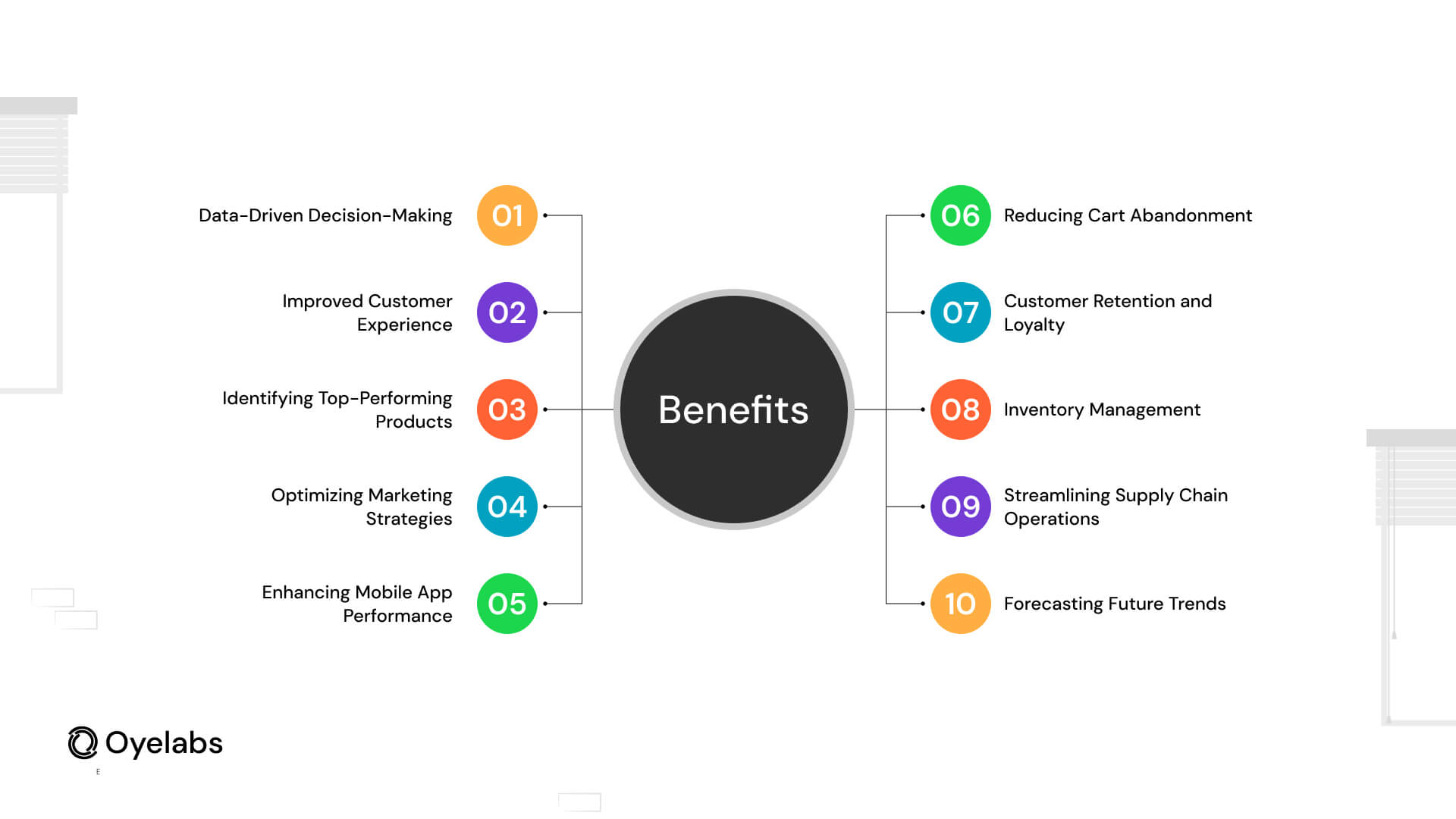
Let’s explore how eCommerce analytics can offer substantial benefits to your business:
Data-Driven Decision-Making
In the digital age, guessing what works or relying on intuition can be costly. Instead, data provides concrete evidence that guides decision-making. With eCommerce analytics, entrepreneurs can track everything from which marketing channels are driving traffic to which products have the highest demand.
This data empowers you to make decisions based on facts rather than assumptions. For instance, if you notice that most of your traffic comes from social media, you can invest more resources into social campaigns, increasing your overall returns. Any social media app earns millions through this. Similarly, analytics can reveal underperforming products or categories, allowing you to make adjustments, like promotions or bundling, to improve sales.
Improved Customer Experience
Customer experience is the heart of eCommerce success. Understanding how users interact with your website or mobile app—where they linger, where they abandon their carts, and what drives their loyalty—helps you tailor the experience to meet their needs.
For example, if analytics shows that users frequently drop off at a particular step in the checkout process, it may signal that the process is too complicated or time-consuming. By optimizing this step based on your data, you can reduce cart abandonment and increase conversion rates.
With the help of eCommerce analytics, you can:
- Personalize product recommendations based on browsing history or previous purchases. Nearly 35% of the total profit of Amazon comes because of personalization efforts.
- Simplify the checkout process to make it more user-friendly.
- Segment your audience to target different customer groups with specific offers.
These improvements create a seamless shopping experience that keeps customers coming back.
Identifying Top-Performing Products
Not all products are created equal—some will resonate more with customers and drive higher revenue. eCommerce analytics helps you identify top-performing products so you can focus your efforts on promoting and expanding these offerings.
By tracking metrics like product views, add-to-cart rates, and sales, you can easily see which products are most popular. Additionally, you can analyze trends over time to understand seasonality or shifts in consumer preferences. This data allows you to optimize your inventory, ensure you’re stocking the right products, and reduce costs associated with overstocking slow-moving items.
When developing an app like Taskrabbit or expanding your product line, these insights can guide your decisions on which products to highlight or prioritize.
Optimizing Marketing Strategies
eCommerce analytics plays a pivotal role in optimizing your marketing efforts. Instead of spending marketing dollars blindly, data allows you to track the performance of each campaign, channel, and promotion. By analyzing customer behavior, you can measure which channels—whether it’s email marketing, social media, or paid ads—are driving the most engagement and conversions.
Here’s how analytics can improve your marketing:
- Campaign Performance: Understand which marketing campaigns lead to sales and which ones don’t, so you can adjust your strategies accordingly.
- Customer Segmentation: Use data to create more targeted marketing campaigns. For example, you can segment customers based on location, purchasing behavior, or product preferences.
- Return on Investment (ROI): Track the ROI of every marketing dollar spent, ensuring that your efforts are cost-effective.
By optimizing your marketing strategy with the help of eCommerce analytics, you can increase brand awareness, generate more leads, and boost conversions—all while keeping your budget in check.
Enhancing Mobile App Performance
If you plan to develop an eCommerce app, eCommerce analytics is vital for improving your app’s performance. Tracking user interactions within the app can help you understand:
- How do users navigate your app?
- Where do drop-offs occur in the purchasing process?
- Which features are most or least used?
Cart abandonment is one of the biggest challenges in eCommerce, with the average cart abandonment rate hovering around 70%. While the reasons for abandonment vary, eCommerce analytics can help you identify patterns and address the root causes.
You might discover that a high percentage of users abandon their carts after seeing unexpected shipping costs or that the checkout process is too complicated. By identifying these pain points, you can make necessary adjustments, such as:
- Offering free shipping thresholds.
- Simplifying the checkout process.
- Providing guest checkout options.
Aditionally, you can implement follow-up emails to remind customers of their abandoned carts or use exit-intent popups with special offers. To learn more about effective strategies, check out our detailed discussion on streamlining the checkout process. Reducing cart abandonment directly impacts your bottom line, turning lost sales into completed transactions.
Customer Retention and Loyalty
Acquiring new customers is more expensive than retaining existing ones. With eCommerce analytics, you can monitor customer behavior to determine what keeps them coming back. Metrics like Customer Lifetime Value (CLV) and repeat purchase rate help you identify your most loyal customers and better understand their preferences.
By analyzing their behavior, you can develop targeted strategies to boost customer retention, such as:
- Loyalty programs offer points or rewards for repeat purchases.
- Personalized discounts or offers based on past buying behavior.
- Exclusive product launches for returning customers.
With these insights, you can foster long-term relationships and build a loyal customer base that drives sustained growth.
Inventory Management
Efficient inventory management is critical for an eCommerce business. Overstocking leads to higher storage costs while understocking results in missed sales opportunities. eCommerce analytics provides real-time data on product demand, enabling you to optimize inventory levels.
By tracking sales trends and forecasting demand, you can ensure that you’re stocking the right products in the right quantities. Additionally, analytics can help you identify slow-moving items that may need promotions or discounts to clear out.
Improved inventory management ensures that you’re meeting customer demand while minimizing costs, making your business more efficient and profitable.
Streamlining Supply Chain Operations
Your supply chain is a vital component of your eCommerce business. By using eCommerce analytics, you can monitor your entire supply chain, from procurement to delivery. This allows you to identify potential bottlenecks, delays, or inefficiencies and take proactive measures to streamline operations.
For example, by tracking delivery times and order fulfillment rates, you can pinpoint areas where your supply chain is slowing down, whether due to shipping delays, supplier issues, or warehouse inefficiencies. Streamlining your supply chain reduces costs, improves customer satisfaction, and enhances your overall operational efficiency.
Forecasting Future Trends
One of the most significant benefits of eCommerce analytics is its ability to help you forecast future trends. By analyzing historical data, you can predict changes in customer behavior, product demand, and market trends. This foresight enables you to prepare for fluctuations in demand, plan your marketing efforts accordingly, and adjust your inventory before the competition does.
For example, if analytics shows a seasonal spike in sales for specific products, you can ramp up inventory, adjust marketing strategies, and prepare promotions to capitalize on this trend.
How to Leverage eCommerce Analytics for Business Growth
To fully harness the power of eCommerce analytics, here are some actionable steps you can take:
- Set Clear Goals: Identify your business objectives and determine the metrics that align with those goals (e.g., increasing conversion rates, improving customer retention, or boosting average order value).
- Invest in the Right Tools: Use platforms like Amazon Analytics, or dedicated eCommerce analytics software to track and analyze your data.
- Regularly Review Data: Continuously monitor and review your analytics to spot trends, optimize performance, and make informed decisions.
- Test and Optimize: Use A/B testing to experiment with different strategies and see which ones deliver the best results.
- Train Your Team: Ensure that your team understands how to interpret and act on the data insights from your analytics tools.
Optimize your eCommerce app with Oyelabs
Conclusion
For entrepreneurs and businesses looking to develop an eCommerce app or optimize their existing online store, eCommerce analytics is an invaluable tool for driving growth. From enhancing the customer experience to streamlining operations, data insights can help you make informed decisions that lead to higher conversions, increased revenue, and long-term success. So, add your eCommerce analytics to your app with Oyelabs today.