
The Surprising ROI of Launching With an UberEats Clone App

The Surprising ROI of Launching With an UberEats Clone App
 Sachin Sharma
Last Updated on December 22, 2025
Key Takeaways What You’ll Learn: Stats That Matter:
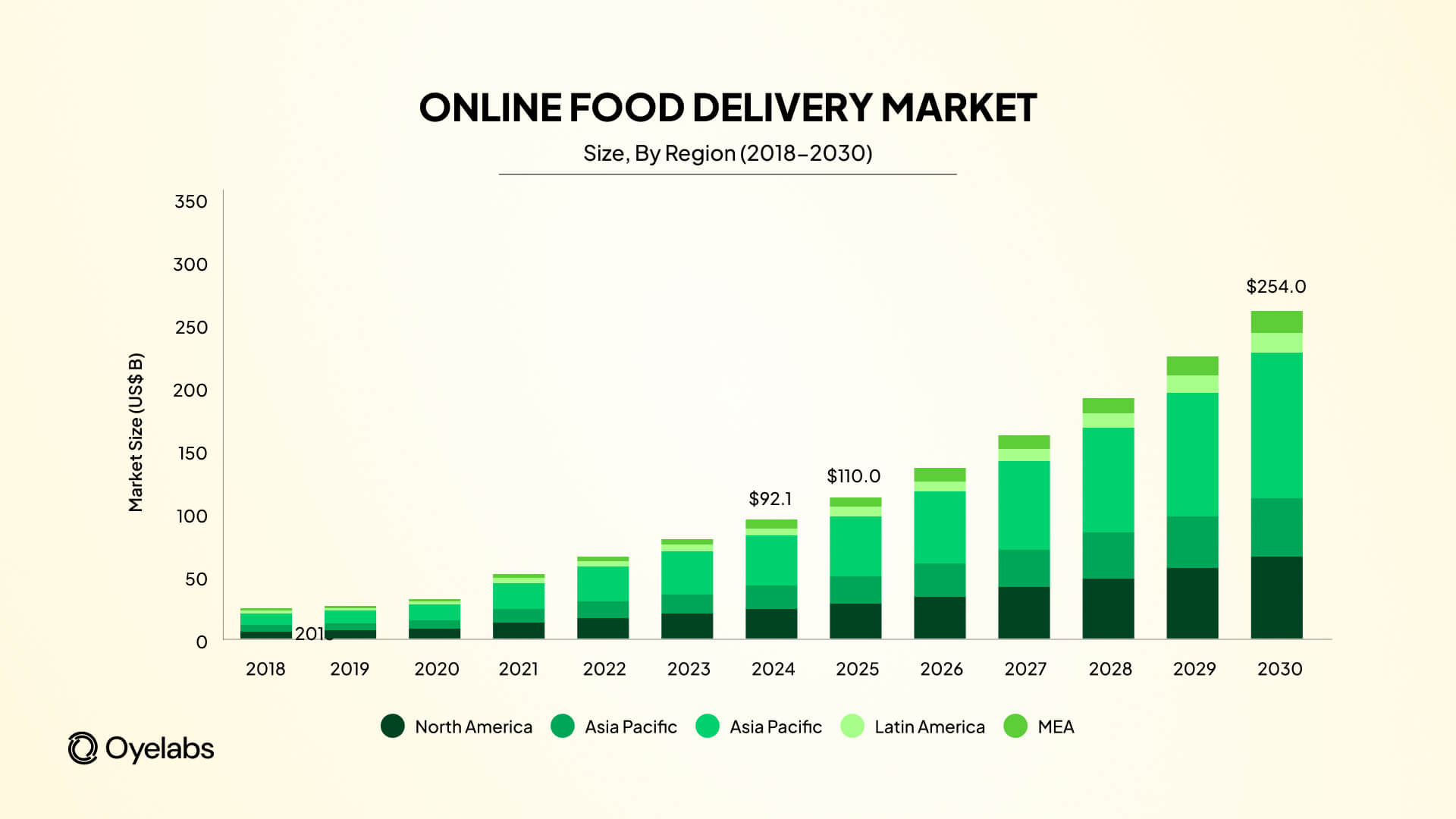
Consumers today expect instant, convenient, and seamless food delivery experiences, and the online food delivery market is growing faster than ever. For entrepreneurs, this surge in demand presents an incredible opportunity to start a profitable business. However, creating a custom platform that can compete with giants like UberEats, DoorDash, or Postmates requires significant time, money, and technical expertise. An UberEats clone app provides a pre-built, fully customizable, white-label solution that addresses these challenges. It enables a faster launch, lowers development risks, and allows you to focus on attracting customers and scaling your business. This blog explains why using this solution is a smart, cost-effective choice for building a successful food delivery platform. The biggest contributor to ROI is simple. You save enormous development costs and enter the market much faster. With demand rising quickly and competition still open in many regions, speed matters more than ever. A custom built food delivery platform can take 8 to 12 months or more to build, test, and refine. By contrast, a high quality UberEats clone app is already complete with core features and only requires customization. Why this matters: the global online food delivery market was estimated at USD 288.84 billion in 2024 and is projected to grow to USD 505.50 billion by 2030. When the overall demand base is growing so fast, being early to market allows you to capture a share of rapidly increasing orders which can translate into fast revenue generation. Launching within weeks lets you: In an industry where user loyalty is shaped by convenience and reliability, being fast to market becomes a decisive advantage. Building a platform similar to UberEats from scratch can easily cost USD 100,000 to 200,000 or more depending on features, technology choices, team size, and testing requirements. Custom app development can cost over $150,000 to build. Using a clone solution significantly reduces this expense because the core architecture and essential modules such as ordering, real time tracking, payments, dashboards, and delivery partner management are already created and ready to use. Clone solutions reduce initial app costs by more than 60 percent. The savings you achieve can be redirected into high impact growth activities such as targeted marketing, restaurant onboarding, delivery partner incentives, local promotions, early user acquisition campaigns, and continuous app improvements based on user feedback. This allows you to protect your cash flow instead of draining funds before launch. You invest strategically during and after launch when real user data gives you clarity. With lower upfront spending, you reach breakeven earlier and begin generating profit faster, which directly boosts your overall ROI. Online food delivery has evolved into a mature and highly profitable industry. It is no longer a speculative venture, as customer demand, ordering habits, and digital adoption patterns are well established. By leveraging an UberEats clone app, entrepreneurs can enter the market with confidence, tapping into a business model that is already tested and widely accepted. Using a clone app gives you access to a platform designed for efficiency and scalability. You benefit from strong user demand, high repeat order potential, and predictable purchasing behavior, ensuring your platform generates consistent revenue. Additionally, the built-in monetization mechanisms such as commissions from restaurants, delivery fees, subscriptions, and in-app advertising provide multiple income streams from day one. The model is highly adaptable, allowing you to scale operations, add new features, or expand to additional cities without starting from scratch. By following a proven framework, you significantly reduce the uncertainty and risk associated with launching a new platform. This strategy increases your chances of capturing market share quickly, building a loyal customer base, and achieving sustainable long-term ROI. One of the strongest advantages of launching an UberEats clone app is the ability to generate revenue from multiple sources simultaneously. This diversified structure ensures that you are not dependent on a single channel for income. Instead, you build a balanced, reliable, and scalable revenue model that increases profitability as your user base grows. Each revenue stream plays a strategic role in boosting your overall ROI and makes your platform more sustainable in the long run. Restaurant commissions remain the primary source of income for most food delivery platforms. Typically, platforms charge between 15 percent and 30 percent on each order placed through the app. While these margins may appear moderate at first glance, the real value emerges once the platform begins to handle a substantial daily order volume. Even a small commission becomes extremely lucrative when hundreds or thousands of orders are processed daily. Additionally, restaurants are often willing to pay higher commissions in exchange for visibility, marketing, and a steady flow of customers generated by your platform. Customer delivery fees provide another consistent and predictable revenue channel. These fees can be structured in various ways depending on your business strategy and market demand. You may implement a flat delivery fee for all orders or create a distance based pricing model that increases revenue on longer delivery routes. Many platforms also apply surge pricing during high demand periods, such as weekends, holidays, or festival evenings. This allows you to maximize earnings during peak times when order volume is naturally higher. Together, these fee structures ensure that your platform earns from every order placed by customers. Subscription programs offer one of the most stable sources of recurring revenue. By introducing premium membership plans, you can give customers benefits such as free deliveries, priority customer support, exclusive deals, and early access to special offers. These perks create a sense of value that encourages more users to subscribe, particularly frequent customers who order multiple times a week. Subscription based revenue is extremely valuable because it arrives consistently each month and does not fluctuate with daily order volume. This makes it easier to forecast earnings and manage long term growth strategies. In app advertising becomes increasingly profitable as your user base grows. Restaurants are always looking for additional ways to increase visibility and attract customers. With your platform, they can pay to appear in featured sections, run sponsored promotions, highlight limited time offers, or display banner advertisements within the app. Since these placements help restaurants boost their sales, advertising is a high margin revenue stream for your platform. As more restaurants join and competition for visibility increases, your advertising opportunities expand even further, allowing you to generate significant revenue from promotional placements. Leverage the booming demand for online food ordering with a Clone App for Online Food Delivery. This fully customizable solution lets you launch your platform quickly, minimize development costs, and start earning revenue from day one. Designed with a proven business model, it supports multiple income streams including restaurant commissions, delivery charges, subscriptions, and in-app advertising. Build strong partnerships with restaurants, attract loyal customers, and scale efficiently in your target market. Don’t wait months for custom development when you can start fast. Contact our team today to see how a Clone App for Online Food Delivery can deliver high ROI and sustainable growth. Launching a food delivery service with an UberEats clone app offers far more than a quick setup. It provides a strategic and financially rewarding entry into one of the fastest growing digital markets. The ability to deploy a fully functional, market ready platform in weeks instead of months removes unnecessary risk and maximizes revenue potential. With rising demand for online food ordering and customer expectations shifting toward seamless digital experiences, this is the perfect time to enter the industry. If you want to launch quickly and profitably, a clone based solution is one of the smartest investments available. Ready to launch your own food delivery platform? Explore UberEats clone app solutions today and unlock a surprisingly high ROI. 1. Can I integrate multiple payment options in a clone app? 2. How long does it take to customize a clone app? 3. Can I launch the app in multiple cities simultaneously? 4. Are clone apps compatible with both iOS and Android? 5. Can I add extra services like grocery or alcohol delivery later? 6. Is technical support available after app launch?
How an UberEats Clone App Boosts Your ROI
Reduced Time to Market
Lower Development and Investment Costs
Proven and Validated Business Model
Maximizing Profitability With Multiple Revenue Streams
Restaurant Commissions
Customer Delivery Fees
Subscription Programs
In App Advertising
Launch Your Food Delivery Business
Conclusion
FAQs
Yes, clone apps can support cards, digital wallets, and cash-on-delivery.
Customization usually takes 2–4 weeks depending on features and branding.
Yes, clone apps are scalable and support multi-city operations from day one.
High-quality clone apps are fully compatible with iOS and Android devices.
Yes, clone apps allow adding services without rebuilding the entire platform.
Most clone solutions provide ongoing support for updates, maintenance, and troubleshooting.