
How to Build a Micro-Drama App: A Step-by-Step Guide

 Sachin Sharma
Last Updated on June 9, 2026
Key Takeaways –
What You’ll Learn:
- Micro-drama apps deliver short episodes designed for mobile-first viewing.
- Vertical video format improves engagement and completion rates.
- Coin systems and subscriptions are common micro-drama monetization models.
- Original content helps platforms stand out from competitors.
- Creator dashboards simplify content uploads and performance tracking.
Stats That Matter:
- ReelShort users average 35.7 minutes daily, surpassing Netflix’s 24.8 minutes on mobile.
- ReelShort engagement exceeds Amazon Prime Video (26.9 minutes) and Disney+ (23 minutes).
- Most micro-drama episodes are designed for 1–5 minute viewing sessions.
The micro-drama format is experiencing rapid global adoption. These are short-form serialized videos, typically 60 to 90 seconds per episode, built around cliffhangers that drive continuous viewing and repeat engagement.
This model has already generated billions of views across Asian markets and is now expanding quickly into Western audiences through platforms like ReelShort, DramaBox, and Mango TV. These platforms have proven that micro-drama app development is not just a content trend but a scalable revenue model powered by subscriptions, coin-based systems, and hybrid monetization strategies.
For founders looking to build a micro-drama app, launch a micro-drama streaming app, or enter micro-drama platform development, this guide explains the full process. You will learn how short drama app development works in practice, including core features, monetization architecture, and technology choices needed to scale.
What Is a Micro-Drama App and How Does It Work?
A micro-drama app is a mobile-first platform that hosts serialized short-form video content, typically dramas broken into episodes of one to three minutes each. Users unlock episodes through subscriptions, coin-based purchases, or ad-watching.
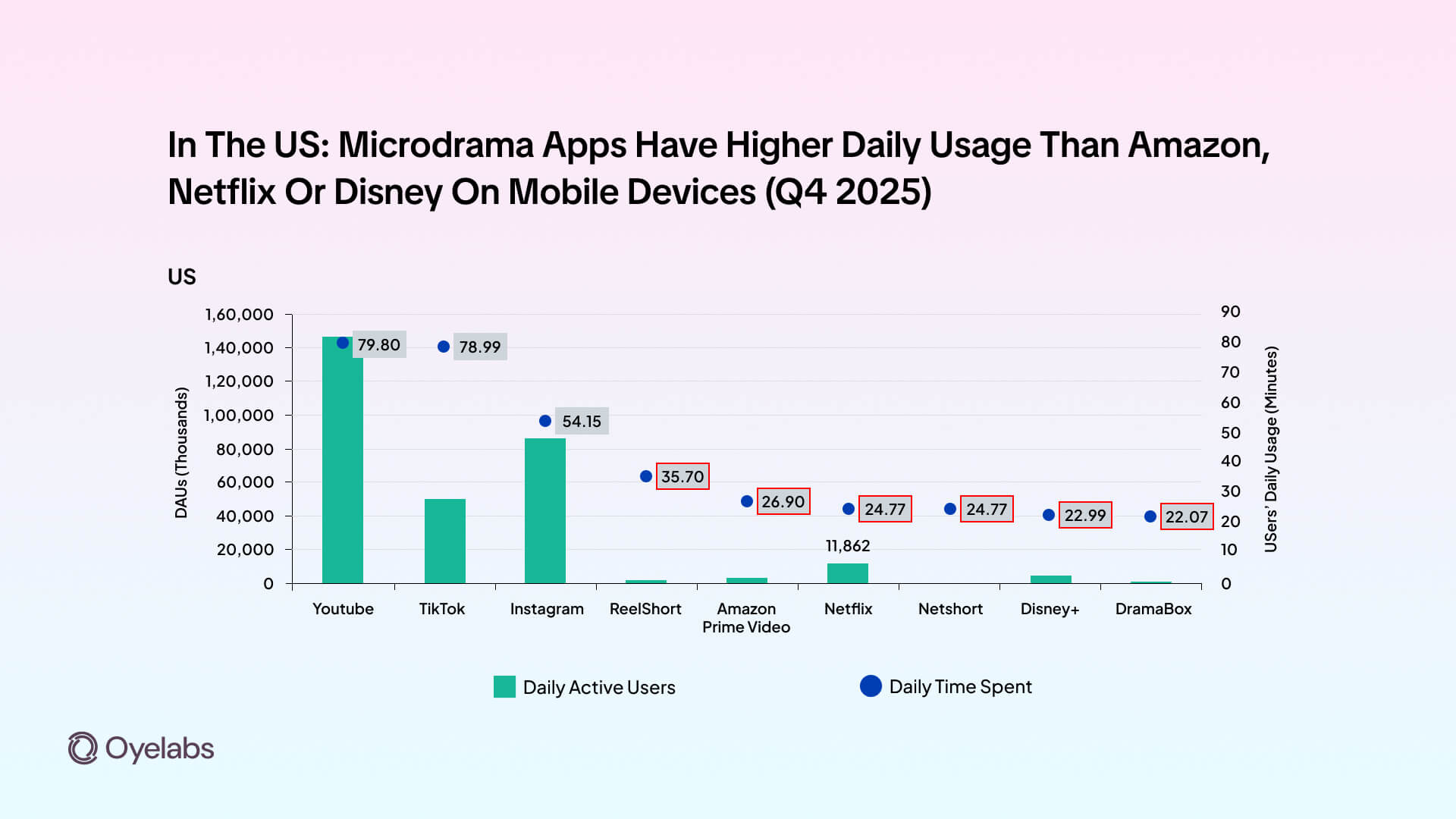
The format borrows from mobile gaming’s progression mechanics. Each episode ends on a hook. Viewers pay (or watch ads) to see what happens next. The engagement numbers back this up: in Q4 2025, ReelShort users in the US averaged 35.7 minutes per day on the app, outpacing Netflix (24.8 min), Amazon Prime Video (26.9 min), and Disney+ (23 min) on mobile.
Who Should Build a Micro-Drama App?
You don’t need to be a major studio to enter the market. Today, micro-drama platform development is attracting a wide range of businesses and entrepreneurs.
- Independent content platforms targeting niche audiences such as romance, thriller, BL, and historical drama
- Creator economy founders building subscription-based content platforms
- Regional OTT providers expanding into short-form entertainment
- White-label entrepreneurs launching platforms under their own brand
If you’re in any of these categories, the development process is largely the same. What changes is your content strategy, audience focus, and monetization model.
What Features Do You Need to Build a Micro-Drama App?
Before you build a micro-drama app, it’s important to define the features that will support content delivery, monetization, and long-term user retention. Most successful micro-drama platforms are built around three core systems: the viewer experience, creator tools, and admin controls.
A strong micro-drama streaming app should do more than host videos. It should guide users from one episode to the next while making content discovery and monetization feel seamless.
Which Features Improve User Retention?
Retention is what separates successful micro-drama apps from platforms that struggle to grow. The most effective retention features encourage viewers to return regularly and continue unlocking episodes.
Key retention features include:
- Personalized recommendations based on watch history
- Continue watching across multiple devices
- Preview trailers before episode unlocks
- Social sharing with episode-specific deep links
- Referral and loyalty coin rewards
- Daily login rewards and bonus coins
- Favorite series notifications
- Watch history synchronization
- Episode countdowns for upcoming releases
In our experience with micro-drama app development, features like personalized recommendations, push notifications, and daily rewards often have a bigger impact on engagement than adding dozens of advanced features. The goal is to keep viewers moving smoothly from one episode to the next.
Also Read: How New Short-Video Apps Compete Without Influencers
Step-by-Step Guide to Building a Micro-Drama App
Step 1: Define Your Monetization Model
Your monetization model shapes your entire app architecture. Nail this before development starts.
| Model | How It Works | Best For |
|---|---|---|
| Subscription (SVOD) | Monthly or annual access to all content. | Long-term retention |
| Coin/Credit System | Users buy coins to unlock episodes. | Higher revenue per user |
| Hybrid | Free episodes plus paid premium content. | Growth and monetization |
| Ad-Supported (AVOD) | Watch ads to unlock episodes. | Large, price-sensitive audiences |
| Creator Subscription | Fans subscribe to individual creators. | Creator-driven platforms |
ReelShort and most top-grossing micro-drama apps use a coin/hybrid model because it drives higher revenue per active user than flat subscriptions alone. If you’re building a creator monetization platform, adding a fan subscription layer on top makes sense.
Step 2: Choose Your Tech Stack
The right stack depends on your timeline, budget, and scale goals.
| Component | Recommended Option | Why |
|---|---|---|
| Mobile (iOS + Android) | Flutter | Single codebase, faster development |
| Backend | Laravel (PHP) or Node.js | Scalable and reliable |
| Database | MySQL + Redis | Efficient data storage and caching |
| Video Hosting & Streaming | AWS S3 + CloudFront or Mux | Smooth, low-latency video delivery |
| Payments | Stripe, Razorpay, or In-App Payments | Flexible payment processing |
| Push Notifications | Firebase (FCM) | Reliable cross-platform notifications |
| Admin Panel | Custom Laravel Dashboard | Complete platform management and control |
If you want to move faster, a white-label micro-drama platform built on Flutter and Laravel can cut your build time from 6-9 months to 6-8 weeks. That’s the approach OyeLabs takes with its MoonDrama-style builds, giving you a production-ready codebase that’s fully customizable.
Step 3: Build the Video Delivery Infrastructure
This is where most first-time builders underestimate effort. Video delivery is not just storage. You need:
Transcoding: Raw video files need to be converted into multiple resolutions (360p, 720p, 1080p) for adaptive streaming. Use AWS Elastic Transcoder or Mux for this.
DRM Protection: If your content has any licensing value, you need Digital Rights Management to prevent downloading and redistribution. Widevine (Android) and FairPlay (iOS) are the standard options.
CDN Setup: Deliver video from edge servers closest to the user. Without a CDN, playback buffers. With one, it doesn’t.
Episode Gating Logic: This is the core of your business model. The app backend needs to check whether a user has unlocked an episode before serving the video URL. Never expose direct video URLs in the client.
Step 4: Design the Content Discovery Experience
Retention lives and dies on how well your app surfaces the right content. A well-structured discovery layer includes:
- A home feed with editorial carousels (Trending, New Releases, Recommended for You)
- Genre and category filters
- Series pages with episode lists, cast info, and episode teasers
- Search with title, genre, and tag support
- Notification triggers when new episodes drop for a user’s saved series
The UX pattern that works best: open on a drama that’s already mid-season with a few free episodes. Let the viewer get hooked, then gate the rest. This is the same hook Platforms like ReelShort and DramaBox use, and it converts.
Step 5: Set Up the Creator Dashboard
If your platform includes a creator-upload model (versus a closed studio model), you need a functional creator portal.
| Feature | What It Does |
|---|---|
| Series Manager | Organizes series, genres, and metadata |
| Episode Uploader | Uploads and schedules episodes |
| Earnings Dashboard | Tracks revenue and unlocks |
| Audience Analytics | Monitors views and retention |
| Payout Settings | Manages creator payment details |
If you’re building something closer to an OnlyFans or Fansly model with drama content, add subscription tiers per creator so fans can subscribe to their favorite creator directly.
Step 6: Integrate Payments and the Coin System
The coin system is the engine of most micro-drama apps. Here’s how it typically works:
- User buys a coin bundle (e.g., 100 coins for $0.99, 500 coins for $3.99)
- Each episode costs a fixed number of coins to unlock (e.g., 5 coins per episode)
- Coins are stored in the user’s wallet in the backend
- Unlock event is server-side validated before video URL is released
Make sure your coin system supports:
- Bonus coins on first purchase
- Daily free coin rewards (drives return visits)
- Gifting coins to other users (social feature)
- Refund and dispute handling via admin panel
For payment processing, Stripe works well for US/EU markets. If you’re targeting Southeast Asia or South Asia, add Razorpay or a local gateway.
Step 7: Plan for Scale From Day One
A successful launch can spike traffic fast if a series goes viral. Build with this in mind:
- Use auto-scaling infrastructure (AWS EC2 Auto Scaling or equivalent)
- Cache episode metadata and unlock states in Redis to reduce database hits
- Use a queue system (Laravel Horizon or Bull) for processing uploads and notifications
- Set up monitoring and alerting before launch, not after
A white-label solution with an architecture already designed for scale is far less risky than building from scratch and retrofitting later.
How Much Does It Cost to Build a Micro-Drama App?
The cost to build a micro-drama app typically ranges from $8,000 to $150,000+, depending on whether you choose a white-label solution, a custom build, or an enterprise-grade platform. A white-label micro-drama app usually costs between $8,000 and $20,000, while a custom platform can range from $30,000 to $60,000. Enterprise solutions with advanced infrastructure, DRM protection, and multi-region support can exceed $150,000.
Several factors influence the final development cost, including feature complexity, content monetization systems, video streaming infrastructure, third-party integrations, and ongoing maintenance requirements.
| Build Type | Estimated Cost Range | What’s Included |
|---|---|---|
| White-Label (Customized) | $8,000 – $20,000 | Ready-made platform with branding and customization |
| Custom Build (Mid-Scale) | $30,000 – $60,000 | Custom apps, backend, admin panel, and integrations |
| Full Custom (Enterprise) | $80,000 – $150,000+ | Advanced infrastructure, DRM, analytics, and multi-region support |
What Are the Ongoing Costs of Running a Micro-Drama App?
Beyond development costs, founders should budget for hosting, streaming, payment processing, and ongoing platform maintenance.
| Cost Item | Estimated Cost |
|---|---|
| AWS / Cloud Hosting | $200–$1,500+ per month |
| Video CDN (CloudFront / Mux) | $100–$800+ per month |
| Payment Gateway Fees | 2–3% per transaction |
| Apple Developer Account | $99 per year |
| Google Play Developer Account | $25 one-time fee |
| Push Notifications | Free tier available via Firebase |
| Maintenance & Updates | $500–$2,000+ per month |
How Long Does It Take to Build a Micro-Drama App?
The timeline for micro-drama app development depends on your feature requirements, customization level, and whether you choose a white-label solution or a fully custom build. Founders looking to launch quickly often choose a white-label platform, while larger businesses may invest in a custom solution with unique features and infrastructure.
| Build Type | Estimated Timeline | Best For |
|---|---|---|
| White-Label (Customized) | 4–5 Weeks | Fast launch with a proven solution |
| Custom Build (Mid-Scale) | 4–6 Months | Unique features and custom branding |
| Full Custom (Enterprise) | 6–9 Months | Large-scale platforms with advanced requirements |
What Does the Development Timeline Look Like?
If you’re using a white-label solution, the development process is typically broken into the following phases:
| Phase | Duration | What Gets Built |
|---|---|---|
| Discovery & Setup | Week 1 | Branding, feature planning, and tech stack selection |
| Core App Development | Weeks 1–2 | User authentication, episode browsing, video playback, and series pages |
| Monetization Layer | Weeks 2–3 | Coin system, subscriptions, and payment gateway integration |
| Creator Dashboard | Weeks 3–4 | Content uploads, audience analytics, and payout management |
| Admin Panel & QA | Weeks 4–5 | User management, reporting, content moderation, testing, and deployment |
In our experience, the biggest causes of delays are scope creep, late monetization decisions, and underestimating the complexity of video streaming infrastructure. Defining these requirements early and starting with a proven white-label foundation can significantly reduce development time and help you launch within 4–5 weeks.
Ready to Launch Your Micro-Drama App?
Building a successful micro-drama app requires more than just video streaming. You need the right mix of content discovery, monetization, creator tools, and scalable infrastructure to keep users engaged and drive revenue. Whether you’re planning to build a platform like ReelShort, launch a niche short drama app, or create a creator-focused streaming service, starting with the right foundation can save months of development time.
Oyelabs specializes in custom and white-label micro-drama app development, helping founders launch faster with proven features and flexible customization. Contact our team today for a free consultation and bring your micro-drama app idea to life.
Conclusion
The micro-drama market is growing fast, and the window to build a differentiated platform is still open. The technical build is straightforward if you choose the right architecture and partner. Where most founders get stuck is underbuilding the monetization layer or overcomplicating the discovery UX.
Keep the core loop simple: free taste, paid unlock, push notification when the next episode drops. Everything else builds on top of that.
OyeLabs builds custom and white-label micro-drama platforms on Flutter and Laravel, including full creator dashboards, coin systems, and streaming infrastructure. If you’re scoping a build, get in touch for a free consultation.
FAQs
How many episodes should a micro-drama app launch with?
Launching with at least 50–100 episodes across multiple genres helps attract users, increase watch time, and reduce early audience churn.
What genres perform best on micro-drama platforms?
Romance, revenge, billionaire stories, fantasy, family drama, and suspense consistently generate higher engagement and stronger user retention rates.
Can independent creators publish content on a micro-drama app?
Yes. Many platforms allow creators to upload original series, reach audiences directly, and earn revenue through subscriptions or content purchases.
How often should new episodes be released?
Daily or weekly episode releases keep viewers engaged, improve retention, and encourage users to return regularly for new content.
Is content licensing better than producing original micro-dramas?
Licensing enables faster launch, while original content builds exclusivity, stronger branding, and long-term competitive advantages for platform growth.