
How New Short-Video Apps Compete Without Influencers in 2026
 Anuraag Jain
Last Updated on May 25, 2026
Key Takeaways
- Short-drama apps generated approximately $2.98 billion in in-app revenue during 2025
- ReelShort reportedly crossed nearly $1.2 billion in consumer spending
- TikTok confirms follower count is not a direct ranking factor for distribution
- Utility-first short video apps are replacing personality-driven creator strategies
- Algorithm quality matters more than creator quantity in modern video-sharing apps
- Retention systems now matter more than downloads in social media app development
Most founders trying to build a short video app are solving the wrong problem. They focus on influencers, creator payouts, and viral marketing loops before validating whether the platform itself can retain attention. That strategy is becoming increasingly risky in 2026. The fastest-growing short-video platforms are no longer fully dependent on influencer culture. Instead, they are using algorithm-first feeds, vertical micro-drama content, faceless utility videos, and AI-assisted discovery systems to drive engagement.
Apps like TikTok still dominate creator-led entertainment, but new platforms are proving that audiences will spend heavily on structured content, niche utility, and recommendation-driven experiences without depending on traditional influencer ecosystems.
The fastest-growing short video apps in 2026 compete without traditional influencers by using algorithm-first discovery systems, vertical micro-drama content, faceless utility formats, and AI-driven engagement loops. Platforms like ReelShort and DramaBox generated billions in consumer spending by prioritizing retention and content performance over creator popularity.
That shift is changing how founders launch app-like TikTok platforms today.
This guide explains how modern short video apps compete without influencers, what business models are actually working, hidden operational costs most founders ignore, and what businesses should validate before investing in short video app development.
Why Are New Short Video Platforms Moving Away From Influencer Dependency?
The economics of creator-led social media are changing.
For years, platforms depended heavily on influencers to drive traffic, engagement, and retention. That model helped TikTok scale globally. But it also created expensive creator ecosystems, unstable monetization structures, and rising acquisition pressure for newer entrants.
That is why many founders planning to launch app like TikTok platforms are now exploring different retention models.
The shift happening in 2026 is not “anti-influencer.”
It is “algorithm-first.”
The strongest emerging short video apps are increasingly optimizing around:
- retention loops
- watch-time behavior
- recommendation systems
- episodic storytelling
- utility-driven content
- AI-assisted personalization
An algorithm-first short video platform prioritizes behavioral engagement signals over follower relationships during content distribution.
That changes platform economics significantly.
Instead of competing directly with celebrity creators, newer apps compete through:
- recommendation quality
- content pacing
- retention psychology
- niche audience targeting
- session duration optimization
In our experience reviewing short video platform launches, the biggest misconception founders have is assuming creator quantity automatically creates engagement.
It does not.
Weak recommendation systems usually destroy retention regardless of creator count.
| Traditional Influencer Model | Algorithm-First Model |
| Creator popularity driven | Behavior driven |
| Follower-based distribution | Interest-based distribution |
| Expensive creator payouts | Lower creator dependency |
| Personality-centric | Retention-centric |
One operational pattern appears repeatedly across social media app development projects: platforms with stronger recommendation quality usually outperform platforms with larger influencer rosters.
Bottom line: The next generation of apps like TikTok are increasingly reducing dependency on influencer ecosystems and focusing more heavily on retention infrastructure.
How Are Vertical Drama Apps Reshaping the Short Video Industry?
The biggest disruption inside short video apps is not happening inside influencer culture.
It is happening inside mobile-first entertainment.
Vertical-drama platforms such as ReelShort, DramaBox, GoodShort, and ShortMax are replacing influencer-led feeds with serialized scripted content.
A vertical-drama app is a short video platform built around episodic mobile-first storytelling optimized for vertical viewing and rapid consumption.
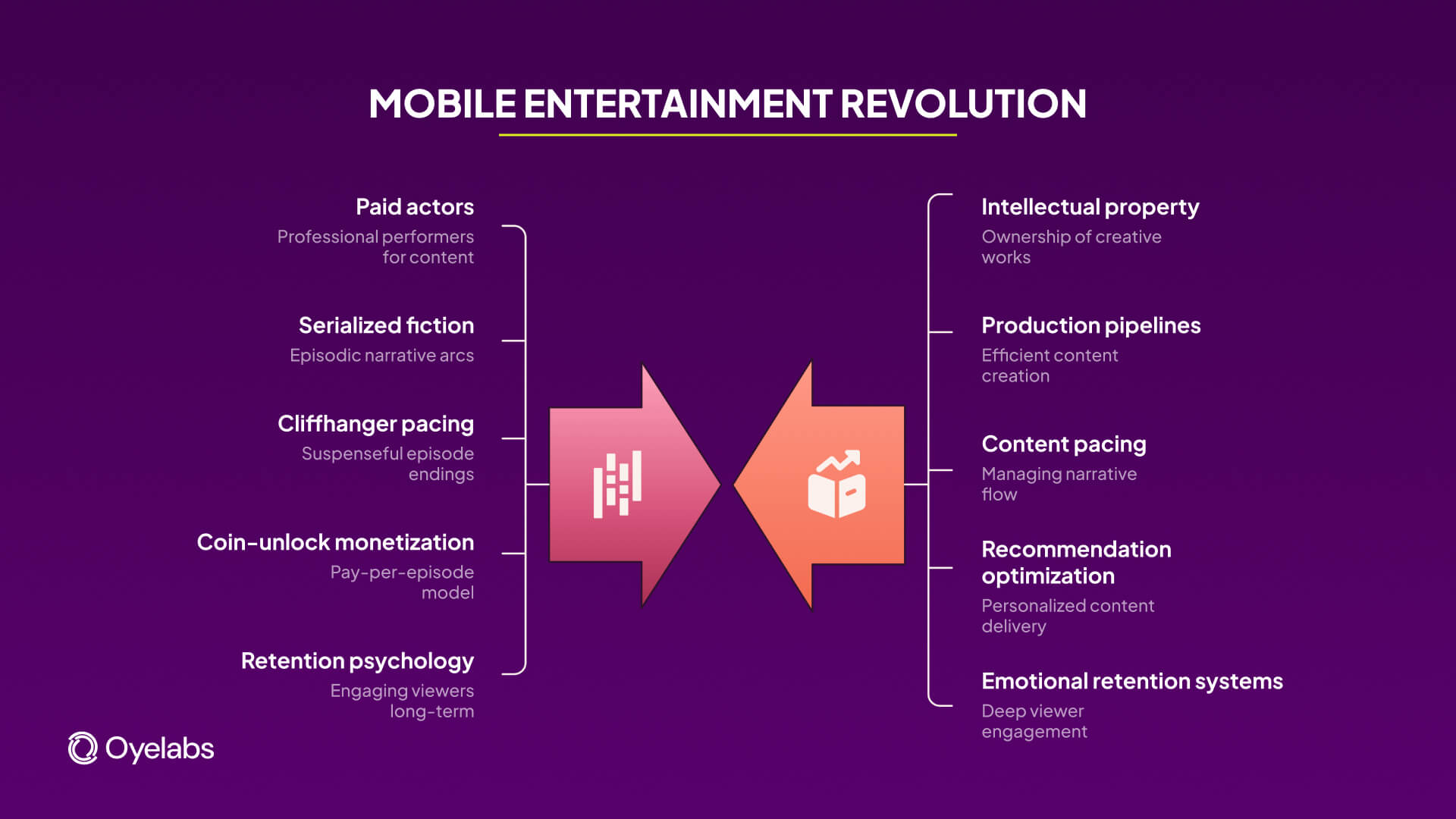
These platforms rely heavily on:
- paid actors
- serialized fiction
- cliffhanger pacing
- coin-unlock monetization
- retention psychology
This creates very different platform economics compared to traditional creator ecosystems.
Instead of paying influencers continuously, platforms invest more heavily in:
- intellectual property
- production pipelines
- content pacing
- recommendation optimization
- emotional retention systems
The growth numbers are significant.
Short-drama apps reportedly generated approximately $2.98 billion in in-app purchase revenue during 2025.
ReelShort reportedly crossed nearly $1.2 billion in consumer spending.
DramaBox reportedly generated over $323 million while becoming one of the strongest monetization players in the category.
A coin-unlock monetization system allows users to purchase virtual currency to access additional episodes or premium scenes.
This model changes user psychology.
Instead of casually scrolling through creator content, viewers emotionally commit to unfinished story arcs.
In our experience analyzing mobile content retention systems, serialized storytelling dramatically improves session continuation because users feel psychologically compelled to complete narrative loops.
That is why vertical-drama apps optimize heavily for:
- suspense triggers
- emotional pacing
- autoplay continuation
- short episodic structure
- rapid payoff cycles
Unlike influencer platforms, these apps behave more like streaming businesses compressed into mobile-first vertical formats.
Bottom line: Vertical-drama apps are proving that retention psychology can outperform influencer popularity inside modern short video platforms.
Why Does TikTok’s Recommendation System Matter More Than Followers?
TikTok fundamentally changed how content distribution works.
Older social platforms depended heavily on follower relationships.
TikTok shifted toward interest-based discovery.
An interest graph is a recommendation system that distributes content based on behavioral engagement instead of social relationships.
That distinction matters.
TikTok’s recommendation engine evaluates:
- watch time
- rewatches
- completion rate
- engagement velocity
- interaction behavior
- session continuation
Follower count is no longer the primary distribution signal.
That is one reason smaller creators can outperform large accounts.
It also explains why newer TikTok clone app businesses are investing heavily in recommendation infrastructure instead of creator acquisition.
In practical terms, algorithm quality now determines:
- content visibility
- session duration
- retention quality
- monetization potential
- user addiction loops
In our experience reviewing short video recommendation systems, weak content ranking infrastructure usually kills retention faster than poor visual design.
This changes how founders should approach short video app development.
The challenge is not simply building a video feed.
The challenge is building behavioral prediction systems capable of sustaining attention.
| Engagement Signal | Why It Matters |
| Watch time | Measures content stickiness |
| Completion rate | Indicates retention quality |
| Rewatches | Signals strong engagement |
| Scroll interruption | Measures attention capture |
| Session duration | Indicates addictive behavior |
One operational lesson appears repeatedly across apps like TikTok: recommendation systems eventually become the real product.
Bottom line: Modern short video apps compete through behavioral recommendation quality, not follower count alone.
Why Are Utility-Driven Short Video Apps Growing Faster Than Expected?
Not every successful short video app is trying to become the next TikTok.
Some of the fastest-growing platforms in 2026 are utility-first.
These apps focus on solving practical user problems through short-form content.
Common categories include:
- language learning
- coding tutorials
- cooking guidance
- fitness coaching
- productivity systems
- finance explainers
- educational micro-content
A utility-first short video app prioritizes functional value over entertainment-driven creator ecosystems.
This changes user behavior dramatically.
Users return because the platform solves recurring needs.
That creates stronger long-term engagement patterns in many categories.
In our experience evaluating utility-focused platforms, repeat usage often depends more on habit formation than creator loyalty.
This model also reduces:
- creator acquisition pressure
- influencer dependency
- talent negotiation costs
- revenue-sharing complexity
Instead, these platforms invest more heavily in:
- search visibility
- recommendation systems
- AI categorization
- personalized learning flows
- content organization
One operational advantage of utility-driven short video apps is that educational and instructional content often stays relevant far longer than entertainment trends.
That improves long-tail retention.
Bottom line: Utility-first short video apps reduce creator dependency by making repeat functional value more important than personality-driven engagement.
What Monetization Models Are Actually Working for Apps Like TikTok?
Advertising alone is no longer enough for newer short video platforms.
The strongest businesses in 2026 are combining multiple monetization systems simultaneously.
Common monetization models now include:
- ad revenue
- subscriptions
- coin unlock systems
- affiliate commerce
- digital gifting
- premium memberships
- AI-powered upsells
- creator monetization programs
A hybrid monetization system combines multiple revenue streams instead of relying entirely on advertising.
Vertical-drama apps monetize heavily through:
- premium episode unlocks
- subscription systems
- suspense-driven retention pacing
Utility-first apps often monetize through:
- memberships
- premium learning systems
- software integrations
- upsell ecosystems
In our experience reviewing short video app monetization systems, ad-only businesses become increasingly unstable unless the platform reaches massive daily active user volume.
That is why newer short video platforms are prioritizing:
- direct payments
- subscriptions
- digital goods
- gated content systems
| Monetization Model | Best Fit |
| Ad revenue | Large entertainment apps |
| Coin unlocks | Vertical-drama platforms |
| Subscriptions | Utility-first apps |
| Digital gifting | Creator ecosystems |
| Affiliate commerce | Product-focused creators |
One repeated operational lesson across TikTok clone app deployments is that retention quality matters more than monetization complexity during early growth.
Bottom line: The strongest short video businesses in 2026 combine multiple monetization systems instead of depending entirely on advertising revenue.
What Technical Infrastructure Does a Modern Short Video App Need?
Building an app like TikTok now requires far more than a simple video feed.
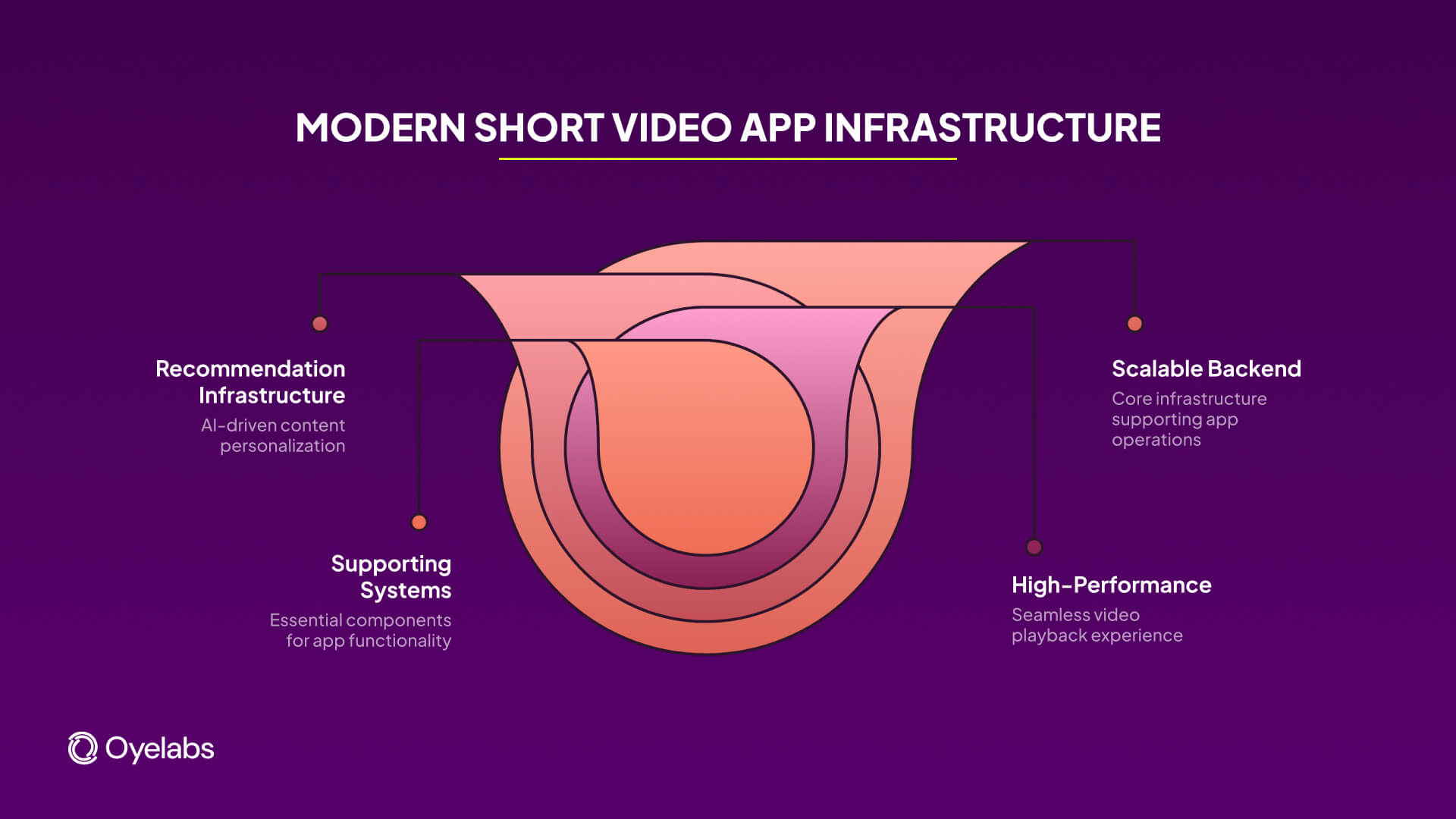
Modern short video app development depends heavily on scalable backend systems, recommendation infrastructure, and high-performance streaming architecture.
A recommendation engine is an AI-driven system that personalizes content distribution based on user behavior and engagement patterns.
Most scalable short video platforms now require:
- video transcoding systems
- cloud infrastructure
- recommendation algorithms
- CDN optimization
- behavioral analytics
- moderation systems
- AI tagging infrastructure
- push notification architecture
The backend infrastructure usually becomes more complex than the frontend interface itself.
In our experience deploying scalable social media app development projects, recommendation systems and video processing infrastructure typically create the largest long-term operational costs.
Platforms must continuously manage:
- concurrent streaming sessions
- recommendation quality
- low-latency playback
- moderation pipelines
- storage scaling
- engagement analytics
The strongest short video platforms increasingly invest heavily in:
- AI moderation systems
- GPU-based recommendation infrastructure
- scalable database architecture
- cloud transcoding pipelines
- behavioral prediction systems
One operational reality most founders underestimate is that recommendation quality usually becomes the biggest technical moat after user growth begins.
Bottom line: Modern apps like TikTok are infrastructure-heavy platforms where backend scalability matters more than visual design alone.
What Mistakes Do Founders Make When Launching an App Like TikTok?
Most founders entering short video app development underestimate how difficult retention actually becomes.
Downloads are easy.
Habit formation is not.
A TikTok clone app is a short video platform built around vertically scrolling feeds, recommendation systems, and engagement-driven content discovery.
The most common founder mistakes include:
Mistake #1: Prioritizing installs over retention
Large install numbers mean very little if session duration collapses after the first week.
The metrics that matter most include:
- watch-time retention
- repeat session frequency
- completion rate
- average session duration
- creator retention
Mistake #2: Underestimating content supply pressure
Short video platforms require continuous content velocity.
Weak content density usually destroys recommendation quality.
Mistake #3: Overinvesting in influencers too early
Many founders spend aggressively on influencer acquisition before validating retention infrastructure.
That often creates unsustainable burn.
Mistake #4: Ignoring moderation systems
Weak moderation eventually creates:
- spam-heavy feeds
- copyright risks
- unsafe content exposure
- advertiser hesitation
- declining trust
In our experience reviewing short video platform launches, moderation quality directly impacts advertiser viability and long-term retention.
| Critical Metric | Healthy Signal |
| Session duration | Increasing weekly |
| Repeat sessions | Strong daily return |
| Watch completion | High engagement |
| Upload frequency | Stable creator activity |
| Retention curve | Gradual decline only |
One operational pattern appears repeatedly across failed social platforms: acquisition scales faster than recommendation quality.
Bottom line: Founders planning to build a short video app should optimize retention infrastructure before scaling acquisition aggressively.
Also Read: How to Attract Content Creators to Your App Like TikTok
Want to Launch an App Like TikTok Faster?
For founders exploring a scalable short video app or TikTok clone app infrastructure, Oyelabs helps businesses launch short video platforms with creator apps, admin dashboards, AI-driven feeds, video streaming systems, engagement modules, monetization systems, and scalable backend architecture.
Instead of rebuilding standard short video platform infrastructure from scratch, founders can focus on:
- audience growth
- content retention
- monetization systems
- creator onboarding
- recommendation algorithms
- niche community building
This approach reduces early development risk while accelerating time-to-market for businesses planning to build a short video app.
Launch Your Short Video Platform With Stronger Retention Systems
Build a scalable app like TikTok with recommendation infrastructure, monetization systems, and operational workflows designed for long-term retention instead of short-term vanity growth.
✓ AI-driven recommendation systems for stronger session retention
✓Scalable backend infrastructure for high-volume video streaming
✓ Monetization systems built beyond traditional advertising revenue
✓ Recommendation-focused architecture designed for sustainable platform growth
Conclusion
The short video app industry is no longer driven only by influencer culture. In 2026, platforms are scaling through recommendation systems, vertical-drama storytelling, utility-first content, and AI-driven retention loops instead of relying entirely on creator popularity.
Apps like TikTok, ReelShort, and DramaBox proved that watch-time retention, recommendation quality, and session continuation now matter more than follower count alone.
For founders planning to launch app-like TikTok platforms, the real challenge is not building a video feed. It is building a platform capable of sustaining attention consistently through content velocity, behavioral analytics, and scalable recommendation infrastructure.
The smartest next step is validating retention behavior and recommendation quality before scaling acquisition aggressively.
FAQs
Can a short video app grow without influencers?
Yes. Modern short video apps increasingly grow through recommendation systems, vertical-drama content, utility-based formats, and AI-driven discovery instead of relying entirely on influencer ecosystems. Platforms are now prioritizing retention mechanics and content performance more heavily than influencer follower counts.
What is the most profitable short video app model in 2026?
Vertical-drama platforms and hybrid monetization systems are currently among the most profitable models because they combine subscription revenue, coin unlock systems, premium content, and strong watch-time retention. Utility-first platforms are also growing because they generate repeat usage without relying entirely on creator payouts.
How much does it cost to build an app like TikTok?
Short video app development costs vary significantly depending on recommendation systems, streaming infrastructure, moderation systems, backend scalability, and AI capabilities. Enterprise-grade platforms usually require far deeper infrastructure investment than founders initially expect because recommendation engines and video processing systems become expensive at scale.
What makes TikTok’s recommendation system different?
TikTok primarily uses an interest-graph recommendation model. Instead of distributing content mainly through follower relationships, it prioritizes engagement signals such as watch time, rewatches, completion rates, and interaction behavior. This allows new creators to reach large audiences without needing massive follower counts.
What technical systems are required for a scalable short video app?
Most scalable short video platforms require cloud-based video processing, recommendation engines, scalable database architecture, CDN infrastructure, AI moderation systems, behavioral analytics, and real-time engagement tracking. The backend infrastructure is usually far more complex than the frontend user interface.
How long does it take to launch a TikTok clone app?
White-label short video apps can often launch within weeks, while large-scale custom-built social media platforms may require several months depending on recommendation complexity, AI systems, streaming infrastructure, moderation requirements, and scalability planning.