
Multi-Creator Platforms vs Independent Creator Websites

Multi-Creator Platforms vs Independent Creator Websites
 Sushmeet Setia
Last Updated on June 26, 2026
Key Takeaways
What You’ll Learn:
- Multi-creator platforms grow through creator and fan network effects.
- Independent creator websites give creators full brand and audience ownership.
- Marketplace platforms earn commissions from creator transactions.
- Independent platforms generate recurring SaaS or license revenue.
- Your business model decides features, costs, and long-term growth.
Stats That Matter:
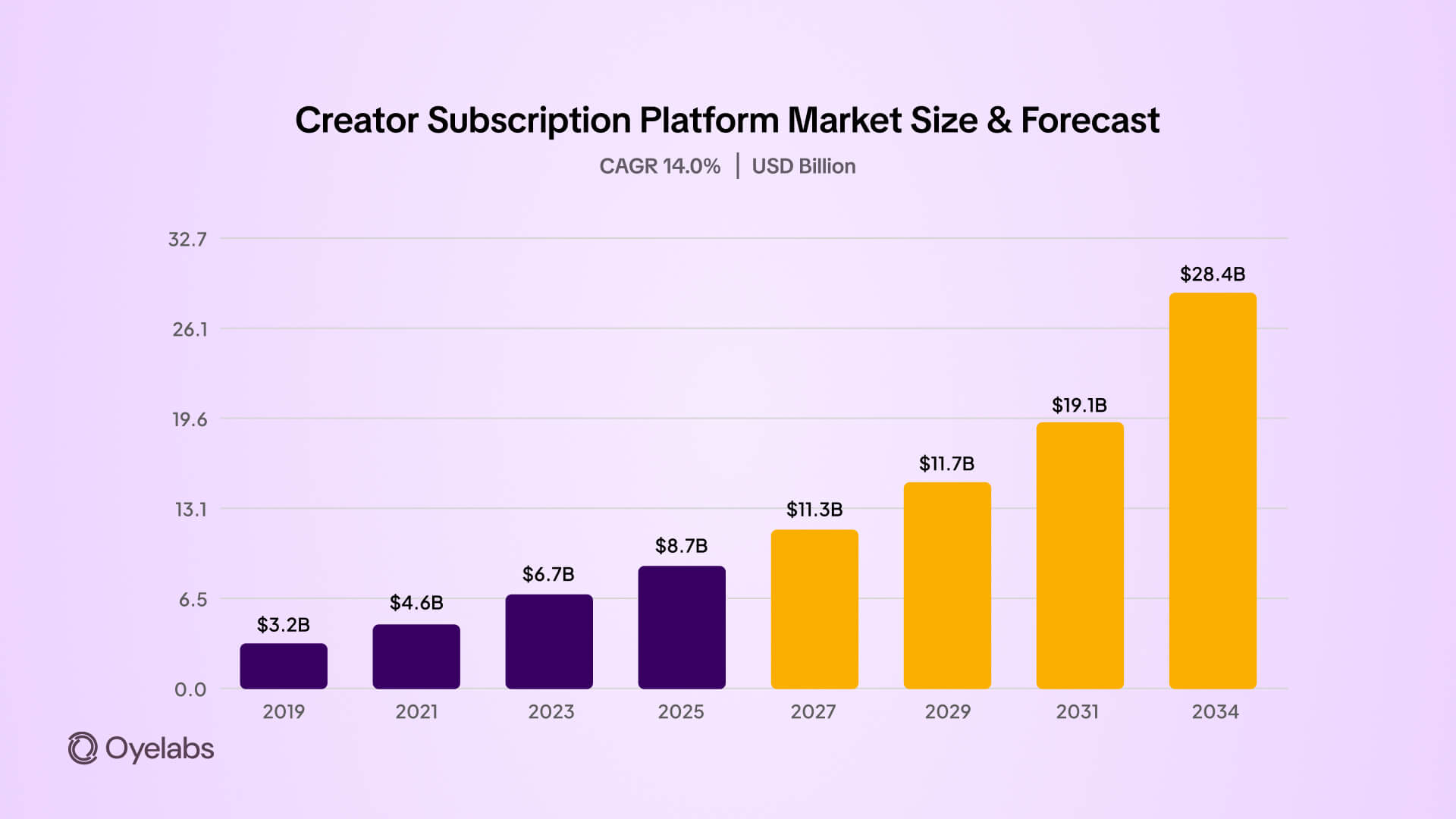
- The creator subscription platform market reached $8.4B in 2025.
- The market may reach $28.4B by 2033 at 14% CAGR.
- Over 207 million creators are active worldwide.
The creator economy continues to expand across fitness, education, coaching, wellness, independent media, and subscription content. As a result, founders looking to launch a subscription-based creator platform face an important decision early in the planning process.
Should you build a marketplace where multiple creators operate under one brand? Or should you provide creators with their own standalone websites and complete ownership of their audience?
The answer affects your monetization model, customer acquisition strategy, operational costs, compliance requirements, and long-term scalability. At its core, the difference between a multi-creator platform vs independent creator website comes down to ownership and monetization. Multi-creator platforms typically earn through commissions and marketplace growth, while independent creator websites generate recurring software revenue and give creators greater control over their audience, branding, and subscriber relationships.
In this guide, we’ll compare the multi-creator platform vs independent creator website model, examine revenue potential, explore feature requirements, and help you determine which business model aligns with your goals.
What Is a Multi-Creator Subscription Platform?
A multi-creator platform is a marketplace-style ecosystem where many creators sign up, build profiles, and publish content, all under your brand’s domain and infrastructure. Think OnlyFans, Fansly, or Patreon. One platform, thousands of creators, a unified experience.
As the platform owner, you act as the infrastructure provider. Creators bring the audience; you provide the tools, payment processing, and discoverability. Your platform becomes the destination, and every creator who joins adds to its overall value.
This model works because of network effects. The more creators on your platform, the more fans it attracts. The more fans arrive, the more creators want in. When it works, it compounds. When it stalls, both sides feel it.
You set the rules, own the brand, and control the experience end to end. That comes with significant responsibility: content moderation, payment compliance, creator payouts, and trust-building all sit with you. It is a high-investment model that rewards founders who are ready to operate at scale.
What Is an Independent Creator Website Platform?
An independent creator website model gives each creator their own branded, standalone site. You build the white-label software; they deploy it as their own platform with their own domain, branding, and direct relationship with their fans.
Unlike a shared marketplace, there is no cross-creator competition for fan attention. Each creator operates in their own space, with their own pricing, their own content rules, and their own subscriber list that they fully own. Fans subscribe directly to the creator, not to a broader platform they may wander away from.
 As the software provider, you earn through licensing fees, setup fees, or SaaS subscriptions. Creators keep the majority of their earnings, which makes your product an easy sell to creators who are frustrated with giving a 20% cut to platforms they have no control over.
The demand for this model is growing. The global creator subscription platform market reached $8.4 billion in 2025 and is forecast to hit $28.4 billion by 2033 at a 14.0% CAGR. Founders building the infrastructure layer stand to capture a significant share of that growth.
Multi-Creator Platform vs. Independent Creator Website: Core Differences
Both platform models are chasing the same market, but they serve very different business goals.
| Factor | Multi-Creator Platform | Independent Creator Website |
|---|---|---|
| Branding | Your platform brand | Creator’s own brand |
| Creator Control | Limited | Full |
| Discoverability | Built-in (network effect) | Creator-driven |
| Revenue Model | Commission per transaction | License/SaaS fee |
| Content Moderation | High (platform-managed) | Low (creator-managed) |
| Compliance Risk | Centralized on the platform | Distributed to creators |
| Scalability | Grows with creator count | Grows with license count |
| Audience Ownership | Platform owns audience data | Creator owns audience data |
Revenue Potential: How Each Creator Platform Model Makes Money
Here’s how the math looks at scale for each model.
Multi-Creator Platform Revenue Estimate
| Creator Count | Avg. Monthly Earnings per Creator | Platform Cut (20%) | Monthly Platform Revenue |
|---|---|---|---|
| 100 creators | $500 | 20% ($100 per creator) | $10,000 |
| 500 creators | $500 | 20% ($100 per creator) | $50,000 |
| 1,000 creators | $500 | 20% ($100 per creator) | $100,00 |
These numbers look compelling on paper. But keep in mind: commission-based revenue is only as strong as your creators’ earnings, and earnings are rarely evenly distributed. The bulk of transaction revenue on any multi-creator platform concentrates at the top, not across the board.
Independent Creator Platform Revenue Estimate
| Licenses Sold | Monthly License Fee | Monthly Recurring Revenue |
|---|---|---|
| 50 creators | $99/month | $4,950 |
| 200 creators | $99/month | $19,800 |
| 500 creators | $99/month | $49,500 |
This model delivers predictable MRR with no dependency on how much creators earn. You get paid whether they have 10 fans or 10,000.
Related Read: OnlyFans Business Model
Essential Features for Each Type of Creator Platform
Must-Haves for a Multi-Creator Platform
- Creator onboarding and profile builder
- Discovery feed and search functionality
- Fan subscription management
- Centralized payout system with creator dashboards
- Content moderation tools
- Payment processing with chargeback protection
Must-Haves for an Independent Creator Platform
- White-label branding (custom domain, logo, color scheme)
- Subscription and PPV content management
- Direct fan messaging
- Creator analytics dashboard
- Payout integration (Stripe, crypto, or regional gateways)
- Mobile-responsive storefronts
Whether you are building a multi-creator marketplace or an independent creator platform, OyeLabs delivers both models with fully customizable source code so you own the product outright, not just a license to use it.
Which Creator Platform Model Is Right for Your Business?
Both models can work. The difference is what you’re building toward.
A multi-creator platform is a bet on marketplace dynamics: you need creators and fans growing together, and you carry the full weight of compliance, moderation, and trust. It’s a high-ceiling model, but the cold-start challenge is real and the operational overhead is significant from day one. With over 207 million creators now active globally, competition for creator attention on established platforms is already intense.
An independent creator website platform is a software business. Your job is to give creators the infrastructure they need to own their audience and monetize on their terms. You earn recurring license revenue without touching a single piece of content or taking a commission cut.
Choose the multi-creator platform if:
- You have a traffic acquisition strategy beyond just recruiting creators
- You’re resourced to handle content moderation and payment compliance at scale
- Your goal is building a consumer-facing brand that fans recognize and return to
Choose the independent creator platform if:
- You want predictable SaaS revenue without transaction dependency
- You’re targeting creators who are tired of giving 20% to platforms they don’t control
- You want lower compliance exposure and faster time to first revenue
The creator economy is expanding well beyond adult content into fitness, education, music, wellness, and independent media. Independent platforms built around a specific niche, with full creator ownership, are where a significant portion of that growth is heading.
Build Your Creator Platform with OyeLabs
OyeLabs builds custom and white-label creator platforms for founders who want full ownership of their product from day one.
Whether you are launching a multi-creator subscription marketplace or an independent creator website platform, OyeLabs delivers ready-to-deploy solutions with subscription management, PPV content tools, direct fan messaging, creator dashboards, and payout integration, all built to your specifications.
No generic SaaS lock-in. No revenue sharing with a platform provider. You own the code, the product, and the business.
Conclusion
The creator economy is no longer a niche. It spans fitness, education, music, wellness, independent journalism, and well beyond adult content. Creators across every category are actively looking for ways to own their audience, cut out platform middlemen, and monetize directly.
The founders who win in this space will not necessarily build the next OnlyFans. Many will build the tools that help the next wave of creators sidestep the platform tax, launch faster, and keep more of what they earn.
If you want to run a marketplace and earn on transactions, the multi-creator model is your path. If you want to build a scalable software business with recurring revenue and lower operational risk, the independent creator platform model is where the smarter opportunity sits right now.
Pick the model that matches your resources, your risk tolerance, and your long-term business goal. Then build it properly from the start.
FAQs
1. Can creators migrate from a marketplace to an independent creator website?
Yes. Creators can move subscribers, content, and branding to an independent website, giving them greater control over pricing, audience relationships, and long-term business growth.
2. Which creator platform model is easier to launch for a startup?
Independent creator website platforms are generally easier to launch because they require less moderation, lower compliance efforts, and simpler day-to-day platform management.
3. Can independent creator websites support multiple payment gateways?
Yes. Most independent creator platforms can integrate multiple payment gateways, allowing creators to accept local and international payments based on their target audience.
4. Do multi-creator platforms need stronger security than independent websites?
Yes. Multi-creator platforms handle larger user bases, payments, and content, making advanced security, fraud prevention, and data protection essential for platform trust.
5. Can one business offer both marketplace and independent creator website solutions?
Yes. Many businesses combine both models, operating a creator marketplace while offering white-label websites for creators seeking complete brand and audience ownership.