
Essential Features You Need in a WhatsApp-Like App

 Sushmeet Setia
Last Updated on July 11, 2026
Key Takeaways –
What You’ll Learn:
- Real-time messaging is the foundation of every successful chat app.
- End-to-end encryption protects user conversations and builds trust.
- Voice and video calls increase daily user engagement.
- Business features create additional monetization opportunities.
- Niche messaging apps can compete with larger platforms.
Stats That Matter:
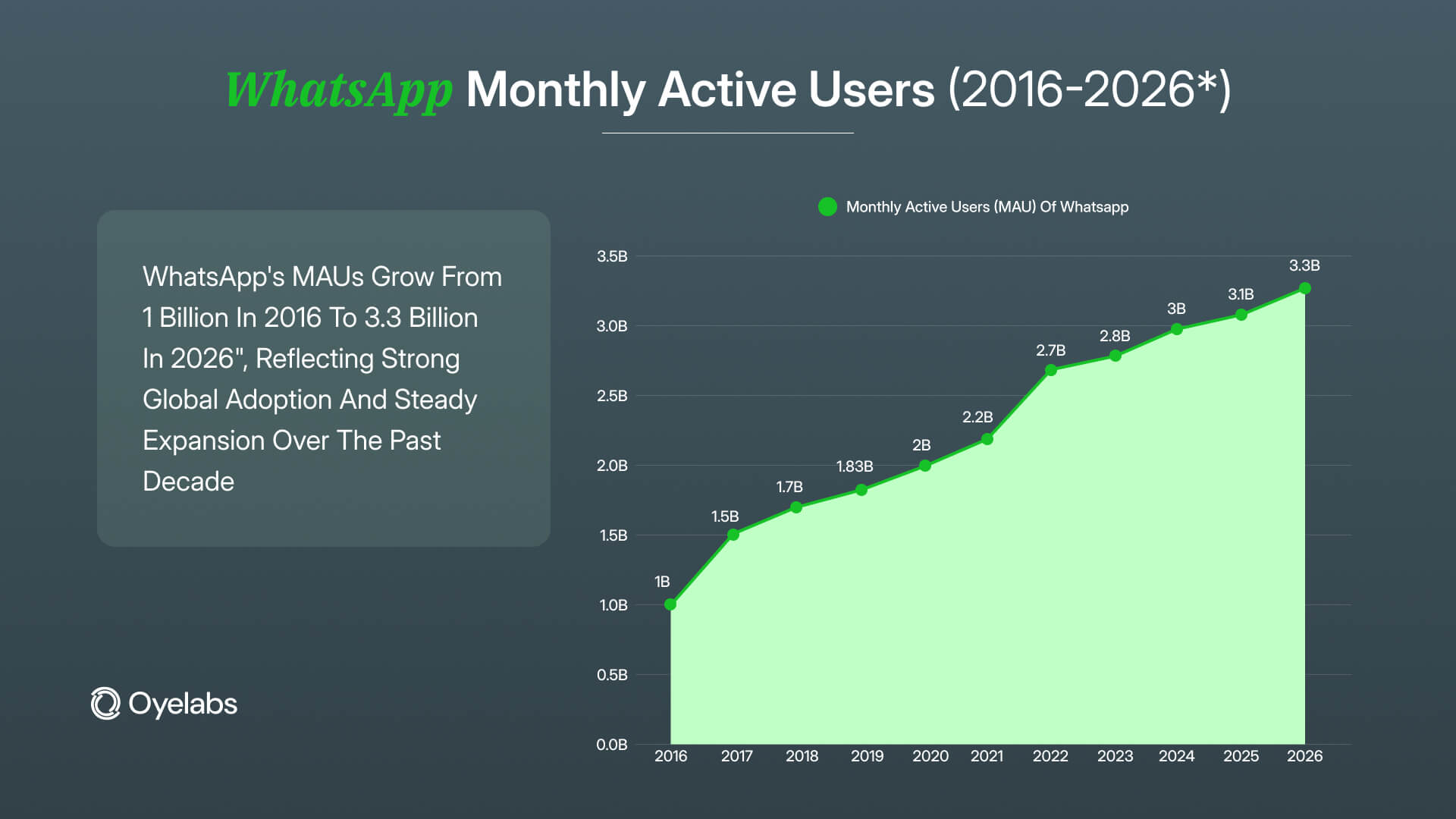
- WhatsApp has 3.3+ billion monthly active users in 2026.
- WhatsApp may reach 3.5 billion users by the end of 2026.
- Users send 7+ billion voice messages every day.
Messaging apps have become an essential part of how people communicate, collaborate, and do business. For founders, building a WhatsApp-like app is no longer about copying an existing platform. It’s about creating a secure, reliable, and feature-rich communication experience tailored to a specific audience or industry.
A successful messaging app requires much more than basic chat functionality. Users expect real-time messaging, voice and video calling, end-to-end encryption, media sharing, business communication tools, and a seamless experience across devices. Delivering these features from the start helps improve user engagement, retention, and long-term growth.
This guide covers the top 10 essential features every WhatsApp-like app should include, along with the technical considerations and business capabilities needed to build a scalable messaging platform in 2026. Whether you’re creating a community app, business messenger, or niche communication platform, these features will help you build a product that meets modern user expectations.
Why the Messaging Category Still Has Room
Messaging continues to be one of the fastest-growing digital product categories, and WhatsApp’s growth is proof that demand is far from slowing down. The platform has more than 3.3 billion monthly active users as of January 2026 and is projected to reach 3.5 billion users by the end of the year. Rather than plateauing, user engagement continues to expand as messaging becomes central to both personal and business communication.
Usage patterns are also evolving beyond one-to-one conversations. Between 41% and 57.5% of all WhatsApp messages are sent in groups, while users exchange more than 7 billion voice messages every day, along with 19 billion daily media transfers, including 6.5 billion videos.
For founders, these numbers highlight an important opportunity. The goal isn’t to recreate WhatsApp feature for feature. Instead, success comes from building a messaging platform tailored to a specific audience or use case, whether that’s community chat, creator fan groups, marketplace communication, workplace collaboration, or industry-specific messaging. A focused, fast, and secure experience can deliver far more value than trying to compete as a general-purpose messaging app.
Also Read: WhatsApp CRM for Tech Entrepreneurs
Top 10 Essential Features for a WhatsApp-Like App
1. Real-Time One-to-One and Group Messaging
Real-time messaging is the core feature of any WhatsApp-like app. Users expect messages to be delivered instantly, whether they’re chatting with one person or participating in a group conversation. Even a small delay can affect the user experience and reduce engagement.
Your app should support private chats, group messaging, typing indicators, online status, message timestamps, and message synchronization across devices. Group chats should also include admin controls, member management, mute options, and customizable notifications to make conversations easier to manage.
A reliable real-time messaging system built with technologies like WebSockets ensures fast and consistent communication, making this the most important feature of your app.
2. Voice and Video Calling
Voice and video calling have become standard features in modern messaging apps. Users expect to switch from text to voice or video without leaving the app, whether they are talking with friends, family, or colleagues.
Your app should offer high-quality voice and video calls, support both individual and group calls, and include features such as mute, speaker mode, camera switching, and call history. Optimizing calls for different network conditions also helps deliver a better experience.
Adding voice and video calling increases user engagement and makes your messaging platform a complete communication solution.
3. End-to-End Encryption
Security is one of the biggest reasons people trust a messaging app. End-to-end encryption ensures that only the sender and recipient can read messages, keeping conversations private and protected from unauthorized access.
Along with encryption, your app should support two-factor authentication, biometric login, secure device management, and disappearing messages. These features help users protect their accounts and give them more control over their privacy.
Making security a priority from the beginning helps build trust and encourages long-term user adoption.
4. Media Sharing
People use messaging apps to share much more than text. A WhatsApp-like app should allow users to send photos, videos, documents, voice notes, locations, contacts, GIFs, and stickers quickly and securely.
The platform should also compress large files without significantly reducing quality and support fast uploads and downloads. Behind the scenes, cloud storage and content delivery networks (CDNs) help maintain performance as user activity grows.
A strong media-sharing experience makes conversations more engaging and supports both personal and business communication.
5. Message Status and Offline Queuing
Users want to know whether their messages have been sent, delivered, and read. These message status indicators improve communication by removing uncertainty and making conversations more reliable.
Offline message queuing is equally important. If a user loses their internet connection, messages should be stored automatically and delivered as soon as they reconnect. This ensures that conversations continue smoothly even in areas with poor network coverage.
Together, these features create a dependable messaging experience that users can trust.
6. Status, Stories, and Channels
Features like Status updates and Stories encourage users to open the app more often. Since they disappear after 24 hours, they create a sense of urgency and keep content fresh.
Channels and broadcast lists allow businesses, creators, and communities to share updates with large audiences without creating group chats. These features increase engagement and give users more reasons to return to the platform every day.
They also provide new opportunities for businesses to communicate with customers and promote their products or services.
7. Push Notifications
Push notifications help bring users back to the app whenever they receive a new message, missed call, or important update. Without reliable notifications, users can easily miss conversations.
A good notification system should allow users to customize alerts for individual chats, groups, and channels. Features like mute options and notification scheduling help prevent notification fatigue while giving users more control over their experience.
Well-managed notifications improve daily engagement without becoming intrusive.
8. Business Profiles, Automated Responses and Chatbots
Many businesses now use messaging apps to communicate with customers. Adding business profiles allows companies to display contact information, operating hours, websites, and verified badges.
Automated replies, quick responses, and chatbots help businesses answer common questions, manage customer support, schedule appointments, and respond even outside business hours.
These features improve customer service while creating additional monetization opportunities for your messaging platform.
9. Payments and In-Chat Commerce Integration
Messaging apps are increasingly becoming commerce platforms. Users want the ability to send money, pay businesses, browse products, and complete purchases without leaving the conversation.
Your app can support peer-to-peer payments, digital wallets, QR code payments, product catalogs, and secure checkout. These features simplify transactions while creating new revenue opportunities for businesses using the platform.
Adding payment functionality makes your app more useful for both consumers and commercial users.
10. Reporting, Blocking, and Moderation Tools
User safety is essential for the long-term success of any messaging platform. Every WhatsApp-like app should include reporting and blocking features so users can quickly deal with spam, fake accounts, or abusive behavior.
Group admins should also have moderation tools to remove members, approve requests, manage permissions, and maintain healthy communities. Automated spam detection can further reduce harmful activity without affecting genuine users.
Strong moderation tools help create a safer platform, improve user trust, and support sustainable community growth.
Build Your WhatsApp-Like App with Oyelabs
Whether you’re launching a community messaging platform, a business communication app, a creator-focused chat solution, or a niche social network, Oyelabs can help you bring your vision to market.
Our team builds secure, scalable, and fully customizable WhatsApp-like apps with modern features such as real-time messaging, voice and video calling, media sharing, end-to-end encryption, group management, business messaging tools, and multi-platform support. We also offer white-label and custom development solutions, helping founders reduce development time while creating products that stand out.
If you’re ready to build a messaging platform tailored to your audience, contact Oyelabs today to discuss your requirements and launch a feature-rich communication app with confidence.
Conclusion
Building a WhatsApp-like app in 2026 is no longer about recreating an existing messaging platform. Success comes from solving a specific communication problem with a reliable, secure, and feature-rich experience. From real-time messaging and voice calls to end-to-end encryption, business tools, and scalable infrastructure, every feature plays a role in user retention and long-term growth.
Rather than trying to compete with global messaging giants on every front, focus on serving a niche audience with features that address their unique needs. A well-planned product backed by the right technology stack can help you launch faster, validate your idea, and scale as your user base grows.
FAQs
1. Can a WhatsApp-like app work without a phone number?
Yes. A messaging app can support email, usernames, enterprise IDs, or social logins, depending on your target audience and security requirements.
2. How many users can a WhatsApp-like app support?
A scalable messaging app can support millions of users when built with cloud infrastructure, load balancing, and optimized real-time messaging architecture.
3. Which industries benefit most from WhatsApp-like apps?
Healthcare, education, finance, logistics, e-commerce, customer support, and enterprise teams benefit from secure messaging platforms designed for industry-specific communication needs.
4. Can a WhatsApp-like app support multiple devices simultaneously?
Yes. Modern messaging apps synchronize conversations across smartphones, tablets, desktops, and web browsers, allowing users to access messages from multiple devices seamlessly.