
Top 9 Hyperlocal Business Ideas Driving Profits in 2026
Top 9 Hyperlocal Business Ideas Driving Profits in 2026
 Priyanka B
Last Updated on February 5, 2026
Key Takeaways What You’ll Learn: Stats That Matter:
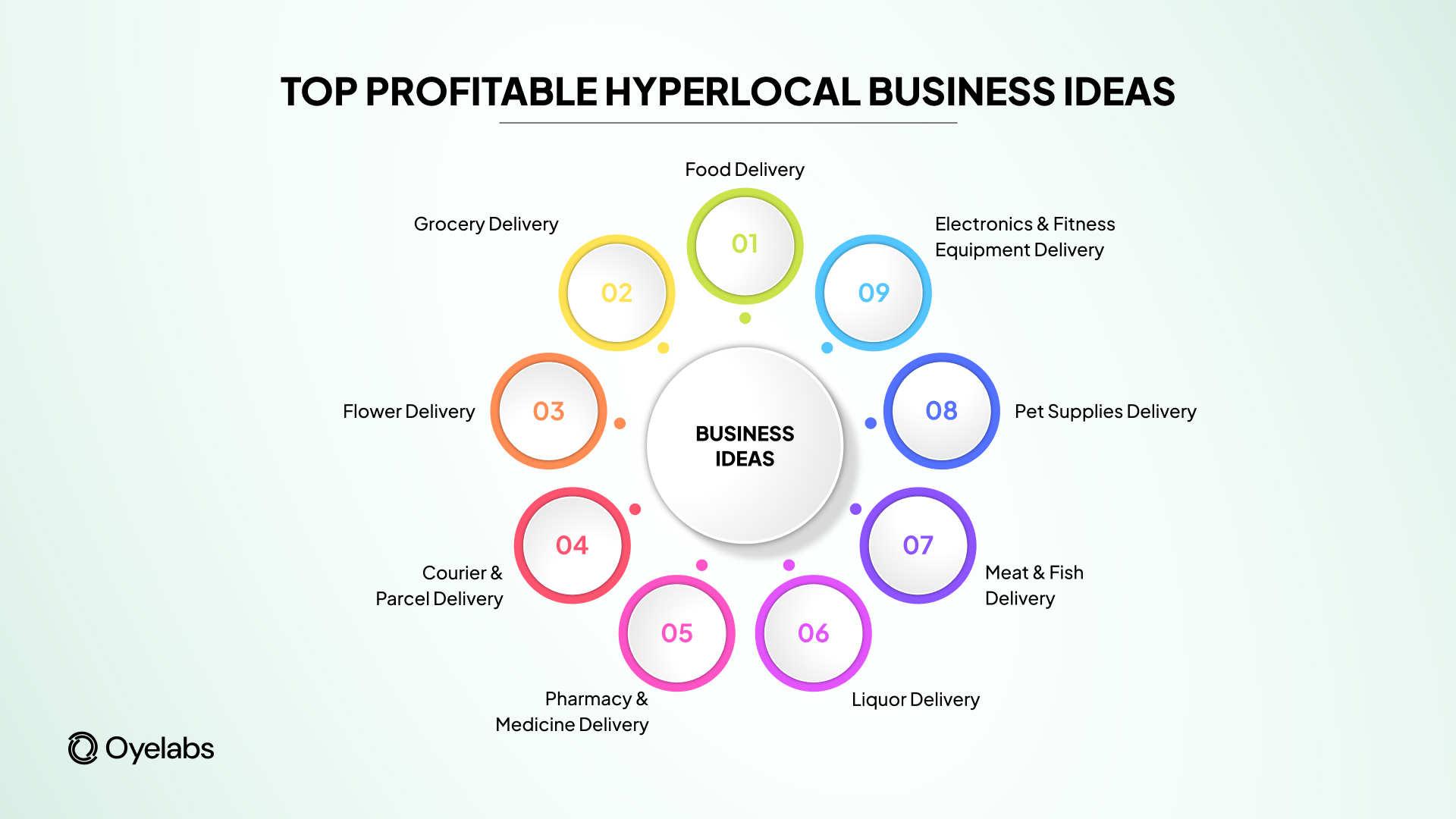
Ever get tired of waiting forever for food, groceries, or essentials to arrive? What if you could build your own service that gets everything to people fast, local, and hassle-free? That’s what hyperlocal businesses are all about. From hot meals and fresh groceries to medicines, flowers, and even fitness gear, these platforms focus on speed, convenience, and serving their local community. The best part? With the right hyperlocal delivery software, you can launch your own app or platform without starting from scratch. In this blog, we’re breaking down the top hyperlocal business ideas you can dive into, whether it’s a low-cost hustle or a high-growth venture that actually scales. Hyperlocal businesses succeed because they bridge the gap between online convenience and local speed. Customers expect faster delivery, and local platforms can deliver within hours or even minutes. Operating within shorter distances reduces fuel costs, driver wages, and delivery times, making operations lean and repeatable. These businesses also benefit from strong community relationships. Local vendors partner with platforms to expand reach without building their own technology. Customers get convenience; vendors get more orders; platforms make money from fees, commissions, and subscriptions. With smart logistics, real‑time tracking, and smooth payment options, hyperlocal businesses are efficient, scalable, and lucrative. Starting a hyperlocal business does not always require a huge budget. Many profitable ideas can begin with minimal investment, simple operations, and lean logistics. Here are some low‑cost opportunities: Food delivery is one of the most profitable hyperlocal business models because it serves both daily and occasional consumption patterns. Customers rely on platforms for meals ranging from lunch and dinner to late-night snacks and pre-planned meal subscriptions. Busy urban populations, professionals, and students drive steady demand. Global platforms like UberEats show how effective hyperlocal delivery can be when orders are fulfilled quickly within a city. For entrepreneurs, similar results can be achieved by using hyperlocal development software to create a platform that connects local restaurants and customers efficiently. Partnering with restaurants, cloud kitchens, and home chefs allows a wide variety of cuisines without managing inventory. Revenue comes from commissions, delivery fees, surge pricing, and sponsored listings. Route optimization, real-time tracking, and consistent service are key to repeat orders and customer satisfaction. Overview Grocery delivery has transitioned from occasional convenience to everyday necessity. 92% of consumers prefer same‑day grocery delivery, and nearly 24% expect orders within two hours, reinforcing the value of hyperlocal delivery business models over centralized warehouses. Target Customers Core users include busy professionals, families, and elderly shoppers who value speed and eliminate the hassle of traditional shopping. Repeat customers and those using subscription plans create predictable revenue streams vital for long‑term operational stability. Key Platform Features Successful grocery platforms must support real‑time inventory sync to reduce cancellations, smart substitution options, and flexible delivery scheduling. Additional essential features are multiple payment options, order tracking, and vendor dashboards to optimize stock and pricing. These operational capabilities build customer trust and recurring use. Revenue Model Revenue is generated from a mix of commissions from partner stores, delivery charges, surge pricing for premium slots, and subscription plans that offer benefits like free deliveries. With mobile grocery purchases often averaging higher ticket values than in‑store visits, this segment offers strong unit economics and customer loyalty. Flower delivery thrives on time-sensitive, occasion-based demand. Customers frequently order for birthdays, anniversaries, weddings, festivals, or corporate events. Hyperlocal platforms source flowers from nearby florists to ensure freshness and timely delivery, which is critical to customer satisfaction. Revenue comes from florist commissions, delivery fees, and value-added services like gift wrapping, personalized notes, or same-day delivery. Premium pricing is possible during festivals and special occasions. Though niche, flower delivery offers strong margins, predictable seasonal spikes, and the potential for brand loyalty, making it a compelling hyperlocal business opportunity. Courier and parcel delivery services support a growing segment of small e‑commerce sellers and local businesses needing same‑day or intra‑city deliveries. As 67% of consumers prefer local courier services, these platforms increasingly replace centralized logistics for short‑distance shipments. Unlike national carriers, hyperlocal courier platforms excel in flexibility, speed, and lower delivery costs. Revenue is earned through per‑delivery pricing, business subscription packages, and express delivery charges. With minimal inventory risk, parcel delivery scales efficiently and becomes a critical infrastructure for local commerce, e‑tail, and social sellers. Pharmacy and medicine delivery is a high-demand hyperlocal model that benefits from urgent, recurring, and essential orders. Customers value convenience, privacy, and speed, especially for chronic conditions or emergencies. Platforms partner with licensed pharmacies to ensure compliance, product authenticity, and safe delivery. Revenue comes from pharmacy commissions, delivery fees, and partnerships with healthcare brands. Key features include prescription uploads, reminders for refills, and local delivery within short time frames. By offering reliability and convenience, pharmacy delivery platforms secure long-term customer loyalty and consistent daily revenue. Liquor delivery is a high-margin hyperlocal business where regulations permit online alcohol sales. Customers appreciate the convenience of ordering directly from nearby stores, particularly for weekends, parties, or last-minute events. Platforms earn through store commissions, delivery charges, and surge pricing during peak demand. Compliance is crucial, requiring age verification, secure payments, and strict adherence to local laws. Efficient inventory management and reliable delivery create trust and recurring orders, making liquor delivery a profitable niche within the hyperlocal ecosystem. Fresh meat and fish delivery addresses growing consumer demand for hygiene, traceability, and quality. Hyperlocal sourcing ensures products reach customers quickly, reducing spoilage and logistics costs. Subscription models, scheduled deliveries, and premium product selections (organic, antibiotic-free, specialty cuts) enhance customer lifetime value. Urban, health-conscious consumers are the primary market, and partnerships with local butchers and seafood suppliers strengthen the supply chain. High-quality sourcing, timely delivery, and predictable demand make this a profitable hyperlocal niche. The pet supplies market benefits from repeat purchases and high loyalty. Pet owners frequently need food, accessories, medicines, and grooming items, creating predictable demand for hyperlocal delivery platforms. Revenue comes from vendor commissions, delivery fees, and subscription plans for recurring orders. Platforms can also offer premium services like same-day delivery for emergencies. Providing reliability, convenience, and access to trusted brands ensures customer retention and sustainable growth in this expanding niche. Hyperlocal delivery for electronics and fitness equipment focuses on quick delivery of small devices, wearables, smart home gadgets, and home workout gear. Customers value convenience and fast service over traveling to multiple stores. Revenue comes from vendor commissions, delivery fees, premium services like installation or setup, and warranties. Higher product values allow for better margins. Partnering with local retailers reduces logistics complexity, while rapid delivery differentiates the platform from national e-commerce giants. Related Read: Choose The Right Hyperlocal Delivery Business Model Starting a hyperlocal business doesn’t have to be complicated. Whether you are delivering fresh groceries, hot meals, medicines, or launching a multi-category service, the right technology makes all the difference. At Oyelabs, we build on-demand hyperlocal software that helps you manage vendors, track orders in real time, and deliver smooth, reliable customer experiences. No more struggling with logistics or rigid systems. Our scalable hyperlocal platforms let you focus on growth while we handle the tech backbone. Take the next step with Oyelabs and turn your hyperlocal idea into a profitable, future-ready business. The most successful hyperlocal businesses are built on focus, speed, and strong local partnerships. Starting with a single category allows entrepreneurs to understand customer behavior, streamline operations, and control costs more effectively. Serving nearby customers ensures faster fulfillment, higher satisfaction, and better repeat usage. Low-cost hyperlocal models make market entry easier and reduce early risk, while broader hyperlocal platforms create opportunities for long-term expansion and higher order values. As demand for convenience and locality continues to grow, businesses that prioritize reliability, smart technology, and scalable execution are better positioned to build sustainable platforms and strengthen their presence within local markets over time. 1. How long does it take to launch a hyperlocal business platform? 2. Do hyperlocal platforms work in small towns or only big cities? 3. What is the biggest operational challenge in hyperlocal businesses? 4. Can hyperlocal businesses operate without owning delivery vehicles? 5. How do hyperlocal platforms ensure consistent service quality? 6. Is hyperlocal business suitable for first-time entrepreneurs?
What Makes Hyperlocal Businesses Profitable
What Are the Top Hyperlocal Business Ideas?
Low‑Cost Hyperlocal Business Ideas
1. Food Delivery
2. Grocery Delivery
3. Flower Delivery
4. Courier & Parcel Delivery
Other Profitable Hyperlocal Business Ideas
5. Pharmacy & Medicine Delivery
6. Liquor Delivery
7. Meat & Fish Delivery
8. Pet Supplies Delivery
9. Electronics & Fitness Equipment Delivery
Build Your Hyperlocal Business with the Right Platform
Conclusion
FAQs
With ready hyperlocal development software, most platforms can launch within weeks, depending on features, integrations, and local compliance needs.
Hyperlocal platforms perform well in small towns due to lower competition, shorter distances, and stronger community-driven customer loyalty.
Managing real-time inventory, delivery partners, and peak-time demand simultaneously is the biggest operational challenge for hyperlocal platforms.
Yes, most platforms rely on third-party drivers or vendor-managed deliveries to reduce costs and scale faster efficiently.
Service quality is maintained through vendor ratings, delivery tracking, performance monitoring, and strict onboarding standards for partners.
Hyperlocal models are ideal for first-time founders due to lower startup costs, faster validation, and easier local market testing.