
Handyman Platform: Corporate vs Homeowner Strategy

Handyman Platform: Corporate vs Homeowner Strategy
 Anuraag Jain
Last Updated on February 11, 2026
Key Takeaways
What You’ll Learn:
- A handyman platform succeeds by serving one market first, not everyone.
- Corporate models focus on contracts and predictable revenue.
- Homeowner models grow faster through frequent, smaller jobs.
- Platform trust comes from reviews, payments, and real-time availability.
- Early validation matters more than perfect features.
Stats That Matter:
- Home services market exceeds $1.6 trillion globally.
- 70% of users prefer online booking over phone calls.
- Digital platforms cut corporate maintenance costs by 20%.
- Verified reviews increase conversion rates significantly.
- Subscriptions deliver higher lifetime value in B2B platforms.
Real Insights:
- Focused platforms scale faster than broad marketplaces.
- Speed to launch improves brand perception.
- Trust systems drive repeat usage.
- One revenue model reduces operational confusion.
- Expansion works best after product-market fit.
Handyman Platform: Corporate vs Homeowner Strategy
If you’re thinking about launching a handyman platform, here’s the real question you can’t dodge:
Are you building for corporate clients or homeowners?
Sounds simple. It isn’t.
One path gives you steady contracts and predictable revenue. The other fuels fast adoption, viral growth, and brand visibility. Pick the wrong one early, and even a solid product can stall.
The handyman economy has shifted. On-demand services, mobile booking, escrow payments, and reputation systems are now baseline expectations – not “nice to have” features. Founders aren’t just building apps anymore. They’re designing two-sided marketplaces with demand balancing, unit economics, and long-term scalability baked in.
This guide breaks down the corporate vs homeowner strategy for a handyman platform – clearly, practically, and without theory overload – so you can launch with confidence, not guesswork.
Why the Handyman Platform Market Is Growing So Fast
The handyman platform market is not growing by accident. It is expanding because everyday behavior has changed – permanently. The handyman platform opportunity is backed by scale, with the global home services market projected to surpass $1.6 trillion by 2030.
Homeowners, renters, and businesses no longer search classifieds or wait for referrals. They expect speed, transparency, and certainty. The same expectations shaped food delivery, ride-hailing, and freelance work. Home services were simply next.
Three forces are driving this growth:
- Urban density and rental living have increased maintenance demand.
- Mobile-first habits make instant booking the default.
- Trust systems (ratings, reviews, verified providers) reduce hesitation.
For founders, this shift matters because demand already exists. The risk is not whether people need handymen. The risk is launching a platform without a clear strategy for who you are serving first.
On-Demand Services Are Now a Daily Habit
On-demand services are no longer limited to convenience-driven luxuries. They are now embedded into everyday operations, both inside homes and across workplaces. What once required phone calls, follow-ups, and uncertainty has been replaced by a simple tap on a screen. Users expect same-day or next-day availability, transparent pricing before work begins, digital payment options, and real-time updates throughout the job lifecycle.
These expectations apply equally to fixing a leaking tap in an apartment and maintaining systems across a multi-floor office building. A handyman platform that fails to meet these standards is not competing on service quality alone – it is competing against convenience itself. This shift explains why modern handyman platforms are built as real-time marketplaces rather than static listing directories.
What Is a Handyman Platform (Simple Definition)
A handyman platform is a two-sided marketplace that connects service providers with homeowners or businesses that need maintenance and repair services. At its core, the platform manages discovery by helping users find the right professional, coordination through scheduling and communication, transactions such as payments and invoicing, and trust through ratings, reviews, and verification systems.
From a founder’s perspective, a handyman platform is not simply an app – it is an operational system designed to manage demand, supply, pricing, and accountability at scale. This distinction is critical. Platforms that position themselves as listing directories struggle to grow, while those that function as service infrastructure build stronger, more defensible businesses.
How a Handyman Platform Works Step-by-Step
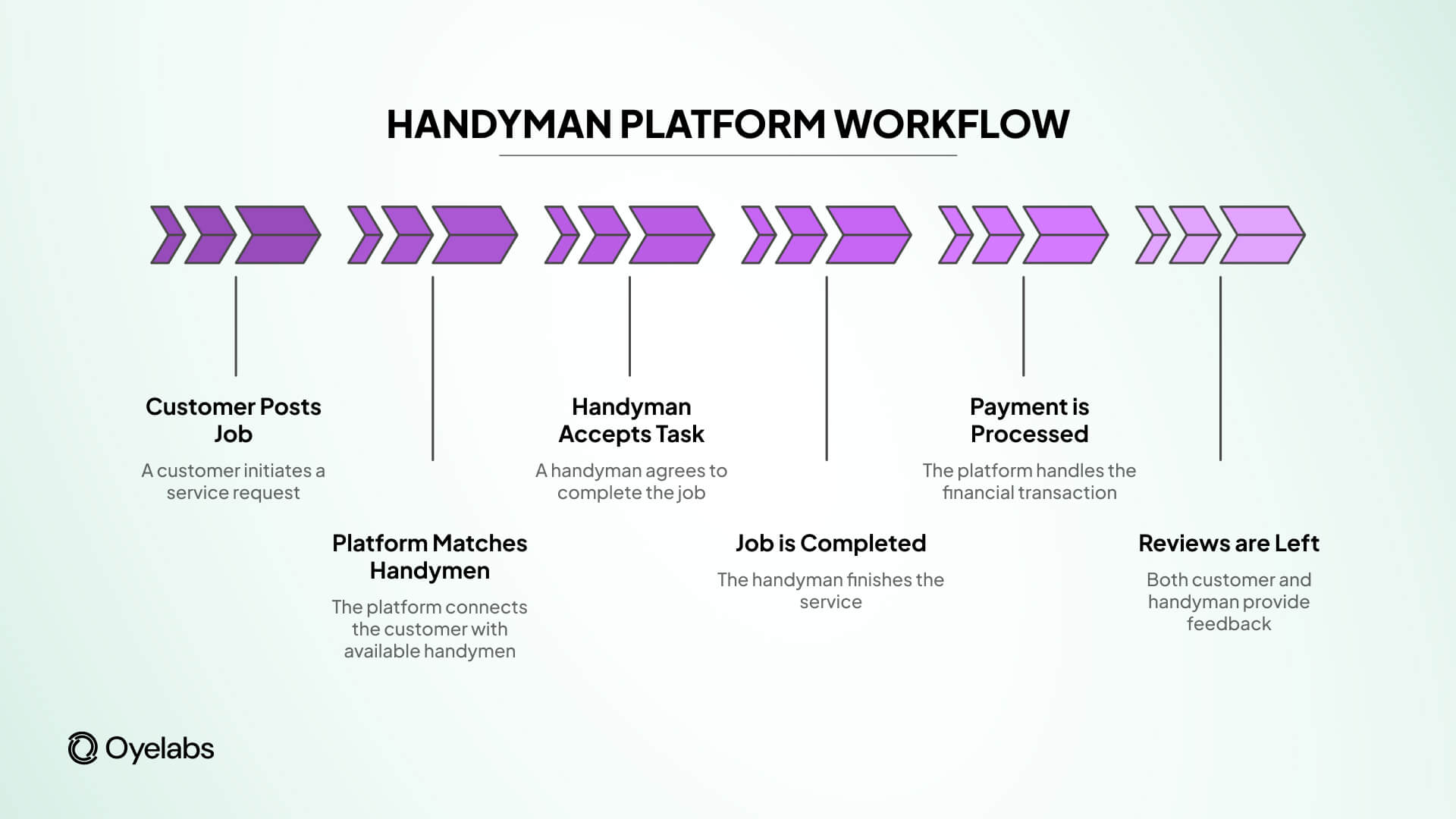
Most successful handyman platforms follow a simple but tightly controlled flow. Complexity is hidden from the user, not removed from the system.
Typical flow:
- A customer posts a job or selects a service
- The platform matches or notifies available handymen
- A handyman accepts the task
- The job is completed
- Payment is processed through the platform
- Both sides leave a review
Behind this flow sits logic for pricing rules, availability windows, cancellation policies, dispute handling, and commission management. These mechanics are where platforms either scale – or break.
Corporate vs Homeowner Strategy in a Handyman Platform
Every handyman platform must answer one foundational question early:
Are you solving problems for businesses or for individuals?
This decision shapes everything:
- Feature prioritization
- Pricing models
- Sales and marketing approach
- Support requirements
- Revenue predictability
Corporate and homeowner users behave differently, buy differently, and stay loyal for different reasons. Trying to serve both equally at launch often leads to diluted positioning and operational confusion.
The smartest founders pick one strategy, execute it well, and expand later with data – not assumptions.
Corporate Handyman Platform Strategy (B2B Model)
A corporate-first handyman platform is built for repeat demand, structured workflows, and long-term relationships. Unlike homeowner platforms that optimize for volume, corporate platforms optimize for reliability and accountability.
This model serves organizations that treat maintenance as an operational necessity, not a one-off task.
Typical corporate customers include:
- Office complexes
- Retail chains
- Warehousing and logistics facilities
- Hotels and hospitality groups
- Property management firms
- Co-working spaces
For these clients, the handyman platform is not just a booking tool. It becomes part of their facilities management stack.
Who the Corporate Handyman Platform Is For
Corporate users care less about browsing and more about consistency.
Their priorities are:
- Guaranteed response times
- Trained and verified service providers
- Centralized billing
- Clear service-level accountability
- Multi-location coordination
A founder building for this segment must think beyond “jobs completed” and focus on service continuity. One missed repair can disrupt business operations, tenant satisfaction, or safety compliance.
This is why corporate platforms often emphasize process, reporting, and control over speed alone.
Typical Corporate Use Cases
Corporate handyman demand is structured and predictable. The platform is used repeatedly, often by multiple teams within the same organization.
Common use cases include:
- Preventive maintenance schedules
- Emergency repair handling
- Vendor assignment across multiple locations
- Standardized pricing for recurring tasks
- Central approval workflows
Unlike homeowners, corporate users do not want to explain their requirements repeatedly. They expect the platform to remember preferences, service history, and compliance needs.
This creates higher switching costs – and stronger retention – when executed well.
Revenue Model for Corporate Handyman Platforms
Corporate platforms succeed by shifting away from per-job thinking and toward contract-based revenue.
Common monetization approaches include:
- Monthly or annual maintenance retainers
- Subscription pricing per location
- Bulk service packages
- Tiered service plans based on response time
- Custom enterprise contracts
This model reduces revenue volatility and makes forecasting easier. It also aligns platform incentives with long-term service quality rather than short-term transaction volume.
For founders focused on sustainability over rapid spikes, this model offers stability that investor decks often favor.
Pros of the Corporate Strategy
A corporate handyman platform offers several structural advantages:
- Predictable and recurring revenue
- Higher lifetime value per customer
- Lower churn compared to B2C users
- Fewer users generating more revenue
- Stronger brand positioning as a service partner
From a scaling perspective, onboarding one corporate client can be equivalent to onboarding hundreds of individual homeowners.
However, these benefits come with trade-offs that founders must understand early.
Challenges of the Corporate Strategy
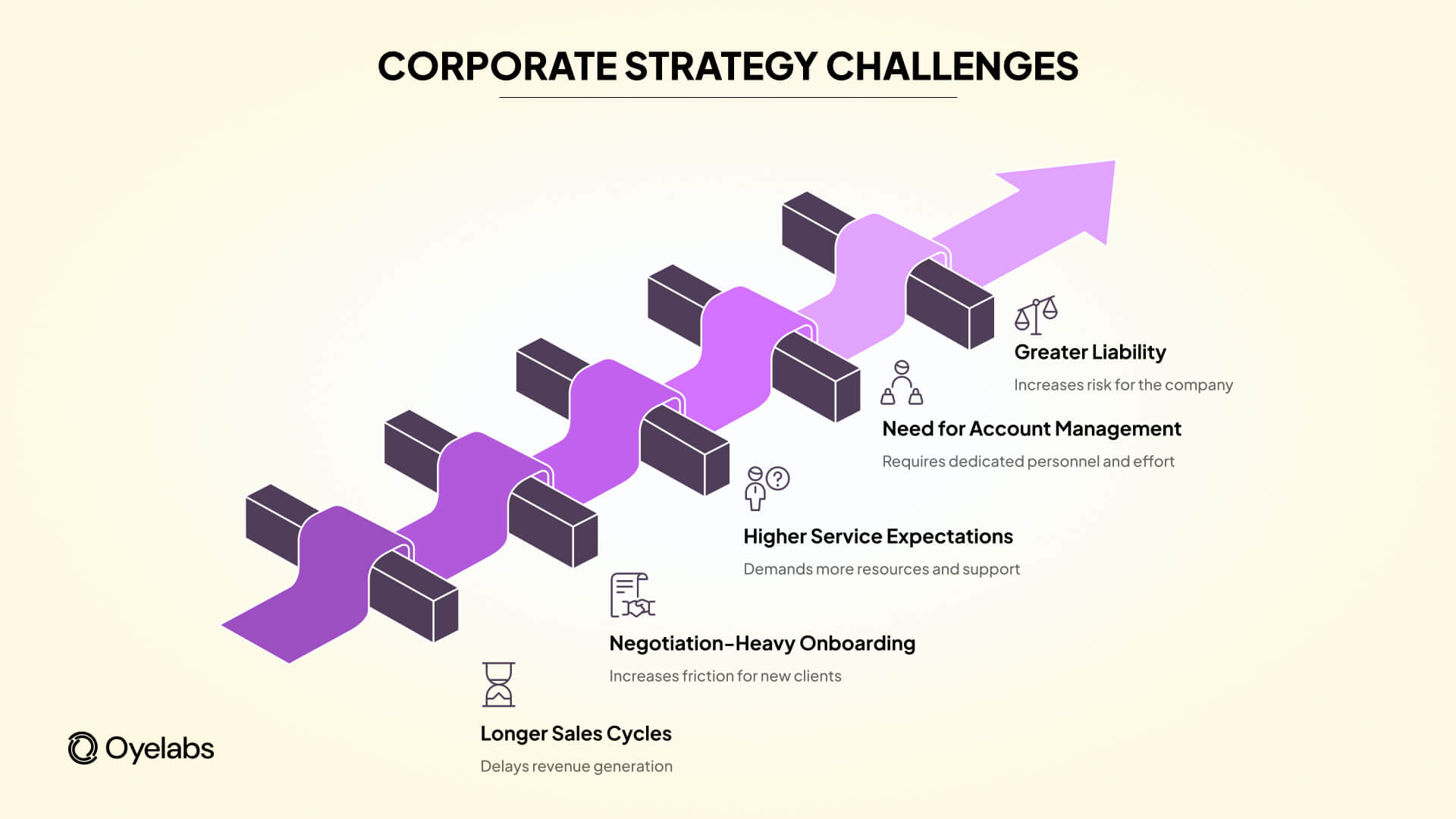
The corporate model is not inherently easier. It simply shifts complexity from marketing to operations and sales.
Key challenges include:
- Longer sales cycles
- Negotiation-heavy onboarding
- Higher service expectations
- Need for account management
- Greater liability for service failures
This strategy rewards founders who are comfortable with B2B sales, structured execution, and relationship-driven growth. It is less forgiving to experimentation and inconsistency.
Homeowner Handyman Platform Strategy (B2C Model)
A homeowner-first handyman platform is designed for volume, speed, and accessibility. It serves individuals who need quick solutions, clear pricing, and minimal friction.
This model is often where brand-driven platforms emerge. Growth is fueled by everyday problems – leaky faucets, broken switches, furniture assembly – that happen frequently and unexpectedly.
Unlike corporate users, homeowners are not looking for a process. They are looking for relief.
Who the Homeowner Handyman Platform Is For
Homeowner platforms typically serve:
- Individual homeowners
- Renters in urban housing
- Small landlords managing a few units
- Short-term rental hosts
These users value:
- Fast availability
- Transparent pricing
- Simple booking flows
- Trust signals such as reviews and ratings
They rarely plan ahead. Most jobs are reactive. This means demand is constant but unpredictable, and the platform must be optimized for real-time matching rather than long-term scheduling.
Common Homeowner Jobs on a Handyman Platform
Homeowner demand clusters around everyday maintenance tasks. These are not specialized projects. They are frequent, repeatable, and time-sensitive.
Common categories include:
- Plumbing and minor electrical work
- Appliance installation and repair
- Furniture assembly
- Painting and patchwork
- Mounting and installations
Because job value is often modest, success in this segment depends on job frequency and operational efficiency, not high margins per task.
Revenue Model for Homeowner-First Platforms
Homeowner-first handyman platforms typically monetize through transactional volume rather than long-term contracts. Revenue is generated through commissions on completed jobs, platform service fees, dynamic or surge-based pricing during peak demand, premium visibility options for service providers, and occasional membership or convenience fees for users.
This approach allows founders to experiment quickly with pricing and incentives, making it easier to adjust monetization as user behavior becomes clearer. However, this flexibility comes with revenue variability. Demand often spikes during certain seasons or weather conditions and slows during others, which makes forecasting and long-term planning more complex for early-stage platforms.
Pros of the Homeowner Strategy
For early-stage startups, the homeowner strategy offers several compelling advantages. Market entry is typically faster because individual users are easier to acquire and onboard than corporate clients. The booking flow is simpler, first-time usage carries lower friction, and satisfied customers are more likely to refer the platform organically.
Over time, this creates strong brand visibility at scale, especially in local or regional markets. As a result, this model is often preferred by founders who are focused on rapid adoption, building marketplace liquidity, and preparing for future fundraising or expansion.
Challenges of the Homeowner Strategy
While growth in a homeowner-first handyman platform can be rapid, maintaining sustainability is significantly more challenging. Customer acquisition costs tend to rise quickly as competition increases, and users are often highly price-sensitive. Job volumes can fluctuate, driven by seasonality and external factors, which impacts both revenue consistency and service provider retention.
Churn is typically higher on both sides of the marketplace, requiring continuous optimization. The platform must constantly balance supply and demand – too many users without enough available handymen leads to poor customer experience, while too many handymen without sufficient jobs results in disengagement and attrition.
Corporate vs Homeowner Strategy: Side-by-Side Comparison
| Dimension | Corporate Strategy | Homeowner Strategy |
| Revenue predictability | High | Variable |
| Sales cycle | Longer | Short |
| Average order value | High | Low to medium |
| User acquisition | Fewer, larger clients | Many individual users |
| Churn | Low | Higher |
| Brand visibility | Moderate | High |
This comparison highlights why choosing the right strategy early is not optional – it is foundational.
Which Handyman Platform Strategy Should Startups Choose First?
Founders often ask which model is “better.” The more accurate question is which model is right for their current stage.
There is no universally superior strategy. The correct choice depends on capital availability, growth expectations, and operational maturity.
Choose a Corporate Handyman Platform If You:
- Prefer predictable, recurring revenue
- Are you comfortable with longer sales cycles
- Can manage structured service delivery
- Plan to grow through contracts, not virality
Corporate-first platforms reward patience and discipline. They are harder to start but easier to stabilize once traction begins.
Choose a Homeowner Handyman Platform If You:
- Want faster user adoption
- Are building a consumer-facing brand
- Intend to test demand quickly
- Are comfortable iterating on pricing and features
Homeowner-first platforms move fast. They validate ideas quickly but require constant optimization to manage churn and margins.
The mistake many founders make is choosing emotionally – rather than strategically.
Can a Handyman Platform Support Both Models?
Yes – but not at the beginning.
Trying to serve corporate clients and homeowners simultaneously often creates:
- Confusing user journeys
- Inconsistent pricing logic
- Overloaded support operations
- Diluted marketing messages
Most successful handyman platforms expand after validation, not before it.
A Smarter Expansion Path
- Launch with one clear user segment
- Validate demand, pricing, and operations
- Strengthen marketplace liquidity
- Introduce the second model as a structured extension
This approach allows founders to scale with data, not assumptions.
If you’re exploring execution, this guide on how to build an app like TaskRabbit in 10 easy steps breaks it down clearly.
Essential Features for a Modern Handyman Platform
A successful handyman platform does not need every feature on day one. It needs the right features.
Core MVP Features
These are non-negotiable:
- Service listing and categorization
- Job posting and acceptance flow
- Real-time availability
- In-app chat
- Secure payments
- Ratings and reviews
These features establish trust and usability. Without them, growth stalls early.
Advanced Features for Scaling
As the platform matures, additional capabilities drive efficiency and retention:
- Subscription billing and contracts
- Corporate dashboards
- Multi-location management
- SLA tracking
- Analytics and reporting
Founders who plan feature rollout in phases reduce burn and increase learning speed.
How One Founder Built a TaskRabbit-Like Handyman Platform with Oyelabs
One early-stage founder approached Oyelabs with a clear goal: launch a freelance handyman marketplace similar to TaskRabbit without spending a year in development. By using a ready-to-launch platform and customizing it for a focused market, the founder entered the market quickly, onboarded service providers faster, and began generating real user activity within weeks. The platform’s early launch helped build credibility, increased engagement and impressions, and positioned the business as a recognizable brand in its category – proving that speed to market can directly influence market perception and long-term value.
Why Founders Prefer White-Label Handyman Platforms Over Custom Builds
Custom development sounds attractive, but it often delays validation.
White-label platforms offer:
- Faster time to market
- Lower upfront risk
- Proven marketplace logic
- Flexibility to customize as demand evolves
For early-stage CEOs and entrepreneurs, launching early and learning fast often matters more than perfect architecture.
Final Thoughts
The strongest handyman platforms did not begin by trying to serve everyone at once. They succeeded by focusing on a single market and solving one specific problem exceptionally well. By committing early to one user segment, founders are able to design clearer workflows, stronger value propositions, and more efficient operations.
Aligning the platform around one core problem also makes it easier to validate demand, refine pricing, and build trust on both sides of the marketplace. When the business is supported by a scalable and well-tested revenue model, growth becomes intentional rather than reactive.
With a solid foundation in place, expansion stops being stressful and instead becomes a strategic next step guided by real data and market confidence.
FAQs
What is the best strategy for launching a handyman platform startup?
The best strategy depends on your target market. Corporate platforms offer stable revenue through contracts, while homeowner platforms grow faster through volume. Early-stage founders should choose one segment, validate demand, and expand later using real data instead of assumptions.
Is a handyman platform profitable for startups and entrepreneurs?
Yes, handyman platforms can be profitable when built with a clear user focus and scalable revenue model. Corporate platforms earn through subscriptions and contracts, while homeowner platforms rely on commissions. Profitability depends on controlling acquisition costs and maintaining marketplace balance.
Should founders build a custom handyman app or use a white-label solution?
Most early-stage founders benefit from white-label solutions because they launch faster and cost less. Custom development delays validation and increases risk. A white-label handyman platform allows founders to test the market, refine features, and scale with confidence.
How long does it take to launch a handyman marketplace platform?
Using a ready-made or white-label platform, founders can launch within weeks. Custom development may take several months. Faster launches help validate demand early, attract service providers, and generate traction before competitors or market conditions change.