WEBTOON Business Model: How It Makes Money From Digital Comics

WEBTOON Business Model: How It Makes Money From Digital Comics
 Anuraag Jain
Last Updated on November 3, 2026
Key Takeaways
What You’ll Learn
-
WEBTOON uses a freemium business model connecting comic creators, readers, advertisers and entertainment companies.
-
Readers can access free comics or pay to unlock selected episodes early.
-
WEBTOON makes money through paid content, advertising, IP adaptations and licensing.
-
CANVAS lets independent artists publish comics and build their own audience.
-
WEBTOON Originals are selected comics supported through company publishing arrangements.
-
Creators can earn through advertising revenue sharing, Super Likes and Originals agreements.
-
Popular WEBTOON comics can become television dramas, films, animation and games.
Stats That Matter
-
Paid content contributed approximately $1.09 billion, making it the largest revenue source.
- Paid content accounted for nearly 79% of total company revenue in 2025.
What Is the WEBTOON Business Model?
WEBTOON follows a freemium, multi-sided platform business model. It connects comic creators with readers and also works with advertisers and entertainment companies.
The platform allows readers to access many comics for free. They can browse different genres, follow their favourite series and wait for new episodes. Those who want to read selected episodes early can pay to unlock them.
Creators have two main publishing routes. They can publish independently through WEBTOON CANVAS or work with the company to release a WEBTOON ORIGINAL. This gives new artists an opportunity to build an audience while allowing WEBTOON to work with selected stories on a larger scale.
The business also extends beyond reading. Advertisers pay to reach WEBTOON’s audience, while entertainment companies can work with the platform to turn popular comics into films, television series and other formats.
In short, WEBTOON brings several groups together and earns money from the activity happening across its platform.
How Does WEBTOON Work as a Business?
To understand how WEBTOON operates, look at what each group brings to the platform.
Creators publish comics
Artists and writers upload their stories through CANVAS or work with WEBTOON to publish an ORIGINAL series. They create the episodes that keep the platform’s content library growing.
Readers discover and follow stories
Readers browse comics, subscribe to series and return when new episodes are released. They can read many stories for free or pay to access selected episodes early.
Advertisers pay to reach readers
Brands and businesses use WEBTOON’s advertising options to put their products and services in front of its audience. They can use display advertisements or product placements within content.
Entertainment companies work with popular stories
Some comics attract attention beyond the platform. WEBTOON works with production studios and streaming services to develop selected stories into other formats.
For example, True Beauty began as a webtoon before becoming a Korean television drama. Sweet Home also started as a webtoon and later became a Netflix series.
Each group plays a different role. Creators supply the stories, readers build the audience, advertisers pay for access to that audience, and entertainment partners create opportunities for successful stories to reach more people.
Also Read: Build an Anime Streaming App for Guaranteed Success
How Does WEBTOON Make Money?
WEBTOON earns money from three main sources: paid content, advertising and IP adaptations. Each gives the company a different way to generate revenue from its comics, readers and original stories.
1. Paid Content and Fast Pass
Have you ever finished an episode and wanted to know what happens next without waiting for the next free release? WEBTOON gives readers that option through paid access features.
Readers can purchase Coins, the platform’s virtual currency, and use them to unlock selected episodes. One of its best-known features is Fast Pass, which allows readers to access certain episodes before their free release.
WEBTOON also offers Daily Pass for selected completed series. Readers can unlock episodes according to the access rules for each series, with paid unlock options available.
The advantage of this approach is that readers do not have to pay for every comic. They can enjoy free episodes and spend money only when they want earlier access to a story.
Paid content is WEBTOON’s largest revenue source. In 2025, it generated approximately $1.09 billion, accounting for nearly 79% of the company’s total revenue. This category also includes physical book sales through the platform.
2. Advertising Revenue
Readers who do not purchase Coins still contribute to WEBTOON’s business. Every time they browse comics and read episodes, the platform has opportunities to display advertisements.
WEBTOON earns advertising revenue through display ads and product placements within content. Businesses pay to show their products or services to readers who spend time on the platform.
For example, a brand may purchase advertising space or arrange for a product to appear within a comic. This gives WEBTOON a way to earn from its free audience. It does not have to depend entirely on readers who pay to unlock episodes.
3. IP Adaptations and Licensing
A successful comic does not have to remain a digital comic forever.
WEBTOON can work with entertainment companies to develop selected stories into films, television dramas, streaming series, animation, games and other formats.
Take True Beauty, for example. The story first gained readers as a webtoon before becoming a Korean television drama. Sweet Home followed a similar path, moving from a digital comic to a Netflix series.
These adaptations introduce the original stories to people who may never have read the comics. They also give existing fans another way to enjoy characters and stories they already know.
WEBTOON earns money from these arrangements through production agreements, licensing fees and other commercial deals. It can also earn from merchandise sales and IP royalties. Not every comic becomes a television series or film. WEBTOON uses audience data and the popularity of stories on its platform to identify titles that may have potential in other formats.
WEBTOON Business Model Canvas
The Business Model Canvas gives a closer look at how WEBTOON runs its business, from the people it serves to the money it earns.
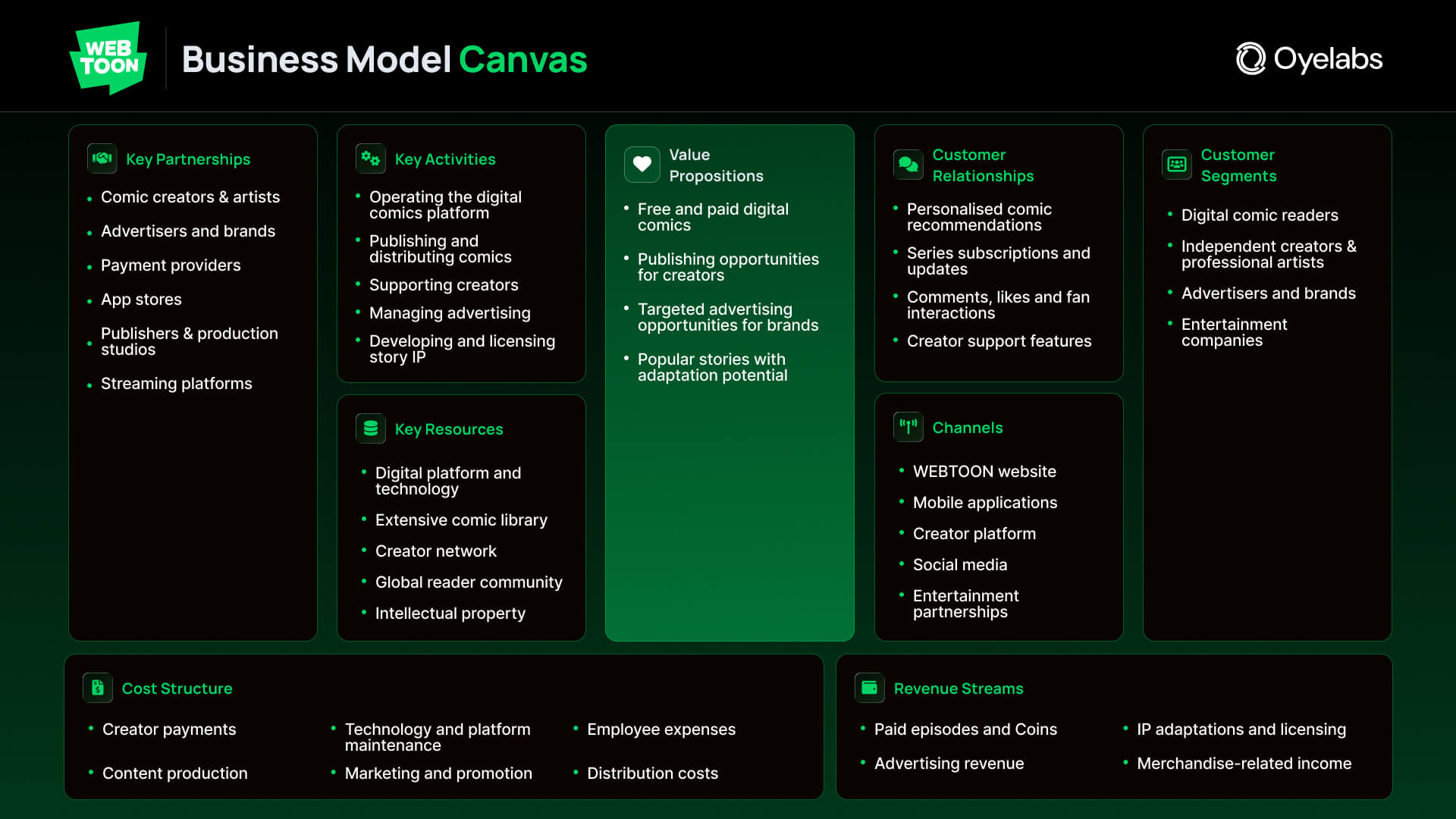
| Business Model Component | How It Works at WEBTOON |
|---|---|
| Customer Segments | Digital comic readers, independent creators, professional artists, advertisers and entertainment companies. |
| Value Propositions | Free and paid comics for readers, publishing opportunities for creators, advertising access for brands and stories with adaptation potential for entertainment companies. |
| Channels | WEBTOON website, mobile applications, creator platform, social media and entertainment partnerships. |
| Customer Relationships | Personalised recommendations, series subscriptions, comments, likes, creator updates and fan support features. |
| Revenue Streams | Paid content, advertising, IP adaptations, licensing and merchandise-related income. |
| Key Activities | Operating the platform, distributing comics, supporting creators, selling advertising and developing story rights. |
| Key Resources | Digital platform, comic library, creator network, reader community, technology and intellectual property. |
| Key Partnerships | Comic creators, advertisers, payment providers, app stores, publishers, production studios and streaming platforms. |
| Cost Structure | Creator payments, content production, technology, platform maintenance, marketing, employee expenses and distribution costs. |
The canvas shows why WEBTOON needs more than a large collection of comics. It must keep readers interested, give creators reasons to publish and build relationships with businesses that can help generate revenue.
How Do WEBTOON Creators Make Money?
Creators are the reason readers have new stories to follow. WEBTOON offers different ways for artists and writers to earn, depending on how they publish their work.
The two main publishing routes are CANVAS and ORIGINALS.
WEBTOON CANVAS Creators: CANVAS is WEBTOON’s self-publishing platform. Artists and writers can upload their comics and build an audience without first securing an ORIGINALS contract. Creators retain ownership of their CANVAS series under the platform’s non-exclusive publishing arrangement. They can also earn through advertising and fan support programmes.
Ad Revenue Sharing: Eligible CANVAS creators can earn 50% of the revenue generated by static and video advertisements displayed on their series. For static display ads, WEBTOON currently requires a series to have:
- At least 1,000 subscribers.
- At least 40,000 global monthly page views.
Video ad earnings have an additional viewership requirement.
Super Likes: Readers can purchase Super Likes to show support for their favourite series. Creators earn revenue when readers send these paid reactions. A CANVAS series needs at least 500 total Likes to qualify for the Super Like programme, subject to the programme’s other requirements. These options allow creators to earn from their audience without charging every reader to access their comics.
WEBTOON ORIGINALS Creators: WEBTOON ORIGINALS are selected series published through an arrangement with the company.
When a series is approved for the ORIGINALS programme, its creator receives an advance to support production. After launch, creators can also earn a share of revenue from paid content, including Fast Pass, according to their agreement. ORIGINALS creators may also get opportunities for brand partnerships and adaptations into other entertainment formats.
What Makes WEBTOON’s Business Model Successful?
WEBTOON has built a business where readers, creators and entertainment partners all have reasons to participate. A few parts of its approach help explain why the model works.
Readers Can Start for Free: People do not need to pay before they know whether they enjoy a comic. They can browse stories, read free episodes and follow series that interest them. Once readers become invested in a story, paid features give them the option to access selected episodes sooner.
Independent Creators Can Publish Their Work: Traditional publishing can be difficult for new comic artists. They may not have the contacts or resources needed to get their work in front of a large audience. CANVAS gives creators a place to publish independently. This helps WEBTOON attract stories from both new and experienced artists.
New Episodes Bring Readers Back: WEBTOON publishes many stories in episodes rather than releasing an entire series at once. Readers follow their favourite comics and return when new chapters become available. Comments, likes, subscriptions and personalised recommendations also help readers stay connected with the stories they enjoy.
Popular Comics Can Become Entertainment Properties: WEBTOON does not have to earn from a story only while it is being read on the platform. A popular comic may later become a drama, film, game or animated series. This gives the company opportunities to earn from successful stories in different markets and formats.
It Has More Than One Revenue Source: Paid content brings in most of WEBTOON’s revenue, but advertising and IP adaptations contribute as well. This means the company can earn from readers who purchase episodes, readers who view advertisements and entertainment companies that work with its stories.
Develop Your Digital Comics Platform With Oyelabs
Planning to launch a digital comics platform like WEBTOON? Turning your idea into a working product requires the right development partner. From comic publishing and reader accounts to episode management, payment integration and monetization features, every part of the platform needs to work together.
Oyelabs helps businesses build custom web platforms, mobile applications and digital products based on their requirements. Whether you want to create a platform for independent comic artists, offer paid episodes or build a subscription-based reading service, the development process starts with understanding your business goals and choosing the right features.
Conclusion
WEBTOON has built its business around making digital comics accessible to readers and giving creators a place to publish their stories.
Readers can enjoy many comics for free, pay to access selected episodes early or support creators. Advertisers get access to an active audience, while entertainment companies can work with popular stories beyond the platform.
Its 2025 financial results show that paid content remains the biggest source of revenue. However, the growth in IP adaptations also shows the earning potential of taking successful comics into films, television and other formats.
For businesses planning to build a digital comics platform, WEBTOON offers a clear example of how publishing, reader engagement and different revenue sources can work together.
FAQs
1. What Features Are Needed to Build an App Like WEBTOON?
Key features include comic publishing, reader accounts, episode management, search, recommendations, subscriptions, payments, comments and creator dashboards.
2. How Do You Monetize a Digital Comics Platform?
You can generate revenue through paid episodes, subscriptions, advertising, in-app purchases, licensing deals and merchandise sales.
3. How Long Does It Take to Develop a Digital Comics Platform?
Development time depends on the feature set, technology and platform requirements. A basic version takes less time than a feature-rich web and mobile platform.
4. What Technology Is Needed to Build a Platform Like WEBTOON?
You need frontend and backend technologies, a database, cloud hosting, payment integration, content management tools and mobile app development frameworks.
Reviewed By: Anuraag Jain
CEO, Oyelabs & AI Transformation Expert