
Why OFTV Failed to Fully Solve OnlyFans’ Discovery Problem

Why OFTV Failed to Fully Solve OnlyFans’ Discovery Problem
 Anuraag Jain
Last Updated on August 17, 2026
Key Takeaways –
What You’ll Learn:
- OFTV launched in 2021 to help fans discover creators through free SFW content.
- OFTV remained separate from the main OnlyFans platform, creating extra discovery steps.
- Its curated content did not provide personalized recommendations based on user behavior.
- OFTV could not showcase creators whose content did not fit its SFW format.
- Fans still relied on social platforms and directories to discover many creators.
Stats That Matter:
- OFTV launched on August 17, 2021, as a free streaming platform and app.
- OFTV had over 800 videos from more than 100 creators at launch.
- OFTV offered fitness, cooking, comedy, music, and other SFW content.
If you’ve ever tried finding a new creator on OnlyFans, you’ve probably noticed the issue. Finding someone you already know? Easy. Finding someone new who actually matches your interests? Not so much. Most discovery still happens on X, TikTok, Reddit, or Instagram before fans ever make it to OnlyFans.
OnlyFans tried to change that with OFTV in 2021. The idea was pretty simple: give fans free, safe-for-work content where they could discover creators before deciding to subscribe. Sounds like a win, right? Well, not exactly.
A few years later, that discovery gap is still very much there, with third-party directories stepping in to help fans find creators they can’t easily discover on OnlyFans itself.
So, what went wrong with OFTV? In this article, we’re breaking down what OFTV was supposed to do, where it fell short, and what founders can learn from it when building an OnlyFans-like creator platform.
What Was OFTV and Why Did OnlyFans Build It?
So, what exactly was OFTV?
OnlyFans launched OFTV on August 17, 2021, as a separate, free streaming platform and app built around safe-for-work creator content. It featured everything from fitness and cooking to comedy and music, with both short- and long-form videos available across phones, tablets, and smart TVs.
And OnlyFans was pretty clear about what it wanted OFTV to do. The company said the platform would let fans watch their favorite creators and discover new ones. After a soft launch earlier that year, OFTV had already grown to more than 800 videos from over 100 OnlyFans creators by the time of its official launch.
The idea was pretty simple: give fans something they could watch for free, let them get familiar with creators and their content, and create another way for those creators to reach potential fans.
That made OFTV more than just a streaming app. It was also meant to open up a new discovery route for the OnlyFans creator community. And honestly, that sounds like a pretty smart move.
The problem was that giving fans more content to watch isn’t quite the same as building a discovery system. That gap is where OFTV’s approach started to fall short.
How OFTV Was Supposed to Fix OnlyFans’ Discovery Problem
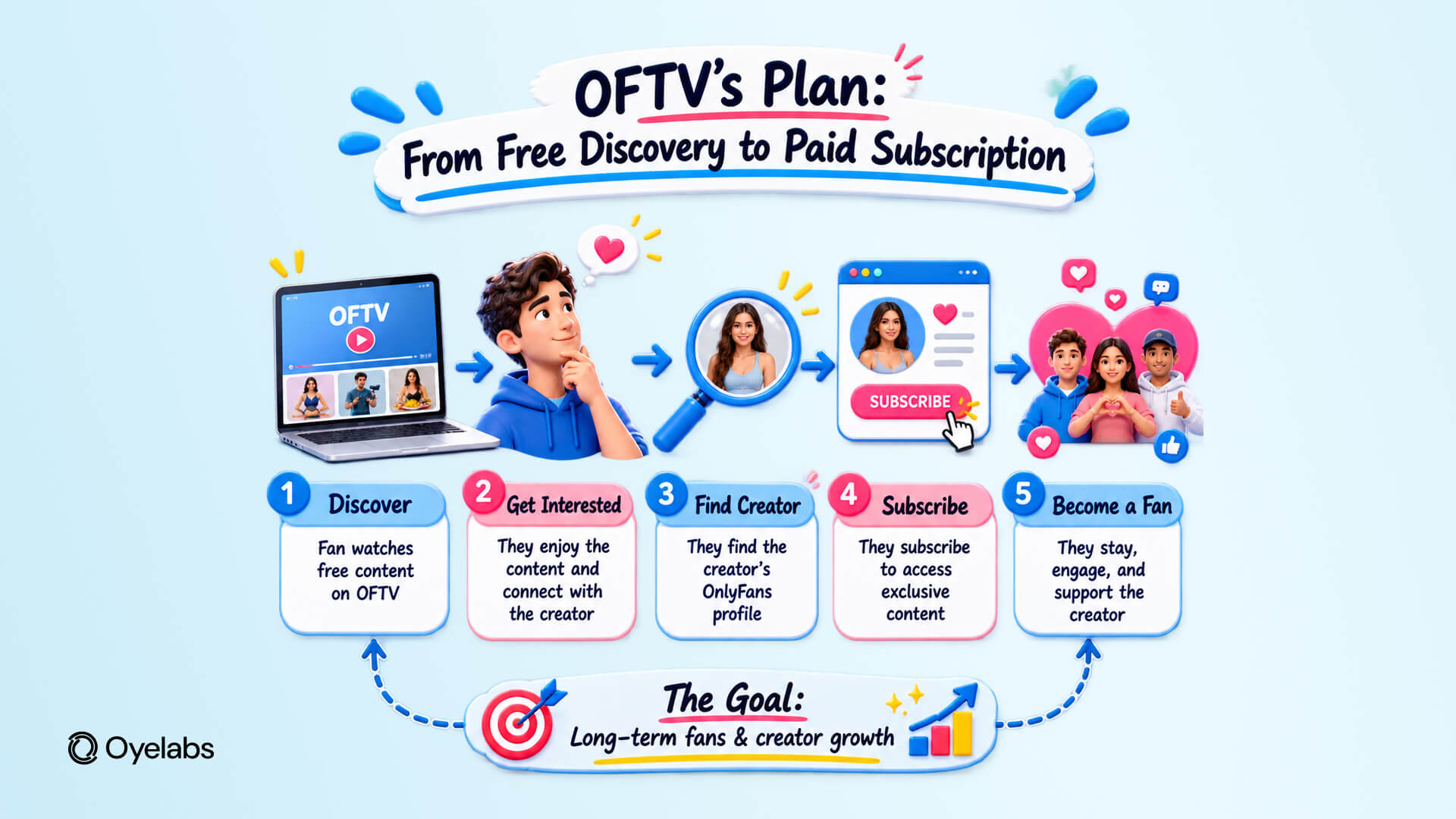
So, how was OFTV supposed to help with the discovery problem?
The idea was pretty simple. Instead of asking fans to already know a creator’s name before they could find them, OFTV gave them a free place to come across creators naturally. A fan could watch a video, like what they saw, get a feel for the creator, and then decide if they wanted to check out their paid OnlyFans profile.
Basically, OFTV was meant to be the first step in the journey from “Who is this?” to “I want to subscribe.”
And the timing made sense. Creators were already spreading their content across multiple platforms, using free content to attract attention and paid subscriptions to turn that attention into income. OFTV was OnlyFans’ attempt to bring that discovery step closer to its own ecosystem.
In theory, it could have worked a little like YouTube or TikTok: discover something interesting, find the creator behind it, and decide if you want more.
The catch? OFTV could introduce fans to some creators and some content, but it still wasn’t a discovery system for the entire OnlyFans platform.
OFTV’s Discovery Features vs. What a Real Discovery Engine Needs
This is where things get a little more interesting. OFTV gave fans another place to watch creator content, but watching content and actually discovering creators are two different things.
To see where OFTV stopped short, let’s put its approach next to the features you’d normally expect from a proper discovery system:
| What Fans Need | Did OFTV Deliver It? |
|---|---|
| Searchable creator directory | Not really. Discovery focused more on featured content and channels. |
| Personalized recommendation feed | No. Content was curated rather than tailored to individual interests. |
| Categories and interest-based browsing | Partially. Some broad categories were available, but the options were limited. |
| Access to a creator’s full catalog | No. OFTV featured separate SFW content rather than a creator’s full paid OnlyFans catalog. |
| Discovery for all creator types | No. Creators without suitable SFW content had little or no presence on OFTV. |
| Built into the main OnlyFans experience | No. Fans had to use a separate app. |
And that’s really the point.
OFTV added another place to discover content, but it never became a discovery engine for the entire OnlyFans platform. It could help fans find some creators, but it didn’t make discovering creators a natural part of the main OnlyFans experience.
Where OFTV Fell Short on Solving Discovery
This is where the real problem with OFTV becomes clear.
The idea itself wasn’t bad. Giving fans free content and giving creators another way to get noticed made sense. The issue was that OFTV solved one small part of discovery without fixing the bigger experience around it.
Here’s where things started to break down.
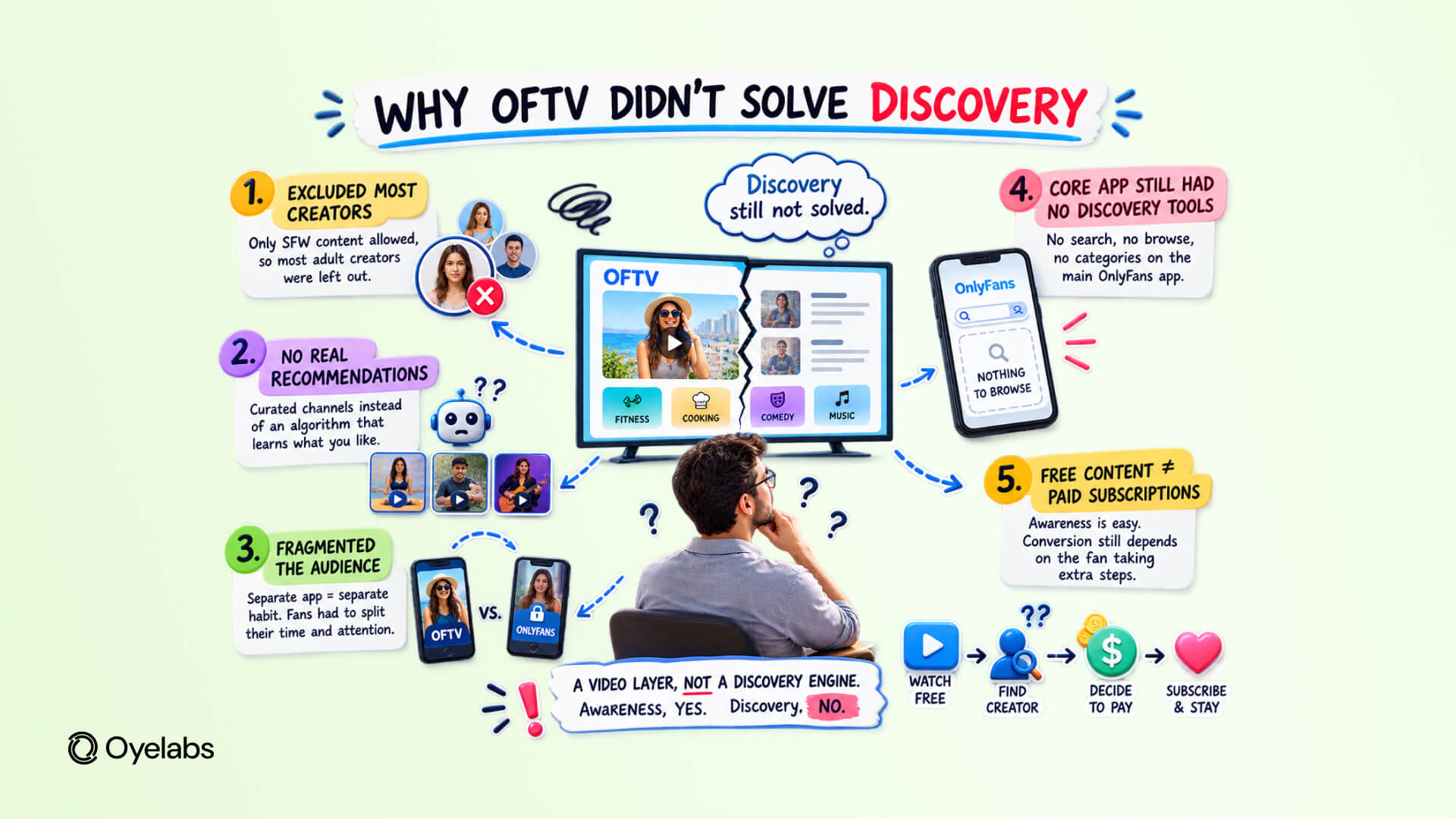
It Left Out a Huge Part of the Creator Base
The biggest limitation was right there in OFTV’s safe-for-work model.
Because the platform could only feature SFW content, it couldn’t represent the full range of creators on OnlyFans. Creators whose main content didn’t fit those requirements were effectively left out of this discovery channel.
And that creates a pretty obvious problem.
Imagine building a platform with thousands of creators but giving fans a discovery tool that only works for a portion of them. The creators who can participate get another way to attract attention, while everyone else is still left relying on external promotion.
So, OFTV created a discovery channel for certain creators, rather than a discovery system for the entire marketplace.
It Wasn’t Really Personalized
This is another big one.
OFTV had content fans could browse, but it didn’t work like the recommendation feeds people had already become used to on platforms such as YouTube and TikTok.
There’s a huge difference between:
“Here are some videos we picked for you.”
and: “You keep watching this type of content, so here are more creators you might actually like.”
A real recommendation system learns from what users watch, search for, follow, like, skip, and engage with. Over time, the experience becomes more relevant to that specific person.
OFTV’s curated approach didn’t really create that feedback loop. So even if a fan discovered one creator they liked, the platform wasn’t necessarily getting better at helping them discover the next creator.
And that matters because good discovery isn’t supposed to be a one-time event. It’s supposed to keep pulling users back.
It Created a Second Destination
Then there’s the app problem.
OFTV lived separately from the main OnlyFans experience. Fans had to open or download another app to watch the content, then move back toward OnlyFans if they wanted to subscribe. That might not sound like a huge deal, but every extra step creates friction.
The best discovery experiences usually happen naturally while someone is already using the platform. You scroll, see something interesting, tap, explore, and maybe follow or subscribe. With OFTV, the journey was split across two products.
Instead of strengthening the habit of “open OnlyFans and discover something new,” OFTV created a separate habit around OFTV itself.
That made it harder to turn discovery into a core part of the OnlyFans experience.
The Main OnlyFans Experience Still Didn’t Have Real Browse-Based Discovery
This is probably the biggest reason OFTV couldn’t fully close the gap. OFTV existed next to OnlyFans rather than becoming part of it.
A fan could discover a creator through free SFW content, but that didn’t suddenly give them a way to browse the wider OnlyFans creator base based on interests, categories, or other useful filters.
And that’s the experience people actually needed. Think about a fan who doesn’t have a particular creator in mind. They might want to explore a category, find creators with similar interests, or simply see who is worth checking out.
OFTV didn’t solve that problem across the main marketplace. So the original situation remained pretty much the same:
Know the creator → find the creator → subscribe. If you didn’t already know who you wanted, you were still likely looking somewhere else first.
Free Content Doesn’t Automatically Become a Paid Subscription
And then there’s the conversion problem. Getting someone to watch a free video is easy compared with getting them to pay for a recurring subscription.
A fan might watch a free fitness video on OFTV, enjoy it, and move on with their day. For that viewer to become a paying subscriber, they still need to find that creator’s OnlyFans profile, decide they want more content, see enough value in the subscription, and actually pay for it.
That’s a lot of steps between “this is interesting” and “take my money.” OFTV could help with the first part: awareness. But it didn’t completely own what came next.
The fan still had to make the jump from free discovery to the paid OnlyFans experience, and creators still had to rely heavily on external platforms to keep bringing new people into that funnel.
So, What Was the Real Problem?
When you put all of these pieces together, the issue becomes pretty clear.
OFTV wasn’t really a replacement for OnlyFans’ missing discovery system. It was an additional discovery channel sitting outside the core platform. It could introduce some fans to some creators.
But it didn’t give the entire creator base a searchable, personalized, easy-to-use discovery experience inside the place where subscriptions actually happened. And that’s why the discovery problem didn’t simply disappear when OFTV launched.
How Creators and Fans Filled the Gap OFTV Left Behind
Once it became clear that OFTV wasn’t going to become a full discovery system, fans and creators had to figure out their own workarounds.
That’s where third-party directories and external social platforms came in. Independent creator directories started offering the kind of browsing experience fans were looking for, with ways to sort and filter profiles by things like category, location, and price. Basically, they were building the discovery layer that OnlyFans itself didn’t provide.
Creators also kept looking outside OnlyFans to actually get discovered. Social platforms became the place to build an audience, while OnlyFans became the place to turn that attention into subscriptions.
What the workaround looks like
- Social platforms: Build visibility and attract new people.
- Third-party directories: Help fans search and browse creators.
- OnlyFans: Convert that existing interest into paid subscriptions.
- Multiple platforms: Give creators more than one source of traffic instead of depending on OnlyFans alone.
And this is where the OFTV story gets interesting.
If OFTV had fully solved discovery, creators and fans wouldn’t need this extra layer of platforms, directories, and workarounds nearly as much. The fact that they still do suggests that OFTV improved access to some free creator content, but never became the discovery engine for the wider OnlyFans marketplace.
For creators, that means the journey still often starts somewhere else. A fan discovers them on another platform, becomes interested, and only then moves to OnlyFans.
So, instead of discovery → engagement → subscription happening in one place, the experience remains spread across multiple platforms.
OFTV vs. Fansly’s “For You” Feed: Two Different Approaches to Discovery
This is where the difference between OFTV and a more built-in discovery experience becomes pretty obvious.
Fansly took a different route with its “For You” feed, making creator discovery part of the main platform instead of putting it in a separate app. The feed uses user behavior and interests to surface content, while hashtags and categories give fans more ways to browse.
Here’s how the two approaches compare:
| Discovery Feature | OFTV (OnlyFans) | Fansly’s “For You” Feed |
|---|---|---|
| Where discovery happens | Separate app | Inside the main platform |
| Content covered | SFW content | Broader creator content |
| Personalization | Curated content | Based on user interests and behavior |
| User experience | Requires switching apps | One unified experience |
| Creator discovery | Limited to creators with suitable SFW content | Built into the wider creator platform |
And honestly, that’s the biggest difference.
It’s not really about who had more money, more creators, or more resources. It’s about where discovery lives in the product.
OFTV treated discovery as a separate layer. Fansly treated it as part of the main experience. And when you’re trying to help fans find creators they’ll actually care about, that distinction matters.
Also Read: Why OnlyFans Alternatives Keep Getting Shut Down
What Founders Building an OnlyFans-Like Platform Should Learn From OFTV
If there’s one thing the OFTV story makes pretty clear, it’s that discovery works better when it’s part of the main product, not something added on the side.
For founders building a subscription-based creator platform, a few things are worth getting right from the beginning:
- Build search, categories, and filters into the core app instead of treating them as future features.
- Start with recommendation logic, even if it’s simple, so fans can discover content based on their interests.
- Keep the experience in one place rather than sending fans between different apps.
- Give the entire creator base a chance to be discovered, not just creators who fit a specific content format.
- Treat discovery as core product infrastructure, not just a marketing experiment.
The goal isn’t to copy OFTV or build every discovery feature at once. It’s to make sure fans have a natural reason to explore your platform even when they don’t already know who they’re looking for. That’s what turns discovery into engagement, and engagement into subscriptions.
What Would You Build Differently?
OFTV shows how easy it is to create a discovery feature without actually solving the bigger discovery problem. The real lesson isn’t that OFTV was a bad idea. It’s that discovery needs to be part of the platform from the start, not something added later when users are already struggling to find creators.
If you’re planning to build your own subscription-based creator platform, this is where getting the product structure right early can make a real difference. From creator search and categories to recommendations, subscriptions, and monetization, every part should work together to keep fans exploring and creators getting discovered.
At OyeLabs, we help businesses turn these ideas into scalable creator platforms built around the experience their users actually need.
Have a creator platform idea? Let’s talk about building it.
Conclusion
Looking back, OFTV wasn’t a bad idea. It gave fans a free way to discover some creators and gave OnlyFans another route to reach audiences outside its main platform. But it didn’t solve the bigger issue: discovery still happened outside the core OnlyFans experience.
That’s the real lesson for founders building an OnlyFans-like platform. Discovery shouldn’t be a separate add-on or something you figure out later. Search, categories, recommendations, and creator discovery should be part of the product from the start, so the journey from “Who is this?” to “I want to subscribe” feels natural and happens in one place.
FAQs
1. Why did OnlyFans choose a separate app for OFTV?
A separate app gave OnlyFans a way to experiment with free, SFW creator content without changing the core subscription experience. It also gave the company a separate space to explore discovery.
2. Did OFTV increase OnlyFans subscriptions?
OFTV created another path for fans to discover creators, but there’s no clear evidence showing exactly how many OFTV viewers went on to become paying OnlyFans subscribers. So, the impact on subscriptions remains unclear.
3. What could OnlyFans have done differently with OFTV?
OFTV could have connected discovery more closely to creator profiles and subscriptions. Adding better search, personalized recommendations, and a smoother path from watching to subscribing could have reduced the gap between discovery and payment.
4. What should creators look for in a platform’s discovery system?
Creators should look for features that actually help people find them, including searchable profiles, personalized recommendations, category browsing, and fair visibility. The goal should be to reach new audiences without depending entirely on external platforms.
Reviewed By: Anuraag Jain
CEO, Oyelabs & AI Transformation Expert