
Taskrabbit Launch in Sioux Falls: Signals for On-Demand Apps

Taskrabbit Launch in Sioux Falls: Signals for On-Demand Apps
 Anuraag Jain
Last Updated on April 8, 2026
Key Takeaways
What You’ll Learn:
- Taskrabbit entering Sioux Falls proves demand in smaller cities is growing
- On-demand apps succeed by solving local service gaps quickly
- Supply and demand balance is critical for marketplace success
- Local-first strategy works better than global expansion initially
- Service marketplaces scale faster with strong provider onboarding
Stats That Matter:
- Over 60% of users prefer apps for booking home services
- On-demand economy is growing over 20% annually globally
- Local service searches drive more than 70% of bookings
- Mobile apps handle majority of service marketplace transactions
- Gig workforce participation exceeds 30% in many economies
Real Insights:
- Smaller cities offer less competition and faster user adoption
- Fast provider onboarding builds early marketplace liquidity
- Local trust matters more than brand recognition initially
- Simple booking experience improves conversion rates significantly
- Early traction comes from solving one strong use case
Taskrabbit Launch in Sioux Falls: Signals for On-Demand Apps
Big tech doesn’t move quietly. When a platform like TaskRabbit expands into a city like Sioux Falls, it’s not random – it’s a signal.
For years, on-demand apps focused on major metros. Now, the shift toward mid-sized cities shows that demand for structured, tech-enabled home services has matured beyond traditional hotspots. This is where marketplace economics, gig workforce supply, and localized demand intersect.
TaskRabbit’s move highlights a deeper trend: high-frequency services like cleaning, assembly, and moving are becoming standardized through digital platforms, even in smaller markets.
For founders and entrepreneurs, this is not just news – it’s validation. The question is no longer if on-demand service apps work outside big cities, but where to launch next and how fast you can enter the market.
Why Taskrabbit’s Sioux Falls Launch Is a Strategic Signal for On-Demand Apps
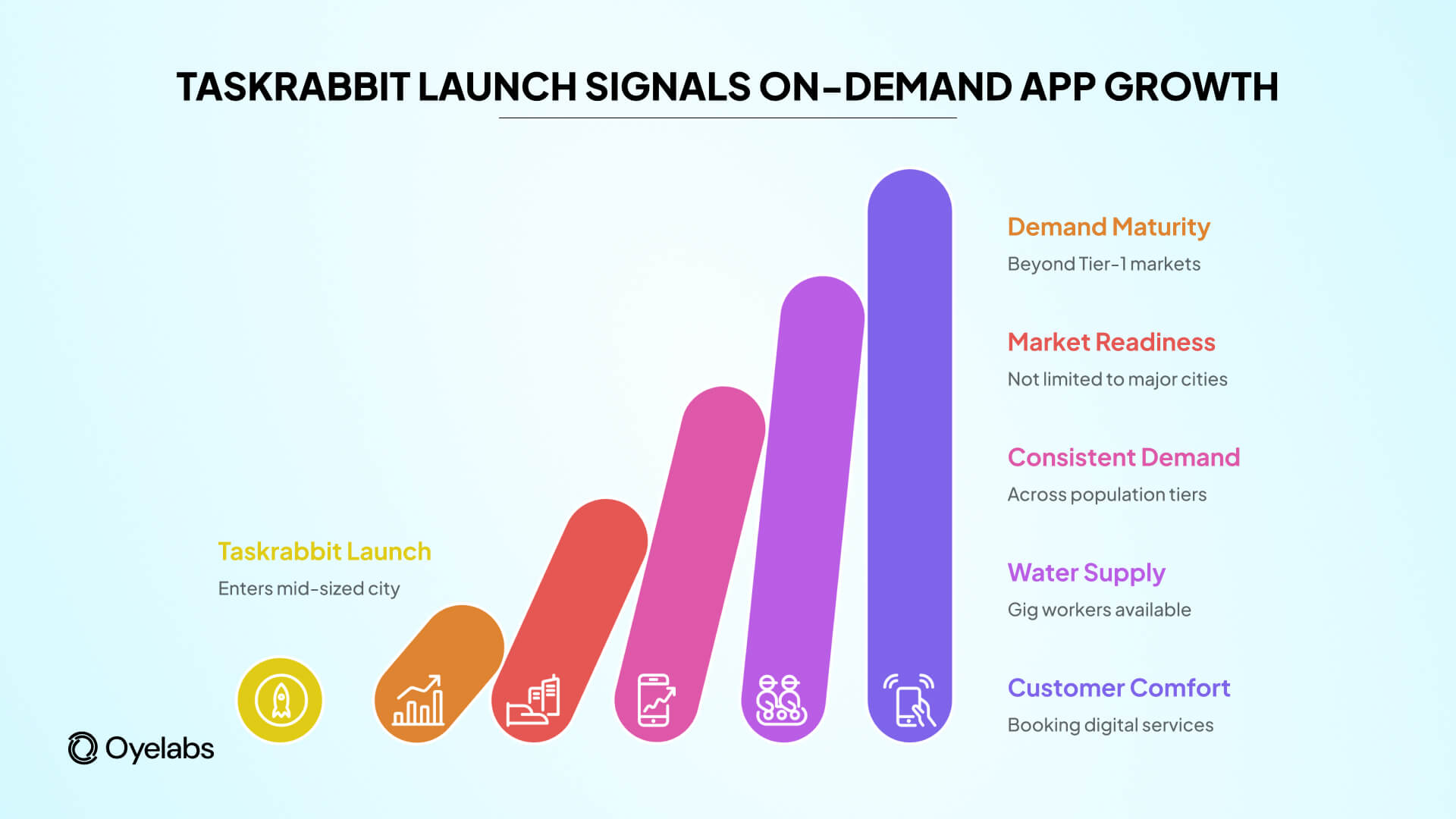
When a mature platform like TaskRabbit enters a mid-sized city such as Sioux Falls, it is not an expansion for visibility – it is a calculated move based on validated demand signals.
TaskRabbit has operated across major metropolitan areas for years. Its expansion into smaller cities indicates that on-demand service marketplaces have reached a level of demand maturity beyond Tier-1 markets. This shift reflects a broader trend in the gig economy, where structured service platforms are no longer dependent on dense urban populations to succeed.
For founders, this is a critical insight. Market readiness is no longer limited to cities like New York or Los Angeles. Instead, mid-sized cities are emerging as high-potential markets with less competition and faster user adoption cycles.
This move also signals that:
- Demand for professional, app-based services is now consistent across population tiers
- Supply of gig workers in smaller cities is strong enough to support marketplaces
- Customers are increasingly comfortable booking local services through digital platforms
In practical terms, Sioux Falls represents a blueprint. If a platform like TaskRabbit sees sustainable unit economics in such a market, founders can confidently explore similar cities with lower competition and higher growth potential.
Signal 1: On-Demand Apps Are Moving Beyond Tier-1 Cities
The expansion of on-demand apps into mid-sized cities is one of the most important structural shifts in the marketplace economy.
For years, founders concentrated on large urban centers because of population density and demand concentration. However, this approach has led to market saturation, high customer acquisition costs, and intense competition.
TaskRabbit’s entry into Sioux Falls reflects a different strategy – targeting cities where demand exists but supply is fragmented.
Mid-Sized Cities Are Now Revenue-Ready Markets
Mid-sized cities are no longer early-stage markets. They have:
- Increasing digital adoption
- Growing middle-class populations
- Rising demand for convenience services
These factors create a strong foundation for service marketplaces.
Unlike large cities, where users have multiple platform options, mid-sized cities often lack structured service ecosystems. This creates an opportunity for new entrants to establish early dominance.
Why Sioux Falls Represents a Scalable Expansion Model
Sioux Falls is not unique – it is representative.
Cities with similar characteristics share:
- Moderate population density
- Limited organized service marketplaces
- High reliance on informal service providers
This combination creates inefficiencies that digital platforms can solve.
For founders, the key takeaway is clear:
Scaling a marketplace does not require starting in the largest city – it requires starting in the right city.
Lower Competition, Faster Brand Dominance
Entering a saturated market often means competing against established players with strong brand recognition and deep marketing budgets.
In contrast, mid-sized cities offer:
- Lower competition from large platforms
- Higher visibility for new entrants
- Faster word-of-mouth adoption
This allows founders to build brand recognition quickly while maintaining lower acquisition costs.
Growth Insight: In smaller cities, user behavior shifts quickly once a reliable platform appears. Fewer alternatives mean faster adoption and stronger retention. Winning one mid-sized city completely is often more valuable than competing weakly in a large metro.
Signal 2: Specialized Home Services Are Driving Marketplace Growth
The on-demand economy is evolving. Early platforms focused heavily on transportation and food delivery. Today, growth is shifting toward labor-intensive, specialized home services.
TaskRabbit’s positioning in Sioux Falls reinforces this transition.
From Delivery to Labor-Based Services
Delivery services are now widely available and highly competitive. Margins are often thin, and customer loyalty is low.
In contrast, home services such as cleaning, furniture assembly, and moving:
- Require skilled or semi-skilled labor
- Have higher average order values
- Encourage repeat bookings
This makes them more attractive for marketplace businesses.
Why Cleaning, Assembly, and Moving Are High-Frequency Categories
Certain service categories naturally generate recurring demand.
| Service Type | Frequency | Revenue Potential |
| Cleaning | Weekly / Monthly | High repeat value |
| Furniture Assembly | Occasional | Medium value |
| Moving Services | Seasonal | High ticket size |
Cleaning services, in particular, form the backbone of many successful marketplaces due to their recurring nature.
Service Depth Beats Service Breadth
Many founders attempt to build platforms that offer too many services at once. This often leads to operational complexity and inconsistent quality.
TaskRabbit’s approach highlights a different strategy:
focus on high-demand service categories and build depth before expanding horizontally.
This allows platforms to:
- Standardize service delivery
- Improve provider quality
- Build customer trust
Signal 3: Gig Economy Is Evolving Beyond Drivers to Skilled Taskers
The gig economy is no longer limited to ride-hailing drivers or delivery personnel. It is evolving toward skill-based service providers, often referred to as “taskers.”
According to McKinsey, over 64 million Americans participate in the gig economy, indicating a strong supply base for on-demand service platforms.
The Rise of Skill-Based Gig Work
Platforms like TaskRabbit enable individuals to monetize specific skills, such as:
- home repairs
- cleaning services
- furniture assembly
- installations
This shift reflects a broader change in workforce behavior. Workers are increasingly seeking flexible income opportunities that leverage their existing skills rather than low-margin, high-volume tasks.
Why Taskers Earn More Than Delivery Drivers
Skill-based services typically command higher pricing due to:
- specialized expertise
- longer service durations
- higher perceived value
This results in better earnings for service providers.
For platforms, this creates a stronger supply ecosystem. When providers earn more, they are more likely to remain active and maintain service quality.
Supply-Side Advantage for Founders
A strong supply base is essential for marketplace success.
TaskRabbit’s model shows that:
- Skilled workers are willing to join platforms that offer flexible earning opportunities
- Higher earnings improve retention among providers
- Better providers lead to higher customer satisfaction
For founders, this means focusing on quality supply acquisition rather than just increasing user downloads.
Signal 4: Trust, Speed, and Structure Are the New Service Standards
Customer expectations have evolved significantly. Convenience alone is no longer enough. Users now expect reliable, fast, and trustworthy service experiences.
From Classified Listings to Verified Marketplaces
Traditional service discovery relied on classifieds or informal referrals. These systems often lacked transparency and accountability.
Modern marketplaces solve this by introducing:
- verified provider profiles
- structured booking systems
- secure payment workflows
- rating and review mechanisms
This creates a more reliable experience for users.
Same-Day Service Is Now Expected
The success of on-demand platforms has conditioned users to expect quick service fulfillment.
In many cases, customers prefer:
- same-day bookings
- flexible scheduling options
- real-time updates
Platforms that cannot meet these expectations risk losing users to competitors.
Why Trust Infrastructure Wins Markets
Trust is one of the most important factors in service marketplaces.
Users need confidence that:
- providers are verified
- services will be delivered as promised
- payments are secure
Platforms that invest in trust infrastructure – such as verification systems and transparent reviews – tend to achieve higher retention rates.
Signal 5: Retail-as-a-Service Is the Next Wave
One of the most overlooked aspects of TaskRabbit’s expansion is its connection to IKEA. This relationship represents a broader trend toward integrating services with product ecosystems.
IKEA + Taskrabbit: A Strategic Play
TaskRabbit’s ownership by IKEA is not incidental. It reflects a strategic alignment between product sales and service delivery.
Customers purchasing furniture often require:
- assembly services
- installation assistance
- post-purchase support
By integrating these services into the buying journey, companies create a seamless customer experience.
Service + Product Integration Is Increasing
Retailers are increasingly looking to bundle services with products.
This approach offers several advantages:
- improved customer satisfaction
- additional revenue streams
- Reduced friction in post-purchase processes
For founders, this opens up new possibilities beyond traditional marketplace models.
Why Founders Should Think Beyond “Marketplace Only”
The next generation of on-demand platforms will not operate as standalone marketplaces.
Instead, they will integrate:
- product sales
- service delivery
- logistics support
This hybrid model creates stronger value propositions and multiple revenue streams.
If you’re planning to build a TaskRabbit-like app, the biggest decision isn’t features – it’s how fast you can enter the market. Learn how founders are launching on-demand service apps faster in 10 easy steps.
What These Signals Mean for Founders Building On-Demand Apps
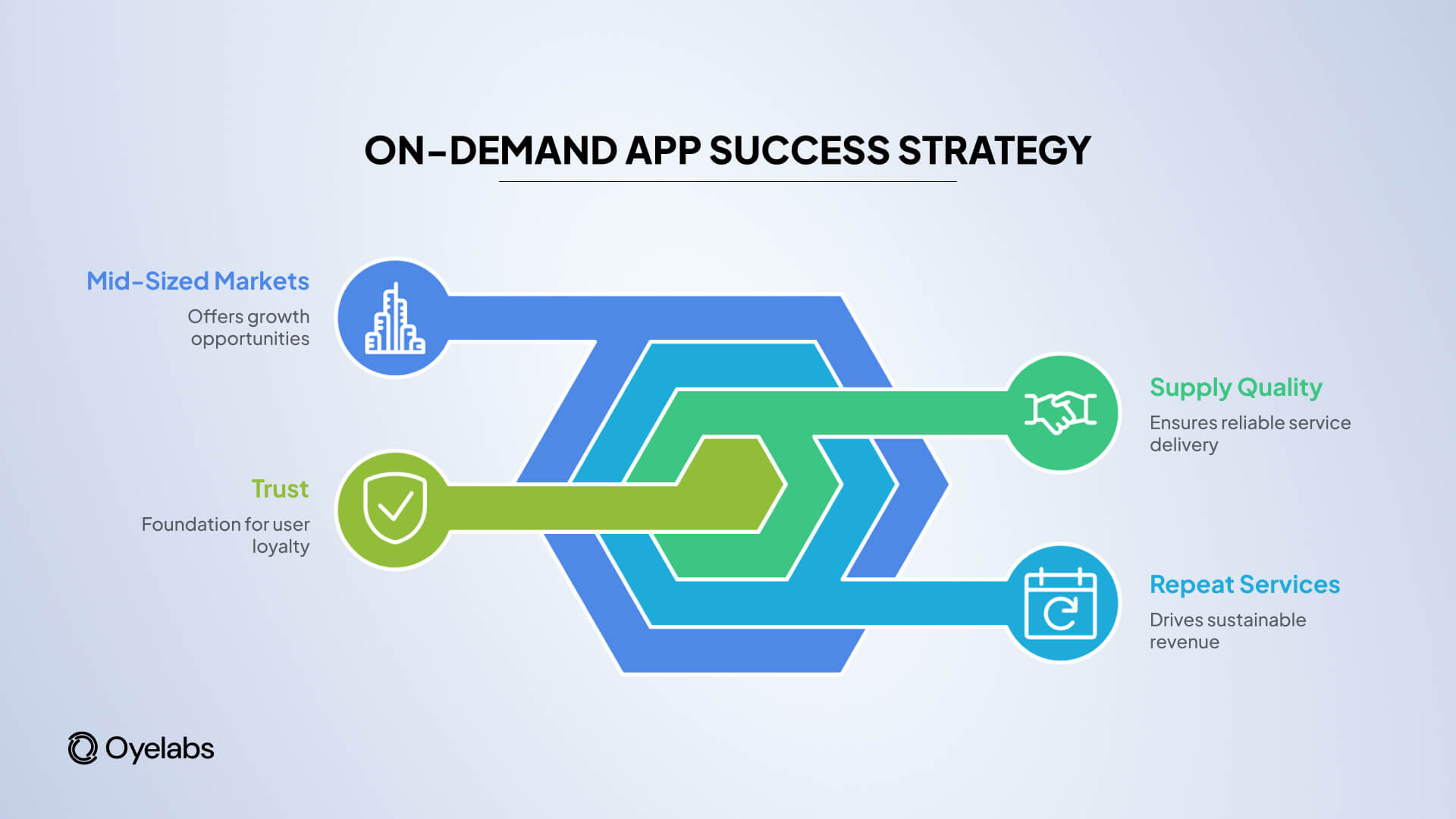
The Sioux Falls expansion is not just a market move – it is a strategic blueprint.
Each signal points toward a clear shift in how on-demand marketplaces are evolving. Founders who understand these signals can position themselves ahead of the curve.
Stop Targeting Oversaturated Metro Markets
Large cities offer visibility, but they also come with:
- high competition
- expensive customer acquisition
- lower margins
Mid-sized cities provide a more balanced opportunity with less competition and faster growth potential.
Build for Repeat Services, Not One-Time Use
Sustainable marketplaces are built on recurring demand.
Services like cleaning and maintenance create repeat usage patterns that:
- improve customer retention
- stabilize revenue
- increase lifetime value
Focus on Supply Quality Before Scale
Many platforms prioritize rapid user acquisition without ensuring service availability.
A more effective approach is to:
- onboard reliable service providers first
- ensure consistent service delivery
- then scale customer acquisition
Design for Trust from Day One
Trust is not a feature – it is a system.
From provider verification to secure payments and transparent reviews, every aspect of the platform should reinforce reliability.
Platforms that establish trust early tend to scale more efficiently and retain users longer.
Builder Tip: Most marketplaces fail because they launch without enough service providers. Demand without supply creates a poor user experience. Onboard and verify providers first, ensure availability, then scale customer acquisition. Supply density determines early success more than marketing spend.
Why Building an On-Demand App from Scratch Is a Strategic Mistake
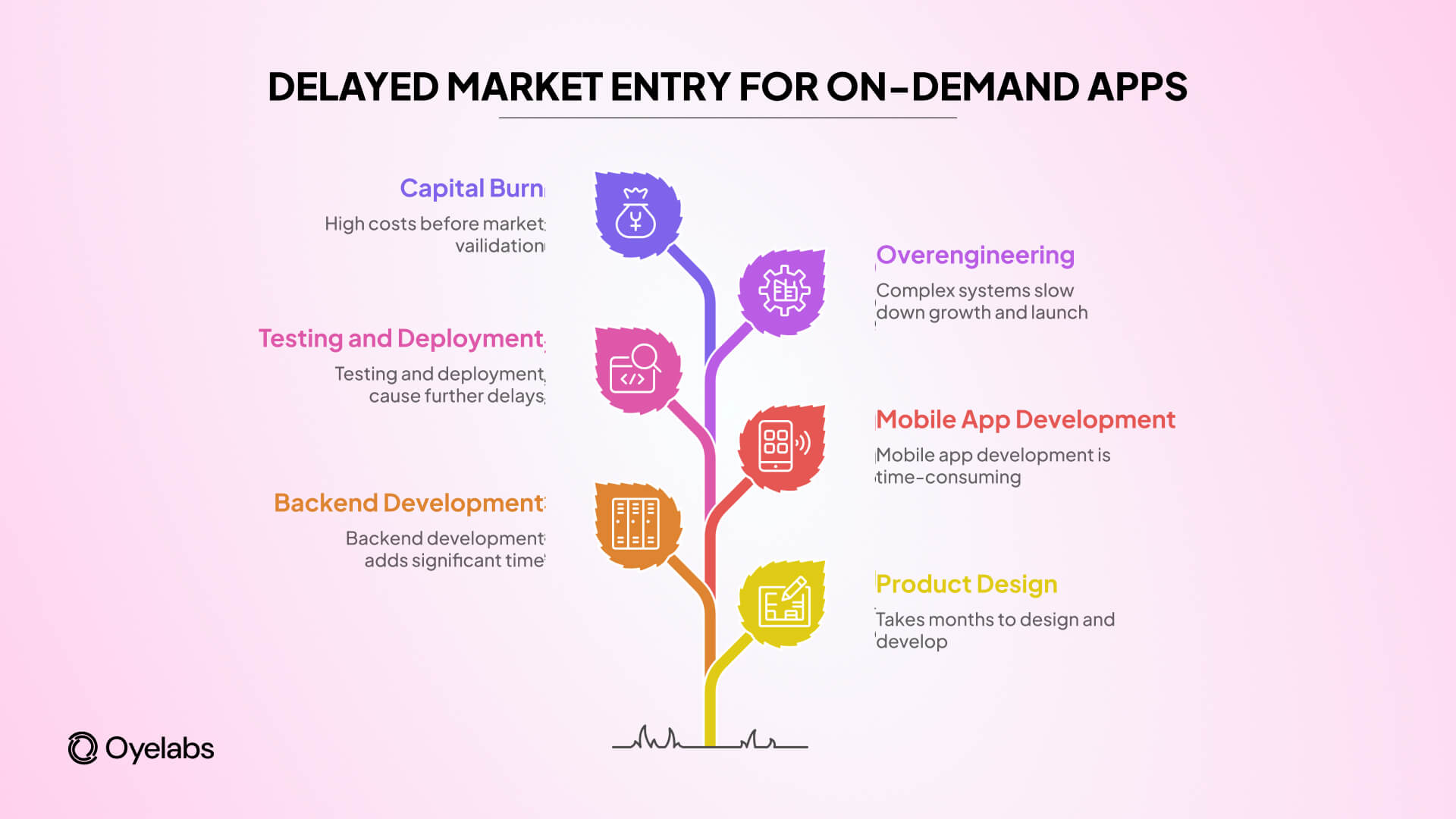
While custom development offers flexibility, it often delays market entry and increases financial risk.
In fast-moving markets, speed is a competitive advantage.
Time Delay Equals Lost Market Share
Building from scratch typically involves:
- product design
- backend development
- mobile app development
- testing and deployment
This process can take several months.
During this time, competitors can enter the market and capture early users, making it harder for new entrants to gain traction.
Overengineering Slows Down Growth
Many founders attempt to build complex systems before validating demand.
This leads to:
- unnecessary development costs
- delayed launch timelines
- increased operational complexity
A simpler, functional platform is often more effective in the early stages.
Capital Burn Before Validation
Custom development requires significant investment in technical resources.
Without market validation, this creates financial risk.
A more efficient approach is to:
- launch quickly
- test the business model
- scale based on proven demand
How Oyelabs Helped a Founder Build a Taskrabbit-Like App and Scale
A founder identified a growing demand for home services in a mid-sized city where no structured marketplace existed. Instead of investing months in custom development, the founder partnered with Oyelabs to launch a TaskRabbit-like platform using a ready-built infrastructure.
The platform was deployed quickly, allowing the founder to focus on onboarding local service providers and acquiring early users. Within a short period, the marketplace began generating consistent bookings across categories such as cleaning, repairs, and assembly.
As more providers joined and service availability improved, user engagement increased significantly. The platform gained visibility across digital channels, leading to higher impressions and organic growth. Over time, the app established itself as a recognized local brand, demonstrating how speed to market combined with the right infrastructure can drive both engagement and market value.

Conclusion
TaskRabbit’s expansion into Sioux Falls is not just a geographic move – it reflects a broader shift in how on-demand marketplaces are evolving. Demand for structured, reliable service platforms is no longer limited to major cities. It is now present across mid-sized markets where digital adoption and service needs intersect.
For founders, this creates a clear strategic window. The opportunity lies in identifying underserved markets, launching quickly, and building strong provider networks before competition intensifies.
Success in this space will not come from building the most complex platform. It will come from entering the right market at the right time, delivering consistent service experiences, and scaling with discipline.
FAQs
What is the difference between ride-hailing, ride-sharing, and carpooling business models in startups?
Ride-hailing connects passengers with drivers for private trips on demand. Ride-sharing allows multiple passengers to share a ride, often reducing costs. Carpooling typically involves pre-planned shared travel. Each model differs in pricing, scalability, and operational complexity for startup founders.
Which business model is more profitable for startups: ride-hailing, ride-sharing, or carpooling platforms today?
Ride-hailing platforms often generate higher revenue through commissions on each ride. Ride-sharing improves efficiency and cost-sharing, while carpooling focuses on lower margins but higher volume. Profitability depends on market demand, pricing strategy, and operational execution.
How do startups choose between ride-hailing, ride-sharing, and carpooling models based on target markets?
Startups should evaluate user behavior, city density, and transportation gaps. Ride-hailing works well in urban areas, ride-sharing suits cost-sensitive markets, and carpooling is ideal for structured, recurring routes such as office commutes.
What features are essential to build a scalable ride-hailing or ride-sharing app platform?
Core features include user registration, ride booking, GPS tracking, payment integration, driver management, and ratings. Advanced features like route optimization, dynamic pricing, and real-time analytics help platforms scale efficiently.