
How Hyperlocal Gig Platforms like Fiverr Are Getting Popular
How Hyperlocal Gig Platforms like Fiverr Are Getting Popular
 Anuraag Jain
Last Updated on October 3, 2025
Key Takeaways
What You Will Learn
-
Digital tools are transforming access, participation, and opportunities for unreached communities.
-
Barriers such as high internet costs, weak infrastructure, and limited digital skills remain major challenges.
-
Educational interventions and capacity-building activities play a vital role in bridging digital gaps.
-
Digital readiness enables communities to advocate for fair policies and global participation.
-
Inclusive growth, equity, and social justice are central goals of digital empowerment projects.
-
Sustainable adoption requires collaboration among governments, NGOs, and the private sector.
Important Stats
-
Nearly 2.6 billion people worldwide still lack access to the internet in 2025.
-
Rural areas account for more than 75% of the global digital divide.
-
Digital literacy programs increase employment opportunities by up to 25% in low-income regions.
-
Communities with affordable broadband access see GDP growth rise by 1.5–2% annually.
-
Mobile penetration is expected to reach 95% globally by 2030, but affordability gaps will persist.
-
Inclusive digital policies are linked to a 10–12% increase in civic participation rates.
Picture this: you’ve got a last-minute client request for a slick presentation, your design software keeps crashing, and your deadline is closer than your next coffee refill.
Boom! Gig platforms like Fiverr connect you with a designer who delivers exactly what you need before your stress levels hit the ceiling. Welcome to the freelance economy revolution, where talent meets opportunity in real time.
These platforms aren’t just websites; they’re AI-powered, globally networked ecosystems that match skills to needs with precision, whether it’s coding, copywriting, video editing, or virtual assistance. Industry data shows freelance marketplaces are growing at double-digit YoY rates, proving this is more than a side hustle trend; it’s a new workforce model.
With smart contracts, integrated project management tools, and secure payment systems, freelance marketplaces are rewriting the rulebook on collaboration. For Gen Z and millennials raised on digital speed and remote work, they’re the perfect blend of autonomy and ambition. This isn’t the future of work; it’s the now, and it’s scaling from bedrooms, coffee shops, and co-working spaces across the globe.
The “Why Now” Factor
Here’s the thing: hyperlocal gig platforms didn’t just “happen.” They exploded because the timing was perfect. Post-pandemic, consumer behavior shifted almost overnight. People wanted services that were faster, closer, and safer, whether it was groceries, handyman help, or same-day package runs. The traditional marketplace couldn’t keep up with the urgency, but hyperlocal gig platforms could.
At the same time, the workforce mindset transformed. The rise of micro-entrepreneurship and flexible work meant people weren’t just looking for full-time jobs; they wanted income streams they could turn on and off like a Spotify playlist.
According to McKinsey, 36% of the U.S. workforce is now engaged in some form of gig work, and hyperlocal apps are the perfect matchmaker between idle talent and instant demand. Then there’s the tech layer, the secret sauce.
These platforms utilize AI-driven matching algorithms to instantly pair tasks with the most suitable gig workers, based on their skills, proximity, and availability. Geofencing technology ensures that services remain truly local, optimizing speed while cutting delivery costs. Add last-mile delivery innovations like dynamic routing and real-time tracking, and you’ve got an experience that’s faster than most national chains can deliver.
In short, hyperlocal gig platforms are thriving now because the world is craving speed, workers want flexibility, and the technology to make it seamless has matured. It’s not just a business model, it’s a perfect storm of cultural shift, economic necessity, and technological readiness.
Key Features Driving Popularity
If Fiverr-like freelance marketplaces were a band, these features would be their chart-topping singles, the real hooks that keep both freelancers and clients coming back for an encore every time.
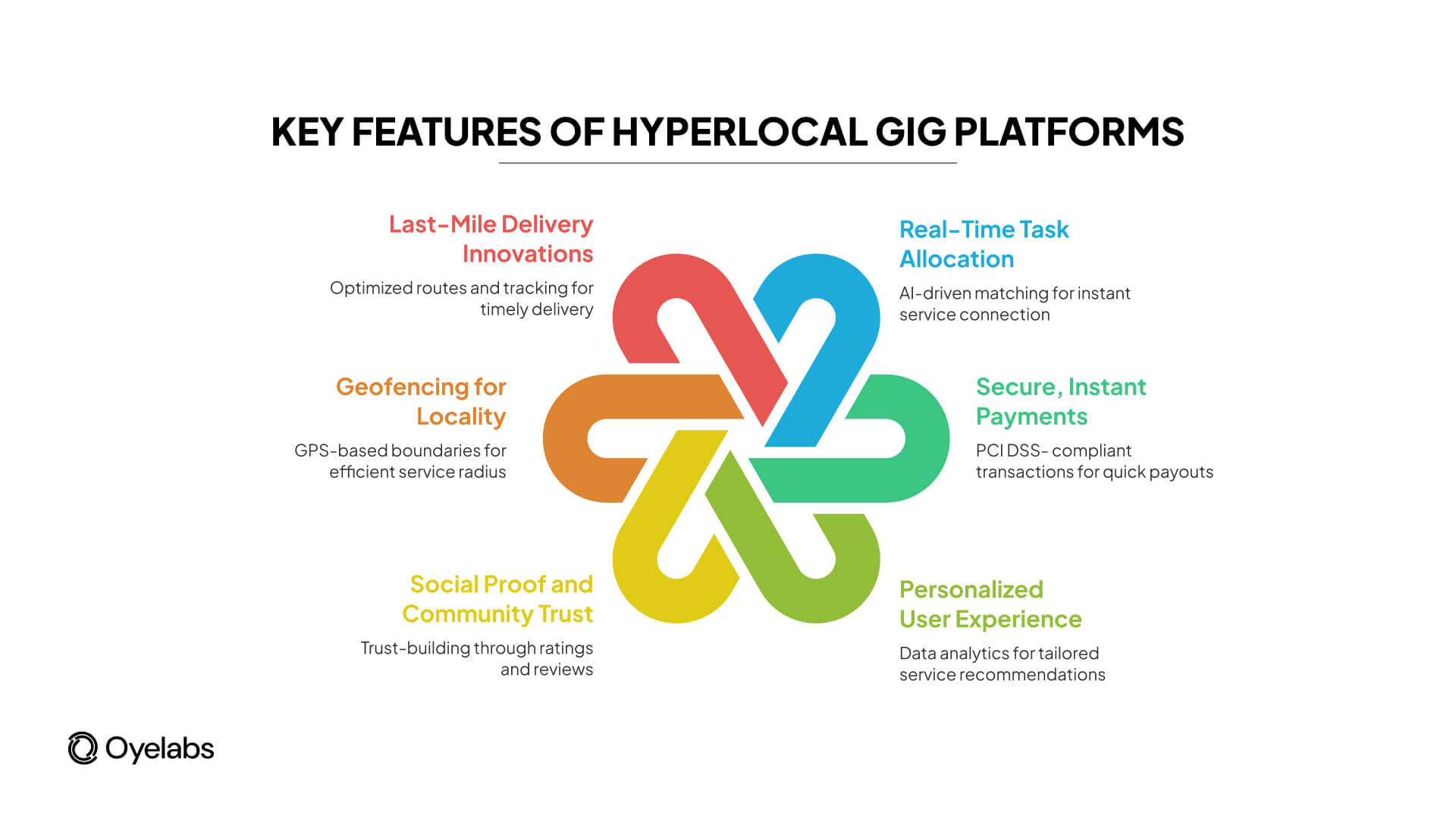
Real-Time Task Allocation
In freelance marketplaces, speed isn’t optional; it’s the foundation. Real-time task allocation ensures projects get matched to the right freelancer within seconds. Instead of relying on slow job boards or endless manual browsing, platforms use AI-driven matching algorithms that factor in:
- Skill set and portfolio relevance
- Availability and time zone alignment
- Pricing and past client feedback
- Performance metrics like completion rates and response time
For example, if a client requests a logo design at 2 p.m., the system can identify a designer with a 98% completion rate, expertise in branding, and a history of fast turnarounds. According to PwC, automated allocation systems can cut hiring cycles by up to 40%, giving clients immediate access to talent while reducing downtime for freelancers.
The result? More projects completed, better earnings potential, and a seamless client experience that feels almost effortless. This is why AI-driven gig apps like Fiverr are shaping the future in 2025, blending instant access to global talent with predictive, machine-powered allocation systems.
Secure, Instant Payments
Cash flow is king, especially for freelancers managing multiple clients across different geographies. Secure, instant payments are now a non-negotiable feature of modern marketplaces. Traditionally, freelancers had to wait weeks for invoice clearance. Now, integrated gateways like PayPal, Stripe, or Payoneer ensure:
- PCI DSS-compliant security for every transaction
- Instant or same-day payouts directly to a freelancer’s account
- Transparent payment tracking with no hidden delays
Research from Finextra shows platforms offering instant payouts report 25% higher trust scores among users. For freelancers, it reduces financial stress and keeps them engaged. For clients, frictionless payments build confidence that their transactions are safe, quick, and professional.
It’s not just an operational perk; it’s a trust-building powerhouse that strengthens long-term platform loyalty. For founders, choosing the right step-by-step guide to building a platform like Fiverr is essential to ensure secure payment systems are implemented from day one.
Personalized User Experience Through Data Analytics
Personalization is one of the most underrated growth engines in Fiverr-like platforms. Every search, booking, and review feeds into a dynamic profile that helps the system predict and recommend the right opportunities. Advanced analytics enable:
- Tailored job suggestions for freelancers based on skills and past success
- Customized talent recommendations for clients aligned with project goals
- Contextual offers influenced by market trends and seasonal demand
Imagine logging in and seeing a curated list of projects perfectly aligned with your design niche, before you even start searching.
Gartner reports that personalization can lift engagement by up to 80%, and in freelance marketplaces, engagement directly translates to repeat contracts. This creates a win-win: freelancers spend less time filtering irrelevant gigs, while clients discover talent faster, increasing satisfaction on both ends.
This creates a win-win: freelancers spend less time filtering irrelevant gigs, while clients discover talent faster. It’s also why many predict AI marketplaces may replace Fiverr-like apps in the next 3 years, as hyper-personalization becomes the standard.
Social Proof and Community Trust Scores
On freelance platforms, flashy ads don’t build trust; social proof does. Ratings, reviews, and repeat bookings are visible benchmarks that influence client choices. But leading platforms go further by offering composite trust scores based on:
- Job success rates and completion history
- Verified identity and skill certifications
- Client endorsements and repeat contracts
- Responsiveness and on-time delivery metrics
BrightLocal’s research shows 87% of consumers read reviews before buying; in freelancing, that number is nearly universal. High ratings attract more clients, which motivates freelancers to deliver quality work, creating a powerful feedback loop.
For new clients, dozens of positive reviews eliminate hesitation, while for freelancers, a stellar trust score becomes a personal brand asset that drives long-term success. For new entrants, knowing the key features of a successful freelance marketplace like Fiverr is vital to building trust at scale.
Geofencing for True Locality
While freelancing is often global, some platforms use geofencing to support localized projects, helping clients find professionals within their city or country for time-sensitive or culture-specific work. Geofencing ensures:
- Faster turnaround for tasks requiring local knowledge (e.g., photography, translations, legal filings)
- Reduced operational friction by matching time zones and communication preferences
- Opportunities for freelancers to build a reputation within their region before going global
According to Harvard Business Review, even small reductions in logistical friction can cut costs by up to 7%, a massive competitive advantage. For freelancers, it means more relevant opportunities; for clients, it means finding culturally aligned talent quickly.
In a world where “local” often equals “trust,” geofencing can be a subtle but powerful differentiator. This explains the growing buzz around regional freelance platforms and how big the opportunity really is.
Last-Mile Delivery Innovations
In freelancing, the “last mile” is not about physical delivery; it’s about final project handoff. This stage determines whether a client becomes a repeat buyer or switches platforms. To optimize the handoff, Fiverr-like platforms integrate:
- Real-time project tracking with milestone updates
- Automated versioning and file-sharing systems
- Instant feedback loops with revision tracking
- Seamless proof-of-delivery notifications
Deloitte’s research shows optimized last-mile processes can boost client satisfaction scores by up to 30%. For freelancers, this means reduced disputes and clearer expectations. For clients, it ensures transparency, reliability, and confidence in final outputs.
Done right, the last mile transforms a one-time gig into a long-term client relationship, boosting platform stickiness and overall growth. Platforms debating between a soft vs. big launch strategy should focus on how their last-mile features create client loyalty from the very first transaction.
Case Studies & Industry Examples
When you look at the global freelance marketplace, the success stories are proof that the right platform can disrupt entire industries. Take Fiverr, for instance. Launched in 2010 with the simple idea of offering services for $5, it has evolved into a multi-billion-dollar marketplace connecting freelancers and clients worldwide.
By implementing AI-powered search, category-specific onboarding, and secure escrow payments, Fiverr scaled to over 4 million active buyers without losing its easy-to-use appeal.
In the U.S., Upwork serves as another benchmark. It focuses on complex, long-term projects and leverages skill-based matching algorithms and enterprise collaboration tools to win over big brands. According to Upwork’s reports, 60% of Fortune 100 companies now hire via the platform, proving its enterprise appeal.
Then there’s Freelancer.com, which blends bidding systems with real-time project tracking, catering to both micro-tasks and large-scale contracts. Their focus on milestone-based payments and global currency integration has helped them attract over 64 million registered users.
These examples show that a successful Fiverr clone isn’t about copying features; it’s about combining cutting-edge technology, trust-focused systems, and scalable infrastructure. With demand for freelance work projected to hit $455 billion by 2030, a well-built Fiverr-style platform isn’t just a business; it’s a long-term growth engine waiting to be ignited.
The Gen Z & Millennial Connection
If hyperlocal gig platforms were dating apps, Gen Z and millennials would be their most active matches. Why? Because these generations don’t just value convenience, they expect it, instantly. For them, tapping a button to get groceries, a dog walker, or a last-minute event photographer isn’t a luxury; it’s a baseline.
According to Pew Research, 93% of millennials own smartphones, and Gen Z spends an average of 4.5 hours daily on mobile apps. That’s prime territory for hyperlocal gig platforms to thrive. This connection runs deeper than speed. Both generations are champions of micro-entrepreneurship, preferring side hustles, flexible schedules, and project-based income over traditional 9-to-5 jobs.
A McKinsey study found that 36% of U.S. workers participate in gig work, with a disproportionate share under 40. Hyperlocal platforms deliver exactly what they want: autonomy, community connection, and immediate payouts. Culturally, Gen Z and millennials align with hyperlocal’s sustainability edge.
Shorter delivery distances mean smaller carbon footprints, a value point that resonates with 75% of Gen Z consumers who say sustainability influences purchase decisions. Add geofenced logistics and eco-optimized last-mile routing, and platforms tick both convenience and conscience boxes.
Socially, these generations trust community-verified platforms over faceless corporations. Real-time reviews, trust scores, and location-based matches create a neighborhood feel, even in urban sprawl. This mirrors their preference for experiential loyalty, sticking with brands that make life easier and align with their values.
Ultimately, hyperlocal gig platforms fit seamlessly into the Gen Z and millennial lifestyle: fast, flexible, tech-savvy, and values-driven. They’re not just using these apps; they’re shaping them. And in a market where the gig economy is expected to hit $455 billion by 2030, these generations aren’t passengers; they’re the drivers.
Challenges to Consider
Even the hottest Fiverr-like freelance marketplaces hit a few speed bumps on the road to success. Here are the big four challenges every player needs to navigate.
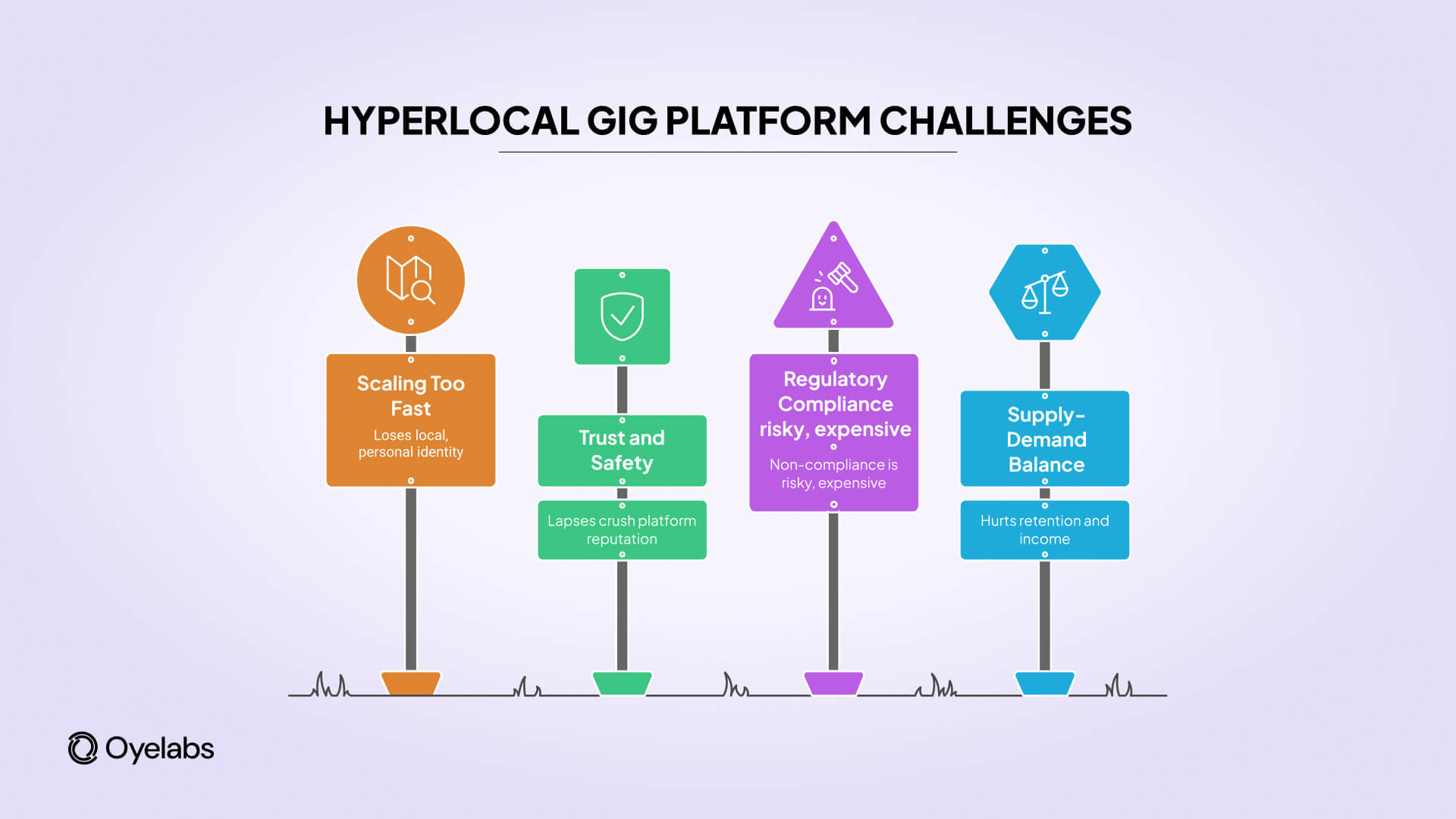
Scaling Without Losing Community Feel
Growth is great, but scaling too fast on a platform risks losing the unique freelancer–client connection that makes it appealing. Users value the authenticity, flexibility, and personal feel of freelance work. Over-expansion can turn a marketplace into a faceless job board with a “race to the bottom” pricing vibe.
According to Bain & Company, 80% of consumers stick with platforms that feel “relevant to their needs.” The solution? Maintain category-specific micro-teams, support niche talent communities, and offer localized features that preserve the platform’s human touch, even as global operations expand.
Trust & Safety Concerns
On freelance marketplaces, trust is currency. Any lapse, like unverified freelancers, payment fraud, or missed deadlines, can damage reputation instantly. BrightLocal data shows that one negative trust-related review can cut booking rates by 21%. That’s why these listed factors aren’t optional; they’re foundational:
- Rigorous onboarding and ID verification
- Skill tests and portfolio validation
- Escrow-based payment systems
- Transparent trust score algorithms
Platforms also need 24/7 dispute resolution support to keep both freelancers and clients protected. In an economy where reputation drives growth, trust and safety are non-negotiable pillars. This is why some founders opt for custom-built freelance marketplaces instead of readymade Fiverr-like apps, as customization allows stronger security systems and fraud detection protocols.
Regulatory & Compliance Hurdles
Different regions have different rules, labor classification, freelancer taxation, and cross-border payments, all of which bring complexity. Non-compliance isn’t just risky; it’s expensive. In 2022 alone, digital labor platforms faced over $100 million in fines worldwide. For Fiverr-like players, compliance-first systems are crucial, including:
- Automated tax and invoice generation
- Clear contractor vs. employee classification
- Secure data management aligned with GDPR/CCPA
- Regional legal advisors for scaling into new markets
Building scalability without regulatory blind spots is critical for long-term sustainability.
Supply–Demand Imbalance
Too many freelancers and not enough jobs? That leads to income instability. Too many clients and not enough freelancers? That causes project delays and poor customer experience. Either imbalance hurts retention. Marketplaces must leverage predictive analytics to anticipate demand cycles, incentivize freelancer availability, and manage client expectations.
A McKinsey report highlights that effective demand balancing can boost fulfillment rates by 25%, making it both a profitability driver and a retention tool. For platforms, maintaining this equilibrium is like tuning an instrument: constant adjustments keep the entire ecosystem in harmony.
This is where choosing the right development partner becomes critical. Founders who want to solve these balancing issues effectively often partner with specialists like Oyelabs, known for building scalable, intelligent platforms tailored to demand management.
Future Outlook
The future isn’t just knocking; it’s breaking down the door. Here’s what industry experts, market data, and emerging tech trends say is next for Fiverr-like freelance marketplaces.
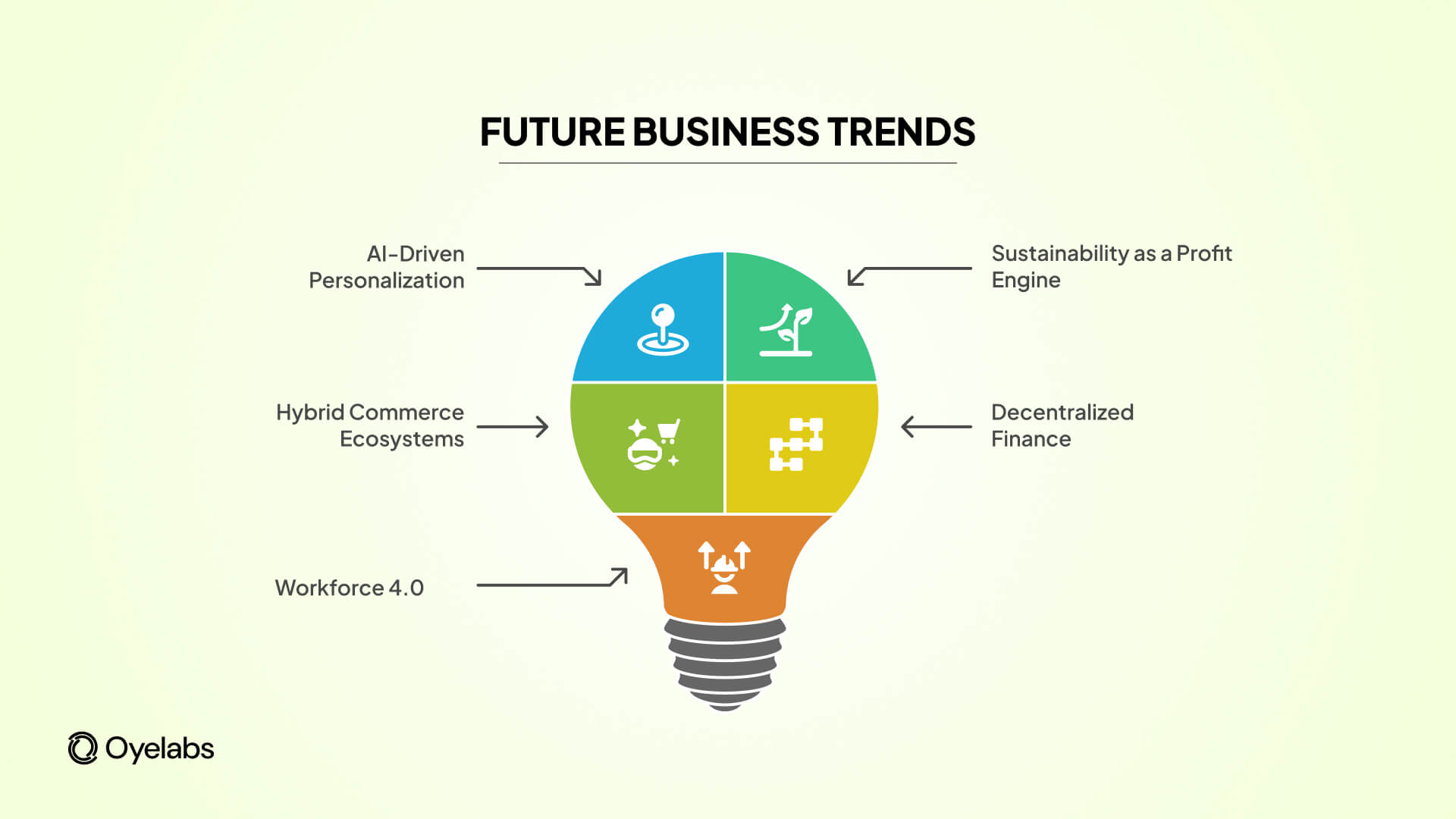
AI-Driven Personalization at Scale
In the next five years, AI on freelance platforms will evolve from simple recommendation engines to proactive project-matching partners. A McKinsey report predicts hyper-personalized experiences will drive 15% higher client retention across industries. Marketplaces will harness:
- Predictive analytics to anticipate project needs before clients post them
- Neural networks to recommend freelancers most likely to succeed on specific gigs
- Behavioral clustering to suggest upskilling opportunities for freelancers
This isn’t just matchmaking, it’s anticipatory commerce. From personalized job alerts to adaptive pricing suggestions, AI will create a frictionless, human-like experience that strengthens loyalty. Early adopters will capture a measurable competitive advantage. For a deeper look at how this personalization fits into larger platform strategies, check out our blog on unlocking ideas for a freelance marketplace app like Fiverr.
Sustainability as a Profit Engine
Sustainability is moving from a PR checkbox to a core value driver, even in digital marketplaces. Deloitte’s 2025 Green Business Index shows eco-conscious companies growing revenue 1.8x faster than non-adopters. For freelance ecosystems, this means:
- Promoting remote-first collaboration that cuts travel-related emissions
- Incentivizing freelancers who adopt green practices (e.g., digital vs. print design)
- Highlighting ESG-conscious clients to attract Gen Z freelancers who value purpose-driven work
By embedding sustainability into platform operations, freelance marketplaces not only support the planet but also attract clients and talent aligned with long-term profitability and ethics.
The Rise of Hybrid Commerce Ecosystems
By 2027, PwC forecasts that 60% of transactions will take place in hybrid ecosystems. For freelance platforms, this translates into a fusion of digital and real-world collaboration. Expect:
- AR/VR-enabled project reviews where clients “walk through” a 3D model or design
- AI-powered co-working hubs that pair local freelancers with global clients
- Blockchain-based loyalty systems that reward repeat collaborations across platforms
The winners will be platforms that deliver seamless, immersive experiences, making online work feel as natural and impactful as in-person collaboration. For those curious about how existing players balance these innovations with proven strategies, our breakdown of the Upwork business model offers useful insights.
Decentralized Finance Becoming Mainstream
DeFi is losing its “early adopter” status. By 2030, the World Bank projects DeFi could account for 15% of global financial services. For freelance marketplaces, this will mean:
- Faster, cheaper cross-border payments using blockchain-based rails
- Smart contracts that guarantee milestone-based payouts automatically
- Tokenized assets as new methods of rewarding freelancers or funding projects
With interoperability standards and regulations maturing, DeFi integration could become a must-have feature, especially for global freelancers frustrated with high fees and delayed payouts.
Workforce 4.0: The Skill-First Economy
The freelance economy is naturally skill-first, but the next phase will make credentials almost irrelevant. LinkedIn’s Future of Work survey shows 78% of hiring managers now prioritize skills over degrees. Marketplaces will lead this shift by offering:
- AI-driven skills assessment tools to validate expertise objectively
- Micro-credential systems built into freelancer profiles
- Gamified upskilling pathways, including VR/AR-based learning experiences
For freelancers, adaptability and continuous learning will be their strongest currencies. For clients, this skill-based system ensures faster, more reliable hiring decisions, reducing project risks while future-proofing talent pipelines. If you’re ready to explore building a platform that embraces this future, don’t miss our guide: How to Start Your Dream Freelance Marketplace Platform Now.
From Idea to Income: Your Custom Gig Economy App
Oyelabs delivers a next-gen freelance marketplace platform engineered to rival and outperform traditional gig portals. With enterprise-grade scalability, real-time bidding engines, and AI-driven talent-matching algorithms, your platform can connect skilled professionals with clients faster than ever.
Designed with ISO-compliant security protocols and a modular microservices architecture, our solution ensures seamless performance even at scale. Whether you’re targeting niche industries or going global, Oyelabs empowers you to launch in weeks, not months.
Boost retention with built-in gamification, escrow-secured payments, and responsive mobile-first design. Ready to disrupt the freelance economy? Partner with Oyelabs and own your gig empire today.
Conclusion
In the rapidly evolving gig economy, platforms that embrace innovation, automation, and user-centric design will dominate. Fiverr’s transformation shows the power of adaptability and strategic tech integration.
Oyelabs empowers entrepreneurs to replicate and enhance such success with advanced, scalable marketplace solutions tailored for next-gen freelancers and businesses. From AI-driven matching algorithms to secure payment gateways, we ensure your platform is future-proof. Don’t just compete, lead the market with precision and innovation.
Partner with Oyelabs today to launch your Fiverr-like platform that’s built for growth, efficiency, and unmatched user satisfaction. The next big success story could have your name on it.
FAQs
What does digital readiness mean?
Digital readiness refers to the ability of individuals and communities to effectively access, use, and benefit from digital tools and services.
Why is digital readiness important for unreached communities?
It empowers them with access to education, jobs, healthcare, and civic participation, reducing social and economic inequalities.
What are the main barriers to digital readiness?
High internet costs, lack of infrastructure, limited digital skills, and inadequate policy support are the key obstacles.
How can digital skills training help?
Training improves employability, boosts confidence in technology use, and enables meaningful participation in the digital economy.
Who should drive digital readiness initiatives?
Governments, NGOs, and private organizations must collaborate to ensure inclusive, equitable, and sustainable digital access.