
Top Mistakes to Avoid When Building a TaskRabbit Like App

Top Mistakes to Avoid When Building a TaskRabbit Like App
 Anuraag Jain
Last Updated on December 26, 2025
Key Takeaways – What You’ll Learn: Most service marketplace apps fail due to execution mistakes, not weak ideas. Market validation prevents building features users never actually need. Localized workflows matter more than generic, one-size-fits-all app designs. Service providers need as much attention as customers for platform success. Strong admin controls are essential for smooth daily marketplace operations. Stats That Matter: 42% of startups fail because there is no real market demand. Poor task matching causes 25–30% task abandonment in service marketplaces.
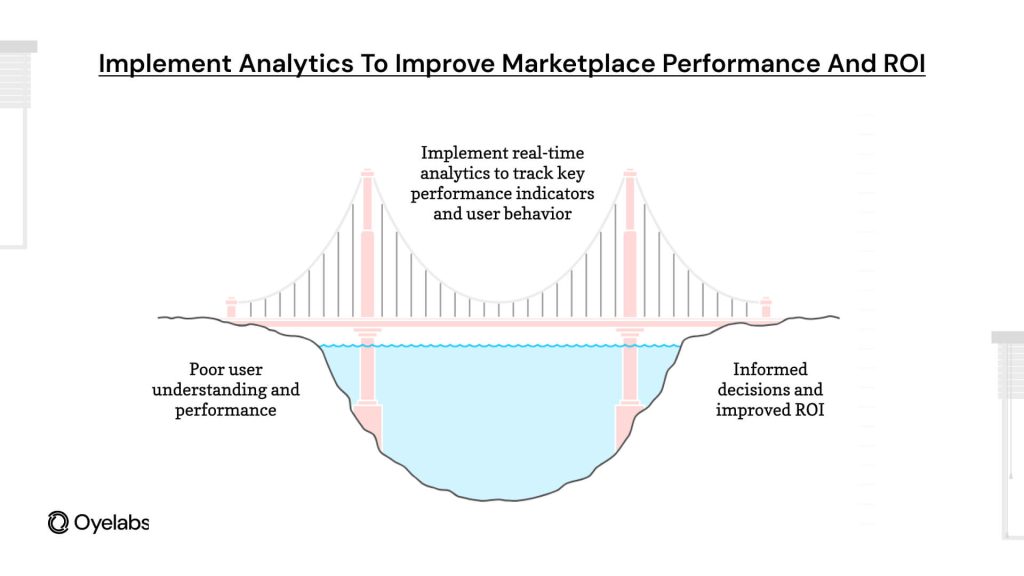
Launching a service marketplace sounds like a flex, but the truth is, most TaskRabbit-like apps flop not because of bad ideas, but bad execution. The U.S. gig economy is projected to reach 90 million workers by 2028. Whether you’re targeting dog walkers in Denver or handymen in Houston, building a two-sided platform is way more complex than a basic app. You’re dealing with trust layers, real-time task matching, geo-tagged payments, and a hyperlocal UX, all of which have to work flawlessly to earn user trust. At Oyelabs, we’ve helped launch over 40+ on-demand platforms across the U.S., from MVP to scale. We’ve seen the pitfalls up close, and we’re here to help you avoid them. In this guide, we break down the top mistakes founders make when building a TaskRabbit-like app and how to build smarter from day one. Let’s get into it. You wouldn’t build a house without checking the ground first, so why build an app without validating your idea? Many founders jump straight into development, fueled by inspiration and urgency, without confirming whether their market even needs what they’re offering. 42% of startups fail due to a lack of market need. What seems obvious on paper often collapses in the real world because it doesn’t match how users actually behave. Instead of building what you think people want, build what they’ve already told you they need. That’s how you avoid wasted development costs and launch a service that users stick with. If you’re in the early stages, it’s smarter to launch your own service marketplace platform with a problem-first approach, not a feature-first one. If your app looks and feels the same in Boise as it does in Brooklyn, it’s probably not going to win either market. Service marketplaces are hyperlocal by nature. What works for a handyman in Phoenix doesn’t work for a babysitter in Boston. Still, too many platforms go to market with generic workflows, static pricing, and language that lacks regional relevance. The result? Low engagement, fewer bookings, and confused users who bounce. Every market has its own nuance. Localized onboarding flows, time zone-aware notifications, and city-specific payout rules are not extras. They’re essentials. When you build a custom local service marketplace that adapts to your region’s habits, the product doesn’t just fit, it feels familiar. That’s what makes users trust and return. Let’s be honest: most “feature-packed” MVPs are built out of fear, not strategy. Founders try to be future-proof from day one, adding everything from promo code logic to AI-based task matching, before even getting their first user. This bloats your timeline, increases your cost, and worst of all, delays feedback from real users who could’ve helped you refine version one. The platforms that scale well usually launch with three core workflows: posting a task, matching with a provider, and paying securely. Everything else, from live chat to loyalty points, can be modular. That’s how you retain agility. This is why it’s critical to get your MVP live for your service marketplace idea quickly, and then iterate based on real use, not assumptions. It’s not about building less. It’s about building smarter. When building a TaskRabbit-like app, it’s tempting to focus solely on the customer side, after all, they’re the ones booking the tasks. But platforms only succeed when both sides of the marketplace are satisfied, especially the service providers who keep the engine running. Too often, Taskers (service providers) get stuck with clunky onboarding flows, poor communication, and unclear earnings. That frustration leads to churn, and when your supply side collapses, bookings drop. Here’s what strong service provider experience should include: A two-sided marketplace is only as strong as the quieter side. Prioritize your Taskers like you do your users, and your entire platform will grow stronger. Matching isn’t just about distance. If your app assigns a task to the “nearest available person,” you’re missing the bigger picture. Bad matches lead to abandoned tasks, poor reviews, and frustrated users. Poor matching logic leads to 25–30% task abandonment on average. Effective task matching should be layered, dynamic, and context-aware. The best platforms use logic that considers: This is where technical architecture matters. Platforms built with flexible filter modules can adapt matching logic over time without major rewrites. And that gives founders the power to improve performance with data, not guesswork. If you’re starting out, build a smart service platform that thinks for your users, not just with GPS, but with behavior-driven logic that evolves. A surprising number of founders launch service marketplaces without a well-defined revenue model. Then they scramble to figure it out once user activity kicks in, and that’s when trust breaks. Users, especially in the U.S. market, expect transparent pricing and platform fees. If the cost breakdown is unclear or fluctuates unexpectedly, they’ll churn. Taskers, too, need to understand exactly how much they’ll take home after each booking. Here are three tested monetization models for TaskRabbit-style platforms: The right monetization model won’t just earn revenue, it’ll create a sense of fairness and trust on both sides. And when your monetization is built into the platform architecture early on, you won’t need messy retrofits down the line. If you’re serious about scale, don’t wait to figure out pricing. Plan ahead and start with a clear, win-win structure. Or better yet, build your commission-ready service marketplace with flexible fee logic from day one. The tech stack you choose isn’t just a development preference, it’s a business decision. It impacts your app’s speed, scalability, cost of maintenance, and even your future fundraising potential. Many early-stage founders fall into two traps: either they over-engineer with bleeding-edge tools that few developers understand, or they go too basic, using quick-fix templates that can’t scale past 100 users. The right stack for a TaskRabbit-like platform should balance performance, flexibility, and long-term supportability. A well-planned architecture also saves on future dev costs. You’ll thank yourself later when adding new modules, like subscription billing, loyalty rewards, or AI-based matching, that don’t require a full system rewrite. If you’re planning for long-term growth, it’s better to build your service marketplace with a scalable architecture that supports both speed and flexibility. What founders often overlook is that the admin panel isn’t just a backend dashboard; it’s your business cockpit. While users and taskers interact with the mobile or web front, your operations team needs tools to resolve disputes, track metrics, manage payouts, and flag bad actors. Without these controls, small issues become support nightmares. We’ve worked with teams who launched with minimal admin functionality, just a booking list and user profiles. Within weeks, they were drowning in support tickets they couldn’t triage because there were no filters, no dispute resolution workflows, and no ability to adjust fees or deactivate users. Operational stability isn’t an afterthought; it’s what allows your platform to scale without burning out your team. If your admin dashboard can’t evolve with your marketplace, neither will your business. You can have the perfect product, a rock-solid backend, and happy test users, and still fail if nobody knows you exist. Most service marketplaces don’t flop because of tech. They flop because the go-to-market plan was an afterthought. Waiting until your app is live to “figure out marketing” means losing critical early momentum. We advise our clients to plan their launch at least 30 days before development finishes. That way, your first users are ready when your app goes live. A high-performing platform needs visibility, not just code. So if you’re preparing to scale or pitch to investors, start building visibility into your product strategy from day one. Or better yet, work with a product partner who can help you launch a fully operational on-demand marketplace with a built-in growth funnel. It’s easy to overlook legal frameworks when you’re in build mode, but ignoring compliance can cost you more than any feature ever will. Service marketplaces in the U.S. are subject to both gig economy regulations and consumer protection laws. Depending on your state, you may need to handle everything from worker classification (1099 vs W-2) to local sales tax on services. Many founders assume standard terms and conditions or boilerplate privacy policies will cover them. But what happens when a Tasker damages property or a user files a chargeback? Legal clarity protects not only your users, it protects your company. Solid legal scaffolding builds long-term credibility. And when integrated into your platform, from signup checkboxes to dispute workflows, it keeps operations smooth and defensible. Your MVP is live. Your users are signing up. But then… silence. What went wrong? Often, platforms launch without building a real-time feedback loop, which means they’re blind to friction points, drop-off causes, or unspoken user needs. Without this loop, you’re flying without radar. A common mistake is thinking analytics equals feedback. It doesn’t. You need qualitative data to understand the why, not just the what. Make it frictionless. Let users speak up with two clicks. When your product evolves with your community, your retention curve rises with it. This is also why it’s crucial to launch a platform you can iterate on. Feedback is your growth engine, and your product should be built to listen. The platform’s built. First, users are active. You’re ready to take it national, or are you? Many marketplace startups fail not because of the initial idea, but because they try to expand before the engine is tuned. Without real product-market fit, measured by task volume growth, repeat usage, and referral conversion, scaling just spreads the cracks wider.. Growth isn’t about adding users. It’s about compounding value in a focused region first. When bookings are consistent, support tickets are low, and revenue is predictable, that’s your signal. Scaling without these signals puts pressure on your team, budget, and infrastructure. But with them, expansion becomes a calculated step, not a gamble. If you’re at this stage, it might be time to expand your successful MVP into a multi-region service marketplace platform designed to grow city by city, sustainably. In every two-sided marketplace, friction is inevitable. Bookings get missed. Providers run late. Users dispute charges. What determines the longevity of your platform isn’t whether problems happen, but how fast and fairly you handle them. Yet many early-stage apps go live with nothing more than an email form buried deep in the footer. This causes frustration to pile up silently, until it shows up in your App Store reviews. Fast, fair, and documented resolution flows make users feel heard and taskers feel protected. This trust layer often determines whether they’ll come back or look for alternatives. What you can’t measure, you can’t improve. Yet many platforms launch without real-time analytics baked in, leaving founders blind to user behavior and performance trends. Analytics isn’t just for vanity metrics like app downloads. You need structured data on how people move through your app, what tasks are posted but not booked, how long taskers take to respond, and which categories drive the most revenue. Launching a TaskRabbit-like app without a feedback loop is like trying to drive blindfolded. With the right tracking systems in place, your decisions get smarter, and your ROI gets stronger. If you’re aiming for long-term sustainability, consider building a data-backed service marketplace that evolves based on how users actually behave. It’s tempting to think of launch day as the finish line. But in reality, it’s the starting line. Launching a marketplace platform is only the beginning. You’ll need to adapt based on early data, support your users daily, keep refining your value proposition, and constantly test what drives growth. We’ve seen this pattern repeatedly. Founders put 90% of their energy into development and 10% into operations and growth, only to realize too late that the real work starts after going live. Don’t just build a service marketplace, build the infrastructure to run it well. From uptime monitoring to community management, from seasonal task bundling to price elasticity testing, the platforms that thrive treat post-launch as a full-time commitment, not an afterthought. Trust is the backbone of every service platform. Oyelabs implements AI-powered verification, review filtering, and fraud detection tools that keep both users and taskers safe. Our logic-driven task matching reduces drop-off and increases booking success. With scalable APIs and proven architecture, we help founders launch with confidence. Build your TaskRabbit-like app with Oyelabs and deliver trust with every booking. There’s a reason most on-demand marketplaces never break past the pilot phase. It’s not the idea, it’s the execution. And more often than not, it’s preventable. By avoiding the 15 mistakes outlined in this guide, you not only save time and money, you give your platform a fighting chance to build trust, generate revenue, and scale sustainably in your target market. At Oyelabs, we’ve helped over 40 service marketplace platforms, from niche micro-task apps to full-scale regional booking platforms, go from scratch to launch-ready and beyond. Our approach blends product validation, scalable architecture, and post-launch support into a single, founder-focused service. If you’re planning to launch or revamp your own TaskRabbit-like platform, now is the time to build it right. Talk to us about building your custom service marketplace, and launch smarter, faster, and stronger. 1. How long does it take to launch a TaskRabbit-like service marketplace? 2. Do service marketplace apps require background checks for providers? 3. Can a TaskRabbit-like app work in smaller cities or niche markets? 4. Is it possible to add subscriptions after launching the MVP? 5. What type of insurance is needed for service marketplace platforms?
1. Skipping Problem – Market Fit Validation
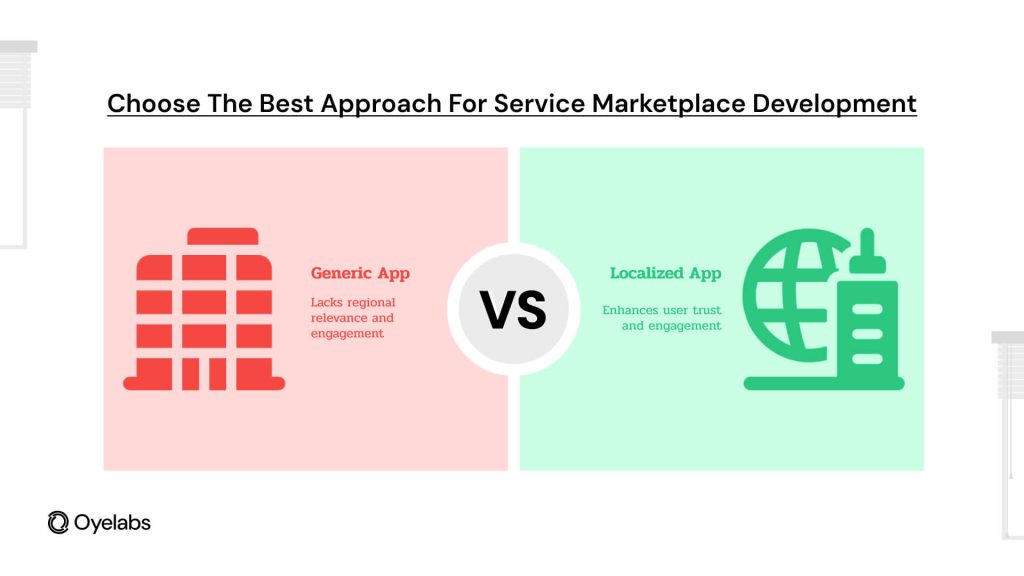
2. Building a Generic App Instead of a Localized Solution
3. Overengineering the MVP
4. Ignoring the Service Provider Experience
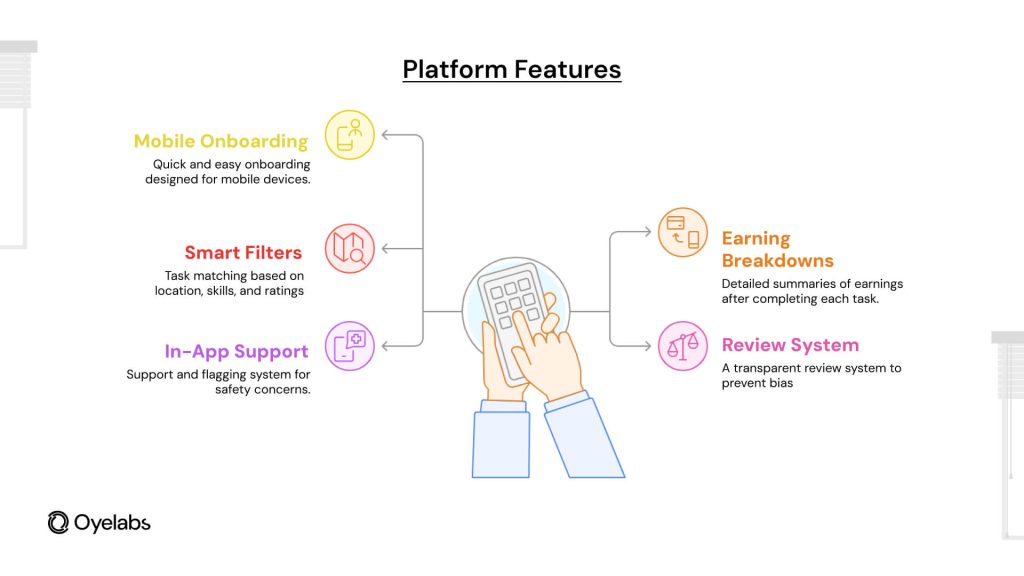
Must-Haves for Tasker Retention
5. Weak Task Matching Logic
Matching Logic Beyond Proximity
Parameter
Why It Matters
Availability Window
Ensures provider can meet the exact time need
Past Rating
Encourages quality through tasker performance data
Skill Tags
Ensures tasker meets task-specific requirements
Task Urgency
Matches based on time-sensitivity
User Preferences
Accounts for user history and preferred providers
6. Unclear Monetization & Commission Structure
Common Revenue Models for Service Marketplaces
7. Choosing the Wrong Tech Stack for Scale
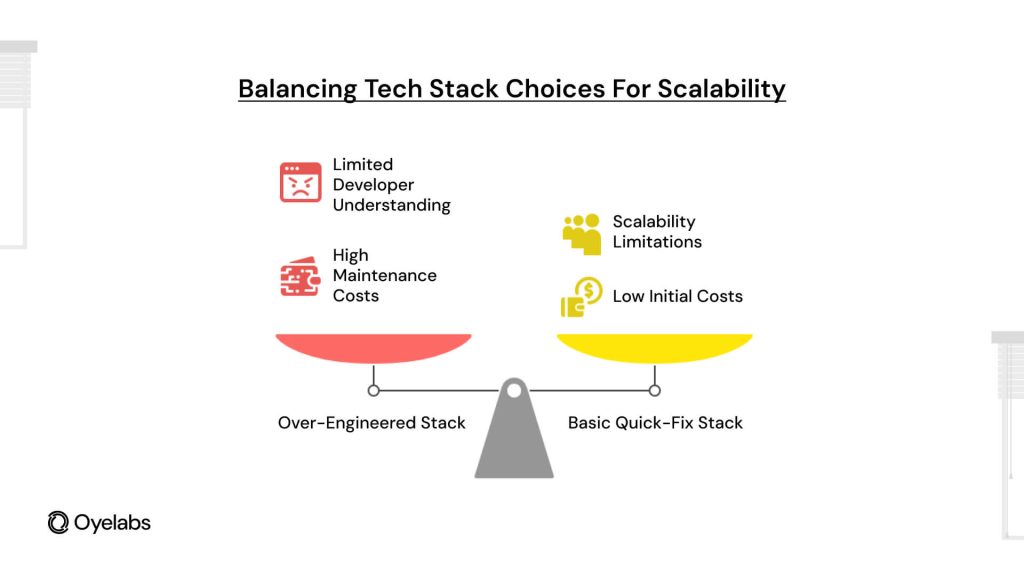
Recommended Stack for On-Demand Marketplaces
8. Inadequate Admin Panel & Operational Controls
Core Features Every Admin Panel Should Include
9. No Launch Playbook or Growth Strategy
Elements of a Smart Launch Strategy
10. Weak Legal and Regulatory Compliance
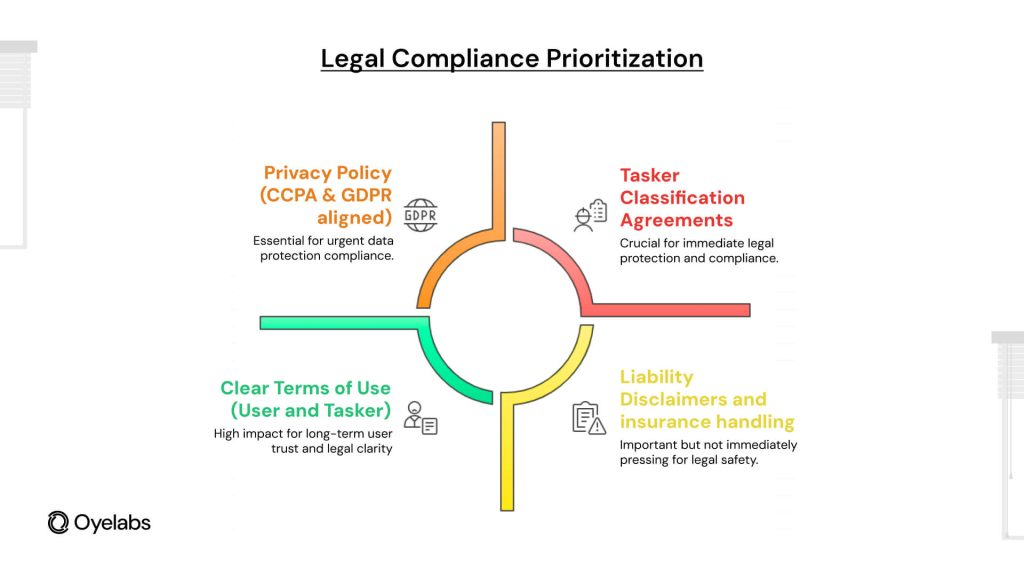
Legal Touchpoints to Handle Proactively
11. Poor Feedback and Iteration Mechanisms
Effective Feedback Tools to Integrate
12. Scaling Too Early Without Product-Market Fit
Know You’re Ready to Scale When:
13. No Contingency for Customer Support and Dispute Resolution
Key Support Systems to Build Early
14. Overlooking Analytics and Business Intelligence
Metrics That Actually Matter
15. Underestimating the Effort Post-Launch
Boost Conversions and Retention with Oyelabs’ AI-Driven Marketplace Stack
Build Smart, Grow Deliberately, and Scale Confidently
FAQs
A basic MVP can be launched in 8–12 weeks, depending on features and platform complexity.
Yes, background checks improve trust and are often expected by users in regulated markets.
Yes, hyperlocal and niche-focused marketplaces often see higher engagement and loyalty.
Yes, subscription models can be integrated later if the platform supports modular monetization.
Most platforms use general liability insurance to cover damages, disputes, and service-related risks.