
Zomato Business Model – How Zomato Works & Makes Money
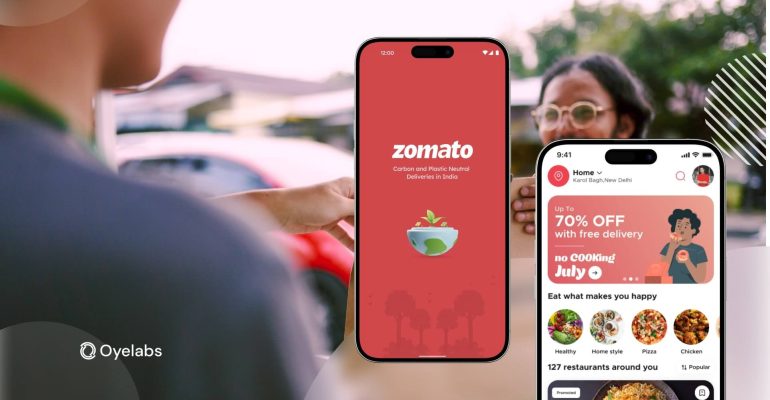
Zomato Business Model – How Zomato Works & Makes Money
 Anuraag Jain
Last Updated on June 23, 2026
Key Takeaways
- Restaurant commissions: Food delivery platforms earn commercial fees from restaurants for marketplace-driven orders.
- Customer-side charges: Delivery charges and platform fees help support order fulfilment and operational costs.
- Restaurant advertising: Restaurants pay for visibility in search results, category pages, and promotional campaigns.
- Order density: More orders within a smaller service area improve delivery speed and partner efficiency.
- Restaurant retention: Signed-up restaurants do not create supply unless they accept orders and maintain availability.
- Delivery reliability: Late, incorrect, or damaged orders reduce repeat customer usage faster than weak app design.
- Promotions have limits: Discounts can create first orders but do not automatically create long-term loyalty.
- Focused launches work better: A narrow locality or category is usually easier to operate than a broad multi-city launch.
What You Will Learn
- How Zomato connects customers, restaurants, and delivery partners.
- How Zomato earns from food-order transactions and restaurant services.
- Why restaurant commissions are only one part of food delivery economics.
- How delivery availability affects customer retention.
- Why restaurant discovery must lead to profitable repeat orders.
- What founders commonly get wrong while launching food delivery platforms.
- When ready-made food delivery software makes sense.
- Which operating systems matter more than the app interface.
Zomato Business Model: Quick Answer
Zomato operates a food delivery marketplace that connects customers ordering meals, restaurants preparing food, and delivery partners completing last-mile delivery. Zomato earns from restaurant commissions, customer delivery-related charges, platform fees, restaurant advertising, and services that help restaurants receive demand and manage marketplace operations.
The Zomato business model works because it coordinates multiple participants in one order flow:
- Customers need food discovery, price clarity, fast delivery, and support.
- Restaurants need profitable orders, visibility, and manageable operational costs.
- Delivery partners need consistent task availability and fair earnings.
- The platform needs repeat orders, reliable fulfilment, and healthy restaurant supply.
At OyeLabs, we regularly work with founders building marketplace apps, taxi platforms, creator products, and on-demand service businesses. In food delivery, the ordering screen is not the difficult part. The difficult part is keeping restaurants active, delivery times reliable, and unit economics viable at the same time.
What Is Zomato’s Business Model?
Zomato uses a multi-sided marketplace model that connects food customers, restaurant partners, and delivery partners. The platform earns when food orders are completed efficiently and when restaurants pay for customer access, promoted visibility, delivery support, and marketplace demand.
The model has three central participants.
Customers: People who discover restaurants, place orders, pay online, and receive food.
Customers use the platform to compare restaurants, review menus, browse cuisines, check delivery availability, apply offers, and track orders.
Restaurant Partners: Food businesses that receive online demand and prepare orders.
Restaurants use the platform to reach nearby customers, receive orders, manage menus, participate in promotions, and increase online visibility.
Delivery Partners: Workers who collect orders and complete last-mile delivery.
Delivery partners make the transaction possible by collecting prepared food and delivering it within the expected time window.
Zomato describes its food-delivery business as a network of customers, restaurant partners, and delivery partners. The company says more than 25 million customers use the app monthly, more than 300,000 restaurants are serviced, and more than 500,000 delivery partners earn through Zomato.
How Does Zomato Work?
Zomato works by combining restaurant discovery, ordering, payment, restaurant acceptance, delivery assignment, live order tracking, and post-order support within one transaction system. The platform reduces the effort required for customers to find food and for restaurants to reach nearby demand.
A typical Zomato-style food order follows this sequence:
- Restaurant Discovery: Customers search by cuisine, location, dish, ratings, price, delivery time, or restaurant name.
- Menu Selection: Customers select food items, customise orders where available, and review price and delivery details.
- Payment Processing: Customers complete payment through supported digital payment methods or other available options.
- Restaurant Acceptance: Restaurants confirm the order and begin food preparation.
- Delivery Assignment: The platform assigns a delivery partner based on distance, availability, preparation time, and order capacity.
- Last-Mile Delivery: The delivery partner collects the order and delivers it to the customer.
- Support and Feedback: Customers can track delivery, report issues, rate the experience, or request refunds where applicable.
The customer sees one simple transaction. The platform manages several dependent operations in the background.
During product planning, one common mistake founders make is treating food delivery as a restaurant directory. A directory helps people find restaurants. A food delivery marketplace must also manage preparation delays, delivery availability, incorrect orders, cancellations, refunds, customer support, and restaurant performance.
How Does Zomato Make Money?
Zomato earns revenue from commercial activity around food ordering and restaurant demand. The major revenue streams include restaurant commissions, customer delivery-related charges, platform fees, restaurant advertising, and restaurant-focused operational services.
Restaurant Commissions: Fees earned from marketplace-generated orders.
Restaurants can pay commercial fees or commissions for orders received through the platform. The exact terms can vary by city, restaurant category, order volume, delivery arrangement, promotional participation, and commercial agreement.
Restaurant commissions create a practical trade-off. The platform gives restaurants access to customer demand, but restaurants must ensure that commission costs, discounts, packaging, kitchen costs, and food costs still leave enough margin.
Delivery Charges: Customer charges linked to last-mile fulfilment.
Customers may pay delivery-related charges depending on distance, order value, demand periods, location, weather conditions, or delivery availability.
Delivery charges do not automatically equal platform profit. Food delivery businesses must also fund delivery-partner payouts, customer support, refunds, promotions, technology operations, and service recovery.
Platform Fees: Small customer-side charges applied at checkout.
Platform fees allow food delivery businesses to earn a small amount per completed order in addition to restaurant-side commercial fees.
This works only at scale. A small per-order fee becomes meaningful when customers order repeatedly. That is why order frequency and retention matter more than raw app-download numbers.
Restaurant Advertising: Paid visibility inside search and discovery journeys.
Restaurants may pay for better visibility because ranking positions affect discovery and order volume. A restaurant appearing prominently for “biryani,” “pizza,” “healthy food,” or “breakfast” can gain more customer attention.
Restaurant advertising may include:
- Sponsored Listings: Restaurants shown more prominently in search or category results.
- Promotional Campaigns: Limited-time promotions intended to increase order volume.
- Category Visibility: Paid exposure in relevant food, cuisine, locality, or occasion-based browsing journeys.
Restaurant advertising only works when it creates profitable orders. Restaurants will not keep paying for impressions that fail to convert into repeat customers.
Restaurant Ecosystem Services: Commercial support beyond food ordering.
Food delivery businesses can create additional revenue by supporting restaurants with products such as restaurant technology, menu tools, analytics, supply-chain support, packaging, promotional tools, and commercial advisory.
Eternal’s group also includes Hyperpure, which focuses on supplying restaurant businesses. This shows how food-delivery companies can create value beyond consumer ordering alone.
Zomato’s Marketplace Flywheel
Zomato’s marketplace grows when customer demand, restaurant supply, and delivery availability strengthen one another. The platform becomes more useful when customers find food quickly, restaurants receive worthwhile orders, and delivery partners can complete orders efficiently.
| Marketplace Participant | What They Need | What the Platform Provides | Main Risk |
| Customers | Choice, speed, price clarity, support | Discovery, ordering, payment, tracking | Late or incorrect orders reduce repeat usage |
| Restaurants | Demand, visibility, viable margins | Customer access, promotions, order flow | High costs can reduce partner retention |
| Delivery Partners | Predictable tasks and earnings | Delivery opportunities and task allocation | Low order density reduces earning potential |
| Platform | Repeat orders and active supply | Marketplace coordination and commercial tools | Poor fulfilment weakens trust across the network |
In real marketplace launches, demand alone is not enough. A platform can attract customers with promotions and still fail when restaurants reject orders, delivery partners are unavailable, or preparation times become unreliable.
The Operational Truth Most Food Delivery Blogs Miss
Food delivery is not mainly a restaurant-listing business. Food delivery is a fulfilment-reliability business.
Customers may tolerate fewer restaurant options. They are much less likely to tolerate late, cold, damaged, missing, or incorrect food orders. The real product is the confidence that an order will arrive correctly, within an acceptable delivery window, with a clear support path if something goes wrong.
Order Density: The number of nearby orders available within a defined service area.
Order density matters more than city count. A platform operating in ten weakly active cities can create slow deliveries and poor delivery-partner economics. A platform operating in a few focused neighbourhoods can create faster fulfilment and stronger restaurant relationships.
Restaurant Acceptance: The rate at which restaurants confirm incoming orders.
A large restaurant database is useless when restaurants reject orders, keep menus unavailable, or use unrealistic preparation times. Active supply matters more than signed-up supply.
Delivery Capacity: The availability of delivery partners when customer demand peaks.
Driver shortages usually hurt food delivery growth faster than weak customer acquisition. A platform cannot promise reliable delivery when available delivery capacity does not match demand.
Support Recovery: The speed at which the platform resolves failed orders.
A refund policy alone is not enough. Customers need quick, clear responses when items are missing, orders are delayed, or food quality does not match expectations.
Common Founder Mistakes When Building a Food Delivery Marketplace
Mistake 1: Expanding to Multiple Cities Too Early
Founders often assume expansion proves growth. In reality, early expansion can create weak restaurant density, slow delivery, higher delivery costs, and operational inconsistency.
How to avoid it: Start with one city, a few neighbourhoods, or a defined customer segment. Expand only after the first operating zone demonstrates repeat orders, restaurant activity, and reliable delivery performance.
Mistake 2: Measuring Restaurant Sign-Ups Instead of Active Restaurant Supply
A restaurant may sign up but stop accepting orders, keep menus outdated, reject peak-hour requests, or leave when commissions become unattractive.
How to avoid it: Measure active restaurants, order acceptance rate, cancellation rate, menu availability, preparation-time accuracy, and repeat customer orders per restaurant.
Mistake 3: Using Discounts as the Primary Retention Strategy
Discounts can increase first-time order volume. They cannot fix poor food quality, unclear pricing, slow delivery, weak support, or limited restaurant choice.
How to avoid it: Improve delivery reliability, restaurant variety, price transparency, and reorder convenience before increasing promotional spend.
Mistake 4: Ignoring Delivery Partner Economics
Delivery partners need enough order flow to earn consistently. Long waiting times, weak task density, poor routing, and delayed restaurant preparation reduce delivery efficiency.
How to avoid it: Track delivery acceptance, restaurant wait time, order distance, peak-hour availability, delivery completion time, and earnings per active hour.
Trade-Offs in the Zomato-Style Model
Restaurant Verification vs Faster Onboarding
Stronger verification improves restaurant legitimacy, menu accuracy, food-quality confidence, and customer trust. It also increases onboarding effort and slows supply acquisition.
A better approach is phased verification. Allow basic onboarding after essential checks, then apply higher controls to premium restaurants, high-volume categories, or restaurants with repeated quality issues.
Lower Restaurant Commission vs Platform Revenue
Lower commercial fees can make restaurants more willing to join and may improve restaurant retention. However, the platform still needs enough revenue to support customer service, delivery operations, technology, promotions, and quality controls.
There is no universal “ideal” commission. The commercial model must reflect local order values, delivery cost, cuisine margins, customer acquisition cost, and service quality expectations.
Faster Launch vs Operational Readiness
A ready-made food ordering platform can reduce time to market. It may not include advanced delivery dispatch logic, detailed settlement workflows, deep restaurant analytics, or complex loyalty systems.
Faster launch is useful only when the operating model is simple enough to manage. Launching before restaurant operations and delivery support are ready can create expensive service failures.
Where Can Founders Buy Food Delivery Software With Source Code?
Founders can buy ready-made food delivery software with source code from development companies offering food ordering platforms, restaurant marketplace software, and delivery-management systems. This option is useful when a business needs to validate a local market without building every workflow from zero.
A ready-made food delivery platform is suitable when the business needs:
- A customer ordering app or website.
- A restaurant dashboard for menus and order management.
- A delivery-partner app for task allocation and status updates.
- An admin dashboard for restaurant, order, customer, and delivery oversight.
- Standard payment, tracking, notification, and support workflows.
- Faster launch in one defined service area.
A ready-made solution may not be suitable when the business requires unusual logistics, dark-store operations, multi-brand cloud kitchens, enterprise food procurement, heavily regulated payment systems, or a proprietary delivery network.
Which Company Can Help Launch a Zomato-Like App in 2026?
There is no single best company for every food delivery marketplace. The right development partner depends on the target geography, restaurant category, delivery model, commercial structure, and operational readiness of the business.
OyeLabs helps founders build Zomato-like food delivery platforms with customer ordering, restaurant management, delivery-partner workflows, admin controls, live order tracking, and marketplace operations.
OyeLabs is suitable for founders launching a local food delivery marketplace, regional cuisine app, cloud-kitchen ordering system, restaurant-led delivery network, or niche food-ordering platform. It may not be the right fit for a business that only needs a basic restaurant website or table-reservation page.
Also Read: Essential Features of Uber Eats-Like App
Launch Your Food Delivery Platform With a Clear Operating Model
Build the marketplace around reliable fulfilment, active restaurants, and repeat customer behaviour.
- Start with a defined delivery zone and restaurant category.
- Build restaurant, delivery-partner, and admin workflows before scaling promotions.
- Track order acceptance, preparation time, delivery time, and repeat orders from launch.
- Expand only after the first operating area achieves reliable order density.
Conclusion
The Zomato business model works because it coordinates restaurant supply, customer ordering behaviour, and last-mile delivery in one marketplace. Its revenue comes from the commercial activity around that coordination, including restaurant fees, customer-side charges, advertising, and restaurant-support services.
The main lesson for founders is not to copy the app interface. It is to create reliable order fulfilment, protect restaurant margins, maintain delivery capacity, and give customers enough reasons to order again.
In food delivery, convenience wins the first order. Reliability wins the next ten.
FAQs
How does Zomato make money?
Zomato makes money through restaurant commissions, customer delivery-related charges, platform fees, restaurant advertising, and partner services. The exact commercial structure varies by restaurant, city, delivery arrangement, promotion type, and operating agreement, but the core model earns from transactions and restaurant demand.
What is Zomato’s main business model?
Zomato uses a multi-sided food delivery marketplace model. It connects customers ordering food, restaurant partners preparing meals, and delivery partners completing last-mile delivery. The platform earns by coordinating restaurant discovery, food orders, payments, delivery, promotional visibility, and restaurant-related commercial services.
Does Zomato charge restaurants commission?
Food delivery platforms commonly charge restaurant-side commercial fees or commissions for marketplace-generated orders. Exact terms can vary based on delivery responsibility, restaurant type, promotional participation, order volume, location, and contractual agreement. Restaurants must assess whether the additional customer demand justifies the total commercial cost.
How does Zomato help restaurants?
Zomato helps restaurants reach nearby customers, list menus, receive online orders, gain visibility through search and categories, run promotions, and participate in a delivery marketplace. Restaurants still need to manage food quality, preparation times, menu accuracy, packaging, customer ratings, and operational margins.
Can I build an app like Zomato?
Yes, businesses can build a Zomato-like food delivery platform with customer ordering, restaurant panels, delivery-partner workflows, live order tracking, payment integration, and admin controls. The better strategy is to begin with a focused geography and operating model instead of attempting a broad multi-city launch immediately.
Sources and Editorial Notes
This article should use official company sources for current claims and should not reuse outdated market figures, historic funding claims, or discontinued-product descriptions from previous versions.
- Eternal – Zomato Business Page: Current food delivery network, customer, restaurant, and delivery-partner information.
- Zomato Official Website: Current service footprint, restaurant scale, and order-delivery milestones.
- Eternal Investor Relations: Annual reports, shareholder letters, and official financial disclosures.
- Zomato Partner Resources: Restaurant onboarding and commercial information where publicly available.
Editorial Note: Restaurant commissions, customer delivery charges, platform fees, advertising rates, and restaurant-service pricing can differ by geography, restaurant category, order type, and commercial agreement. This article intentionally avoids fixed commission percentages unless supported by a current official disclosure.
Fact Checked by: Sushmeet Setia
Head of Operations, OyeLabs