
Duolingo Business Model – How it Earns Money?

 Priyanka B
Last Updated on January 12, 2026
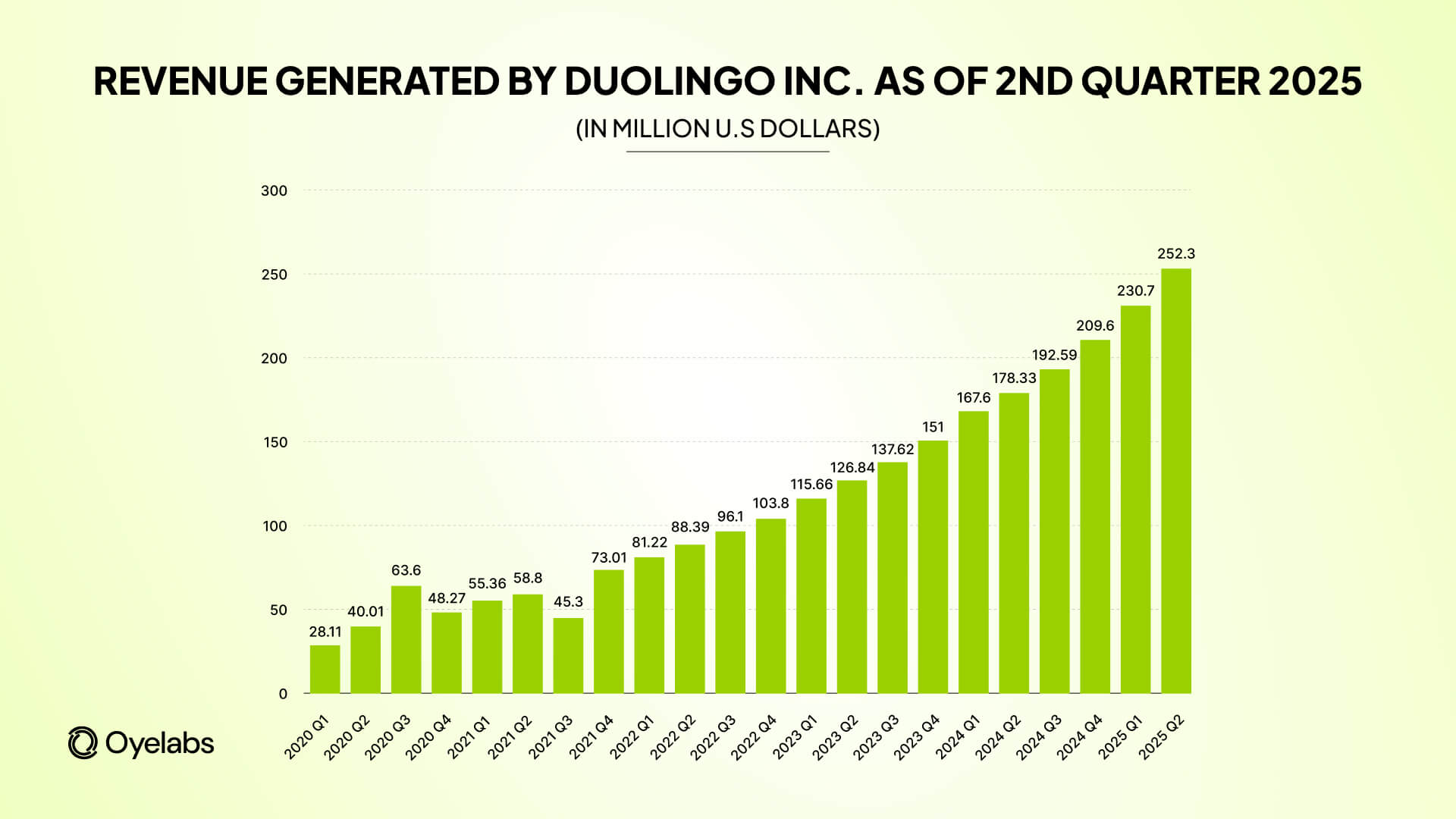
Key Takeaways What You’ll Learn: Duolingo uses a freemium model to attract millions of free users globally. Paid subscriptions remove ads and unlock premium learning features. Gamification increases daily usage through points, streaks, and rewards. Multiple revenue streams reduce dependence on a single income source. Language apps succeed by focusing on habit-building, not long lessons. Stats That Matter: Duolingo generated $748 million in revenue in 2024. Q2 2025 revenue reached $252.3 million in just three months. Duolingo has over 10.9 million paid subscribers worldwide. The app offers 280+ courses across more than 40 languages.
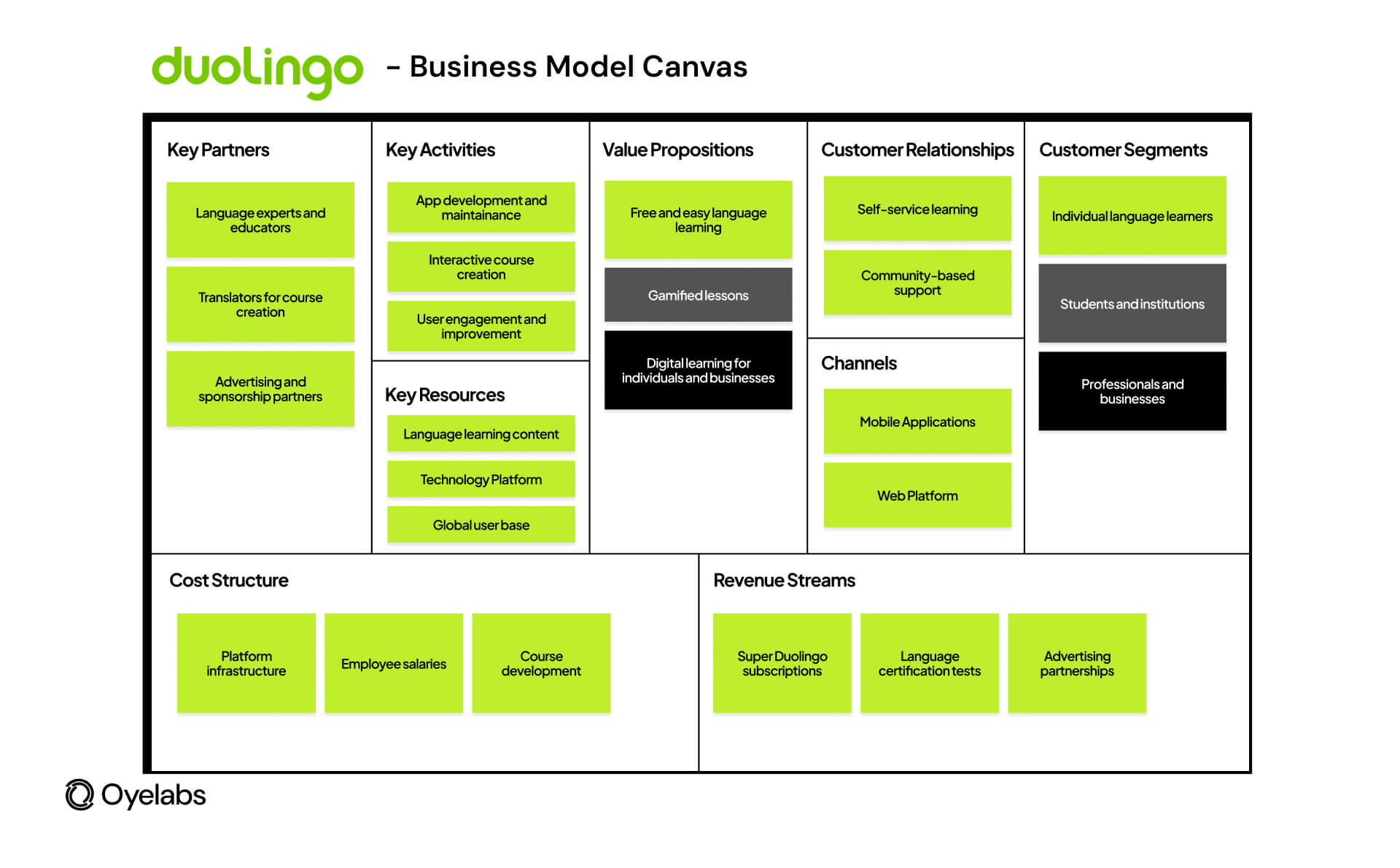
Duolingo has made language learning accessible, interactive, and engaging for millions of users worldwide. With gamified lessons, progress tracking, and interactive exercises, learners can start acquiring a new language quickly and effectively. Beyond its educational platform, Duolingo has developed a successful business model that balances free access with revenue from subscriptions, advertising, certifications, and enterprise solutions. For entrepreneurs and businesses aiming to build an online language learning platform like Duolingo, understanding how the app attracts users, keeps them engaged, and generates revenue provides valuable insights for creating a profitable and sustainable edtech venture. Duolingo was founded in 2011 by Luis von Ahn and Severin Hacker with the goal of making education free and accessible to everyone. Luis von Ahn is also known for helping create CAPTCHA, a widely used internet security system. The idea behind Duolingo was to remove cost barriers and help people learn languages without needing expensive courses or textbooks. The Duolingo app officially launched in 2012 and quickly gained popularity for its short, game-like lessons. Instead of traditional teaching methods, it used interactive exercises, rewards, and daily practice to make learning enjoyable. Over time, Duolingo expanded its language offerings and introduced new learning areas such as math and music basics. Today, Duolingo is one of the most widely used learning platforms in the world, serving millions of users across different countries. Duolingo functions as a game-based learning platform designed to make language study simple and engaging. When users sign up, they select the language they want to learn and set a daily learning goal. The platform currently offers over 280 courses across more than 40 languages, allowing learners to choose from widely spoken languages as well as less common ones. Lessons are broken into short, manageable units that focus on vocabulary, grammar, listening, reading, and speaking skills. Each lesson includes interactive activities such as matching words, translating sentences, listening to audio clips, and speaking into the microphone. Users earn points for correct answers and progress through levels as they advance. Streaks track daily practice, encouraging consistent learning habits. Duolingo also adjusts lessons based on user performance by providing extra practice when needed. This structured and adaptive learning flow is commonly used when businesses plan to build a language learning app like Duolingo, as it supports consistency and long-term user engagement. Duolingo follows a freemium business model, which means anyone can use the app for free, but users can choose to pay for extra features or services if they want a more advanced and uninterrupted learning experience. This approach allows Duolingo to attract and retain a massive global audience while generating significant revenue from users willing to pay for added value. The freemium model, combined with innovative features and a gamified learning experience, has contributed to the company’s strong financial performance. In 2024, Duolingo generated $748 million in revenue, and by the second quarter (3 months) of 2025, the company had already recorded $252.3 million in revenue, demonstrating the effectiveness of its diversified monetization strategy. Here are the main ways Duolingo generates revenue: The biggest source of Duolingo’s income comes from its paid plan, Super Duolingo. Users can subscribe on a monthly or yearly basis to unlock premium features such as ad-free learning, offline access to lessons, unlimited hearts so mistakes do not interrupt progress, and detailed insights into learning performance. This subscription is designed for users who study regularly and want a smoother, more focused learning experience. Since subscriptions renew over time, they provide Duolingo with stable and recurring revenue. By the end of the second quarter of 2025, Duolingo Inc. had 10.9 million paid subscribers worldwide, highlighting the strong adoption and success of its subscription model. Duolingo also earns money through its English proficiency test. This online test measures a person’s English skills and is accepted by universities, employers, and other institutions worldwide. Users pay a fee to take the test and receive an official certificate that can be used for college admissions, job applications, or immigration requirements. Because the test is affordable and can be taken from home, it attracts a large number of learners and serves as an important revenue stream for the company. Advertising is another key way Duolingo makes money. Users who choose the free version of the app see short ads between lessons. With millions of active users spending time on the app every day, Duolingo offers valuable exposure for advertisers. Brands can display relevant ads to specific user groups based on language, location, or interests. This advertising income helps Duolingo keep the app free for most users. Duolingo also offers language training programs for companies and organizations through Duolingo for Business. These solutions help employees enhance language skills for professional communication, cross-cultural collaboration, and international expansion. By providing tailored learning tools, Duolingo allows businesses to improve workforce development while generating revenue. This approach demonstrates how e-learning apps can serve both individual learners and enterprise clients, combining effective education with a sustainable business model. In addition to subscriptions, Duolingo offers optional in-app purchases. Users can buy items such as extra hearts, streak repairs, or learning boosts to continue lessons without interruptions. These are one-time purchases that enhance the learning experience and add to Duolingo’s overall income. Also Read: Best eLearning Apps Business Models A SWOT analysis helps us understand Duolingo’s overall position by looking at its strengths, weaknesses, opportunities, and threats. This gives a clear picture of why the platform is successful and what challenges it may face in the future. Duolingo’s biggest strength is its gamified learning approach, which turns language learning into a fun and engaging experience. Instead of long lessons, users learn through short activities, rewards, points, and streaks. This makes learners feel motivated and encourages daily practice. The app is also very easy to use. Its simple design allows children, students, working professionals, and even older adults to learn without confusion. Duolingo offers a wide range of languages, including popular ones like English and Spanish, as well as less commonly taught languages that are not easily available on other platforms. Another major strength is that Duolingo is free to use. Anyone with a smartphone or internet connection can start learning without paying, which makes education accessible to people across different countries and income levels. While Duolingo is excellent for beginners and intermediate learners, it has limitations for advanced language learning. Users aiming for high-level fluency or professional mastery may find the content too basic. The platform relies heavily on practice-based exercises, such as translations and multiple-choice questions. Although this helps with repetition and memory, it does not always provide deep explanations of grammar rules or language structure. Additionally, Duolingo offers limited real-life conversation practice, which is important for developing speaking confidence and fluency. Some learners may also feel restricted by Duolingo’s fixed learning path, as it does not always allow users to fully customize what they want to learn or skip topics they already know. Duolingo has strong growth opportunities in the future. One major opportunity is partnering with recognized certification bodies to align its courses with global language standards. This would increase trust and attract learners who need official qualifications. The company can also expand beyond language learning into other educational areas, such as professional skills or academic subjects. This would help Duolingo reach a broader audience and increase engagement. Another opportunity lies in forming partnerships with schools, universities, and businesses. By offering structured learning programs for institutions, Duolingo can strengthen its presence in formal education and corporate training. Duolingo operates in a highly competitive market. Many language learning apps offer similar features, which can make it harder to retain users. New platforms that provide more personalized or advanced learning experiences may attract users away from Duolingo. Another challenge is changing user preferences. As learning trends evolve, Duolingo must continuously update its platform to stay relevant. Additionally, since Duolingo collects user data to improve learning experiences, data privacy and security concerns pose ongoing risks that must be carefully managed. Want to create a successful language learning app like Duolingo? Now is the perfect time to turn your idea into reality. With features like gamified lessons, personalized learning, offline access, subscriptions, in-app purchases, and certification options, you can offer learners an engaging and effective experience. Whether you’re targeting individuals or businesses, a custom language learning platform can generate revenue while helping people achieve their goals. Partner with our expert team to design, develop, and launch your own language learning app that scales globally and stands out in the competitive edtech market. Duolingo’s business model shows that education can be both accessible and profitable. By offering free, engaging lessons first, the platform builds a large and loyal user base. Monetization comes later through subscriptions, ads, certification tests, and business solutions, without limiting learning access. This diversified revenue approach reduces risk and supports steady growth. Duolingo’s focus on user experience, simplicity, and value has helped it earn global trust, making its long-term success both sustainable and scalable. 1. Is Duolingo a profitable company? 2. Is Duolingo a B2B or B2C company? 3. How does Duolingo earn money without charging users? 4. Does Duolingo support offline language learning? 5. How does Duolingo keep users engaged long-term?
A Brief History of Duolingo
How Duolingo Works
How Duolingo Makes Money
Super Duolingo Subscription
Language Certification Tests
Advertising Partnerships
Language Learning for Businesses
In-App Purchases
Duolingo Business Model Canvas
Duolingo SWOT Analysis
Duolingo Strengths
Duolingo Weaknesses
Duolingo Opportunities
Duolingo Threats
Build a Language Learning App Like Duolingo
Conclusion
FAQs
Ans – Yes, Duolingo is a profitable company that generates revenue through subscriptions, advertising, certification tests, and business products while maintaining strong global user growth.
Ans – Duolingo mainly operates as a B2C platform for individual learners, but also serves B2B customers through Duolingo for Business and institutional language training programs.
Ans – Duolingo earns money by displaying advertisements to free users, while offering optional premium features that encourage paid upgrades without restricting access to core learning content.
Ans – Duolingo allows offline lesson access for paid users, helping learners continue practicing without internet connectivity while traveling or in low-network areas.
Ans – Duolingo uses streaks, rewards, leaderboards, reminders, and short lessons to build daily habits and encourage consistent learning over long periods.