
Tier-2/Tier-3 Host Onboarding: Space Rental Challenge Solved

Tier-2/Tier-3 Host Onboarding: Space Rental Challenge Solved
 Anuraag Jain
Last Updated on November 3, 2025
Okay, let’s be real, Tier-2 and Tier-3 cities’ space rental hosts have mad potential but often get left hanging by outdated onboarding systems.
From verification delays to poor UI, it’s chaos before cash flow. That’s where OyeLabs steps in, building smart, scalable vacation rental platform solutions powered by AI-driven KYC, automated verification APIs, and hyperlocal analytics.
According to an AirDNA 2024 report, emerging cities in India saw a 47% YoY growth in new short-term listings, proving the next billion-dollar rental boom isn’t in metros anymore. We make it frictionless for hosts to list spaces, sync calendars, and start earning, no tech degree required.
With cloud-native architecture, integrated CRM dashboards, and real-time fraud detection, onboarding becomes a one-click experience. The future of hosting? It’s decentralized, mobile-first, and unfolding in Tier-2 and Tier-3 cities, and OyeLabs is already building for it.
Core Challenge: Barriers Faced by Tier-2/Tier-3 Hosts
Even the most passionate hosts in Tier-2 and Tier-3 cities face a maze of challenges before their listings ever go live. The dream of turning idle spaces into income often collides with digital barriers, trust gaps, and limited technical know-how.
Let’s break down what’s really holding them back, and why solving these issues unlocks the next big wave of digital inclusion.
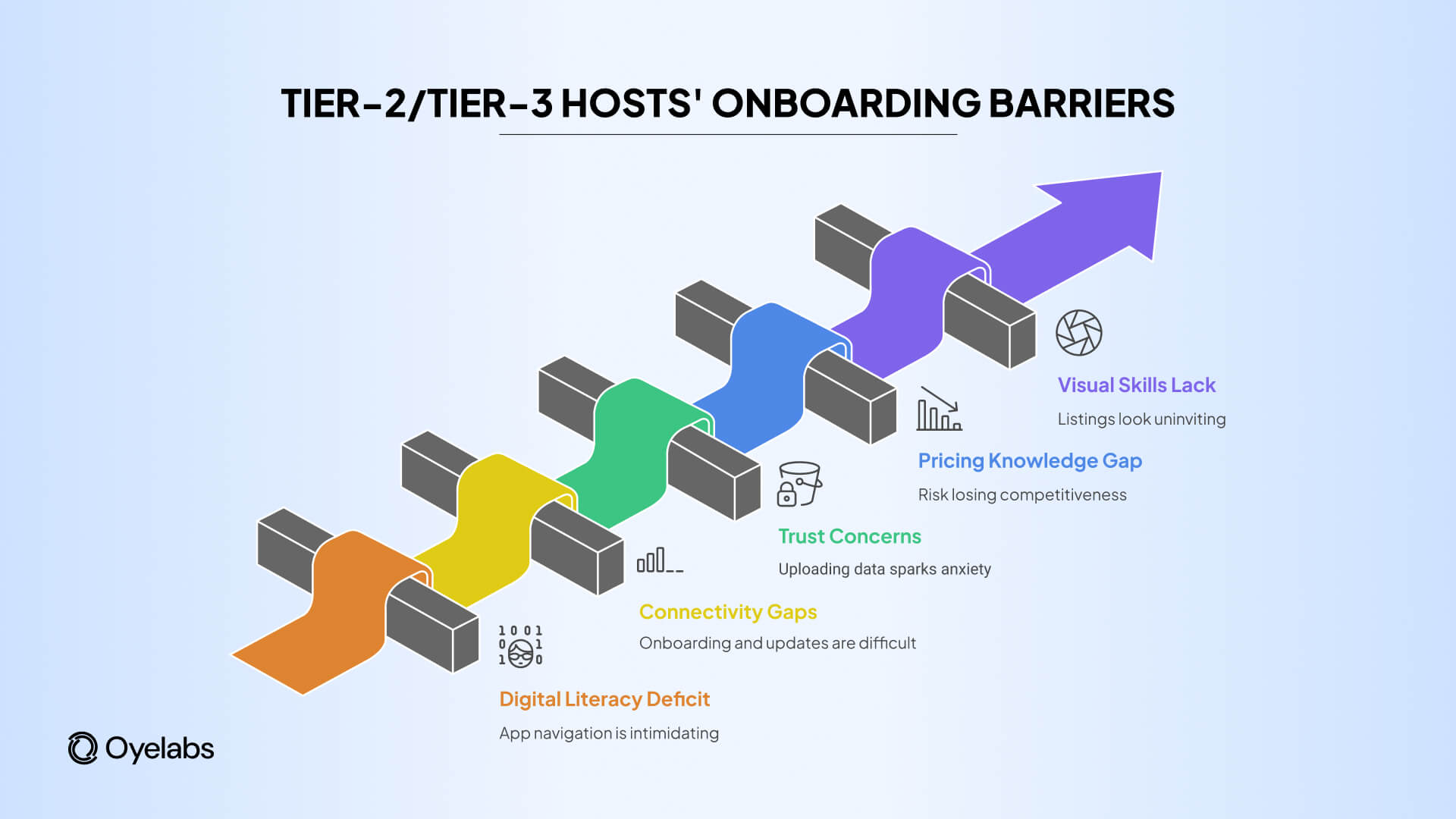
Digital Literacy Deficit
Many aspiring hosts struggle with basic digital operations, from uploading images to verifying profiles. While urban hosts easily adapt to platform dashboards, Tier-2/Tier-3 users often lack guided tutorials and multilingual support.
According to Deloitte’s 2024 Digital Readiness Index, over 43% of rural users find app navigation intimidating. Without intuitive UI/UX design and simple onboarding cues, their spaces stay offline, stalling potential revenue streams.
Infrastructure and Connectivity Gaps
Slow internet speeds and unstable connections create friction during onboarding and booking updates. These regions often rely on 3G networks or shared Wi-Fi hotspots, making high-resolution uploads and real-time communication tough.
Research revealed that 56% of non-metro hosts experience app timeout errors weekly. To fix this, platforms must adopt low-bandwidth optimization, background sync, and offline form saving, turning limitations into scalable opportunities.
Trust and Data Privacy Concerns
For first-time hosts, uploading IDs or bank details online sparks anxiety. Many fear scams, data misuse, or identity theft. This isn’t paranoia; cybercrime awareness remains low outside major metros.
Platforms must integrate GDPR-compliant encryption, transparent privacy dashboards, and visible trust seals to build confidence. When hosts feel digitally protected, engagement rises dramatically, a finding confirmed by PwC’s 2024 Global Trust Survey.
Pricing and Market Knowledge Gap
Hosts in smaller cities often underprice or overprice their listings due to limited market exposure. Without real-time pricing analytics or demand prediction tools, they risk losing both competitiveness and credibility.
A platform-driven dynamic pricing engine, fueled by local demand data, can bridge this gap. As Airbnb’s regional model proved, automated insights and smart recommendations can raise average host earnings by up to 38% in emerging markets.
Also read: Expanding into Experiences: How Our Airbnb-Like App Can Help
Lack of Visual Presentation Skills
A great space won’t sell without great visuals. Many Tier-2/Tier-3 hosts lack access to high-quality cameras, lighting, or content training. The result, listings that look uninviting and fail to convert. Platforms can change this by offering AI-assisted photo enhancers, image framing guides, and sample templates. According to Meta’s 2024 Visual Commerce Study, strong imagery can boost listing conversions by 42%, turning hesitant hosts into confident digital entrepreneurs.
Steps to onboard hosts in Tier-2/Tier-3 cities
Onboarding hosts in Tier-2 and Tier-3 cities isn’t just about adding more listings; it’s about crafting a seamless, human-first digital journey. The goal is to make every new host feel confident, protected, and ready to earn online.
Here’s a proven step-by-step playbook that top platforms are using to simplify host onboarding in emerging regions.
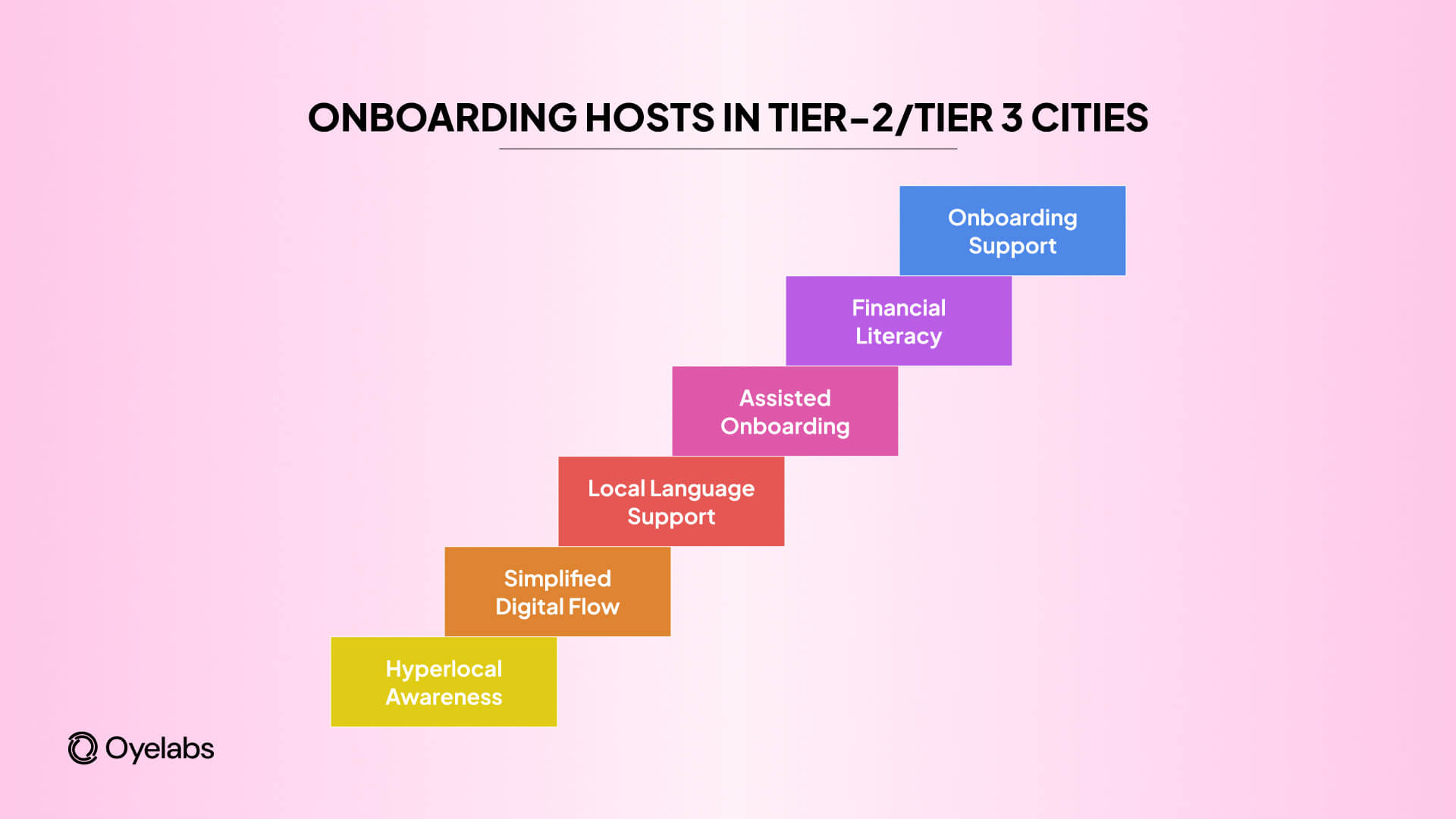
Hyperlocal Awareness Campaigns
Before onboarding even begins, awareness is key. Platforms must run community-based campaigns that educate locals on the benefits of space rentals. Partnering with micro-influencers, local NGOs, and municipal authorities builds credibility fast.
As per Nielsen’s 2024 Trust Index, 86% of rural users trust local messengers more than digital ads. Awareness sessions, short explainer videos, and regional-language webinars bridge the gap, transforming curiosity into confident participation.
Simplified Digital Onboarding Flow
Forget 10-step forms and endless verifications. Tier-2/Tier-3 onboarding must be mobile-first, low-bandwidth, and intuitive. Use progressive disclosure UX, showing only relevant fields step by step. Integrate AI tools that auto-scan IDs, optimize photos, and offer language-based guidance.
A Harvard Business Review (2023) case study shows that simplifying onboarding workflows increases completion rates by 57% in low-digital-literacy zones. The key: clarity, not complexity.
Local Language & Voice Support
Language shouldn’t block opportunity. Hosts should be able to navigate and complete onboarding in their native tongue. Platforms can integrate AI voicebots and NLP-powered translations for regional languages.
Adding voice-guided tutorials or WhatsApp-based assistance boosts accessibility. According to Google’s 2024 Internet Inclusivity Report, 72% of non-English speakers prefer regional language interfaces for digital tasks. The goal: make onboarding sound and feel local, not corporate.
To know more, read the List of Lessons from a Vacation Rental Platform like Airbnb
Assisted Onboarding via Local Agents
For hosts new to digital platforms, a hybrid model works best. Deploy trained local agents, think of them as “digital sherpas.” These agents help hosts register, upload images, verify spaces, and understand pricing models.
Platforms like OYO and Meesho scaled massively using this phygital (physical + digital) onboarding model. It bridges the trust gap while ensuring authenticity. Agents also act as post-onboarding mentors, ensuring retention and satisfaction.
Financial Literacy and Secure Payments Setup
Trust in payments is non-negotiable. Many new hosts hesitate to link bank accounts or digital wallets. Platforms must provide simple, visual guides on setting up KYC-compliant payment gateways, payout schedules, and tax deductions.
Introducing simulated demos and FAQs in regional languages improves adoption. As per a Mastercard Inclusion Study (2024), 48% of rural entrepreneurs onboard faster when they understand payout safety. Transparency builds trust, and trust builds growth.
Post-Onboarding Support & Gamified Learning
Once onboarded, hosts need continued support to thrive. Use gamified microlearning modules, quizzes, badges, and short videos- to teach best practices like pricing, photography, and guest management.
Offer 24/7 multilingual chatbots and community WhatsApp groups for real-time help. Studies from the MIT Inclusive Tech Lab show gamification boosts long-term platform engagement by 64%. A host who feels guided becomes your best growth ambassador.
Also, focus on Boost Rental Profits with an Airbnb-Style Platform
Building Trust and Safety for Hosts
Trust is the heartbeat of any successful space rental ecosystem, especially in Tier-2 and Tier-3 cities where first-time hosts crave assurance before participation. Building confidence isn’t about flashy guarantees; it’s about transparency, protection, and proven credibility.
Here’s how platforms can build an unshakeable foundation of trust and safety for every new host.
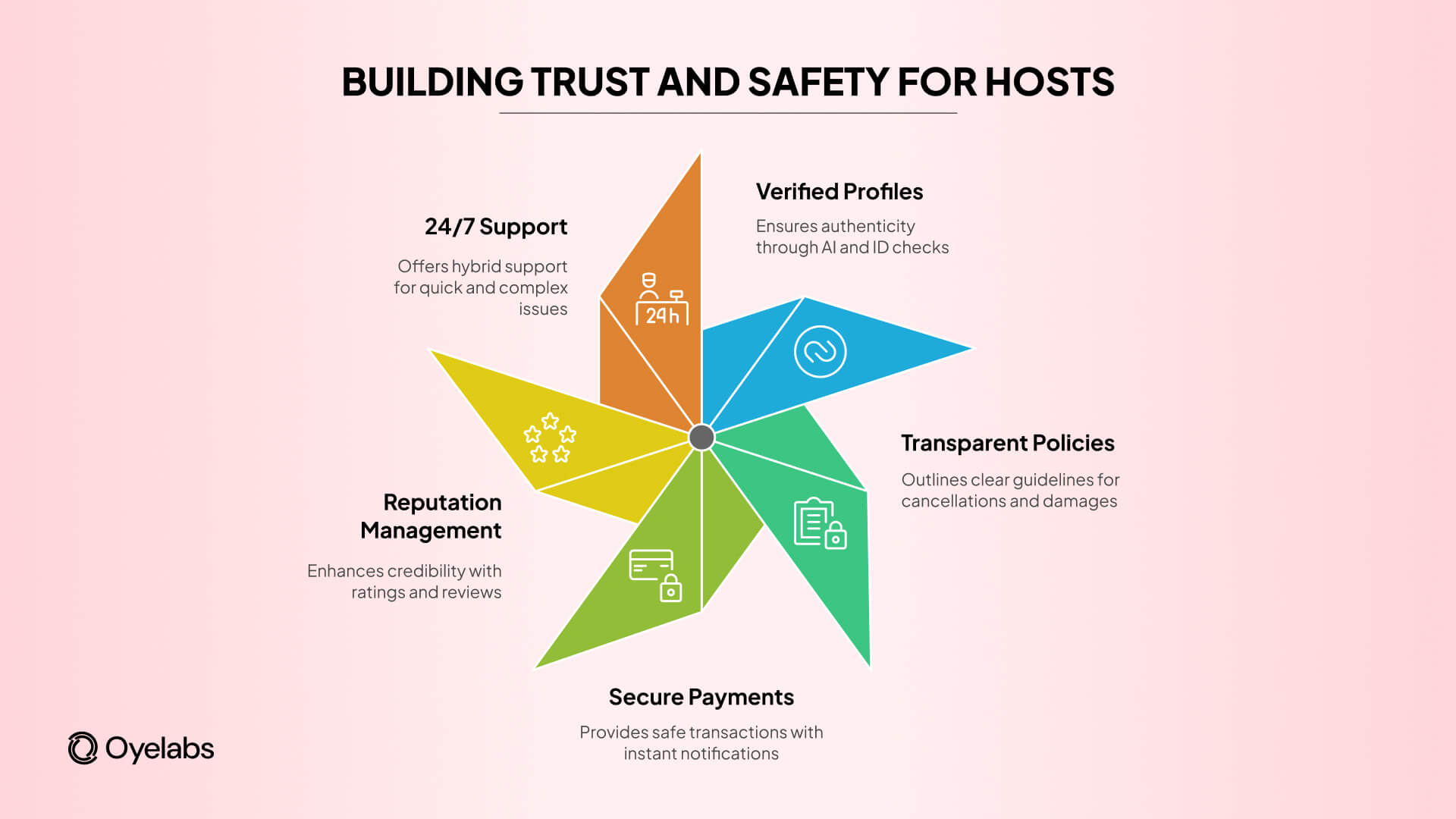
Verified Guest and Host Profiles
Authenticity starts with identity. Platforms must use AI-driven KYC verification and government ID checks to ensure that every guest and host is real. Include visible verification badges, review histories, and “trust scores” powered by behavior analytics.
A 2024 Statista survey revealed that 78% of hosts prefer verified guests for peace of mind. Automated fraud detection systems and two-factor authentication add a further security layer, reducing impersonation risks and promoting a safe digital community.
Transparent Policies and Host Protection Plans
Tier-2/Tier-3 hosts often fear property damage or fraud. Platforms must outline crystal-clear policies covering cancellations, damages, and payouts. Introducing Host Protection Plans (like insurance-backed guarantees) builds reassurance.
According to PwC’s Global Trust Barometer (2024), policy transparency boosts retention by 41%. Add easy-to-read policy summaries, visuals, and in-app FAQs. When users see fairness in writing, they don’t just sign up, they stay.
Secure and Flexible Payment Systems
Payment anxiety is real, especially among new digital earners. Platforms should deploy PCI DSS-compliant gateways, escrow-based transactions, and instant payout notifications to enhance confidence. Adding local payment methods, UPI, Paytm, or regional e-wallets, ensures accessibility.
Mastercard’s 2024 Inclusion Study shows that secure instant payments increase trust among new hosts by 52%. Security plus flexibility equals reliability, making every transaction feel safe and seamless.
Ratings, Reviews, and Reputation Management
Trust thrives on visibility. Hosts and guests should both have access to transparent rating systems and two-way feedback mechanisms. Implement machine learning moderation to flag fake reviews and reward consistent high performance.
Airbnb’s 2024 Trust Framework reported that authentic peer reviews improve booking conversions by 39%. Encourage hosts to respond publicly to feedback; it humanizes the platform and builds local credibility fast.
24/7 Human + AI Support System
Automation alone doesn’t build trust; empathy does. Combining AI chatbots for quick fixes with real human support for complex issues ensures reliability. A hybrid support model reduces response time and fosters emotional security.
According to Zendesk’s CX Trends Report (2025), 62% of users trust brands more when they get instant, human-backed help. Add multilingual hotlines and WhatsApp-based updates for accessibility across time zones and literacy levels.
Next-Gen Vacation Rental Tech, Tailored by Oyelabs
Launch your own vacation rental platform with Oyelabs, the tech studio trusted by 250+ global startups for scalable digital innovation. From Airbnb-style marketplace clones to hybrid property management systems (PMS) and multi-vendor booking apps, we craft full-stack solutions tailored to your business goals.
Our platforms integrate AI-driven pricing engines, GDPR-compliant architecture, and real-time booking synchronization across web and mobile. With Oyelabs, you don’t just get a product; you get a market-ready, revenue-optimized ecosystem built for Tier-1 to Tier-3 growth. Let’s turn your idea into a platform that hosts success stories.
Conclusion
In today’s digital economy, owning a vacation rental platform isn’t just about bookings; it’s about creating experiences, trust, and recurring revenue. Oyelabs empowers founders to build high-performing, AI-optimized, and mobile-responsive platforms that rival global leaders like Airbnb and Vrbo.
With custom APIs, multi-language integration, and secure payment architecture, you’re equipped to scale confidently from local markets to global travelers. Whether you’re targeting urban hosts or emerging Tier-3 cities, Oyelabs turns your vision into a sustainable business engine.
Ready to launch your rental platform? Let’s build your next success story with Oyelabs today.
FAQs
1. What makes UberEats Pro’s on-time rate system revolutionary for food delivery?
It uses AI-driven route optimization, predictive analytics, and real-time traffic data to ensure faster, more accurate deliveries every time.
2. How do on-time rates impact customer loyalty and restaurant satisfaction?
Consistent delivery punctuality builds trust, improves restaurant coordination, and encourages repeat orders from satisfied customers.
3. Can startups integrate similar delivery precision systems with Oyelabs’ solutions?
Absolutely. Oyelabs builds end-to-end delivery platforms with AI logistics, smart driver dashboards, and predictive ETA technology.
4. How does punctuality translate to business growth?
Brands maintaining 95%+ on-time rates achieve up to 2.3x higher retention and stronger ROI through reduced churn and improved user trust.
5. What technologies power Oyelabs’ on-time delivery architecture?
Our solutions leverage cloud-native infrastructure, GPS-backed dispatch, machine learning algorithms, and automation APIs for seamless performance.