
How to Build an App Like WeGo – Founder’s Guide 2026

How to Build an App Like WeGo – Founder’s Guide 2026
 Anuraag Jain
Last Updated on March 11, 2026
Key Takeaways
What You’ll Learn
- A taxi booking app like WeGo connects riders, drivers, and payments through one platform.
- Ride-hailing apps work using GPS tracking, driver matching, and digital payment systems.
- Founders can launch taxi platforms using custom development or ready-made software solutions.
- Taxi platforms generate revenue from ride commissions, driver subscriptions, and surge pricing.
- A simple, fast app with reliable drivers helps startups compete with large ride-hailing companies.
Stats That Matter
- The global ride-hailing market may reach $212 billion by 2029.
- More than 1.45 billion people may use ride-hailing apps worldwide by 2029.
- Urban populations may reach 68% of the world by 2050, increasing demand for mobility services.
- Electric vehicles could represent 30% of vehicle sales by 2030, influencing taxi platforms.
- AI technology can help mobility platforms reduce operational costs by up to 30%.
Real Insights
- Launching quickly helps founders capture local market demand before competitors.
- Taxi platforms grow faster when they build a strong driver network first.
- Simple booking experiences increase user retention and repeat rides.
- Affordable development options allow startups to enter the mobility market faster.
How to Build an App Like WeGo – Founder’s Guide 2026
Imagine it’s 7:45 AM, the subway is packed, and someone nearby taps their phone to book a ride in seconds. That tiny moment shows how urban transport works today – fast, app-driven, and powered by real-time data.
Platforms like WeGo proved that mobility apps can turn everyday travel into a scalable digital business. For founders and early-stage startups, the opportunity is clear: launch a taxi platform that connects riders, drivers, and payments through one intelligent system. Modern ride-hailing apps combine GPS tracking, AI-based route optimization, secure payment gateways, and cloud-based dispatch systems to deliver reliable rides on demand.
This guide explains how to build an app like WeGo in 2026, covering features, technology stack, development cost, and the fastest path to launch a taxi platform.
What Is WeGo and Why It Became a Successful Mobility Platform
Before building an app like WeGo, it is important to understand why the platform gained traction among travelers and urban commuters.
WeGo is primarily known as a travel discovery platform that allows users to compare travel services and book rides or transport options through a simple mobile interface. The core idea behind its success lies in simplifying travel decisions. Instead of browsing multiple apps, users can quickly discover available transportation options, check pricing, and confirm a booking in a few steps.
For founders, the real lesson is not just the product itself but the platform model behind it. Mobility platforms like WeGo connect three essential stakeholders:
- Riders looking for quick transportation
- Drivers seeking ride opportunities
- Platform administrators managing pricing, operations, and analytics
When these three elements work together through a well-designed application, the platform begins generating consistent transactions and user engagement.
Another important factor is mobile-first design. Users expect to book a ride within seconds, track their driver in real time, and complete the payment without friction. Successful mobility platforms focus on removing complexity at every stage of the journey.
Key Features That Made WeGo Popular
Several features helped WeGo establish strong user adoption:
- Real-time availability of rides and transportation options
- Transparent fare estimates before booking
- GPS-based ride tracking and route visibility
- Simple booking interface requiring minimal user steps
- Secure digital payment integrations
- Ratings and feedback systems for drivers and riders
These features may sound standard today, but when combined into a reliable platform, they create high user retention and repeat usage, which is essential for a ride-hailing business.
Business Model Behind Apps Like WeGo
A taxi platform generates revenue through multiple streams. The most common ones include:
- Commission on every completed ride
- Driver subscription or onboarding fees
- Surge pricing during high demand
- Advertising partnerships within the platform
- Corporate ride partnerships for business travel
For entrepreneurs, the takeaway is clear: a taxi booking app is not just a product – it is a transaction engine. The more rides processed, the stronger the revenue potential.
Why Entrepreneurs Want to Build an App Like WeGo Instead of Starting a Traditional Taxi Business
Traditional taxi businesses rely on fleets, dispatch centers, and phone-based bookings. While this model worked for decades, it struggles to compete with the efficiency and scale of modern mobility platforms.
Digital ride-hailing apps remove operational bottlenecks and introduce automation. Drivers and riders are matched instantly, routes are optimized using algorithms, and payments happen automatically.
The difference becomes clearer when comparing the two models.
| Traditional Taxi Business | Taxi App Platform |
| Limited service area | City-wide or multi-city reach |
| Phone-based bookings | Instant mobile bookings |
| Manual dispatching | Automated driver matching |
| Cash-heavy transactions | Digital payments and wallets |
| Minimal data insights | Real-time analytics and demand forecasting |
For founders, the platform model offers several advantages.
First, the business becomes asset-light. Instead of owning vehicles, the platform connects independent drivers and passengers.
Second, the system becomes scalable. Once the software infrastructure is built, expanding to new cities becomes significantly easier.
Third, founders gain access to valuable operational data such as peak demand times, user behavior patterns, and route efficiency.
These insights allow founders to improve pricing strategies, optimize driver availability, and increase ride completion rates.
In simple terms, technology transforms a local taxi service into a scalable digital marketplace.
Market Opportunity for Taxi Apps in 2026
The global mobility sector continues to expand rapidly. Urban populations are growing, car ownership costs are rising, and many consumers prefer on-demand transport rather than owning a vehicle.
As a result, ride-hailing platforms are becoming a fundamental part of city infrastructure.
Recent industry projections suggest the global ride-hailing market may exceed $300 billion by 2030, driven by smartphone adoption, digital payments, and improved mapping technology.
Several trends are contributing to this growth.
- First is the rise of local mobility platforms. While global companies dominate major markets, many regions still prefer locally operated ride-hailing services that understand regional pricing, driver availability, and cultural preferences.
- Second is the growth of electric vehicle adoption. Governments and cities are encouraging EV-based transportation networks, which creates opportunities for new ride-hailing platforms built around sustainable fleets.
- Third is the increasing demand for multi-service mobility platforms. Many taxi apps are evolving beyond simple ride bookings to include car rentals, delivery services, and corporate transport solutions.
For founders, this presents a significant opportunity. Instead of competing directly with global players, many startups are focusing on specific cities or underserved regions, where localized platforms can quickly gain traction.
Launching early in such markets often allows founders to build strong driver networks and brand recognition before competitors enter.
Growth Insight: Successful mobility startups rarely launch nationwide on day one. Instead, they dominate one high-demand city first, build strong driver density, and refine operations. Once ride demand stabilizes, expanding into nearby cities becomes significantly easier.
Core Features Needed to Build an App Like WeGo
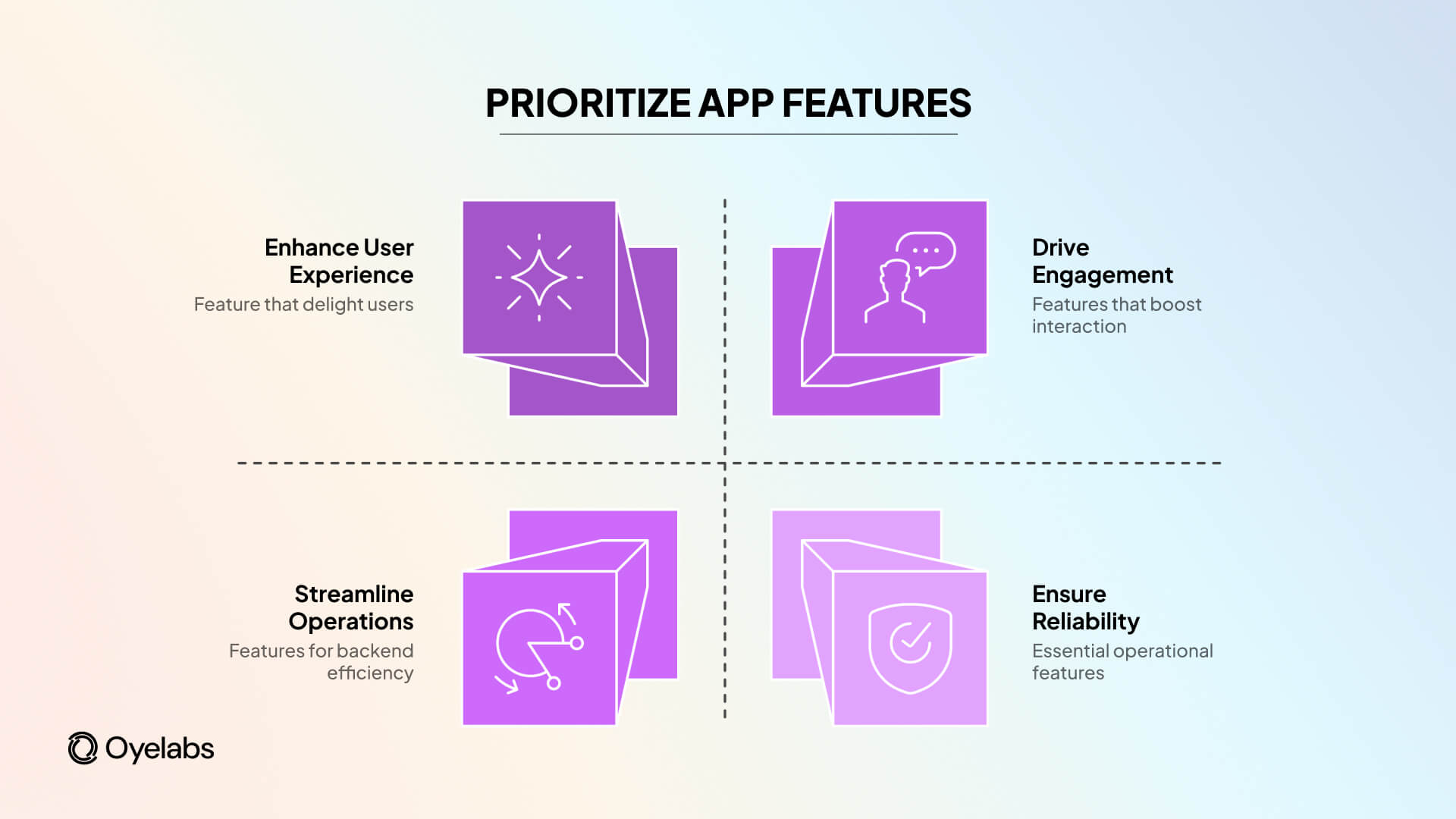
Every successful taxi booking platform relies on a three-part system:
- User application
- Driver application
- Admin management panel
Each component plays a specific role in maintaining smooth operations.
User App Features for a Taxi App Like WeGo
The rider-facing application determines the overall user experience. It must be fast, intuitive, and reliable.
Essential features include:
- Quick registration using phone number or social login
- Ride booking with pickup and drop location selection
- Fare estimation before confirming the ride
- Real-time GPS tracking of the driver
- Secure digital payments through cards or wallets
- Ride history and invoice tracking
- Driver rating and feedback system
Optional enhancements that improve engagement include scheduled rides, referral rewards, and in-app promotions.
Driver App Features for a Taxi App Like WeGo
The driver application acts as the operational backbone of the platform.
Drivers need tools that allow them to manage trips efficiently.
Core driver features include:
- Driver profile registration and document verification
- Accepting or rejecting ride requests
- Real-time navigation support
- Earnings tracking dashboard
- Ride history and trip summaries
- Ratings and customer feedback
Startups often overlook the driver experience, but platforms that provide transparent earnings and reliable navigation tools typically retain drivers longer.
Admin Panel Features for Managing a Taxi Platform
The admin panel is where the platform operators manage the entire ecosystem.
This dashboard typically includes:
- Driver approval and document verification
- User account management
- Commission configuration
- Payment and transaction monitoring
- Fleet and vehicle management
- Operational analytics and demand insights
For founders, the admin panel becomes a critical decision-making tool because it provides data about ride demand, peak hours, driver performance, and revenue patterns.
Builder Tip: Drivers prefer platforms where earnings, commissions, and trip summaries are clearly visible. Transparent earnings dashboards reduce disputes and improve driver retention, which directly stabilizes ride availability on the platform.
Step-by-Step Process to Build an App Like WeGo
Launching a ride-hailing platform like WeGo requires more than just software development. Founders must also plan the operational strategy behind the platform.
The process typically follows several structured phases.
Step 1 – Market Research
The first step is understanding the local mobility landscape.
Founders should analyze:
- Existing taxi platforms in the region
- Average ride pricing models
- Population density and travel demand
- Availability of potential drivers
This research helps identify gaps in the market and defines the startup’s unique value proposition.
Step 2 – Define the Taxi App MVP
Many founders attempt to launch feature-heavy platforms from day one. This often leads to longer development timelines and higher costs.
A more effective strategy is launching a Minimum Viable Product (MVP).
An MVP should include only the most essential features:
- Ride booking system
- Driver matching and dispatch
- GPS tracking
- Digital payment integration
- Driver and rider rating system
Launching with a focused MVP allows founders to test market demand and gather real user feedback.
Step 3 – Choose the Development Approach
Founders typically choose between two development paths.
Custom Development
This approach involves building the entire platform from scratch.
Advantages:
- Complete control over product features
- Unique design and architecture
Challenges:
- High development costs
- Long development timelines
- Greater technical risk
White-Label Taxi App Solution
White-label solutions provide a ready-built platform that can be customized and branded.
Advantages:
- Much faster time to market
- Significantly lower development cost
- Proven infrastructure and features
For early-stage startups, the white-label approach often provides a practical way to launch quickly while validating the business model.
If you’re exploring ways to launch faster without spending months on development, you may want to understand how to choose the best readymade taxi booking script for your startup.
Technology Stack Required to Build an App Like WeGo
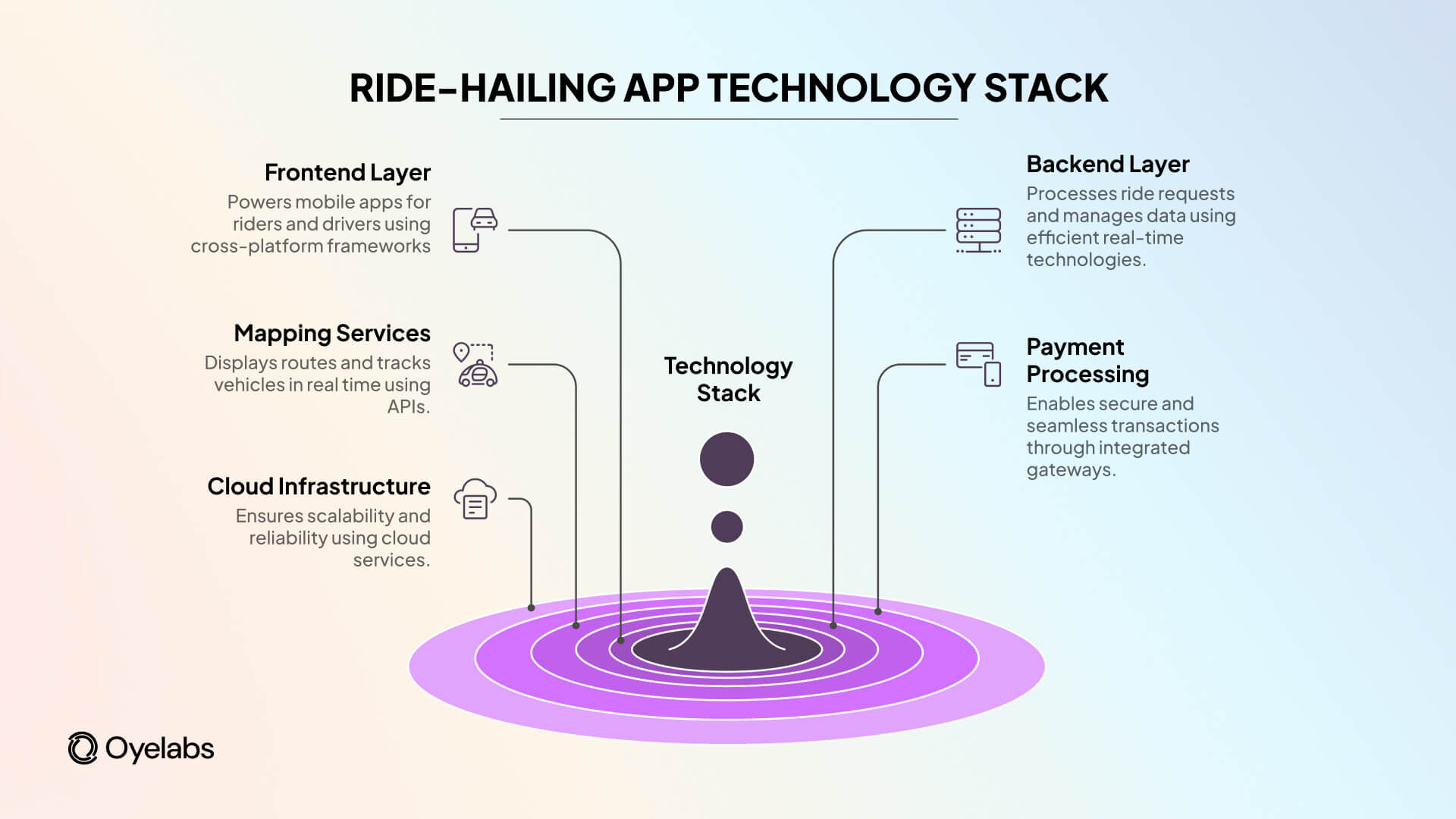
Behind every ride-hailing platform is a complex technology architecture designed to handle thousands of ride requests simultaneously.
The technology stack typically includes several layers.
- The frontend layer powers the mobile apps used by riders and drivers. Cross-platform frameworks such as Flutter or React Native allow developers to build applications that run on both iOS and Android devices.
- The backend layer processes ride requests, manages driver matching, and stores user data. Technologies like Node.js or Python are commonly used because they can handle real-time transactions efficiently.
- Mapping services form another critical component. APIs from providers such as Google Maps or Mapbox allow the platform to display routes, calculate travel time, and track vehicles in real time.
- Payment processing systems also play a key role. Platforms typically integrate payment gateways like Stripe, PayPal, or digital wallets to enable secure and seamless transactions.
- Finally, cloud infrastructure ensures the platform remains scalable and reliable. Services such as AWS or Google Cloud allow ride-hailing apps to handle sudden spikes in demand without performance issues.
For founders, the goal is not just to build an app but to create a stable and scalable mobility platform capable of handling thousands of daily transactions.
Cost to Build an App Like WeGo in 2026
For most founders exploring how to build an app like WeGo, the first practical question is cost. Developing a ride-hailing platform involves multiple components, including rider apps, driver apps, backend infrastructure, and payment integrations.
Industry estimates show that the cost of building a taxi booking platform varies widely depending on development approach and feature complexity.
| Development Approach | Estimated Cost |
| Basic MVP Taxi App | $15,000 – $40,000 |
| Advanced Taxi Platform | $40,000 – $80,000 |
| Enterprise-Level Mobility Platform | $100,000+ |
Several factors influence these costs.
First is platform architecture. Taxi apps require real-time GPS tracking, ride dispatch systems, and payment gateway integrations that must operate reliably under heavy usage.
Second is multi-application development. A complete taxi platform requires at least three systems working together: the rider app, the driver app, and the admin management dashboard.
Third is security and compliance. Handling payments, user identity verification, and transaction records requires secure infrastructure and testing.
Because of these complexities, many founders spend months and significant capital building their initial product.
However, a growing number of startups are now choosing a faster route by launching with a ready-built taxi booking platform instead of developing everything from scratch.
Oyelabs provides a fully functional taxi booking script starting at $2,599, which already includes the essential components required to run a ride-hailing platform:
- Rider mobile application
- Driver mobile application
- Admin management dashboard
- Real-time GPS ride tracking
- Fare calculation system
- Secure payment integrations
- Driver onboarding and verification tools
- Ride history and ratings system
Instead of spending tens of thousands of dollars on initial development, founders can launch a production-ready platform and customize it based on their market needs.
This approach significantly reduces both development cost and time-to-market, allowing entrepreneurs to focus on building their driver network, acquiring users, and establishing their brand in the local mobility market.
For many early-stage founders, this balance of affordability, speed, and functionality makes a ready-built platform the most practical way to launch a taxi booking business.
Timeline to Build a Taxi Booking App Like WeGo
In addition to cost, development time is another critical factor. Many founders underestimate how long it takes to build a fully functional ride-hailing platform.
A typical custom development process involves several stages.
The first stage is research and planning, where the development team defines product requirements, user flows, and technical architecture. This phase alone can take several weeks.
The second stage involves UI and UX design. Designers create wireframes, visual layouts, and interaction flows for both rider and driver applications.
After the design phase, engineers begin backend and mobile development. This stage includes building the booking system, driver dispatch logic, payment integrations, and GPS tracking functionality.
Finally, the platform undergoes testing and quality assurance to ensure stability before launch.
| Development Phase | Estimated Timeline |
| Research & Planning | 2 – 3 weeks |
| UI/UX Design | 3 – 4 weeks |
| Development | 8 – 12 weeks |
| Testing & Deployment | 3 – 4 weeks |
In total, the timeline for a custom-built taxi app typically ranges between three and six months.
However, in competitive markets, waiting six months to launch can be risky. Mobility startups often benefit from entering the market quickly, onboarding drivers early, and building brand visibility before competitors arrive.
This is one reason why many founders now prioritize speed-to-market strategies.
Technology Trends Shaping Taxi Apps in 2026
The mobility industry continues to evolve rapidly. Platforms launching today must consider the technology trends that will shape transportation services over the next decade.
- AI-Based Dynamic Pricing: Artificial intelligence is increasingly used to calculate fares based on demand, traffic conditions, and driver availability. This system automatically adjusts pricing to maintain a balance between rider demand and driver supply.
- Smart Route Optimization: Advanced route algorithms can predict traffic patterns and recommend faster routes. This reduces travel time and improves driver efficiency.
- Electric Vehicle Integration: Many governments are promoting electric mobility through policy incentives. Taxi apps are beginning to incorporate EV-specific features such as charging station discovery and battery-aware route planning.
- Advanced Safety Systems: Passenger safety has become a major priority for ride-hailing platforms. Modern systems include emergency alerts, ride sharing with trusted contacts, and real-time driver monitoring.
- AI-Powered Customer Support: Automated chat systems now handle booking changes, ride queries, and refund requests. These systems reduce operational costs while improving customer response times.
For founders building a taxi platform like WeGo in 2026, integrating these technologies can significantly improve competitiveness and user satisfaction.
Common Mistakes Founders Make When Building a Taxi App
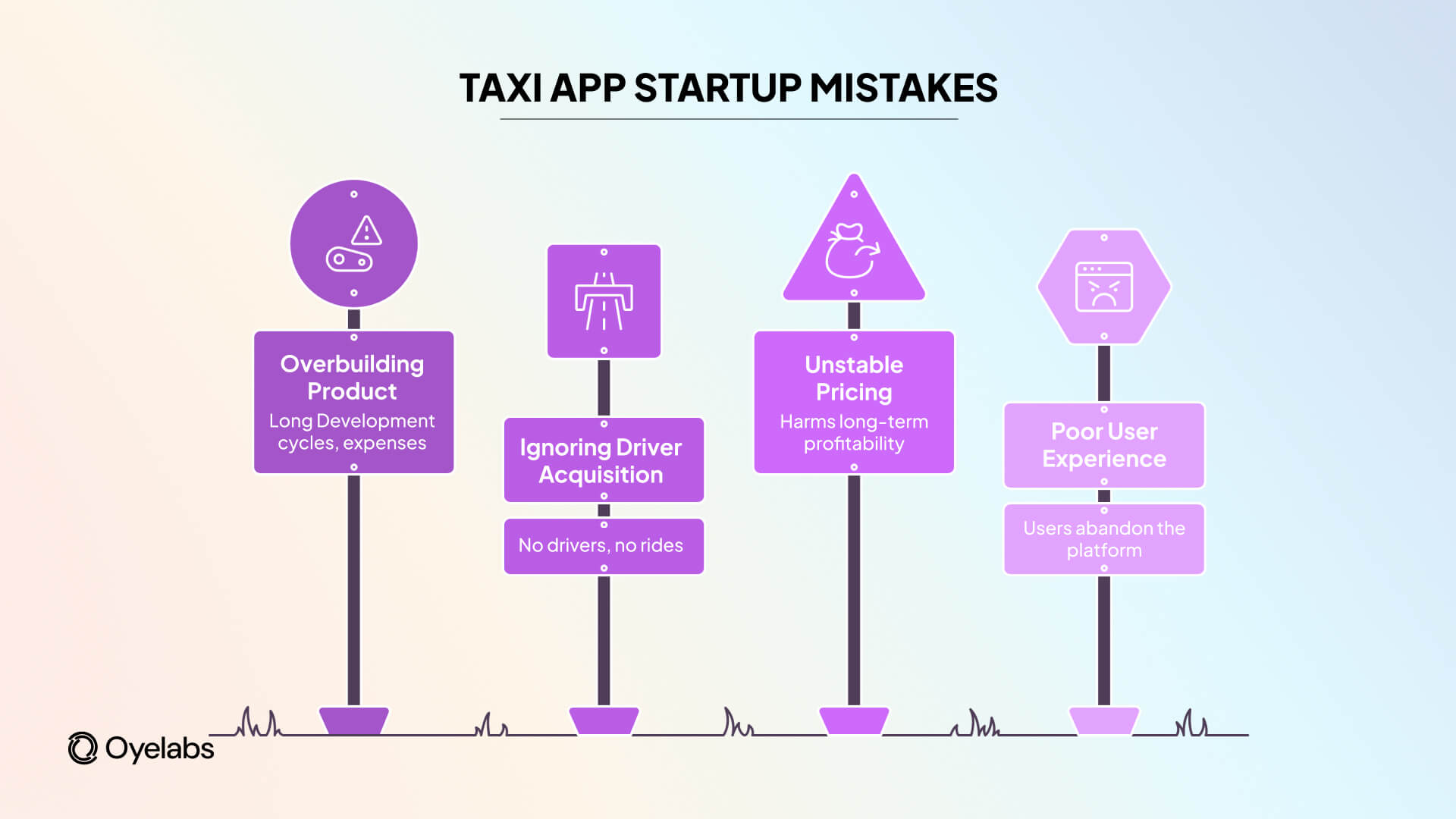
While the opportunity in ride-hailing is substantial, many startups struggle due to avoidable strategic mistakes.
One of the most common issues is overbuilding the product too early. Founders sometimes attempt to replicate every feature of global platforms before launching. This leads to long development cycles and unnecessary expenses.
Another common mistake is ignoring driver acquisition. A taxi platform cannot function without drivers. Even the most advanced application will fail if there are not enough drivers available to accept rides.
Pricing strategy also plays a crucial role. Some startups enter the market with unsustainable discount campaigns, which may attract users temporarily but harm long-term profitability.
Poor user experience is another major risk. If the booking process is complicated or the application performs slowly, users quickly abandon the platform.
Successful founders focus on three priorities during early launch:
- Reliable ride booking experience
- Strong driver network
- Clear pricing strategy
By solving these fundamentals first, the platform can grow organically through repeat users and driver referrals.
How a Taxi App Launch Helped a Startup Become a Recognized Brand
The growth potential of ride-hailing platforms becomes clearer when looking at real founder experiences.
One startup founder approached Oyelabs with the idea of launching a localized taxi platform in a growing metropolitan region. The founder had identified a strong demand for reliable transportation but lacked the technical infrastructure to build a ride-hailing application from scratch.
Instead of spending months on complex development, the founder launched the platform using a ready-built taxi booking solution and focused on driver onboarding and local partnerships.
Within months of launch, the platform began gaining traction across the city. Drivers joined the network quickly, daily ride requests increased, and the platform started appearing in local digital conversations. What began as a small mobility startup gradually evolved into a recognizable transportation brand in its region.
The key takeaway was simple: speed to launch allowed the founder to capture market attention early, which ultimately strengthened brand value and market presence.
Growth Insight: In mobility platforms, trust drives repeat usage. Features such as driver verification, ride tracking, and transparent pricing reassure users and encourage them to book rides consistently.
The Fastest Way to Build an App Like WeGo in 2026
For most founders, the challenge is not the business idea – it is the technical execution.
Custom development can take several months and require a large engineering budget. For startups that want to validate the market quickly, this approach often creates unnecessary delays.
An increasingly popular alternative is launching with a white-label taxi booking platform.
White-label platforms provide a pre-built ride-hailing infrastructure that includes the rider app, driver app, and admin dashboard. The system can then be customized with branding, pricing logic, and regional features.
This approach offers several advantages.
First, it significantly reduces development time. Instead of building every component from scratch, founders can launch with a platform that already supports essential features such as booking management, GPS tracking, and digital payments.
Second, it lowers the initial investment required to launch the platform.
Third, it allows founders to focus on driver onboarding, marketing, and partnerships, which are the real drivers of platform growth.
For many early-stage mobility startups, this strategy provides a faster path to market validation.
How Oyelabs Helps Founders Build Taxi Apps Faster
Launching a ride-hailing platform requires technical expertise, scalable infrastructure, and reliable mobile applications. Oyelabs provides founders with a ready-to-launch taxi booking platform designed to simplify this process.
The platform includes the essential components required to operate a taxi marketplace:
- Rider mobile application
- Driver mobile application
- Admin management dashboard
- Real-time GPS ride tracking
- Secure digital payment integrations
- Driver onboarding and verification tools
The system is designed to be fully customizable, allowing founders to adjust pricing models, commission structures, and service areas according to their market strategy.
Unlike traditional development projects that require months of engineering work, the Oyelabs taxi booking platform enables startups to launch significantly faster.
Another important advantage is cost efficiency. While many ride-hailing applications require large development budgets, the Oyelabs taxi platform starts at $2,599, making it accessible for early-stage founders who want to validate their mobility business idea quickly.
By combining a proven technology stack with customization flexibility, Oyelabs enables founders to focus on building their marketplace rather than managing complex software development.
How Founders Can Launch Their Taxi Platform Successfully
Technology alone does not determine the success of a ride-hailing platform. Founders must also develop a clear launch strategy.
One of the most effective approaches is to start with a single city focus. Launching locally allows founders to build strong driver networks and understand user behavior before expanding to additional regions.
Driver acquisition should be treated as a priority from day one. A healthy supply of drivers ensures that riders receive quick ride confirmations, which improves user satisfaction.
Marketing also plays a crucial role during early launch. Referral programs, local partnerships, and targeted digital advertising can help attract the first group of riders and drivers.
Founders should also monitor operational metrics closely. Ride completion rates, driver response times, and customer ratings provide valuable insights that can guide platform improvements.
A structured launch strategy typically includes:
- Selecting a focused launch city
- Onboarding a reliable driver network
- Offering early user incentives
- Monitoring platform performance data
- Expanding gradually to nearby regions
This approach allows founders to build a stable marketplace before scaling operations.
Launch Your Taxi Platform Faster With Proven Technology
Start your mobility business with a ready-built taxi platform designed for speed, scalability, and reliability.
✓ Launch a complete rider, driver, and admin platform quickly
✓ Reduce development costs compared to custom app development
✓ Scale your taxi marketplace across cities with ease
✓ Customize branding, pricing, and operations for your market
Final Thoughts
Urban transportation is undergoing a major transformation. Consumers increasingly rely on mobile platforms for everyday mobility, and cities are encouraging smarter transportation systems.
For entrepreneurs, this shift creates a valuable opportunity. Building a taxi platform is no longer limited to large technology companies. With modern software infrastructure and scalable cloud systems, startups can now launch their own ride-hailing platforms.
The key is speed and strategy. Founders who enter the market early, build strong driver networks, and focus on user experience can establish strong local mobility brands.
By combining the right technology with a clear market strategy, launching an app like WeGo can evolve from a simple startup idea into a scalable transportation business.
For many founders in 2026, the opportunity lies not just in building an app – but in building the next regional mobility platform.
FAQs
What business model do founders typically use when launching a taxi app like WeGo?
Most taxi apps use a commission-based marketplace model. The platform connects riders and drivers and takes a percentage from every completed ride. Additional revenue can come from driver subscriptions, surge pricing during peak demand, corporate ride partnerships, and in-app promotions that increase total platform earnings.
How do new taxi platforms attract drivers during the early launch stage?
Driver acquisition usually starts with local onboarding campaigns. Founders partner with independent drivers, taxi fleets, and vehicle owners. Early incentives such as lower commission rates, referral rewards, and guaranteed ride demand help drivers join the platform and create initial supply for passengers.
What makes a taxi booking app scalable when expanding to multiple cities?
A scalable taxi platform relies on cloud infrastructure, automated dispatch systems, and real-time analytics. These technologies allow the app to handle thousands of ride requests simultaneously. When the software architecture is designed correctly, founders can expand into new cities without rebuilding the entire platform.
How can founders compete with large ride-hailing companies in local markets?
Many successful mobility startups focus on specific cities or niche services instead of competing globally. By offering reliable rides, fair pricing, and strong driver relationships, local platforms can build loyal users. Regional knowledge and faster decision-making often give smaller platforms an advantage.