
Neighborhood Service Platforms and the Future of Local Commerce

Neighborhood Service Platforms and the Future of Local Commerce
 Anuraag Jain
Last Updated on July 8, 2026
Key Takeaways
What You’ll Learn
- Neighborhood service platforms organize local commerce around trust.
- TaskRabbit helped digitize neighborhood service discovery.
- Reviews now function as digital word-of-mouth recommendations.
- Local density often matters more than geographic expansion.
- Service marketplaces succeed through transactions, not downloads.
- Trust infrastructure creates long-term marketplace advantages.
- Hyperlocal commerce is becoming a major growth category.
Stats That Matter
- Digital labor platforms continue expanding globally.
- Consumers increasingly discover services through digital channels.
- Service industries remain one of the largest employment sectors.
- Reviews influence most local purchasing decisions.
- Mobile-first service booking continues growing.
Real Insights
- Trust density matters more than user growth.
- Supply quality influences retention more than features.
- Local commerce is becoming platform-driven.
- Marketplace liquidity drives long-term success.
- Strong neighborhoods create strong marketplaces.
Statistics Snapshot
- According to the International Labour Organization (ILO), digital labor platforms continue creating new opportunities for service providers worldwide.
- OECD research highlights growing consumer reliance on digital platforms for local service discovery.
- World Bank digital economy studies show platforms reduce information gaps between buyers and service providers.
- Service occupations remain one of the largest employment categories in many economies, creating significant opportunities for neighborhood service platforms.
Neighborhood Service Platforms and the Future of Local Commerce
For decades, local commerce depended on referrals.
A homeowner needed a plumber.
A neighbor recommended one.
A family needed help moving.
A friend shared a phone number.
Trust moved through communities.
Today, trust still drives local commerce. The difference is that trust now moves through platforms.
This shift has created a new category of businesses known as neighborhood service platforms.
Platforms such as TaskRabbit, Thumbtack, Airtasker, and Urban Company help customers discover, evaluate, book, and pay local service providers through a single digital experience.
Many people view these platforms as simple marketplaces.
That view misses the bigger trend.
Neighborhood service platforms are becoming the infrastructure layer of local commerce. They are transforming how communities find expertise, build trust, and complete transactions.
For founders evaluating a TaskRabbit-like app, understanding this shift is far more important than understanding features alone.
What Are Neighborhood Service Platforms?
Neighborhood service platforms are digital marketplaces that connect local customers with nearby service providers while managing trust, communication, scheduling, payments, and reputation systems.
Unlike traditional business directories, these platforms facilitate transactions rather than simply displaying listings.
Examples include:
- TaskRabbit
- Thumbtack
- Airtasker
- Handy
- Urban Company
A customer searching for furniture assembly, cleaning, moving assistance, home repairs, or handyman services can discover providers, compare reviews, schedule appointments, and complete payments without leaving the platform.
The platform becomes the trusted intermediary.
That role is increasingly valuable in modern local commerce.
Why Are Neighborhood Service Platforms Replacing Local Business Directories?
Neighborhood service platforms are replacing directories because customers want outcomes, not information. Modern consumers prefer booking a trusted provider immediately instead of spending time researching multiple businesses independently.
The evolution looks like this:
| Era | Primary Tool | Trust Source |
| Directory Era | Yellow Pages | Word-of-mouth |
| Search Era | Google Search | Reviews |
| Platform Era | TaskRabbit-like apps | Verified transactions |
Directories helped customers find businesses.
Platforms help customers complete transactions.
That distinction explains why marketplace businesses often create more value than listing businesses.
They own a larger portion of the customer journey.
Why Is Local Commerce Becoming Community-Driven Again?
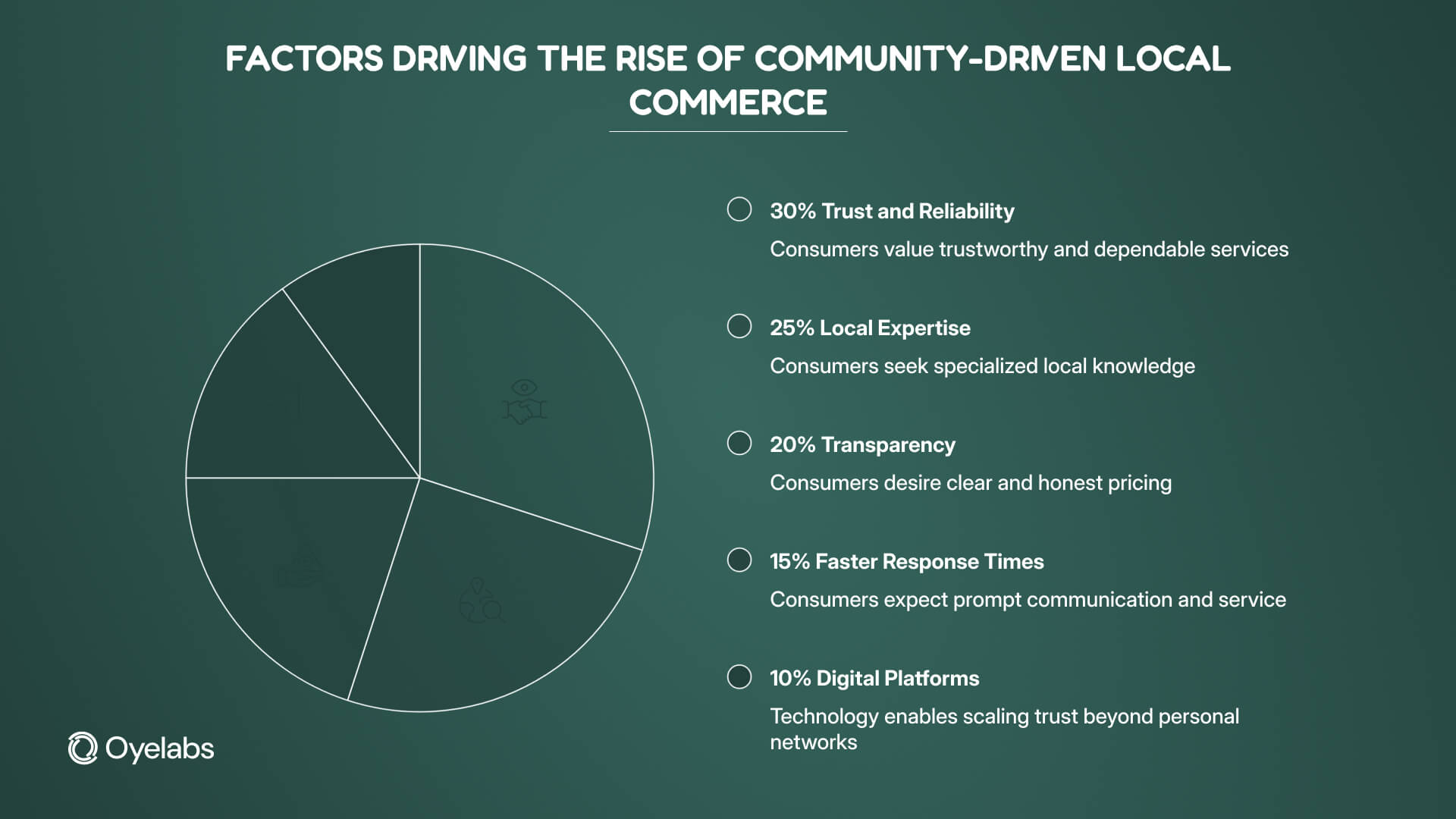
Local commerce is becoming community-driven because consumers increasingly prioritize trust, reliability, and local expertise over simple availability. Digital platforms now allow communities to scale trust beyond traditional personal relationships.
This trend appears across multiple industries.
Customers want:
- Reliable providers
- Verified reviews
- Transparent pricing
- Faster response times
Service providers want:
- Consistent demand
- Reduced marketing costs
- Reputation visibility
Neighborhood service platforms satisfy both sides.
Interestingly, technology is not replacing communities.
Technology is helping communities operate at larger scale.
Why Reviews Have Become Digital Neighborhood Recommendations
Reviews have become digital neighborhood recommendations because they allow strangers to evaluate trust before a transaction occurs. In local service marketplaces, reviews reduce uncertainty and improve decision-making.
According to BrightLocal’s consumer research, the vast majority of consumers read online reviews before engaging local businesses, making reputation systems one of the most influential trust mechanisms in local commerce.
Before service marketplaces existed, trust came from conversations.
Today, trust comes from:
- Reviews
- Ratings
- Verification
- Job completion history
- Response speed
In our experience evaluating marketplace businesses, reputation systems often influence growth more than advanced product features.
Customers rarely ask:
“Does this platform have AI?”
Customers often ask:
“Can I trust this provider?”
That difference matters.
Growth Insight
The strongest neighborhood service platforms invest heavily in trust infrastructure before investing heavily in feature expansion.
What Did TaskRabbit Understand Before Most Local Service Businesses?
TaskRabbit recognized that local commerce is fundamentally a trust problem rather than a discovery problem. The platform succeeded by organizing trust, reputation, and transactions in one place.
Data published by the World Bank highlights how digital platforms reduce information asymmetry between buyers and sellers, helping customers make more informed purchasing decisions.
Many local businesses assumed customers struggled to find providers.
TaskRabbit understood that customers struggled to trust providers.
That insight shaped the platform.
TaskRabbit built systems around:
- Reviews
- Identity verification
- Secure payments
- Communication
- Scheduling
The result was a marketplace where trust became scalable.
That lesson remains relevant for founders building modern neighborhood service platforms.
Why Trust Density Matters More Than User Growth
Most founders focus on user acquisition.
The strongest marketplaces focus on trust density.
Trust density refers to the concentration of trusted providers, successful transactions, verified reviews, and repeat customers within a local market.
This concept rarely appears in startup discussions.
It should.
A marketplace with fewer users and higher transaction activity often creates more value than a marketplace with larger registrations and lower engagement.
Example
| Metric | Platform A | Platform B |
| Registered Users | 100,000 | 25,000 |
| Monthly Transactions | 2,000 | 8,000 |
| Repeat Customers | Low | High |
Most founders celebrate Platform A.
Most investors prefer Platform B.
Why?
Transactions create reviews.
Reviews create trust.
Trust creates future transactions.
That cycle drives sustainable marketplace growth.
Real Marketplace Trade-Off
More provider verification improves trust and transaction quality.
However, stricter verification requirements often slow provider onboarding and marketplace expansion.
Founders must balance trust infrastructure with growth objectives.
The strongest neighborhood service platforms optimize both rather than prioritizing one at the expense of the other.
What Marketplace Founders Often Get Wrong About Local Commerce
After evaluating founders exploring TaskRabbit-like platforms, several patterns consistently emerge.
Many teams spend months discussing features while spending very little time planning provider acquisition.
In reality, provider density often becomes a growth constraint long before technology becomes a competitive advantage.
Our team has observed that marketplaces with strong supply quality and consistent transaction activity frequently outperform larger platforms with higher registration numbers but weaker liquidity.
This observation appears repeatedly across local service categories, from handyman marketplaces to specialized professional service platforms.
What Does the Future of Local Commerce Look Like?
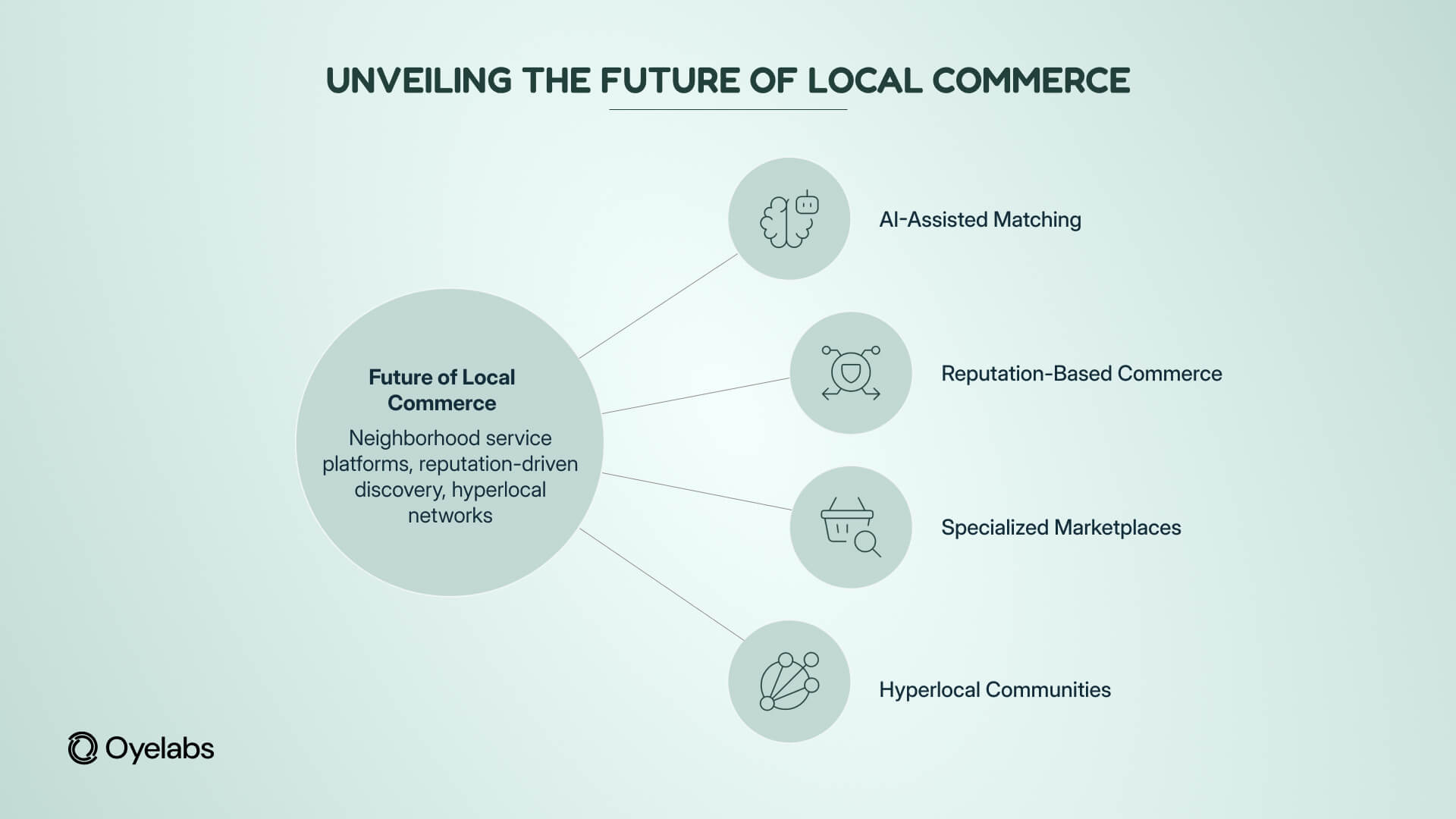
The future of local commerce will likely revolve around neighborhood service platforms, reputation-driven discovery, and hyperlocal service networks powered by technology.
Several trends are becoming increasingly visible.
AI-Assisted Matching
Platforms will become better at matching customers with providers based on quality, reliability, and service history.
Reputation-Based Commerce
Trust signals will continue evolving beyond simple star ratings.
Specialized Marketplaces
Future platforms may focus on:
- Home maintenance
- Skilled trades
- Elder care
- Pet services
- Professional assistance
Hyperlocal Communities
Neighborhood commerce may increasingly resemble digital communities where transactions, referrals, and reputation operate together.
The next generation of local commerce will likely be built around trusted local ecosystems rather than broad national directories.
Based on marketplace trends and founder conversations, we believe the next generation of neighborhood service platforms will compete less on features and more on trust infrastructure, provider quality, and transaction reliability.
Many marketplaces already offer similar booking workflows.
The strongest competitive advantages increasingly come from reputation systems, local density, and repeat customer behavior.
Is Building a TaskRabbit-Like App Still Worth It?
Yes, but the opportunity is no longer simply building another marketplace. The larger opportunity is creating a trusted neighborhood commerce ecosystem.
The strongest opportunities often exist in:
- Skilled trades
- Local home services
- Specialized professional services
- Underserved regional markets
Founders evaluating a TaskRabbit clone should focus on:
- Provider quality
- Trust infrastructure
- Marketplace liquidity
- Repeat transactions
- Local density
Technology supports growth.
Trust sustains growth.
This is where OyeLabs helps founders develop scalable neighborhood service platforms with marketplace workflows, provider management systems, trust infrastructure, and operational tools designed for long-term growth.
Create a Stronger Local Commerce Platform
Launch a marketplace designed around trust, transactions, and sustainable growth.
- Support providers and customers through one ecosystem
- Launch faster using proven marketplace workflows
- Build trust infrastructure from day one
- Scale local demand with stronger liquidity
Conclusion
The future of local commerce will not be defined by bigger directories or larger advertising budgets.
It will be defined by trust.
Neighborhood service platforms are proving that communities still rely on recommendations, reputation, and relationships. The difference is that these interactions now occur through digital infrastructure rather than informal conversations.
Platforms like TaskRabbit demonstrated that local commerce becomes significantly more efficient when trust, communication, payments, and discovery operate together.
For founders, the biggest lesson is simple.
Technology helps people connect.
Trust helps people transact.
The platforms that organize trust most effectively will likely shape the next generation of local commerce.
Frequently Asked Questions
What is a neighborhood service platform?
A neighborhood service platform connects local customers with nearby service providers through a marketplace that manages discovery, booking, communication, payments, and trust systems. Examples include TaskRabbit, Thumbtack, Airtasker, and Urban Company.
How is TaskRabbit different from a local business directory?
A business directory provides information. TaskRabbit facilitates complete transactions. Customers can discover providers, compare reviews, schedule services, make payments, and manage communication directly through the platform.
Why are neighborhood service platforms growing?
Neighborhood service platforms are growing because consumers increasingly prefer trusted, transparent, and convenient ways to discover local service providers. Reviews, ratings, and digital payments make transactions easier and more reliable.
What makes a TaskRabbit-like app successful?
Successful TaskRabbit-like apps focus on trust systems, provider quality, marketplace liquidity, repeat transactions, and strong local density. Features matter, but trust infrastructure often drives long-term growth.
Editorial Note
OyeLabs regularly works with founders evaluating marketplace platforms, local commerce businesses, service marketplaces, and on-demand ecosystems. Insights in this article combine industry research, publicly available marketplace information, and practical observations from marketplace strategy and product development discussions.
Sources & Editorial References
- International Labour Organization (ILO)
- OECD Digital Economy Outlook
- World Bank Digital Development Research
- Public marketplace platform documentation
- Industry marketplace research and reports
Fact Checked By: Tanushree Jain
Senior Product Manager, Oyelabs