
Whatnot Business Model – An Entrepreneurial View

Whatnot Business Model – An Entrepreneurial View
 Anuraag Jain
Last Updated on June 28, 2026
Key Takeaways
Key Takeaways
- The Whatnot business model combines live video, auctions, and marketplace transactions.
- Revenue comes primarily from seller fees and transaction commissions.
- Creator-led selling reduces customer acquisition costs.
- Live auctions generate urgency and higher engagement.
- Trust and authenticity are critical marketplace advantages.
- The model scales across multiple product categories.
- Community participation drives repeat purchases.
- Live commerce monetizes engagement rather than traffic alone.
Whatnot Business Model – An Entrepreneurial View
Traditional e-commerce platforms are optimized for transactions. Whatnot is optimized for participation.
That distinction explains why the company has become one of the most closely watched businesses in live commerce. Instead of relying on static product listings, Whatnot combines live video, real-time auctions, community interaction, and creator-led selling into a marketplace designed around engagement.
At OyeLabs, we regularly evaluate marketplace and creator-led commerce businesses. One pattern we frequently observe is that founders focus heavily on catalog management and checkout experiences while underestimating the role of trust and entertainment in online purchasing decisions. Whatnot succeeded because it transformed shopping into an interactive experience rather than a simple transaction.
According to public company reports and investor disclosures, Whatnot has raised more than $700 million in funding and achieved a valuation exceeding $4 billion, making it one of the fastest-growing live commerce platforms in the Western market.
This article explores the Whatnot business model, explains how the platform generates revenue, why live commerce creates stronger engagement than traditional marketplaces, and what founders can learn from its growth.
Quick Answer
The Whatnot business model is a live-commerce marketplace that allows sellers to auction and sell products through real-time video streams. The platform generates revenue through seller commissions, transaction fees, and marketplace services while benefiting from creator-led audience growth, community engagement, and repeat buyer participation.
What Is the Whatnot Business Model?
The Whatnot business model is a live-commerce marketplace where sellers use real-time video streams to sell products directly to buyers through auctions and instant purchases.
Unlike traditional marketplaces, Whatnot blends entertainment and commerce into a single experience.
Sellers do not simply upload product photos and wait for buyers.
They host live shows.
They demonstrate products.
They answer questions.
They interact directly with audiences.
This approach creates a marketplace where buying decisions happen through engagement rather than search alone.
The platform serves three primary stakeholders:
- Sellers gain access to engaged buyers.
- Buyers receive transparency and real-time interaction.
- Whatnot earns revenue from transactions occurring on the platform.
This structure allows the marketplace to scale without holding inventory while keeping incentives aligned between sellers and the platform.
How Does Whatnot Make Money?
The Whatnot business model earns revenue by facilitating transactions between buyers and sellers rather than owning products itself.
According to Whatnot’s seller documentation, the platform earns revenue through seller commissions and transaction-related fees applied to marketplace sales.
As seller sales increase, platform revenue increases as well.
This creates an asset-light marketplace model with strong scalability.
Seller Commissions
Transaction commissions represent the largest revenue source.
Every completed sale generates a fee for the platform.
Because revenue is tied directly to seller performance, Whatnot benefits when sellers grow their businesses.
Marketplace Fees
In addition to commissions, the platform collects transaction-related fees that support payment processing, marketplace operations, customer support, and platform maintenance.
These fees create predictable revenue beyond simple sales commissions.
Promotional Visibility
Live marketplaces naturally create competition among sellers.
Platforms can generate additional revenue by offering promotional opportunities that increase visibility for auctions, live events, or seller storefronts.
This creates optional monetization without affecting the core marketplace experience.
Why the Whatnot Business Model Works
The Whatnot business model succeeds because it combines entertainment, trust, and commerce into a single user experience.
Traditional e-commerce relies heavily on product listings.
Live commerce relies on participation.
This changes buyer behavior.
Instead of comparing dozens of listings, buyers watch products being demonstrated live while interacting directly with sellers and other community members.
Three factors make the model particularly effective.
Real-Time Trust
Buyers can inspect products live, ask questions instantly, and receive immediate clarification before making purchasing decisions.
This reduces uncertainty and increases confidence.
Auction Psychology
Live bidding introduces urgency.
As buyers compete for limited items, participation increases and purchasing decisions happen faster than in traditional marketplaces.
This often leads to higher engagement and stronger conversion rates.
Community-Led Commerce
Whatnot is not simply a marketplace.
It is a collection of niche communities.
Collectors, enthusiasts, hobbyists, and creators return regularly because they enjoy the experience as much as the products themselves.
This creates stronger retention than marketplaces built solely around transactions.
Why the Whatnot Business Model Scales
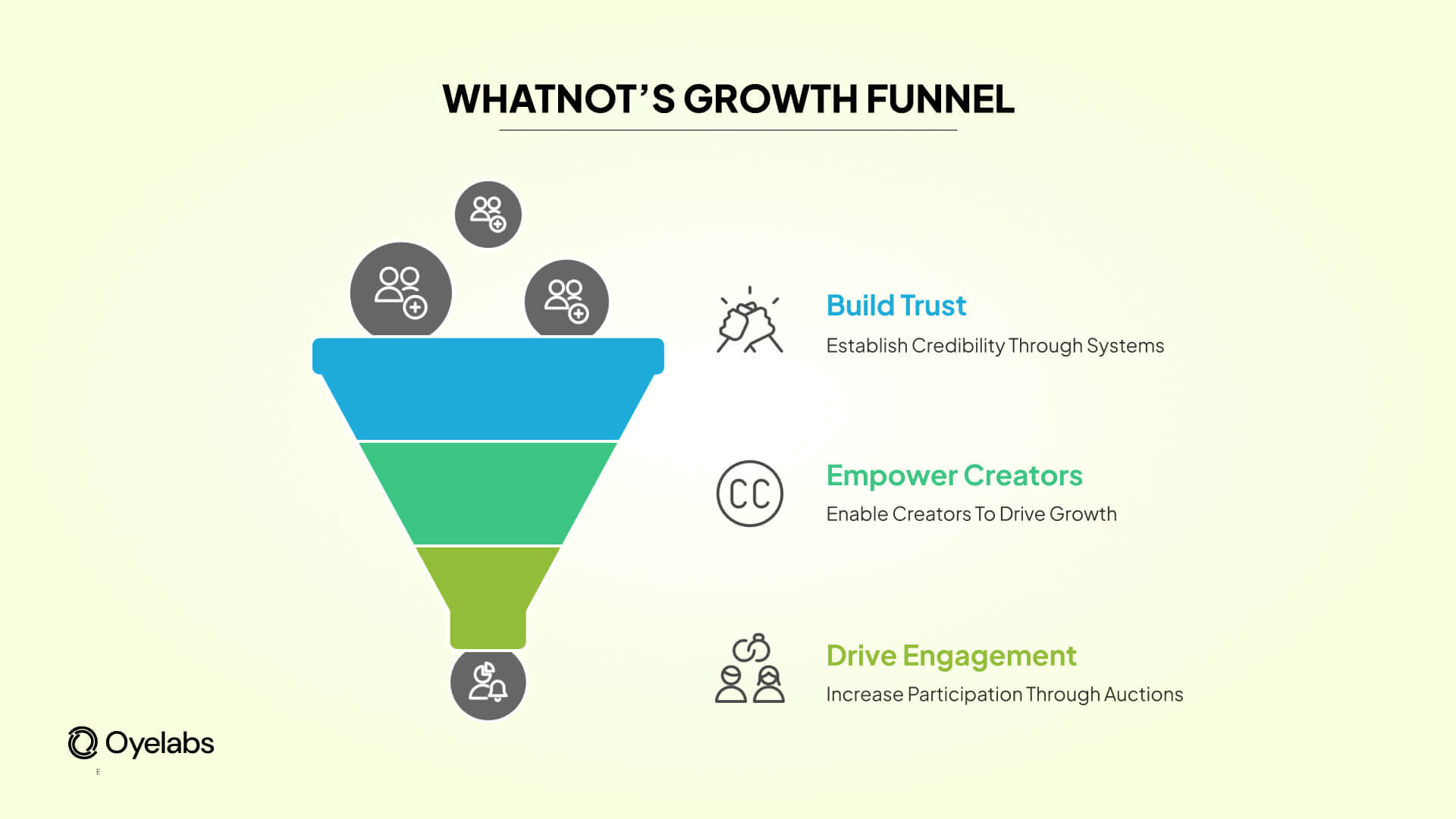
The Whatnot business model scales because creators and sellers generate the content that attracts buyers.
Unlike retailers that must invest heavily in inventory, Whatnot grows by expanding its seller network.
Sellers create live shows.
Live shows attract buyers.
Buyer demand attracts additional sellers.
This marketplace cycle strengthens over time.
The platform has successfully expanded from collectibles into categories such as:
- Trading cards
- Sneakers
- Fashion
- Beauty
- Electronics
- Memorabilia
- Luxury products
The key lesson is that Whatnot does not scale through products.
It scales through communities.
Information Gain: Whatnot Doesn’t Monetize Products. It Monetizes Participation.
The biggest misconception about the Whatnot business model is that it sells products. In reality, it monetizes buyer participation and seller engagement.
Products exist on every marketplace.
Participation does not.
A trading card listed on eBay and the same trading card sold on Whatnot may have identical value. The difference is the experience surrounding the transaction.
Buyers join live streams because they want:
- Real-time interaction
- Product verification
- Entertainment
- Community engagement
- Competitive bidding
This creates an important business advantage.
The more time users spend participating, the more opportunities exist for transactions to occur.
In our experience evaluating marketplaces, engagement-driven platforms generally retain users longer than transaction-only platforms because people return for the experience, not just the product.
That is the real engine behind the Whatnot business model.
Founder Lessons and Business Trade-Offs
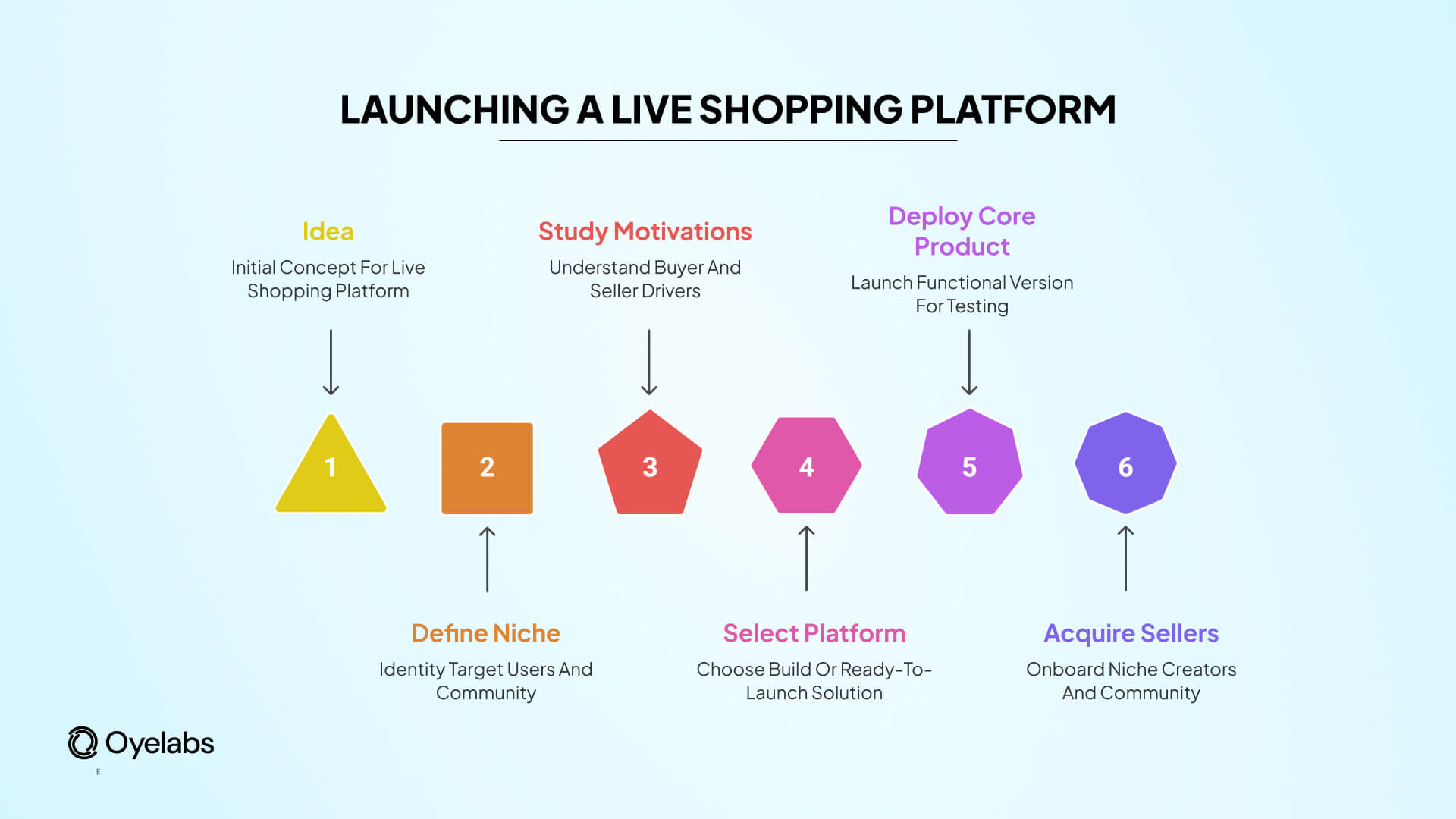
The strongest lesson from Whatnot is that marketplaces scale faster when they build communities before they build catalogs.
Many founders focus on increasing product listings.
Whatnot focused on increasing participation.
That distinction matters.
Mistake 1: Launching Too Broad
One common mistake founders make is trying to serve every category from day one.
Whatnot started with collectibles.
Only after achieving strong marketplace liquidity did it expand into additional categories.
Focused communities typically grow faster than broad marketplaces.
Mistake 2: Prioritizing Buyers Over Sellers
Marketplace businesses often spend heavily on customer acquisition.
However, sellers are usually the growth engine.
Without engaging sellers, buyers have little reason to return.
Successful marketplaces prioritize supply before demand.
Mistake 3: Treating Commerce as a Utility
Many marketplaces optimize for efficiency.
Whatnot optimized for engagement.
The platform recognized that users enjoy auctions, conversations, and community interactions.
That emotional connection creates stronger retention than convenience alone.
Every marketplace also involves trade-offs.
More Verification vs Faster Growth
Stronger seller verification increases buyer confidence.
However, additional checks can slow onboarding.
The challenge is balancing trust with growth.
More Categories vs Community Strength
Expanding into new categories increases revenue opportunities.
However, expansion can weaken marketplace identity if communities become fragmented.
Successful growth requires maintaining engagement while broadening supply.
Which Businesses Can Apply the Whatnot Model?
The Whatnot business model works best in categories where buyers value interaction, expertise, trust, or product authenticity.
The model is particularly effective for:
- Collectibles and trading cards
- Sneakers and streetwear
- Luxury goods
- Memorabilia
- Jewelry
- Beauty products
- Antiques
- Handmade products
The common factor is simple.
Buyers want more than a product.
They want confidence before purchasing.
Live commerce provides that confidence.
When evaluating marketplace opportunities, our team often asks:
“Would buyers benefit from seeing the product demonstrated live?”
If the answer is yes, the Whatnot model may be commercially viable.
Which Is the Best Company to Build a Whatnot-Like Platform in 2026?
Businesses entering live commerce typically choose between building custom software or launching with a proven marketplace framework.
OyeLabs helps founders build live-commerce platforms with:
- Live streaming
- Real-time auctions
- Seller onboarding
- Marketplace management
- Wallet systems
- Payment integrations
- Buyer engagement tools
These solutions are particularly suitable for startups, collectibles businesses, auction platforms, niche marketplaces, and community-driven commerce brands.
Organizations requiring highly specialized workflows may benefit from fully custom development.
Launch Your Live Commerce Marketplace Faster
The success of a live-commerce platform depends on participation, trust, and marketplace liquidity – not simply product listings.
- Build real-time buyer engagement through live interactions.
- Create recurring seller activity with auction-driven experiences.
- Strengthen trust through verification and transparency.
- Launch with a marketplace designed for long-term community growth.
Conclusion
The Whatnot business model demonstrates that the future of e-commerce may be more interactive than transactional. By combining live video, auctions, community participation, and marketplace infrastructure, Whatnot created a model that keeps users engaged long after a purchase is complete.
For founders, the biggest lesson is clear: marketplaces become stronger when people return for the experience, not just the products. In live commerce, engagement drives transactions, and communities drive growth.
FAQs
What is the Whatnot business model?
The Whatnot business model is a live-commerce marketplace where sellers use live video streams to auction and sell products directly to buyers. The platform earns revenue through seller commissions, marketplace fees, and transaction-related services.
How does Whatnot make money?
Whatnot primarily generates revenue through seller commissions and transaction fees collected from marketplace activity. As sellers increase their sales volume, platform revenue grows alongside them.
Why is Whatnot different from eBay?
eBay focuses on listings and transactions, while Whatnot focuses on live interaction and community participation. Buyers can watch live product demonstrations, interact with sellers, and participate in auctions in real time.
Why has Whatnot grown so quickly?
Whatnot benefits from creator-led commerce, live engagement, auction psychology, and strong niche communities. These factors increase retention, repeat purchases, and marketplace activity.
Can founders build a marketplace like Whatnot?
Yes. Businesses can apply the Whatnot model to categories where buyers value authenticity, demonstrations, expertise, and community engagement. Examples include collectibles, luxury goods, fashion, beauty, and specialty retail.
Sources and Editorial Notes
Sources
Editorial Note
This article analyzes the Whatnot business model from a marketplace and live-commerce perspective. Company valuation, funding figures, fees, platform policies, and category expansion strategies may change over time. Readers should verify the latest company disclosures and platform documentation before making commercial or investment decisions.
Disclosure
OyeLabs develops marketplace platforms, auction marketplaces, and live-commerce software. References to Whatnot-like platforms are included solely to explain the underlying business model and help founders evaluate whether live commerce aligns with their business objectives.
Reviewed By: Anuraag Jain
CEO, Oyelabs and AI Transformation Expert