
Top Car Rental Marketplaces in Canada with Business Lessons

Top Car Rental Marketplaces in Canada with Business Lessons
 Anuraag Jain
Last Updated on November 14, 2025
Key Takeaways –
What You’ll Learn:
-
Canada’s top car rental players, Turo, Enterprise, Hertz, Avis/Budget, and Zipcar, are redefining digital mobility in 2025.
-
Platforms are shifting from traditional rentals to AI-powered, app-first, and peer-to-peer mobility ecosystems.
-
Pricing intelligence, fleet telematics, and omnichannel experience are now core growth drivers.
-
Sustainability, EV adoption, and subscription models are shaping long-term user loyalty.
-
Entrepreneurs can enter the market by focusing on trust, user-centric design, and data-backed innovation.
Stats That Matter:
-
Canada’s car rental industry is valued at $4.6B in 2025, driven by digital transformation and shifting consumer behavior.
-
Over 40% of rental fleets are projected to be electric by 2030.
-
Predictive analytics adoption in car rentals is expected to cross 70% by 2026.
-
Peer-to-peer platforms like Turo continue strong growth with millions of Canadian users.
-
The global e-car rental market is expected to hit $33.9B by 2032.
Real Insights:
-
Trust and transparency—like insurance clarity, ratings, and AI verification—directly improve retention.
-
Simple, frictionless, omnichannel workflows outperform feature-heavy platforms in real-world adoption.
-
Sustainable fleets (EVs, hybrids) boost both brand image and long-term profitability.
-
Data-driven decision-making reduces idle fleet time, increases ROI, and strengthens user satisfaction.
-
Mobility-as-a-Service (MaaS) integrations will shape the next era of rentals, making “transport bundles” the new normal.
Alright, road-trip dreamers and startup hustlers, buckle up! Whether you’re planning a weekend escape to Banff or mapping out your next business move, Canada’s car rental marketplaces are shifting gears fast.
In 2025, platforms like Turo, Enterprise, and Zipcar aren’t just handing out keys; they’re redefining how mobility, convenience, and digital trust intersect. With over $4.6 billion in projected industry revenue, this sector is a goldmine for founders hungry to decode next-gen business models.
From AI-driven pricing algorithms to peer-to-peer fleet optimization, these marketplaces blend fintech precision with travel-tech innovation. This blog dives into the top car rental marketplaces in Canada, and more importantly, the business lessons they teach about scalability, user retention, and brand credibility.
So, if you’ve got an entrepreneurial engine revving inside you, stick around. These insights might just be the roadmap to your next big venture.
Overview of the Canadian Car Rental Industry
The Canadian car rental industry is cruising through a digital transformation like never before. Valued at over $4.6 billion in 2025 (Statista), the sector has evolved from airport counters and paper contracts to AI-powered apps and real-time vehicle tracking systems.
With more Canadians prioritizing flexibility over ownership, demand for short-term rentals, peer-to-peer sharing, and EV fleets has skyrocketed. Platforms like Turo, Enterprise, and Hertz are leveraging machine learning algorithms and telematics data to dynamically price and monitor fleet performance and driver behavior, maximizing efficiency and user satisfaction.
Sustainability is also steering the industry forward. The rise of eco-friendly fleets, subscription-based rentals, and contactless check-ins shows how mobility brands are aligning with the values of Gen Z and Millennials.
However, challenges like insurance compliance, fleet maintenance costs, and data security regulations still test market resilience. The Canadian market’s hybrid ecosystem, merging traditional corporate giants with agile digital disruptors, offers a masterclass in adaptive innovation. In short, the car rental industry here isn’t just moving people; it’s driving the future of smart mobility and entrepreneurial opportunity.
Also read: Key Considerations for You When Buying a White-Label Taxi App
Top Car Rental Marketplaces in Canada
Alright, gearheads and go-getters, time to hit the digital highway! Canada’s car rental scene isn’t just about getting wheels; it’s about innovation, trust, and user-centric design. Let’s meet the frontrunners changing how Canadians move.
Turo- The Airbnb of Cars
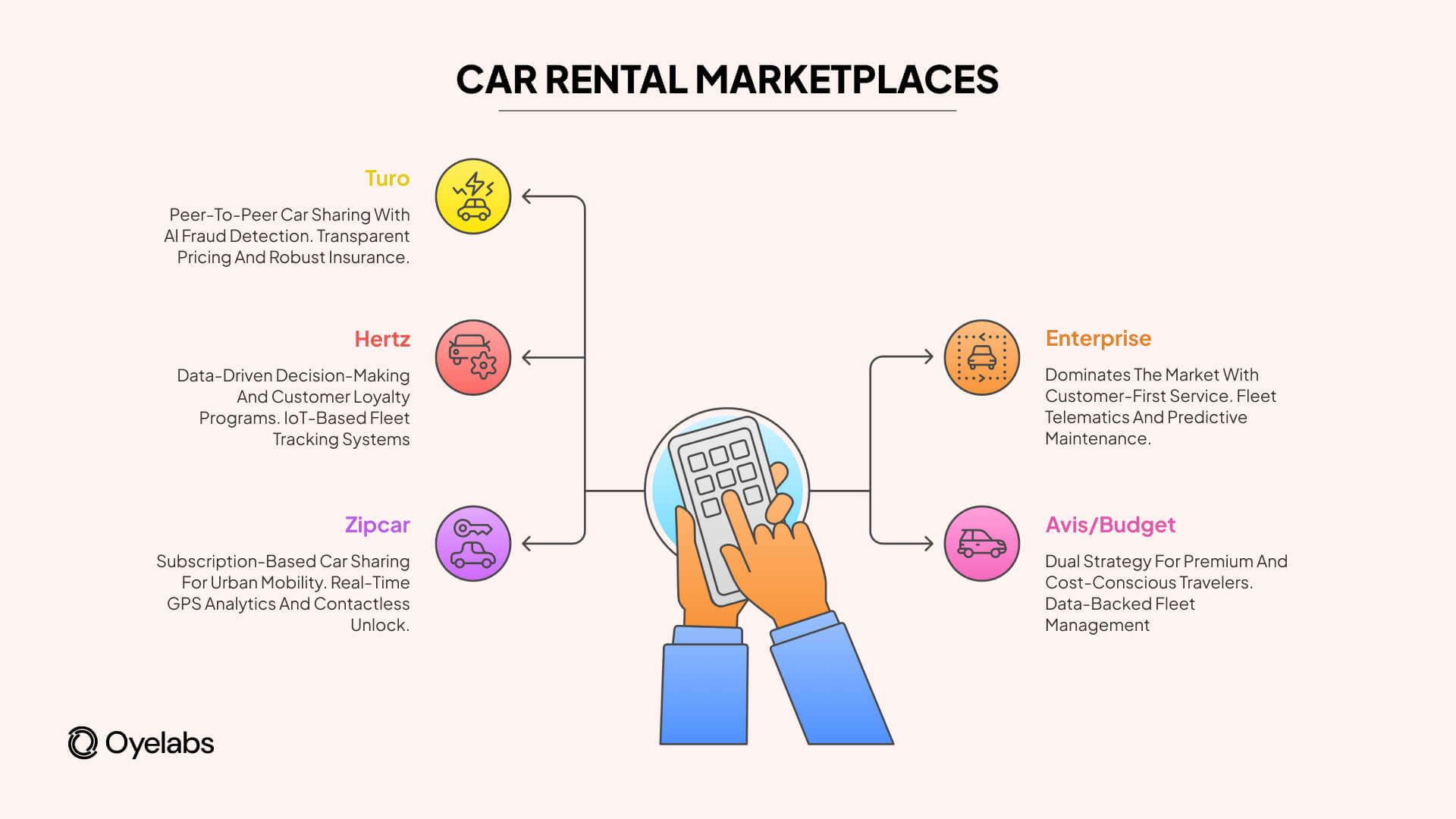
Turo is Canada’s leading peer-to-peer car-sharing platform, empowering everyday car owners to turn idle vehicles into income. With millions of registered users and AI-backed fraud detection systems, Turo nails the perfect blend of accessibility and security.
Its transparent pricing, robust insurance coverage via Intact Financial, and smart vehicle tracking make it a tech-savvy traveler’s dream. Turo’s real success lies in its community-driven model, where convenience meets personalization, allowing renters to skip the counter chaos and experience a seamless, app-powered journey.
Enterprise- Legacy Meets Innovation
Enterprise dominates the Canadian car rental market with over 500 branch locations and a commitment to customer-first service. Its omnichannel ecosystem, integrating online booking with in-branch convenience, showcases operational mastery.
Using fleet telematics and predictive maintenance software, Enterprise reduces downtime and maximizes vehicle efficiency. What sets it apart is its sustainability push; hybrid and EV fleets are now central to its strategy. Enterprise proves that legacy doesn’t mean outdated; it means evolving faster than the competition.
Read more: What Uber’s Robotaxi Move Means for Ride-Hailing Startups
Hertz- Global Trust, Local Edge
Hertz continues to lead through data-driven decision-making and customer loyalty programs that actually deliver value. With Hertz Gold Plus Rewards, users enjoy priority upgrades, real-time booking confirmations, and zero-wait pickups. The brand’s integration of IoT-based fleet tracking systems improves turnaround efficiency and enhances vehicle utilization rates.
In Canada, Hertz’s strength lies in balancing corporate partnerships with consumer convenience, bridging traditional service with digital flexibility. The brand’s resilience and trust factor make it a go-to for travelers seeking reliability and a premium experience.
Avis/Budget- Dual Strategy for Every Traveler
Under the Avis Budget Group, these two brands masterfully cater to distinct markets: Avis for premium business travelers, Budget for cost-conscious explorers. Together, they operate with data-backed fleet management and dynamic pricing tools that optimize utilization. Their loyalty programs, combined with strong B2B ties, sustain high retention rates.
By embracing AI-driven customer analytics and EV adoption goals, Avis/Budget shows how legacy brands can stay agile in a tech-first economy. Their dual-market positioning ensures relevance, reach, and repeat customers across Canada’s vast geography.
Zipcar- Subscription Meets Simplicity
Zipcar redefines urban mobility with its subscription-based car-sharing model, ideal for city dwellers who prefer flexibility over ownership. Backed by real-time GPS analytics and contactless unlock tech, it’s a frictionless experience from start to finish.
Operating in major Canadian metros, Zipcar appeals to eco-conscious users through its low-emission fleet and transparent hourly pricing. Its success stems from simplicity, no long paperwork, just instant access via an app. For businesses and individuals alike, Zipcar represents the future of mobility-as-a-service (MaaS): smart, sustainable, and on demand.
Explore BlaBlaCar’s business model to understand how community-driven platforms are monetizing shared mobility at scale.
Business Lessons from Leading Marketplaces.
Let’s shift gears from admiration to action. The success of Canada’s top car rental marketplaces isn’t a coincidence; it’s a result of smart strategies, data mastery, and customer-first innovation. Here’s what every entrepreneur can learn from them.
Prioritize Trust with Transparent Systems
Brands like Turo and Hertz prove that in the sharing economy, trust is the ultimate transaction. Their systems use AI-based identity verification, insurance clarity, and secure fintech integrations to build user confidence.
Customers crave transparency, clear pricing, visible ratings, and verified hosts turn first-timers into repeat renters. Businesses should adopt trust markers like two-way reviews, safety badges, and refund guarantees to eliminate friction.
When users see transparency, they feel in control, and that emotional assurance directly boosts retention, referrals, and overall brand equity. In short, credibility is your best marketing tool.
Use Data to Drive Decisions
Data is the fuel that powers every successful mobility platform. Enterprise and Avis use AI-driven analytics to predict demand, manage fleets, and optimize pricing in real time. This level of precision reduces idle time and maximizes ROI.
For startups, integrating machine learning algorithms and IoT-enabled tracking can reveal hidden performance insights and user behavior trends. Data-backed strategies help personalize offerings, forecast maintenance, and improve inventory distribution.
The result? Higher customer satisfaction, reduced operational costs, and faster scalability. In today’s ecosystem, decisions made from intuition are expensive; those made from data are exponential.
Build Customer-Centric Ecosystems
Every top car rental marketplace puts the customer at the core. Enterprise is a great case study; it offers a seamless experience across app, website, and in-branch touchpoints. That’s called an omnichannel strategy, and it’s gold in retention economics.
Businesses can replicate this by syncing CRM systems, offering flexible cancellation policies, and automating personalized communication. The goal? Eliminate friction, build trust, and make every user interaction feel effortless.
A customer-centric ecosystem not only boosts loyalty but also creates word-of-mouth advocates. In the end, users don’t remember the app they used; they remember how the experience made them feel.
Interested in developing mobility platforms? Learn how global leaders balance safety and scalability in the Ola Business Model.
Blend Sustainability with Profitability
Today’s consumers, especially Gen Z, demand brands with purpose. Canadian leaders like Zipcar and Avis prove that sustainability and profitability can ride in the same lane. Their EV and hybrid fleets, carbon-offset partnerships, and eco-friendly operations create long-term brand differentiation.
Entrepreneurs can follow suit by integrating green logistics, tracking carbon footprints, and communicating environmental impact through transparent reporting. Investors and customers reward companies that prioritize people and planet alongside profit.
Sustainability isn’t just a marketing story; it’s a strategic framework that drives customer loyalty, regulatory compliance, and future readiness. The green economy isn’t coming; it’s already parked outside.
Innovate or Become Irrelevant
Disruption doesn’t wait for anyone. Turo transformed the rental industry by replacing the counter with a click; its peer-to-peer model redefined convenience. Innovation here isn’t about flashy tech; it’s about identifying inefficiencies and solving them faster than your competitors.
Companies must adopt a culture of experimentation through A/B testing, emerging tech adoption, and agile feedback loops. Blockchain for transaction transparency or AI for fleet automation are no longer luxuries; they’re expectations.
As customer demands evolve, agility becomes your strongest advantage. The golden rule? Stay curious, stay adaptive, and never stop iterating. Because in the fast lane of tech-driven mobility, stagnation equals extinction.
Future Trends in Car Rental Marketplaces.
Buckle up, the future of car rental marketplaces is shifting into high gear! From AI automation to sustainable fleets, the next wave of innovation is redefining how Canadians rent, ride, and reconnect with mobility.
Electrification and Sustainable Fleets
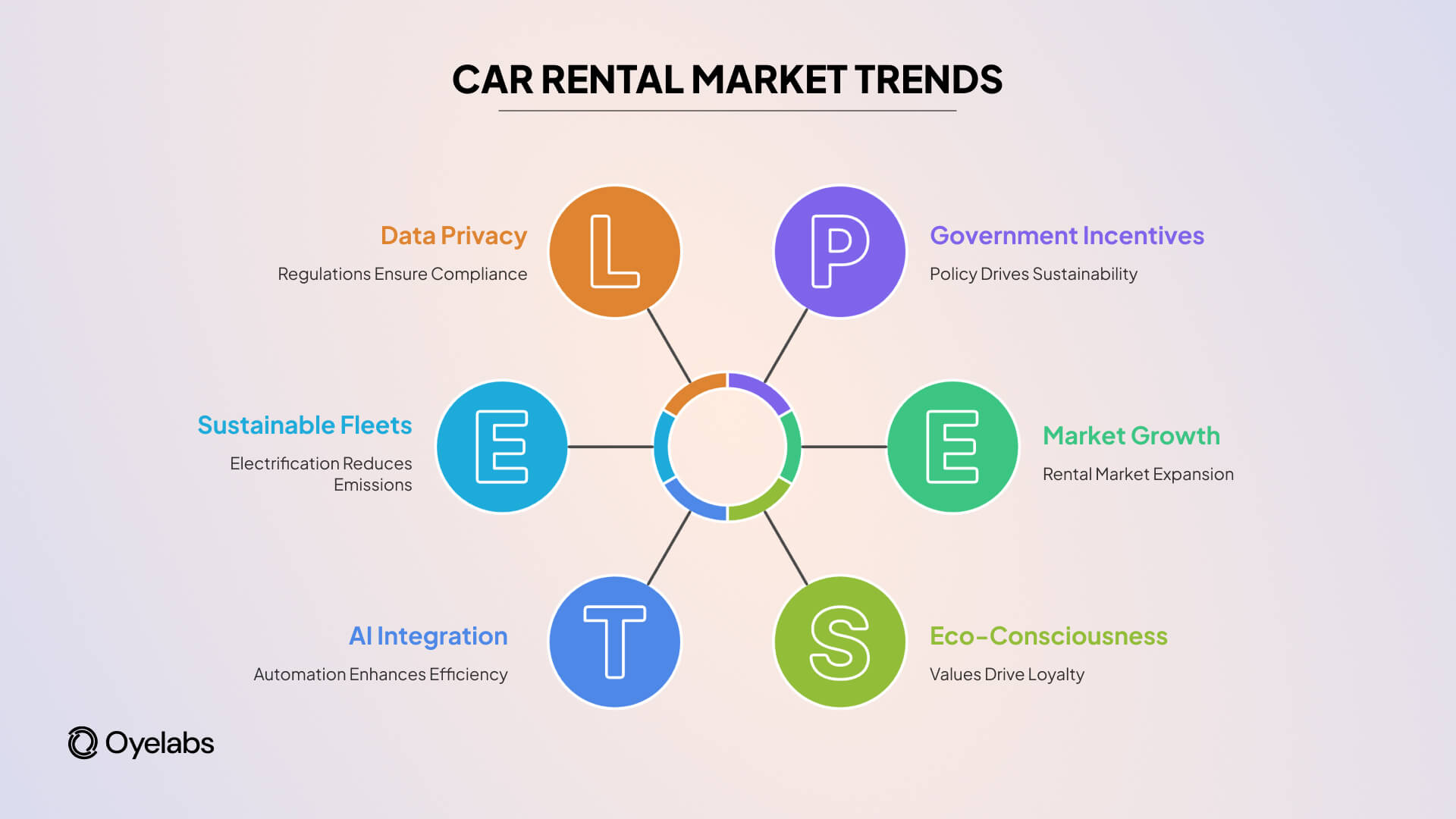
The Canadian car rental industry is charging toward sustainability, literally. By 2030, over 40% of rental fleets are projected to be electric (Transport Canada, 2025). Brands like Avis and Zipcar are leading the transition with EV integration, carbon-offset programs, and partnerships with renewable energy providers.
For startups, this trend highlights the profitability of aligning eco-conscious values with operational efficiency. Expect to see AI-powered EV routing, solar-charging depots, and green fleet analytics dominate the future. Sustainability isn’t a buzzword; it’s the new business model fueling customer loyalty and government incentives.
Integration of AI and Predictive Analytics
AI is steering the rental industry into a smarter era. Market leaders like Turo and Enterprise already use machine learning algorithms to anticipate demand, adjust pricing, and monitor vehicle health through predictive maintenance.
By 2026, over 70% of rental operations are expected to use real-time data analytics (Statista). This evolution minimizes downtime, enhances user experience, and boosts fleet ROI. The next big shift?
Fully automated booking journeys using natural language AI chatbots and predictive personalization engines. Businesses that treat data as an asset, not an afterthought, will dominate the road ahead.
Rise of Mobility-as-a-Service (MaaS)
The concept of Mobility-as-a-Service (MaaS) is merging public transit, car rentals, bikes, and ride-hailing into one connected ecosystem. Canadian urban hubs like Toronto and Vancouver are piloting smart mobility apps integrating Turo, Zipcar, and local transit APIs.
This ecosystem allows users to plan, book, and pay for all transport modes from one platform. It’s not just convenience, it’s mobility orchestration, powered by blockchain-based interoperability and cloud computing scalability. The global electric car rental market is projected to grow from about USD 12.5 billion in 2024 to USD 33.9 billion by 2032, at a CAGR of ~14.8%.
As cities go digital-first, rental marketplaces that plug into MaaS frameworks will gain unmatched visibility and customer stickiness. The future isn’t about owning vehicles; it’s about owning seamless mobility experiences.
Blockchain for Trust and Smart Contracts
Blockchain is emerging as the backbone of secure, transparent car rental ecosystems. By using smart contracts, companies can automate transactions, verify driver credentials, and ensure tamper-proof rental histories.
Startups like HireGo have already tested blockchain-based rental models in Europe, and Canada won’t be far behind. This tech enhances trust between renters and hosts by minimizing fraud and manual verification costs.
Expect integration of decentralized identity systems and real-time transaction ledgers in the coming years. Blockchain will do for rentals what it did for fintech: create an ecosystem of confidence, speed, and accountability.
Hyper-Personalized User Experiences
Tomorrow’s car rental platforms will know what users want before they even search. Using behavioral analytics, AI profiling, and context-aware UX, companies will tailor everything, from pricing to vehicle suggestions, in real time.
For instance, a frequent traveler may receive an auto-suggested SUV at a discounted rate right when flight data signals arrival. Brands like Hertz are already testing AI-curated loyalty programs that reward users based on driving behavior and engagement metrics.
The lesson is clear: personalization isn’t just about convenience, it’s about emotional intelligence in technology. The more human your digital experience feels, the longer your customers stay.
Read further: Guide to Launch Your Own Ride-Hailing App Like inDriver in the USA
Revolutionize Mobility with Oyelabs’ Marketplace Tech
Building a next-gen car rental marketplace? Oyelabs turns that vision into a high-performing digital ecosystem. With expertise in custom mobility solutions, AI-driven analytics, and real-time fleet management systems, Oyelabs helps you launch scalable, secure, and intuitive car rental platforms that rival Turo, Hertz, or Enterprise.
From geo-tracking integrations to dynamic pricing algorithms, every feature is engineered to enhance user trust and operational efficiency. Backed by a proven portfolio in mobility tech innovation, Oyelabs ensures faster go-to-market timelines, seamless user experience, and maximum ROI. Drive your marketplace success, partner with Oyelabs, where innovation meets business velocity.
Conclusion
The road ahead for Canada’s car rental marketplaces looks exciting, fast-paced, and full of opportunity. From Turo’s peer-to-peer innovation to Enterprise’s data-driven excellence and Zipcar’s eco-forward model, these platforms are setting global benchmarks in customer experience and digital transformation.
The industry’s shift toward AI automation, sustainable fleets, and Mobility-as-a-Service (MaaS) signals a future where flexibility, trust, and personalization define success. For entrepreneurs, the key takeaway is simple: innovation isn’t optional; it’s essential.
Whether it’s transparency, data intelligence, or sustainability, each trend offers a roadmap for scalable growth. As Canada drives into a smarter mobility era, those who adapt fastest will lead the journey toward the next generation of transportation entrepreneurship.
FAQs
- How can sustainability and profitability coexist in the car rental industry?
By integrating electric vehicles, green logistics, and carbon-offset programs, companies reduce long-term costs and attract eco-conscious customers, turning sustainability into a profit driver. - Why is Gen Z influencing the shift toward sustainable mobility?
Gen Z prioritizes purpose-driven brands, with over 70% willing to pay more for eco-friendly options, pushing businesses to adopt greener models. - What role does AI play in the future of car rentals?
AI powers predictive analytics for demand forecasting, dynamic pricing, and fleet optimization, enhancing efficiency and customer experience. - How will Mobility-as-a-Service (MaaS) change traditional car rentals?
MaaS integrates multiple transport modes into one digital platform, offering seamless, subscription-based mobility instead of one-time rentals. - Why should startups invest in blockchain for rental operations?
Blockchain ensures transparency, automates smart contracts, and prevents fraud, building trust and reducing administrative costs in digital rentals.